How Long After Getting a Tattoo Can I Swim: Complete Healing Guide
You should wait at least two weeks after getting a tattoo before swimming to avoid infection, irritation, and fading. Fresh tattoos are open wounds that need time to scab, peel, and fully heal. Pools, oceans, and hot tubs contain bacteria and chemicals that can harm your new ink or cause infections.
Once your tattoo is scab-free and no longer red or irritated, it’s safer to swim. Keep your tattoo protected, and you’ll want to know the best care tips to guarantee it heals beautifully. Proper aftercare is essential to maintain the vibrancy and health of your tattoo while preventing complications.
Understanding the Tattoo Healing Process
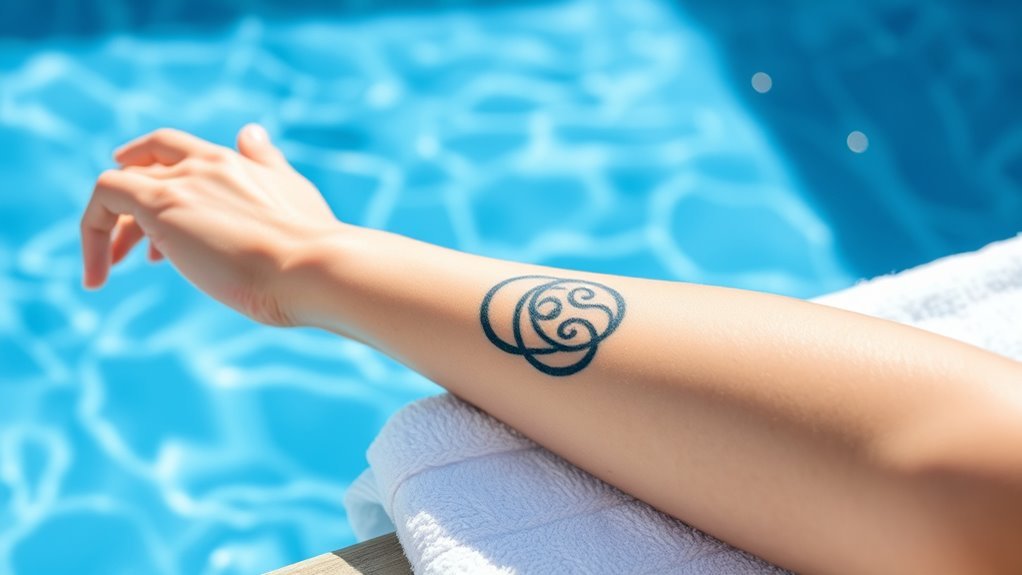
Before you consider swimming, it’s important to understand how your tattoo heals. When you get a tattoo, your skin undergoes trauma as needles deposit ink beneath the surface. This triggers your body’s natural healing process, which typically unfolds in stages over two to four weeks.
Initially, your tattoo will scab and peel, similar to a healing wound. During this time, your skin is especially sensitive and vulnerable to infection. You’ll notice redness, swelling, and itchiness, all signs that your body is repairing itself.
Proper aftercare, like keeping the tattoo clean and moisturized, is vital to support healing. Recognizing these stages helps you avoid actions, such as swimming, that could disrupt the process or damage your new tattoo before it’s fully healed.
Why Swimming Too Soon Can Harm Your Tattoo
Since your tattoo is fundamentally an open wound during the initial healing phase, swimming too soon exposes it to bacteria and irritants that can cause infection or fading. Pools, lakes, and oceans contain microorganisms that can easily enter your skin, leading to redness, swelling, or even serious infections.
Additionally, chemicals like chlorine in pools can irritate your tattoo, drying out the skin and causing the ink to fade or blur. Submerging your new tattoo in water also weakens the scabs protecting it, increasing the risk of peeling or scarring.
To keep your tattoo vibrant and healthy, you need to avoid these hazards by giving your skin enough time to heal before taking a dip. Protect your investment by prioritizing proper care over early swimming.
Recommended Waiting Period Before Swimming

To protect your new tattoo from infection and damage, you should wait a specific amount of time before swimming. Generally, it’s best to hold off for at least two to four weeks. This allows your skin to heal fully and the tattoo to settle.
Here’s a simple timeline to guide you:
- Wait at least 14 days before considering any water exposure.
- Ensure the tattoo is fully scab-free and no longer peeling.
- Keep the tattoo moisturized and clean during this period.
- If you notice any irritation or prolonged redness, extend the waiting time.
Risks of Swimming in Pools, Oceans, and Hot Tubs
Although swimming can be invigorating, jumping into pools, oceans, or hot tubs too soon after getting a tattoo puts you at risk of infection and fading.
Pools often contain chlorine and other chemicals that can irritate your fresh tattoo, slowing healing and causing discoloration.
Oceans expose your tattoo to bacteria, salt, and sand, which can lead to painful infections or abrasions.
Hot tubs pose similar risks, with warm water encouraging bacterial growth that can easily infect open skin.
Additionally, soaking your tattoo in any of these waters can soften the scabs, increasing the chance of peeling premature ink.
To protect your new tattoo, avoid these environments until your skin fully heals and the tattoo settles, ensuring vibrant, long-lasting results without unnecessary complications.
How to Protect Your Tattoo When Swimming Is Permissible
When you’re ready to swim after your tattoo has healed enough, taking proper precautions can help preserve its quality and prevent infection. Here’s how to protect your tattoo when swimming is permissible:
- Apply a waterproof bandage: Cover your tattoo with a breathable, waterproof bandage to shield it from water and bacteria.
- Limit swim duration: Keep your swim sessions brief to avoid prolonged exposure to water, which can cause fading or irritation.
- Rinse with fresh water: After swimming, rinse your tattoo with clean water to remove any chlorine, salt, or contaminants.
- Moisturize immediately: Pat your tattoo dry gently and apply a fragrance-free moisturizer to maintain skin hydration and promote healing.
Following these steps helps ensure your tattoo stays vibrant and infection-free during your swim.
Signs Your Tattoo Has Healed Enough for Swimming
Before you dive back into swimming, you need to make sure your tattoo has fully healed to avoid infection or damage. Look for key signs: your tattoo should no longer be red, swollen, or tender.
The skin must feel smooth without scabs or peeling, and there shouldn’t be any open wounds or oozing.
Your tattoo’s colors should appear settled, not dull or patchy, indicating the skin has regenerated.
Also, the area shouldn’t itch excessively or be sensitive to touch. If your tattoo feels completely normal, like the surrounding skin, it’s a good sign it’s ready for swimming.
Aftercare Tips During the Healing Period
Since your tattoo is fundamentally an open wound during the healing period, you need to keep it clean and moisturized to prevent infection and promote proper recovery. Follow these aftercare tips to help your skin heal smoothly:
- Gently wash your tattoo twice daily with lukewarm water and mild, fragrance-free soap.
- Pat it dry with a clean towel. Avoid rubbing to prevent irritation.
- Apply a thin layer of tattoo-specific ointment or fragrance-free moisturizer to keep the skin hydrated.
- Avoid direct sunlight and tight clothing that might rub against your tattoo.
What to Do If Your Tattoo Gets Infected
If you notice increased redness, swelling, or pus around your tattoo, you could be dealing with an infection.
Act quickly by cleaning the area gently with mild soap and lukewarm water. Avoid scratching or picking at the tattoo to prevent worsening the infection.
Clean gently with mild soap and water; avoid scratching to stop infection from worsening.
Apply a thin layer of antibiotic ointment as recommended by your tattoo artist or pharmacist. It’s vital to keep the tattoo dry and avoid swimming until the infection clears up.
If symptoms persist or worsen, such as fever, severe pain, or spreading redness, seek medical attention immediately.
A healthcare professional may prescribe oral antibiotics.
Prompt care helps prevent complications and supports proper healing, so don’t delay addressing signs of infection.
Long-Term Care to Keep Your Tattoo Vibrant
To keep your tattoo looking vibrant for years, you need to protect it from factors that cause fading and damage. Proper long-term care guarantees your ink stays sharp and bright. Here’s what you should do:
- Always apply sunscreen with at least SPF 30 when your tattoo is exposed to sunlight to prevent UV damage.
- Keep your skin moisturized with fragrance-free lotions to maintain the tattoo’s color and elasticity.
- Avoid prolonged soaking in pools, hot tubs, or the ocean, as chlorine and salt can degrade tattoo pigment.
- Stay hydrated and maintain healthy skin by eating a balanced diet and drinking plenty of water.
Frequently Asked Questions
Can I Use Sunscreen on a New Tattoo Before Swimming?
You shouldn’t use sunscreen on a new tattoo before swimming because it can irritate the healing skin and clog pores.
Wait until your tattoo is fully healed, then apply sunscreen to protect the ink and skin properly.
Does the Size of the Tattoo Affect Healing Time Before Swimming?
Think of your tattoo like a blooming flower—the bigger it is, the longer it takes to fully open.
Are Certain Tattoo Ink Colors More Sensitive to Water Exposure?
Yes, you should be careful with lighter colors like yellow and white, as they tend to fade faster with water exposure. Darker inks usually hold up better, but you still need to avoid swimming too soon.
Keeping your tattoo dry and well-moisturized during the healing process helps maintain the vibrancy of all ink colors. Always follow your tattoo artist’s aftercare instructions to ensure the best results.
Can Swimming Help Reduce Tattoo Swelling During Healing?
Swimming won’t help diminish tattoo swelling during healing; in fact, it can increase infection risk.
You should avoid submerging your tattoo until fully healed to protect your skin and ensure proper recovery without complications.
Should I Avoid Exercise That Causes Sweating While My Tattoo Heals?
You absolutely must dodge sweat-drenched workouts like they’re lava! Yes, you should avoid exercise causing sweating while your tattoo heals, or risk irritation and infection.
Keep it clean, dry, and let your ink settle beautifully without drama.
Conclusion
Waiting to swim until your tattoo is fully healed is as important as letting paint dry before touching it—rushing can smudge your masterpiece. Give your skin the time it needs, usually around 2-4 weeks, to avoid infections and fading.
Once healed, protect your tattoo like a precious gem when swimming. Follow aftercare tips closely, and if any issues arise, address them promptly.
This care will keep your tattoo looking vibrant for years to come. Remember, knowing how long after getting a tattoo you can swim is key to preserving your art and preventing complications.