How Do You Winterize an Inground Swimming Pool in 3 Simple Steps
To winterize your inground swimming pool in three simple steps, start by draining and cleaning it thoroughly. Remove all debris, vacuum the pool, and empty the baskets to ensure a clean surface.
Next, balance your water chemistry by adjusting the pH, alkalinity, and calcium hardness levels. This step is crucial to protect your pool surfaces and equipment from damage during the cold months.
Finally, cover your pool securely with a durable cover. Make sure it fits snugly and is well-fastened to keep out debris and animals. Follow these steps, and you’ll protect your pool all winter while minimizing maintenance. There’s more to learn for a perfect winter prep.
Drain and Clean Your Pool
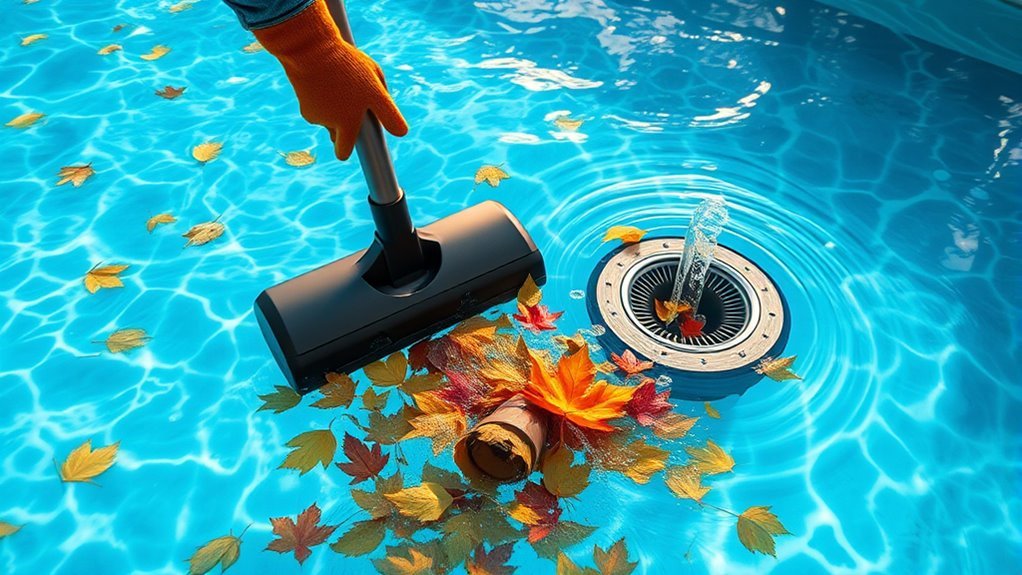
Before you winterize your inground pool, you’ll need to drain the water below the skimmer level and thoroughly clean the surfaces. Start by removing leaves, debris, and dirt from the pool walls and floor using a pool brush and vacuum. This prevents stains and algae growth during the winter months.
Next, empty your skimmer and pump baskets to avoid blockages and freezing damage. You should also clean your pool filter to ensure it’s free of dirt before shutting it down.
Empty skimmer and pump baskets, and clean your filter to prevent blockages and freezing damage before winterizing.
Once the water level is low enough, check for cracks or damage around the pool and repair them if necessary. Taking these steps helps protect your pool structure and equipment, making your next swimming season hassle-free.
Don’t rush. Cleaning and draining set the foundation for successful winterizing.
Balance the Water Chemistry
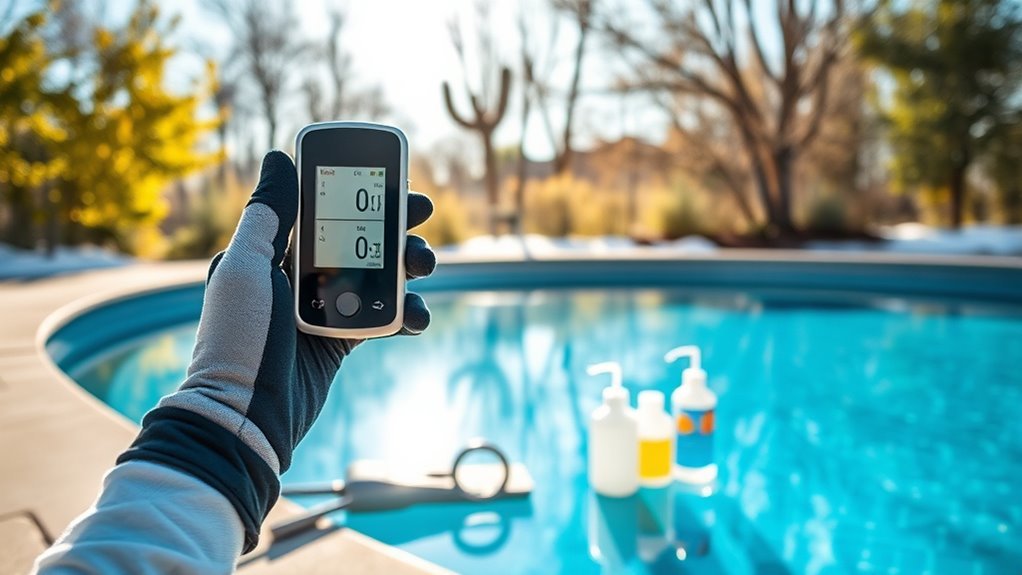
Once you’ve cleaned and lowered the water level, balancing the water chemistry is essential to prevent corrosion, scaling, and algae growth over winter. Test your pool water for pH, alkalinity, and calcium hardness.
Adjust these levels to keep water stable and protect your pool surfaces and equipment. Here’s a quick reference for target ranges:
| Parameter | Ideal Range | Purpose |
|---|---|---|
| pH | 7.2 – 7.6 | Prevents corrosion and scaling |
| Alkalinity (ppm) | 80 – 120 | Stabilizes pH levels |
| Calcium Hardness | 200 – 400 ppm | Protects pool surfaces |
| Chlorine (ppm) | 1 – 3 | Prevents algae growth |
| Cyanuric Acid | 30 – 50 ppm | Stabilizes chlorine |
Cover and Protect Your Pool
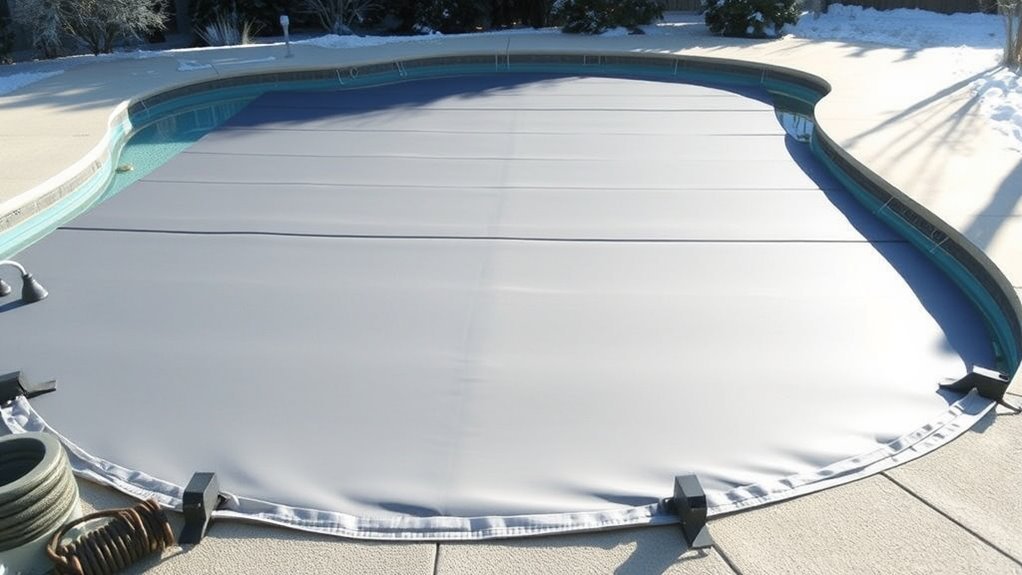
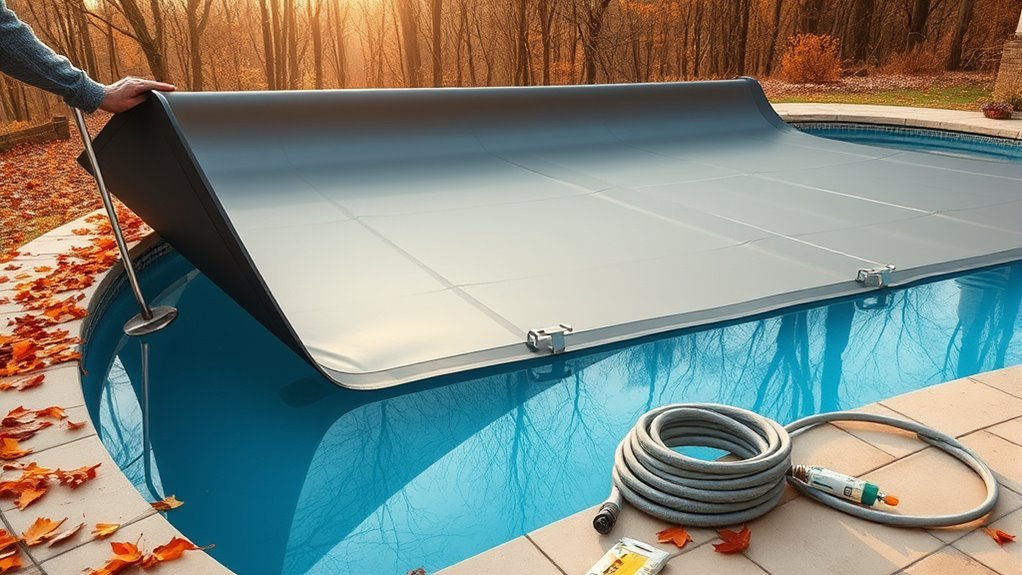
Although you’ve balanced the water chemistry, you still need to cover and protect your pool to keep out debris, prevent damage, and reduce maintenance during winter. Start by choosing a durable pool cover designed for your inground pool’s size and shape.
Secure it tightly using water bags or cover clips to prevent it from blowing away or sagging. Make sure the cover fits snugly, so leaves, dirt, and animals can’t get in.
Over time, check the cover for tears or collected water and remove debris regularly. Using a cover pump to drain excess water will prevent strain and damage.
Frequently Asked Questions
When Is the Best Time to Start Winterizing My Inground Pool?
You should start winterizing your inground pool when temperatures consistently drop below 65°F, usually in late fall. This timing helps prevent freezing damage and keeps your pool in good condition throughout winter.
Taking action at the right time ensures that your pool equipment and surfaces are protected from harsh winter conditions. Waiting too long can lead to costly repairs and maintenance in the spring.
Should I Winterize My Pool Pump and Filter?
Yes, you should winterize your pool pump and filter. Drain all water, clean the filter, and store the pump in a dry, frost-free place to prevent damage during freezing temperatures.
Don’t skip this step!
Can I Use Antifreeze in My Pool Plumbing Lines?
You shouldn’t use regular antifreeze in your pool plumbing lines because it’s toxic. Instead, use non-toxic, propylene glycol-based pool antifreeze made specifically for plumbing to protect your pipes from freezing safely during winter.
How Do I Prevent Algae Growth During Winter?
You can prevent algae growth during winter by maintaining proper chlorine levels; studies show 70% of pools with balanced sanitizer avoid algae. Also, use algaecide, circulate water regularly, and keep the pool covered to block sunlight and debris.
These steps help create an environment that is inhospitable to algae, ensuring your pool stays clean throughout the colder months. Regular maintenance is key to preventing algae buildup even when the pool is not in frequent use.
What Tools Are Essential for Winterizing an Inground Pool?
You’ll need a pool cover, winterizing chemicals, a leaf net, a pool vacuum, a skimmer, and a shop vacuum.
These tools help you clean, balance chemicals, remove debris, and protect your pool through winter.
Conclusion
Now that you’ve drained and cleaned your pool, balanced the water chemistry, and covered it securely, you’re all set for winter. Taking these simple steps protects your pool from damage and saves you time and money when spring arrives.
Isn’t it worth a little effort now to enjoy a hassle-free swim next season? With proper winterizing, your inground swimming pool will be ready and waiting for you when the warm weather returns. By following these winterizing tips, you ensure your pool remains in great condition through the cold months.