How Long After Getting a Tattoo Can You Swim
You should wait at least two to four weeks after getting a tattoo before swimming to avoid infection and protect your healing skin. Fresh tattoos are open wounds, so pool chemicals and bacteria can cause irritation, fading, or scarring if you swim too soon. It’s important to understand how long after getting a tattoo can you swim to ensure proper care.
Make sure your tattoo is fully healed—no redness, scabs, or tenderness—before submerging it in water. Taking care now helps keep your tattoo vibrant and healthy.
Learn what else you can do to guarantee proper healing and safe swimming.
The Importance of Waiting Before Swimming

Although it might be tempting to jump into the pool right after getting a tattoo, you should wait to protect your skin and prevent infection. Fresh tattoos are fundamentally open wounds, making them vulnerable to bacteria and irritants found in pool water.
Fresh tattoos are open wounds; swimming too soon risks infection from pool bacteria and irritants.
Swimming too soon can cause your tattoo to fade, blur, or heal improperly. By giving your skin enough time to heal, you confirm the ink sets well and the colors stay vibrant.
Waiting also helps you avoid discomfort, as the chemicals in pools might sting or cause allergic reactions on sensitive, healing skin.
Typically, waiting at least two to four weeks before swimming is recommended. During this period, focus on keeping your tattoo clean and moisturized to support proper healing.
Risks of Swimming Too Soon After a Tattoo

If you swim too soon after getting a tattoo, you risk exposing your fresh ink to harmful bacteria and chemicals that can cause infection and irritate your skin. Your tattoo is fundamentally an open wound, so jumping into pools, lakes, or oceans too early can lead to serious complications.
Here are the main risks you face:
- Infection: Water often contains bacteria that can enter your skin and cause redness, swelling, or pus.
- Fading: Chemicals in pool water, like chlorine, can strip away your tattoo’s vibrant colors.
- Irritation: Saltwater or pool chemicals can inflame sensitive, healing skin.
- Scarring: Damaging the healing tattoo increases the chance of scarring or uneven texture.
Avoid swimming until your tattoo is fully healed to protect your artwork and health.
How Long Does Tattoo Healing Usually Take?
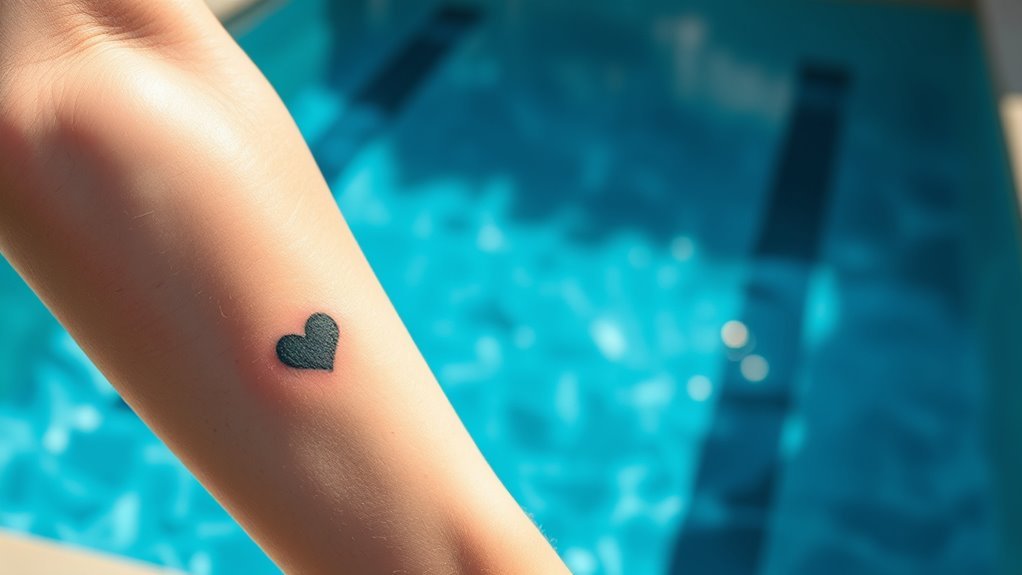
Since your tattoo is fundamentally a wound, it needs time to heal properly before you dive back into swimming. Typically, the outer layer of your skin will heal within 2 to 3 weeks, but complete healing beneath the surface can take up to 4 to 6 weeks.
During this time, your body works to close the wound, regenerate skin cells, and restore the tattoo’s color and texture. You’ll notice scabbing, peeling, and itching as natural parts of the healing process.
It’s important to keep the area clean and moisturized, avoiding any activities that might irritate or infect the tattoo.
Waiting for your tattoo to fully heal guarantees it stays vibrant and reduces the risk of complications when you eventually swim again.
Factors That Affect Tattoo Healing Time
Various factors influence how quickly your tattoo heals, and understanding them can help you care for your new ink more effectively. Healing time isn’t the same for everyone because several key elements come into play. Keep these in mind to ensure proper care:
1. Tattoo Size and Location
Larger tattoos or those on areas with more movement may take longer to heal.
2. Your Skin Type
Oily, dry, or sensitive skin can affect how your skin recovers.
3. Aftercare Routine
Following your artist’s instructions precisely speeds up healing and prevents infection.
4. Your Overall Health
A strong immune system and good hydration promote faster skin repair.
Differences Between Pool, Ocean, and Lake Water
Although all bodies of water might seem similar, pool, ocean, and lake water each present unique challenges to a healing tattoo.
Pool water contains chlorine, which can irritate your fresh tattoo, stripping natural oils and causing dryness or fading.
Ocean water has salt and various microorganisms that might infect your tattoo if it’s still open or sensitive.
Lakes often hold bacteria, algae, and other contaminants, especially in stagnant areas, increasing infection risks.
When you’re considering swimming, remember that your tattoo’s healing skin is vulnerable to these elements.
Pool water’s chemicals, ocean salt, and lake bacteria can all interfere with proper healing.
Signs Your Tattoo Is Ready for Swimming
Understanding the risks pool chemicals, ocean salt, and lake bacteria pose to your healing tattoo helps you recognize when it’s safe to swim again. Before diving in, look for clear signs that your tattoo has healed sufficiently.
Knowing how pool chemicals, ocean salt, and lake bacteria affect your healing tattoo helps you decide when to swim safely.
- Your tattoo’s skin is no longer red or inflamed.
- The scabs have fully fallen off without any bleeding.
- The area feels smooth and not raised or tender.
- There’s no peeling or flaking skin left on the tattoo.
When these signs are present, your tattoo’s protective barrier has likely restored, minimizing infection risks.
If you notice any irritation or discomfort, hold off on swimming longer.
Patience now ensures your tattoo stays vibrant and healthy for years to come.
Tips for Protecting Your Tattoo When You Swim
Once your tattoo has healed enough for swimming, you still need to take steps to protect it from irritation and infection. Always rinse your tattoo with fresh water after swimming to remove chlorine, salt, or bacteria.
Avoid prolonged exposure to water and harsh chemicals. Applying a waterproof bandage or tattoo-specific sunscreen can shield your ink from damage.
| Protection Step | Purpose | When to Use |
|---|---|---|
| Rinse with fresh water | Remove irritants | Immediately after swim |
| Waterproof bandage | Physical barrier | During swimming |
| Tattoo sunscreen | UV and chemical shield | Before sun exposure |
Following these tips helps keep your tattoo vibrant and healthy while enjoying the water safely.
Aftercare Steps to Promote Faster Healing
To speed up your tattoo’s healing, you need to follow specific aftercare steps diligently. Proper care reduces the risk of complications and ensures your tattoo looks vibrant. Here’s what you should do:
Following dedicated aftercare steps helps your tattoo heal faster and maintain its vibrant appearance.
- Keep it clean: Gently wash your tattoo with lukewarm water and mild, fragrance-free soap twice daily.
- Moisturize regularly: Apply a thin layer of tattoo-specific ointment or fragrance-free lotion to prevent dryness and cracking.
- Avoid direct sunlight: Protect your tattoo from the sun, which can cause fading and slow healing.
- Wear loose clothing: Tight clothes can irritate your tattoo and trap sweat, hindering the healing process.
Stick to these steps, and your tattoo will heal faster and stay beautiful longer.
What to Do If Your Tattoo Gets Infected
If your tattoo shows signs of infection, acting quickly is crucial to prevent complications. First, gently clean the area with mild soap and lukewarm water, then pat it dry with a clean towel. Avoid scrubbing or picking at the tattoo.
Apply a thin layer of an over-the-counter antibiotic ointment to reduce bacterial growth. Keep the tattoo covered with a sterile, breathable bandage for a short period to protect it from dirt.
Make sure to wash your hands thoroughly before touching the tattoo to avoid further contamination. Avoid swimming, soaking in water, or exposing the tattoo to harsh chemicals until the infection clears.
Monitor the area closely for worsening symptoms like increased redness, swelling, or pus, and maintain proper hygiene throughout the healing process.
When to Consult a Tattoo Artist or Doctor
Although most tattoos heal without issues, you should consult your tattoo artist or a doctor whenever you notice unusual pain, excessive swelling, or signs of infection. Early advice can prevent complications and speed up healing.
Reach out if you experience:
- Persistent redness or warmth around the tattoo beyond a few days.
- Pus, unusual discharge, or a foul odor from the tattooed area.
- Fever or chills accompanying discomfort near the tattoo.
- Allergic reactions like severe itching, rash, or blistering.
Your tattoo artist can offer specific aftercare tips, while a doctor can address infections or allergic reactions. Don’t hesitate to get professional guidance; it’s *essential* for your health and to keep your new tattoo looking great.
Frequently Asked Questions
Can You Use Sunscreen on a Fresh Tattoo Before Swimming?
You shouldn’t use sunscreen on a fresh tattoo before swimming because it can irritate your skin and cause infection. Wait until your tattoo is fully healed, then apply sunscreen to protect it while swimming.
Does Tattoo Ink Fade Faster With Frequent Swimming?
Like Icarus flying too close, frequent swimming can cause your tattoo ink to fade faster. Chlorine and saltwater break down ink pigments, so you’ll want to protect your artwork by limiting swimming until it’s fully healed.
Are There Specific Tattoo Ink Colors More Prone to Damage From Water?
Yes, lighter colors like white, yellow, and pastel shades tend to fade faster with water exposure. You should protect these inks more carefully, especially when swimming, to keep your tattoo vibrant and sharp longer.
Can Swimming Help Reduce Tattoo Itching During Healing?
When it comes to itching, swimming isn’t the best bet during healing. It might soothe briefly but risks infection and fading.
Better to stick to gentle moisturizing. Don’t count your chickens before they hatch with water just yet.
Is It Safe to Swim in Hot Tubs With a New Tattoo?
No, you shouldn’t swim in hot tubs with a new tattoo. The heat and bacteria can cause irritation or infection.
Wait until your tattoo fully heals, usually about 2-4 weeks, before soaking in hot tubs.
Conclusion
You might wonder if jumping into the pool right after your tattoo is harmless, but the truth is, swimming too soon can lead to infection and fading.
Waiting at least two weeks lets your skin heal properly, protecting your new ink. Keep in mind, factors like water type and your healing speed matter.
So, be patient, follow aftercare, and only swim when your tattoo feels ready—you’ll thank yourself later. Remember, how long after getting a tattoo can you swim depends on proper healing and care.