Best Water Filter For Bad Tasting Water That Works Fast!
Bad tasting water can make simple hydration unpleasant and may even affect the flavor of your meals and beverages. The right water filter can transform your tap water, removing unwanted tastes and odors to provide clean, refreshing water at home.
This review focuses on finding the best water filter for bad tasting water, helping you choose a reliable solution tailored to your needs. Whether you’re dealing with chlorine, sediment, or other common contaminants, the products featured here aim to improve both taste and quality. We’ll look at key features such as filtration technology, ease of use, and maintenance so you can decide which filter fits your lifestyle and budget.
By the end of this review, you’ll have a clearer understanding of which water filter can make your water taste better without complicating your daily routine.
Say Goodbye to Unpleasant Sips: Top Solutions for Crystal-Clear, Refreshing Water
| Image | Product | Price |
|---|---|---|
Pick 1 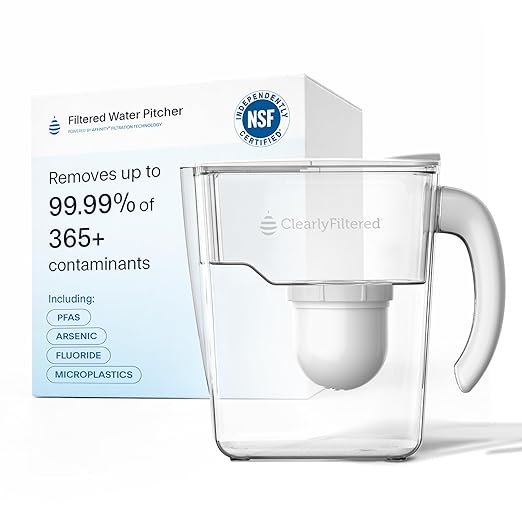 | Clearly Filtered Water Filter Pitcher, 10 Cup BPA Free Water | Check Price On Amazon |
6. Clearly Filtered Water Filter Pitcher, 10 Cup BPA Free Water
Fresh, clean water is essential, especially when tap water tastes off or contains unwanted contaminants. The Clearly Filtered Water Filter Pitcher offers an effective solution to enhance water quality, making every sip refreshing and safe.
With its large capacity and advanced technology, the pitcher accommodates family use without constant refilling. Its thoughtful design and medical-grade materials provide both convenience and confidence in daily hydration.
The Clearly Filtered Water Filter Pitcher combines extensive contaminant removal with user-friendly features. It targets more than 365 harmful substances, including fluoride, lead, arsenic, and microplastics, eliminating impurities while retaining essential minerals.
Certified by NSF, it guarantees water safety those typical filters often miss.
Holding 80 fluid ounces, it serves around ten cups, fitting well on fridge shelves. Pouring is comfortable with its ergonomic handle, and refilling is a breeze thanks to the hinged lid and spill-resistant dam.
Each filter lasts approximately 100 gallons, or about 200 refills, meaning less hassle with replacements. The filter swap is simple and supported by subscription ordering for ongoing ease. Suitable for families and anyone seeking reliable purified water, the pitcher combines value, performance, and health benefits efficiently.
Suitable for families and anyone seeking reliable purified water, the pitcher combines value, performance, and health benefits efficiently.
Pros
- Removes over 365 contaminants including fluoride and microplastics
- Large 80 fl oz capacity fit for families or multiple users
- Made with BPA-free, medical-grade Tritan plastic for safety
Cons
- Filter replacement cost may be higher than some competitors
For those seeking a dependable, high-capacity water pitcher with thorough filtration, this model offers excellent protection without compromising convenience. Its capacity and contaminant coverage surpass many standard filters, delivering crisp and clean water with every use. The Clearly Filtered Water Filter Pitcher remains a solid choice for improving your tap water quality.
| Specification | Details |
|---|---|
| Capacity | 80 fl oz (10 cups / 2.4 L) |
| Material | Medical-grade Tritan plastic, BPA-free |
| Filtration Technology | Proprietary Affinity Filtration (ionic binding) |
| Contaminant Removal | 365+ contaminants including fluoride, lead, PFAS, microplastics |
| Filter Life | 100 gallons (approx. 200 refills / 4 months) |
| Certifications | NSF/ANSI 42 & 372, independently lab tested |
Transform Your Tap: How to Choose the Best Water Filter for Bad Tasting Water
Cost and value
When choosing the best water filter for bad tasting water, understanding the cost and value involves more than just the initial purchase price. While some filters may come at a higher upfront cost, their long-term expenses can be more manageable if replacement filters are affordable and readily available. It’s wise to investigate how frequently filters need changing, as this directly impacts ongoing spending.
It’s wise to investigate how frequently filters need changing, as this directly impacts ongoing spending. Additionally, considering energy efficiency helps keep operational costs low, especially for systems that require electricity to function. Balancing these factors—initial cost, the lifespan and price of replacement parts, and the energy used—provides a clearer picture of overall value, helping you make a choice that suits both your budget and water quality needs over time.
Water quality and contaminants
When selecting a water filter, understanding the reasons behind unpleasant flavors can make all the difference. Often, bad taste stems from chlorine, sediment, or organic compounds present in the source water.
Testing water quality before making a purchase helps identify these impurities, revealing if contaminants such as lead, pesticides, or bacteria are present. This step not only guides the choice of filtration method but also ensures better results. Considering filters with capabilities to remove a range of contaminants, including chemicals and heavy metals, will provide a noticeable improvement in both taste and safety.
Activated carbon filters excel at reducing chlorine and odors, while reverse osmosis systems target dissolved solids and metals. Keeping the specific contaminant profile and your typical water use in mind will lead to a more effective and satisfying water filtration experience.
Filter capacity and lifespan
When selecting a water filter designed to improve taste, understanding the flow rate relative to your daily water consumption helps maintain a steady supply without delays or interruptions. Filters with higher flow rates suit larger households while smaller units may suffice for individuals or couples. Paying attention to how often the filter needs replacement safeguards the quality of the water you enjoy.
Frequent changes might be necessary for filters handling high volumes or challenging water conditions, while some systems offer longer-lasting cartridges that reduce maintenance efforts. Filters equipped with indicator features for replacements add convenience by alerting you when performance begins to decline, removing any guesswork and supporting consistent water quality.
Considering these factors together shapes a satisfying and efficient filtration experience tailored to your routine and preferences.
Installation and maintenance
Choosing a water filter that suits your needs involves thinking about how easy it is to install, how often it will require maintenance, and whether it fits with your current plumbing setup. Filters designed for countertops or pitchers generally offer straightforward setup without the need for special tools or professional assistance, making them ideal for renters or those not wanting to alter their plumbing.
Undersink models often provide a more integrated solution, but installation might take more time and could require a plumber, especially if your existing plumbing has unique fittings. Maintenance varies depending on the type of filter; some need frequent cartridge changes which might add to the ongoing costs, while others have longer-lasting components but could come with a higher initial price. Evaluating how often replacement parts are needed and their availability can save time and money down the road.
Compatibility is another significant factor to keep in mind, since some filters are universal and easily connect to most faucets, whereas others are designed for specific pipe sizes or configurations, requiring adapters or adjustments. Taking these aspects into account can make the process smoother, so your water filter continues to deliver better tasting water without unexpected hassles.
Types of water filters
When deciding on a water filter, understanding how different technologies work can greatly influence your satisfaction with the final choice. Activated carbon filters are excellent for improving taste and removing chlorine and other common contaminants that often cause unpleasant flavors.
These filters are particularly effective in homes where tap water tastes off but does not require heavy purification. Reverse osmosis systems offer a more thorough purification by forcing water through a semi-permeable membrane, eliminating a wide range of impurities including heavy metals, salts, and many dissolved solids. This makes them suitable for households seeking the highest levels of purity, especially where water sources are known to have significant contamination.
UV purification and other advanced methods use ultraviolet light to neutralize bacteria and viruses, adding a layer of disinfection that complements other filtering techniques. This technology is highly beneficial in areas prone to microbial contamination or when sourcing water from private wells. When choosing a water filter, consider the specific issues present in your water supply and how each technology addresses them.
When choosing a water filter, consider the specific issues present in your water supply and how each technology addresses them. Additionally, factor in maintenance requirements, filter lifespan, and installation ease to find an option that fits your daily routine and water needs without hassle.
Additional features and considerations
Choosing the best water filter for bad tasting water involves understanding the features that directly impact both the quality and flavor of your water. Many filters emphasize taste enhancement by removing chlorine and other substances that cause unpleasant odors and flavors, while others focus extensively on contaminant removal including heavy metals, sediments, and microbes.
The physical size and design of the filter can affect its convenience and placement options; some models are compact enough for countertops or travel, while others require under-sink installation, so evaluating portability and available space helps match the filter to your lifestyle. Additional features such as filter replacement indicators, ease of installation, and the types of filtration media used can further improve user experience and filter lifespan, making the process of selecting a water filter both practical and satisfying based on personal water quality needs.
FAQ’s
How Effective Are Carbon Filters In Removing Unpleasant Tastes From Drinking Water?
Carbon filters are highly effective at removing unpleasant tastes and odors from drinking water by adsorbing chlorine, organic compounds, and other impurities. They significantly improve water flavor, making it more enjoyable to drink.
What Are The Best Types Of Water Filters For Improving The Taste Of Bad-Tasting Water?
The best types of water filters for improving the taste of bad-tasting water are activated carbon filters, which effectively remove chlorine and organic compounds that cause unpleasant flavors. Additionally, reverse osmosis systems provide thorough filtration, enhancing water taste by removing a broader range of contaminants.
What Factors Should I Consider When Choosing A Water Filter For Bad-Tasting Water?
When choosing a water filter for bad-tasting water, consider the specific contaminants causing the taste, such as chlorine or sulfur, and select a filter certified to remove those substances. Additionally, evaluate the filter’s capacity, maintenance requirements, and whether it suits your water source and household needs.
Are Under-Sink Water Filters Better Than Pitcher Filters For Enhancing Water Taste?
Under-sink water filters typically provide better water taste enhancement than pitcher filters because they use more advanced filtration technology and treat a larger volume of water directly from the plumbing. However, pitcher filters are more convenient and portable, offering a quick improvement in taste for smaller quantities.
Can A Water Filter Eliminate Chemical Odors And Flavors From Tap Water?
Yes, certain water filters, such as activated carbon filters, can effectively reduce chemical odors and flavors from tap water by adsorbing contaminants. However, the effectiveness depends on the specific filter type and the chemicals present in the water.
Conclusion
Choosing the best water filter for bad tasting water depends on your specific needs, such as budget, installation preferences, and the level of filtration required. Many effective models improve taste by removing chlorine, sediments, and odors, but some may have limitations like slower flow rates or higher maintenance. This type of filter is particularly suitable for households facing water with unpleasant tastes caused by common contaminants.
While no single product fits every situation perfectly, understanding the pros and cons can guide you toward the right choice. Ultimately, selecting a reliable water filter that targets the specific causes of bad taste will enhance your drinking experience, providing cleaner, better-tasting water without unnecessary complexity or expense.