When Can Babies Start Swimming Lessons
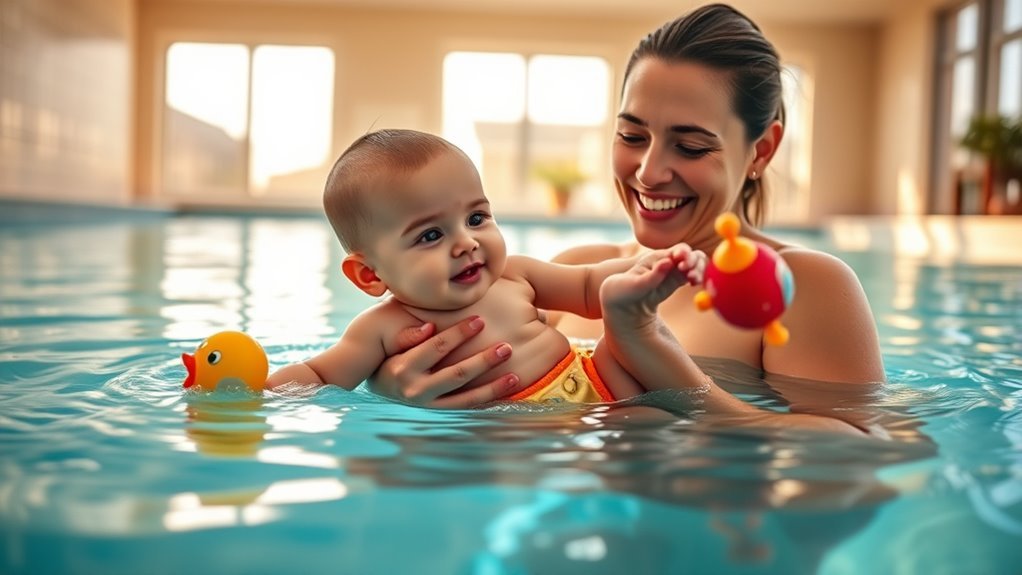
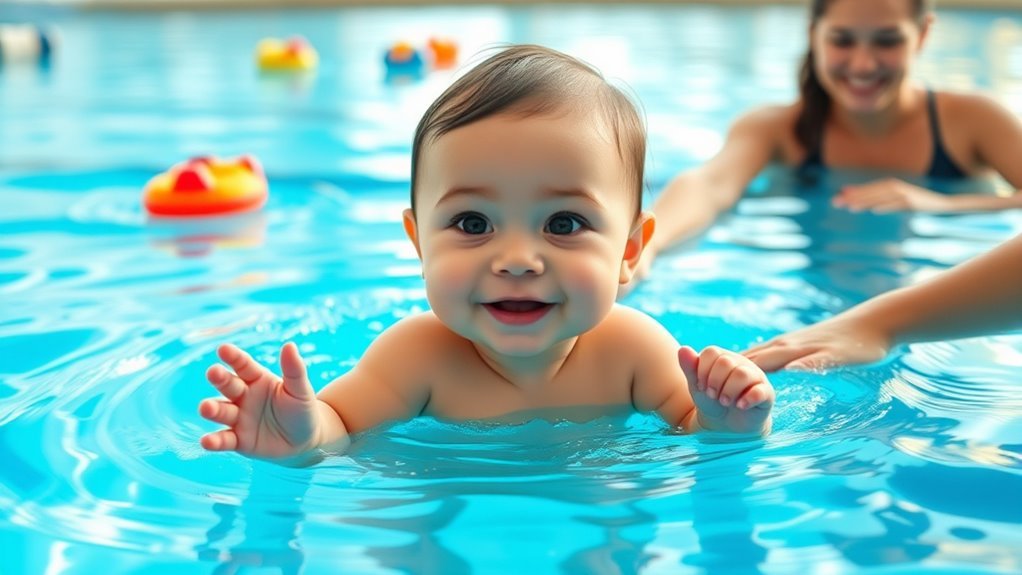
You can start swim lessons with your baby around six months old, once their immune system is stronger and they have better head control for safety. When can babies start swimming lessons? This is a common question for new parents eager to introduce water activities early. These early classes focus on comfort in the water and basic skills, helping your little one build confidence and motor abilities.
Choosing certified instructors and keeping sessions fun and short is key. If you want to know how to pick the best class and keep your baby safe, keep exploring these tips.
Recommended Age to Begin Swimming Lessons for Babies
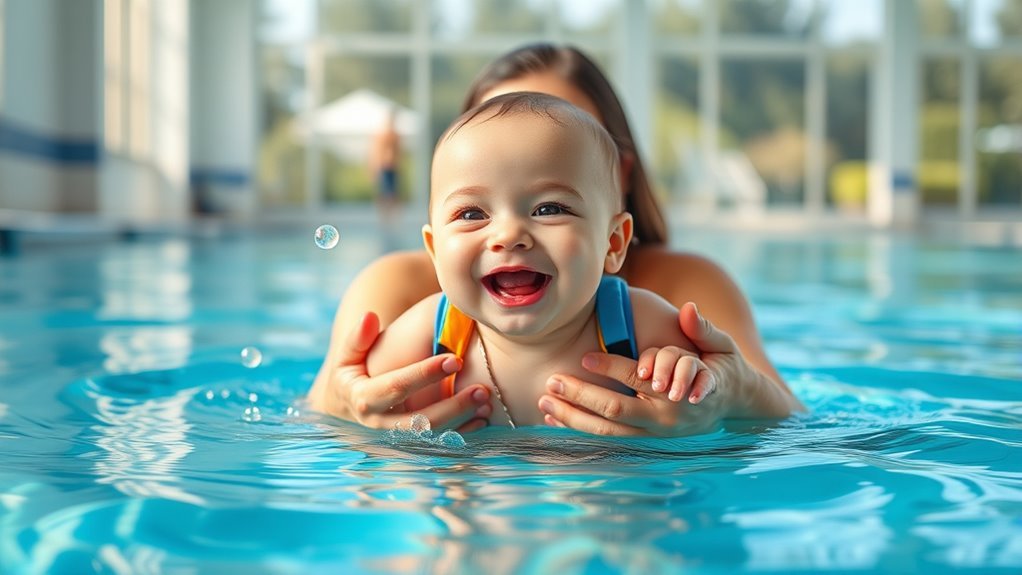
Although every child develops at their own pace, experts generally recommend starting swimming lessons for babies around six months old.
At this age, your baby’s immune system is stronger, and they usually have better head and neck control, which is essential for water safety.
You can find many programs designed specifically for infants, focusing on water comfort and basic skills rather than formal swimming techniques.
It’s important to choose classes led by certified instructors who specialize in infant swimming.
Before beginning lessons, check with your pediatrician to ensure your baby is ready, especially if they were born prematurely or have health concerns.
Starting at six months helps build a positive water experience early on, setting the stage for future learning and safety.
Benefits of Swimming for Infants
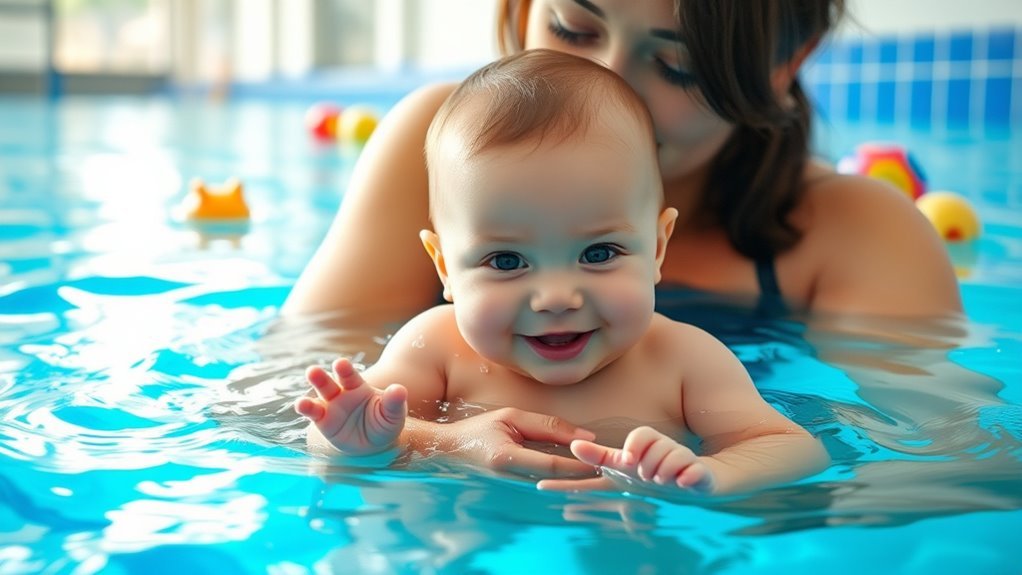
When you introduce your baby to swimming, you’re not just helping them learn a new skill. You’re boosting their physical development and confidence in the water.
Swimming offers numerous benefits that support your infant’s growth and well-being. Here are four key benefits:
Swimming supports your baby’s growth with key benefits for health, skills, safety, and bonding.
- Enhances motor skills by promoting coordination and muscle strength.
- Supports cardiovascular health through gentle aerobic exercise.
- Builds water safety awareness early on, reducing fear of water.
- Strengthens the bond between you and your baby through close physical contact and trust-building.
Choosing the Right Swimming Class for Your Baby
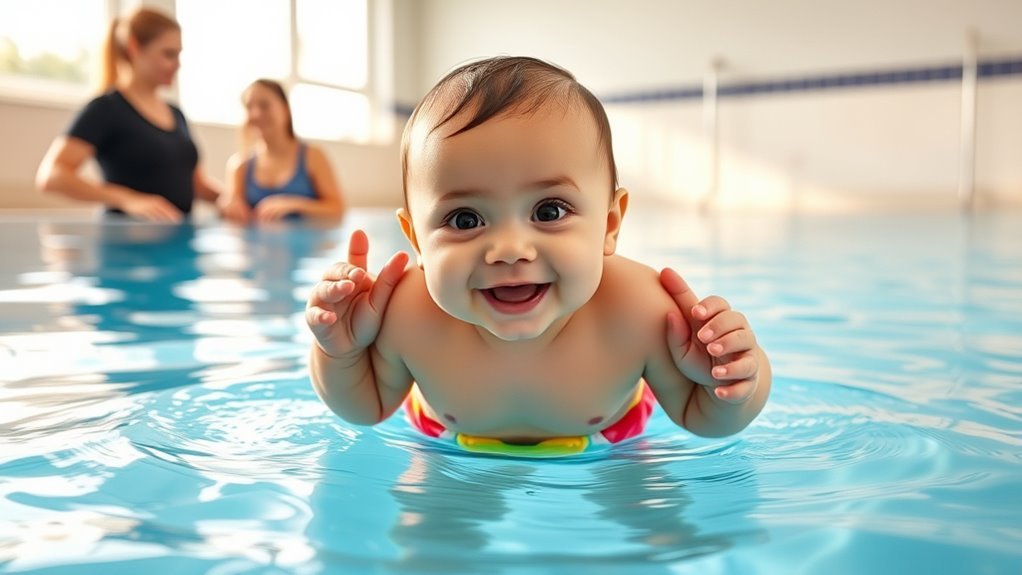
Swimming lessons can maximize the benefits you want for your baby, but picking the right class makes all the difference. First, consider the instructor’s experience with infants; they should be certified in infant CPR and trained in early childhood aquatic education.
Look for small class sizes to ensure personalized attention, and verify the water temperature is comfortable for babies. You’ll want a program that focuses on fun and bonding rather than rigorous skills.
Check the class schedule for flexibility that fits your routine and confirm the facility maintains high hygiene standards. Reading reviews or asking other parents for recommendations will also guide you.
Choosing thoughtfully guarantees your baby enjoys swimming safely and gains confidence in the water from the start.
Safety Tips for Baby Swimming Lessons
Since your baby will be spending time in the water, you need to prioritize safety at every step. Keep these essential tips in mind to ensure a secure swimming experience:
- Always stay within arm’s reach of your baby, never leaving them unattended near water.
- Choose a pool with clean, warm water to prevent chills and infections.
- Use appropriate flotation devices only as supplements; never rely on them alone for safety.
- Watch for signs of fatigue or distress and exit the pool immediately if your baby seems uncomfortable.
Preparing Your Baby for Their First Swim Session
Before your baby’s first swim session, you’ll want to create a calm and positive environment to help them feel comfortable in the water. Start by introducing them to the water gradually, using gentle splashes and soothing tones.
Dress them in a comfortable swim diaper and bring a familiar toy to ease any anxiety. Make sure you’re relaxed too; babies pick up on your emotions. Keep the session short and fun to build positive associations.
| Preparation Step | Description |
|---|---|
| Gradual Introduction | Let baby get used to water slowly |
| Proper Swimwear | Use swim diapers and comfortable suits |
| Familiar Toys | Bring toys to comfort and engage |
| Parent’s Attitude | Stay calm and encouraging |
| Session Length | Keep initial lessons brief |
Frequently Asked Questions
Can Babies Develop Allergies From Pool Chemicals?
Yes, babies can develop allergies from pool chemicals, especially chlorine.
If you notice redness, itching, or irritation after swimming, it’s best to consult a doctor. Consider gentler alternatives or well-ventilated pools for your little one.
How Often Should Babies Attend Swimming Lessons Weekly?
You should aim for one to two swimming lessons per week for your baby. This frequency helps build comfort and skills without overwhelming them, ensuring each session remains fun and safe for their development.
What Swimwear Is Best for Infants in Lessons?
For fabulous floaters, find fitted, fast-drying swim diapers and secure swimsuits. Soft, snug swimwear shields sensitive skin while supporting splash sessions.
You’ll love lightweight layers letting your little one move and master the water with ease!
Are There Specific Water Temperatures Recommended for Baby Pools?
Yes, you should keep baby pools between 85-87°F (29-31°C). This warm temperature helps your baby stay comfortable and prevents chills during lessons, ensuring a safe and enjoyable swimming experience for both of you.
Can Premature Babies Participate in Swimming Lessons?
You can consider swimming lessons for premature babies, but only after consulting their pediatrician. Their immune system is delicate, so waiting until they’re medically cleared and strong enough is vital to guarantee safety and health.
Conclusion
You’re never too early to introduce your baby to the water, but starting around 6 months is usually the sweet spot. Swimming lessons can boost their confidence and health while creating precious bonding moments. Just make sure to pick a safe, supportive class and prepare your little one gently.
Remember, every big journey begins with a single splash—so jump in and enjoy these special first strokes together! When can babies start swimming lessons? Around 6 months is ideal to ensure safety and maximize the benefits of early water exposure.