Can You Swim Safely in the Ocean in Cabo?
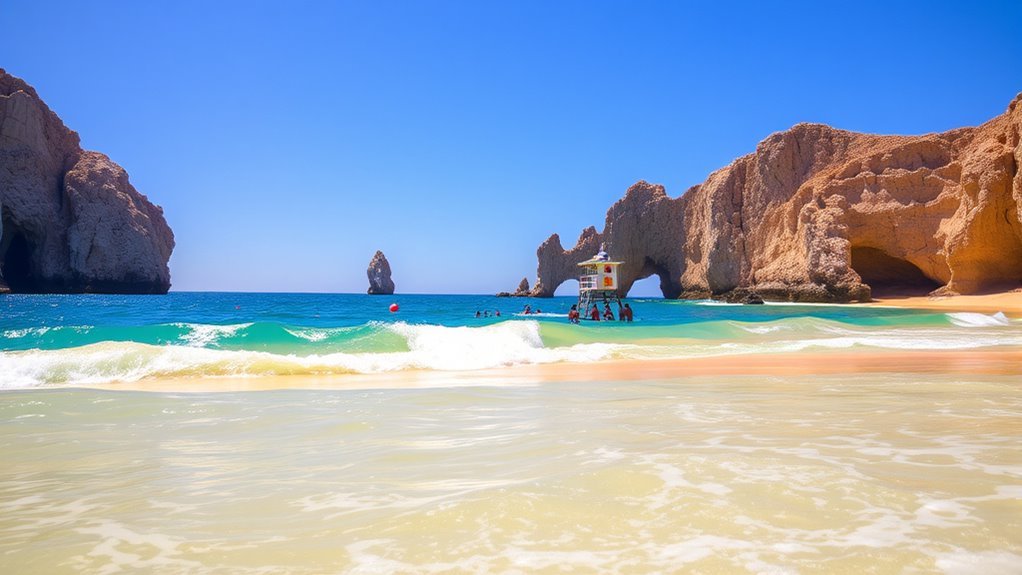
You can swim safely in Cabo’s ocean by choosing popular beaches like Medano or Chileno Bay, where lifeguards watch over swimmers. The water is usually calm, warm, and clear, making these locations ideal for ocean swimming. However, it’s important to watch out for currents and occasional jellyfish.
Stay within designated swimming zones and avoid rocky areas to minimize risks. Checking tide schedules before entering the water is also recommended. Taking these precautions helps ensure a safe and enjoyable swim.
Keep exploring to discover more about ocean conditions, safety tips, and local guidelines for swimming in Cabo’s ocean.
Overview of Cabo San Lucas Beaches
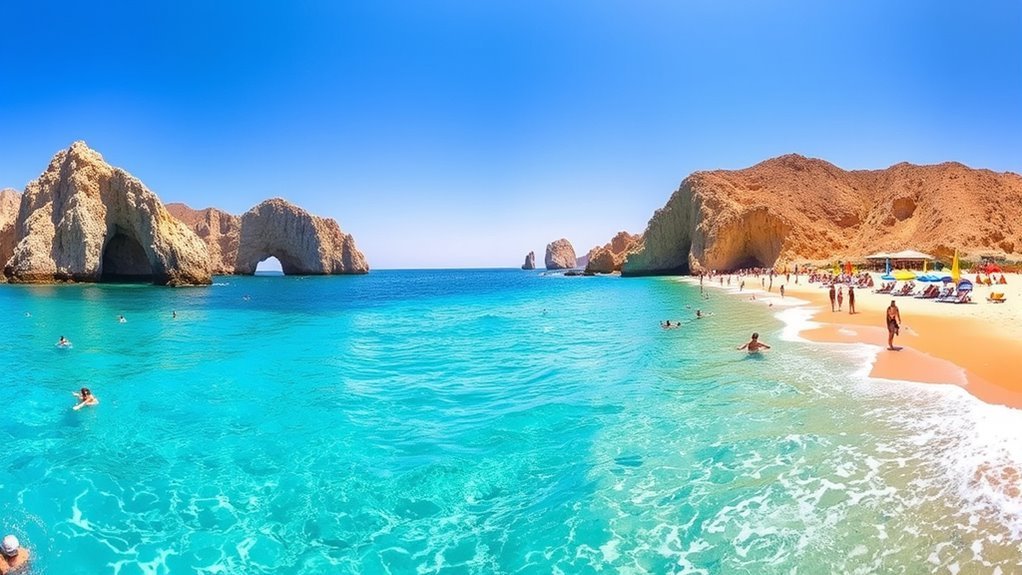
Cabo San Lucas offers a variety of stunning beaches that cater to every type of visitor. If you’re looking for lively spots, Medano Beach is perfect, bustling with activity and easy access to restaurants and shops.
For a quieter experience, Chileno Bay provides calm, clear waters ideal for relaxation. Lover’s Beach, accessible only by boat, offers a secluded escape with breathtaking views. Each beach has its unique charm, so you can choose based on your mood or plans.
You’ll find sandy stretches perfect for sunbathing, rocky coves for exploring, and ample space to enjoy water sports. Whether you want to swim, snorkel, or simply soak up the sun, Cabo’s beaches give you many options to enjoy your time by the sea.
Ocean Conditions and Water Temperature

Although ocean conditions can vary throughout the year, you’ll generally find calm and inviting waters ideal for swimming in Cabo San Lucas. The sea temperature stays comfortably warm, ranging from about 72°F (22°C) in winter to 84°F (29°C) in summer.
This means you won’t need a wetsuit, just your swimsuit and sunscreen. The clarity of the water is usually excellent, making it perfect for snorkeling and spotting marine life.
However, after heavy rains, water may become murkier temporarily.
Keep in mind that weather changes can affect wave height and water temperature slightly, so checking local reports before swimming is a smart move.
Common Ocean Currents and Tides
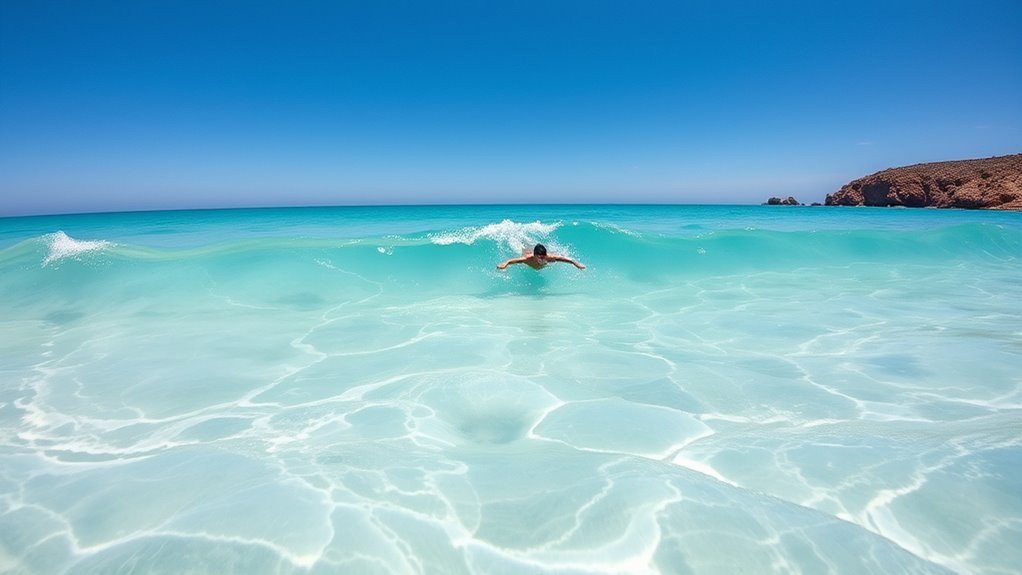
When you swim in these waters, you’ll notice the influence of several ocean currents that shape the tides around Cabo San Lucas. The main current you’ll encounter is the California Current, flowing southward along the coast. It brings cooler waters, which can affect swimming conditions.
Additionally, local wind-driven currents create shifts that may cause unexpected rip currents, especially near rocky points.
Tides in Cabo follow a semi-diurnal pattern, with two high and two low tides each day.
These tidal changes can considerably alter water depth and current strength, so it’s crucial to time your swim accordingly. Pay close attention to tide schedules and local advisories. They’ll help you avoid strong currents and swim safely in this beautiful but dynamic environment.
Marine Life to Be Aware Of
Understanding the ocean currents and tides helps you stay safe, but being aware of the marine life around you is just as important. Cabo’s waters host diverse creatures, and knowing which ones to watch out for can make your swim safer and more enjoyable.
Being mindful of marine life in Cabo enhances both your safety and enjoyment while swimming.
Here are four marine animals you should be aware of:
- Jellyfish Some species sting, causing discomfort or allergic reactions.
- Sea Urchins Stepping on them can lead to painful punctures.
- Stingrays Usually avoid you, but accidental contact can cause injury.
- Sharks Encounters are rare, but stay alert and avoid swimming at dawn or dusk.
Safety Measures and Lifeguard Presence
Since safety is a top priority, Cabo beaches have clear measures in place to protect swimmers like you. Many popular spots feature well-trained lifeguards who vigilantly monitor ocean conditions and respond quickly to emergencies.
You’ll find posted signs warning about rip currents, strong waves, or restricted swimming zones, helping you make informed decisions before entering the water. Additionally, local authorities regularly update safety protocols based on weather and tide changes, ensuring you stay aware of any potential hazards.
It’s wise to always swim near lifeguard stations and never venture too far from shore, especially if you’re unfamiliar with the area.
Recommended Swimming Areas
Where should you swim to enjoy the best of Cabo’s ocean safely? Choosing the right spots enhances your experience and minimizes risks. Here are four recommended swimming areas:
- Medano Beach – Known for its calm waters and lifeguard presence, it’s perfect for swimmers of all levels.
- Chileno Bay – A protected cove with clear, tranquil water ideal for snorkeling and swimming.
- Santa Maria Bay – Offers a serene environment with gentle waves, great for a relaxing swim.
- Palmilla Beach – Features shallow, calm waters and is family-friendly with good safety measures.
Stick to these spots to enjoy Cabo’s ocean confidently while soaking in the stunning surroundings without worry.
Potential Hazards in the Water
Although Cabo’s waters are inviting, you should stay alert to potential hazards that can affect your safety. Strong currents and rip tides are common, especially near rocky areas and narrow beach points. These can quickly pull you away from shore, so always swim within designated safe zones and heed local warnings.
Jellyfish stings occasionally occur, so watch for floating jellyfish or their tentacles.
Sharp rocks and coral can cause cuts or scrapes, so avoid diving headfirst and wear water shoes if you plan to explore shallow areas.
Also, watch out for sudden changes in weather that may increase wave intensity. Being aware of these hazards and respecting posted signs will help you enjoy Cabo’s ocean safely.
Best Times of Year for Swimming
When you plan your swim in Cabo, choosing the right time of year can make all the difference. The ocean conditions vary throughout the year, impacting safety and enjoyment. Here are the best times to contemplate:
1. November to April
Calm seas and cooler temperatures make this the safest and most pleasant swimming period.
2. May to June
Transition months with generally good conditions but occasional rough waves.
3. July to October
Typically the stormiest months, with higher risks due to hurricanes and strong currents.
4. Early December
Water temperatures remain warm, and crowds thin out, offering a peaceful swim.
Tips for Staying Safe While Swimming
Because ocean conditions in Cabo can change quickly, you should always prioritize safety while swimming. Start by checking the weather and water conditions before heading out.
Swim near lifeguard stations whenever possible, and never swim alone. Having a buddy keeps you safer.
Pay attention to warning flags and signs on the beach, and avoid swimming if the water looks rough or if there are strong currents.
Stay within designated swimming areas and don’t venture too far from shore.
If you feel tired or caught in a current, stay calm and swim parallel to the shore until you’re out of it.
Finally, stay hydrated and protect yourself from the sun with sunscreen and a hat.
Following these tips helps ensure your ocean swim in Cabo is both fun and safe.
Local Regulations and Guidelines for Ocean Activities
To enjoy ocean activities in Cabo safely and responsibly, you need to follow local regulations and guidelines designed to protect both visitors and the environment. Authorities enforce rules to ensure a safe and enjoyable experience for everyone.
Here are four key regulations to keep in mind:
- Swim only in designated areas marked by buoys or flags to avoid strong currents and boat traffic.
- Obey lifeguard instructions and posted signs, which provide current safety information.
- Avoid touching or disturbing marine life and coral reefs to preserve the ecosystem.
- Use reef-safe sunscreen to minimize environmental impact.
Frequently Asked Questions
Are There Facilities for Renting Swimming Gear on the Beaches?
Yes, you’ll find facilities renting swimming gear on Cabo’s popular beaches. Vendors offer masks, snorkels, fins, and sometimes wetsuits.
This way, you can easily gear up for ocean activities without bringing your own equipment along.
Can Children Safely Swim at Family-Friendly Beaches in Cabo?
Just like Peter Pan’s Neverland, Cabo’s family-friendly beaches offer safe, shallow waters perfect for kids. You’ll find lifeguards and calm spots, so you can relax while your children splash and play worry-free.
What Are the Emergency Contact Numbers for Ocean Incidents?
You should call 911 for any ocean emergencies in Cabo. Additionally, local lifeguards can be reached directly at 624-143-1234.
Keep these numbers handy to stay safe and get quick help if needed.
Are There Swimming Lessons Available at Cabo Beaches?
You’ll find swimming lessons at Cabo beaches, where instructors guide you like lighthouses through the ocean’s dance. They’ll help you build confidence and skills, turning those waves from intimidating giants into playful friends.
How Accessible Are the Beaches for People With Disabilities?
You’ll find several Cabo beaches equipped with ramps and accessible pathways, making them fairly accessible for people with disabilities.
Still, it’s best to verify specific beach facilities in advance to ensure they meet your individual needs.
Conclusion
Sure, you can swim safely in Cabo’s ocean—if you don’t mind dodging currents, watching out for curious marine life, and timing your dip just right. It’s like a beachfront adventure park where the waves don’t always play nice.
So, if you love excitement mixed with your swim, Cabo’s the spot. Just remember to follow safety tips and local rules—because nothing says fun like a little caution in paradise!
Swimming safely in the ocean in Cabo means being aware of the natural conditions and respecting the environment. With proper precautions, you can enjoy a memorable and safe ocean experience in Cabo.