Can You Swim With New Piercings?
You shouldn’t swim with new piercings because water exposes your healing skin to bacteria and harmful chemicals that can cause infection and slow recovery. Pools, lakes, oceans, and hot tubs all carry risks from microbes or irritants. Swimming with new piercings increases the chance of complications and discomfort.
If you do swim, protecting the area and rinsing it properly afterward is essential. Ignoring care can lead to pain, swelling, or discharge. Proper aftercare helps prevent infection and promotes faster healing.
Keep going to find out how to keep your piercing safe and heal faster. Following these tips ensures your piercing stays healthy during the healing process.
Understanding the Healing Process of New Piercings
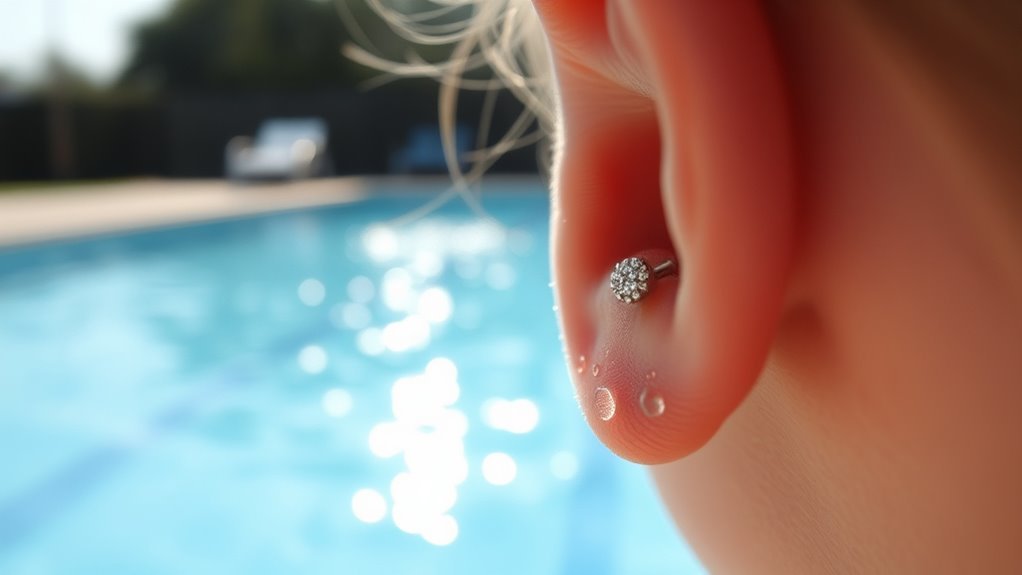
Although your new piercing might look fine on the surface, the healing process beneath is delicate and essential. When you get pierced, your body starts repairing the tiny wound by forming new tissue around the jewelry.
This process can take weeks or even months, depending on the location and type of piercing. During this time, your skin is vulnerable to irritation and infection. You need to keep the area clean and avoid unnecessary touching to prevent complications.
Your body also forms a protective barrier called a fistula, which stabilizes the piercing. If you disrupt this healing, you risk prolonged recovery or scarring. Understanding this helps you appreciate why proper care is critical during those first few weeks after getting pierced.
Risks of Swimming With Fresh Piercings
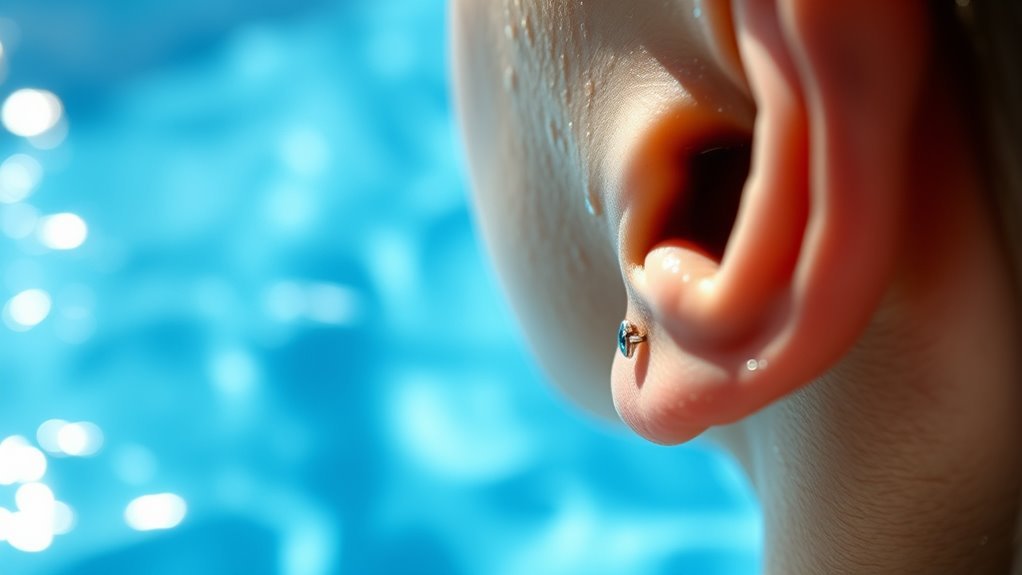
When you swim with fresh piercings, you expose the healing tissue to bacteria and chemicals that can cause infection or irritation. Pools, lakes, and oceans often harbor harmful microbes that can enter your piercing, leading to redness, swelling, and pain.
Chlorine and other pool chemicals might also aggravate sensitive skin, slowing down the healing process. Additionally, water pressure and movement can disrupt the piercing site, increasing the risk of trauma or delayed healing.
You might notice discharge or crusting, signs that your body is fighting an infection. To protect your new piercing, it’s best to avoid swimming until it’s fully healed.
Taking these precautions helps guarantee your piercing heals cleanly, preventing complications that could require medical attention or removal.
How Different Water Types Affect Piercings
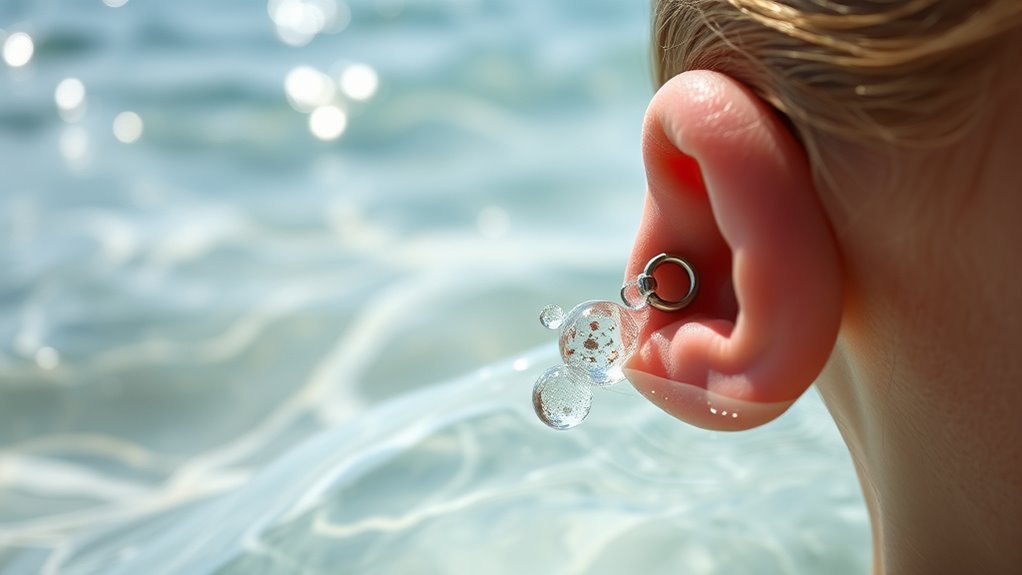
Understanding how different water types impact your new piercing can help you make safer choices about when and where to swim. Freshwater, like lakes and rivers, can carry bacteria and parasites that may infect your piercing. Though it might seem cleaner, it’s still risky during the initial healing stage.
Ocean water contains salt, which has mild antibacterial properties, but it also holds bacteria and pollutants that can irritate your piercing.
Chlorinated water in pools is designed to kill germs, yet chlorine can dry out your skin and delay healing.
Hot tubs and spas often harbor bacteria due to warm temperatures, increasing infection risk.
Knowing these differences helps you avoid exposing your new piercing to harmful environments before it’s fully healed.
Protective Measures for Swimming With New Piercings
If you want to swim with new piercings, you need to take specific protective measures to minimize infection risk and promote healing. Here’s how to protect your piercing effectively:
- Cover the Piercing: Use a waterproof bandage or specialized piercing cover to shield the area from water and bacteria.
- Limit Swimming Time: Keep your swim sessions short to reduce prolonged exposure to water, which can irritate and slow healing.
- Clean Immediately After: Rinse your piercing with sterile saline solution right after swimming to remove any contaminants.
Signs of Infection and When to Seek Help
Taking steps to protect your new piercing while swimming helps reduce the risk of infection, but you still need to watch for warning signs.
If your piercing becomes increasingly red, swollen, or painful, these could be signs of infection.
Pus or unusual discharge, especially if it’s yellow or green, is another clear indicator.
You might also notice warmth around the area or a fever, signaling your body is fighting an infection.
Warmth around the piercing or a fever may indicate your body is combating an infection.
If you experience any of these symptoms, don’t ignore them. Contact a healthcare professional promptly to get appropriate treatment.
Early intervention can prevent complications and promote faster healing.
Tips for Proper Piercing Aftercare Post-Swim
After swimming, you should rinse your piercing gently with clean, fresh water to remove any chlorine, salt, or bacteria that might irritate the area. Proper aftercare is essential to avoid infections and promote healing.
Here are three vital tips to follow post-swim:
- Clean Thoroughly: Use a saline solution or mild, fragrance-free soap to clean around the piercing twice daily. Avoid harsh chemicals that can damage the skin.
- Dry Carefully: Pat the area dry with a clean, soft towel or let it air dry. Avoid using shared towels to prevent bacteria transfer.
- Avoid Touching: Keep your hands away from the piercing unless cleaning, and never twist or turn the jewelry while it’s healing.
Frequently Asked Questions
Can Certain Jewelry Materials Affect Healing in Water?
Yes, certain jewelry materials like surgical steel or titanium reduce irritation and infection risk in water, helping your piercing heal better.
Avoid cheap metals that can cause allergic reactions or tarnish, which might slow the healing process.
How Long Should I Wait Before Changing My Piercing Jewelry?
Think of your piercing as a delicate seed. Wait at least 6 to 8 weeks before changing jewelry. This lets it root strong, preventing irritation or infection while your body gently weaves new skin around the metal.
Are There Specific Piercings More Prone to Complications From Swimming?
Yes, cartilage piercings like ears and nose are more prone to complications from swimming due to slower healing and risk of infection.
You should avoid pools, lakes, or oceans until fully healed to prevent irritation or infection.
Can Swimming Improve or Worsen Piercing Swelling?
Like adding fuel to a fire, swimming can worsen your piercing swelling by exposing it to bacteria and irritants. You’ll want to avoid it during healing to keep swelling down and promote faster recovery.
Is It Safe to Use Topical Ointments After Swimming?
Yes, you can use topical ointments after swimming, but make sure your skin is dry first. Applying ointments on wet skin can trap moisture and bacteria, increasing infection risk.
Always clean and dry before treatment.
Conclusion
Think of your new piercing like a tiny garden seed—if you rush swimming too soon, it’s like flooding the soil before roots have formed. One study found that nearly 40% of fresh piercings exposed to water led to infections, reminding you that patience is key.
Protect your piercing by waiting and using barriers. With care, your “garden” will bloom beautifully, turning your healing journey into a success story worth sharing. Remember, swimming with new piercings can increase the risk of infection, so it’s best to avoid it until fully healed.