10 Steps to Waterproof a Wound for Swimming
To waterproof a wound for swimming, start by gently cleaning it with water and removing any debris. Applying an antiseptic ointment is essential to prevent infection and promote healing. Next, cover the wound with a waterproof dressing that fully seals the area.
Secure the dressing tightly using medical tape to ensure it stays in place during swimming. For added protection, consider applying a liquid bandage over the dressing. Before entering the water, test the seal to confirm it is watertight.
Avoid prolonged submersion to reduce the risk of water exposure. If the dressing becomes wet, change it promptly to keep the wound dry. Monitor your wound’s healing closely and maintain proper care throughout the process.
There’s more to know about keeping your wound safe in water, so follow these steps carefully for effective waterproofing when swimming.
Clean the Wound Thoroughly
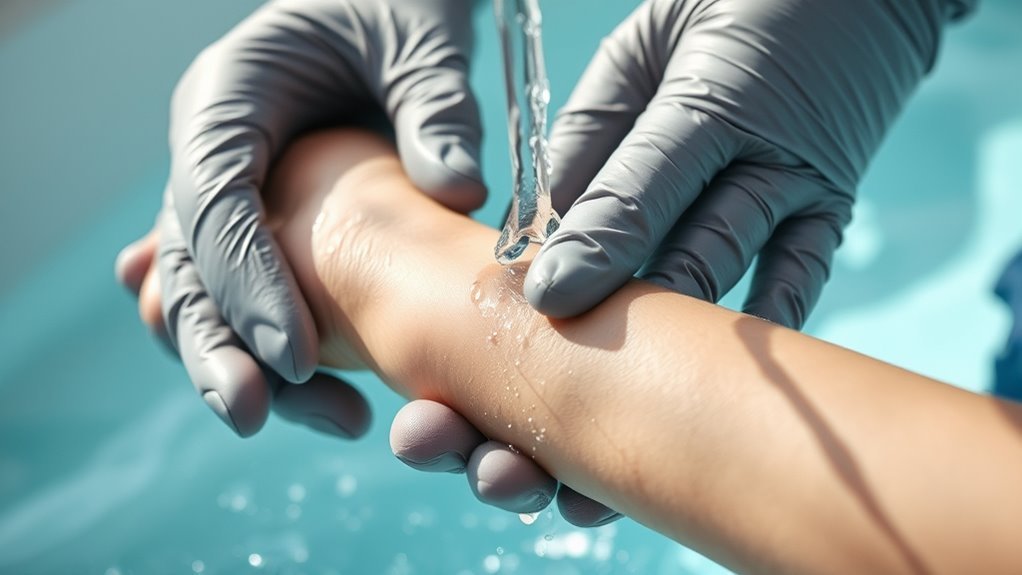
How should you clean a wound to guarantee proper healing? Start by washing your hands thoroughly to avoid introducing bacteria. Rinse the wound gently under cool, running water to remove dirt and debris.
Avoid using harsh soaps or scrubbing, as this can irritate the tissue and delay healing. If particles remain, use sterilized tweezers to carefully pick them out.
Pat the area dry with a clean towel or gauze. Don’t rub, since that can reopen the wound.
Keeping the wound clean is essential before you move on to waterproofing it for swimming. Proper cleaning reduces the risk of infection and sets the stage for effective protection.
Taking these steps ensures the wound heals well while you stay active in the water.
Apply an Antiseptic or Antibiotic Ointment
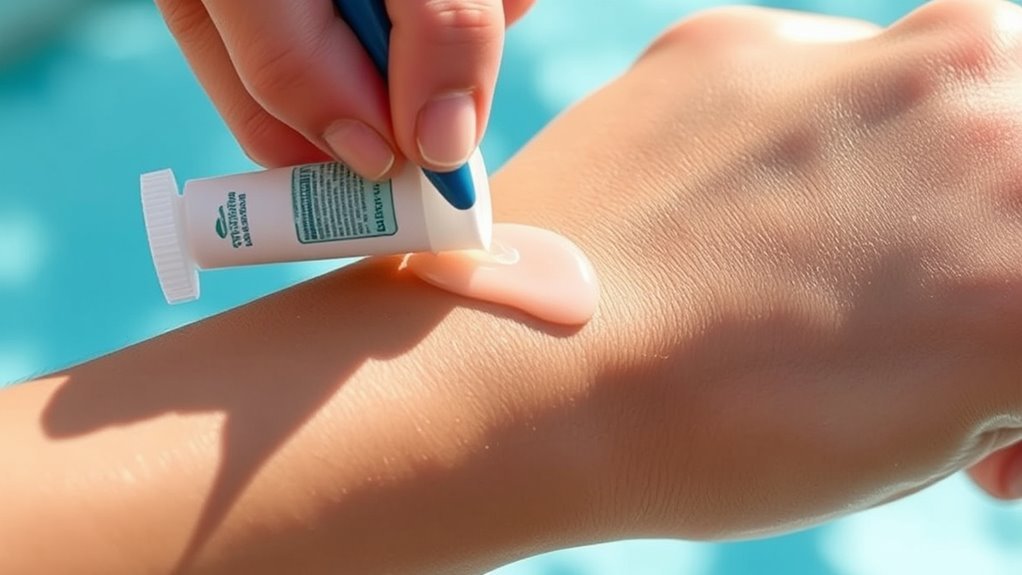
Once the wound is clean and dry, the next step is to apply an antiseptic or antibiotic ointment. This helps reduce the risk of infection by killing or inhibiting bacteria around the wound.
Use a clean finger or a sterile cotton swab to gently spread a thin layer over the entire affected area. Avoid applying too much ointment, as excess moisture can prevent proper healing.
Make sure the ointment you choose is suitable for your wound type and check for any allergies beforehand. Applying this ointment not only protects the wound but also creates a barrier that helps keep out dirt and germs when you swim.
Taking this step seriously is key in promoting faster healing and preventing complications.
Use a Waterproof Dressing or Bandage
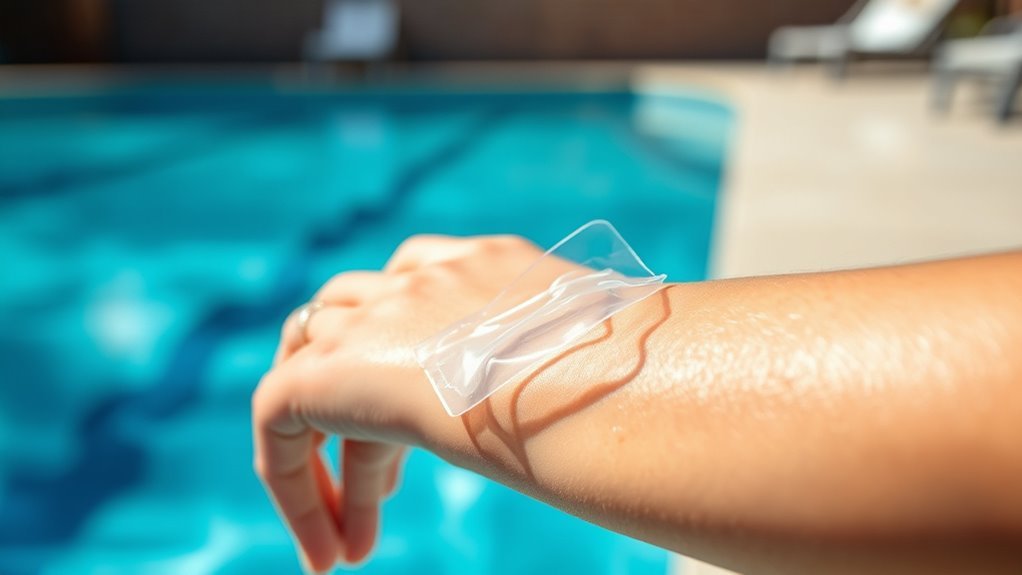
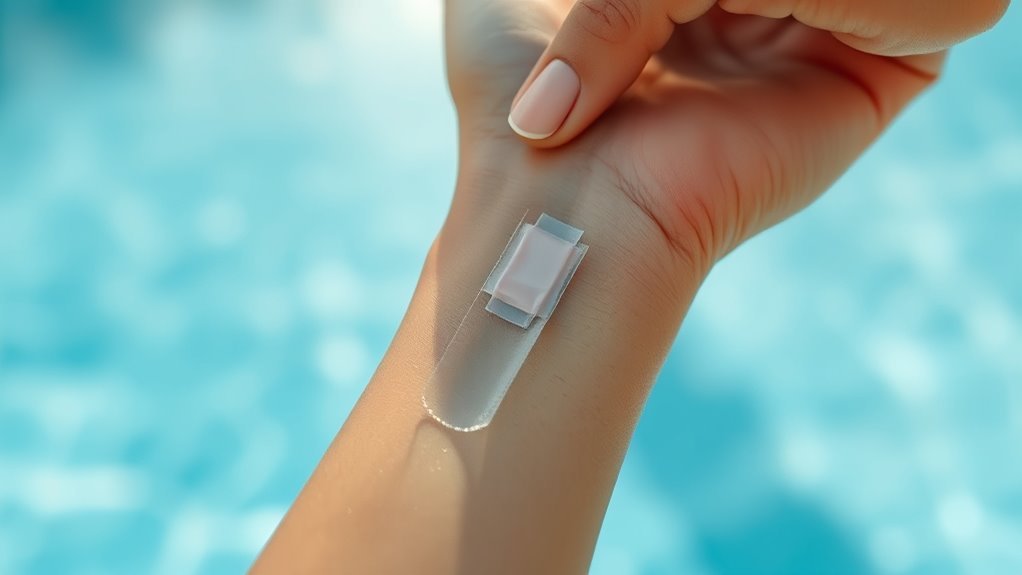
Although keeping a wound clean is crucial, protecting it from water exposure during activities like swimming or showering is equally important. You should use a waterproof dressing or bandage designed specifically to keep moisture out.
These dressings create a tight seal over the wound, preventing water from reaching the injury and reducing infection risk.
Waterproof dressings form a secure barrier, keeping wounds dry and lowering the chance of infection.
When selecting one, ensure it’s the right size to fully cover the wound and overlap the surrounding skin.
Gently press the edges down to maintain a secure fit.
Waterproof bandages come in various forms, including adhesive strips and transparent films, so pick what feels comfortable and suits your wound type.
Using a proper waterproof dressing lets you stay active while keeping your wound safe and dry.
Secure the Dressing With Medical Tape
To keep your waterproof dressing firmly in place, you’ll need to secure it with medical tape. Start by cutting strips of medical tape long enough to wrap around the edges of the dressing without lifting it.
Gently press the tape along the border, ensuring it adheres smoothly to both the skin and the dressing, creating a tight seal. Avoid stretching the tape too much, as this can cause discomfort or gaps where water could seep in.
If the wound is on a joint or area that moves a lot, use extra strips to reinforce the edges. Make sure the tape is water-resistant and hypoallergenic to reduce skin irritation.
Properly taping your dressing helps maintain a waterproof barrier, protecting your wound while you swim.
Consider Using a Liquid Bandage for Extra Protection
If you want to enhance your wound’s waterproof protection, applying a liquid bandage can be a smart choice. This clear, flexible coating seals the wound, creating a barrier that repels water and keeps out dirt and bacteria.
You simply apply it over a clean, dry wound or existing dressing. It dries quickly and forms a tough layer that moves with your skin, reducing the risk of the bandage peeling off during swimming.
Liquid bandages are especially useful for small cuts and abrasions where traditional dressings mightn’t stick well. Just make sure you follow the instructions carefully and avoid applying it to deep or infected wounds.
Using a liquid bandage can give you extra confidence to enjoy the water while keeping your wound protected.
Cover the Area With a Waterproof Sleeve or Wrap
When you need extra protection beyond a liquid bandage, covering the wound with a waterproof sleeve or wrap keeps moisture and contaminants out effectively. First, make sure the skin around your wound is dry to help the wrap adhere properly.
Choose a waterproof sleeve or a specialized adhesive wrap designed for water exposure. Carefully slide the sleeve over the wound or wrap the adhesive securely, making sure all edges seal tightly against your skin. Avoid wrinkles or gaps that could let water in.
If you’re using a wrap, overlap it sufficiently to create a solid barrier. This method adds a durable layer of defense, letting you swim confidently without worrying about infection or irritation.
Test the Seal Before Entering the Water
Before you jump into the water, you’ll want to check that the waterproof seal around your wound is completely secure. Gently press around the edges of your waterproof sleeve or wrap to ensure it’s firmly adhered to your skin with no gaps or air bubbles.
You can also lightly splash a little water on the covering to see if any moisture seeps through. If you notice dampness or loosening, reapply the seal or wrap until it’s tight and dry. Testing the seal helps prevent water from entering and risking infection.
Take your time with this step. It’s better to double-check than to swim with a compromised barrier.
Once you’re confident the seal is solid, you’re ready to enjoy the water safely.
Avoid Submerging the Wound for Extended Periods
Although your wound might be well-protected, you shouldn’t keep it submerged for long periods. Prolonged exposure to water increases the risk of moisture seeping through the dressing, which can slow healing and raise infection chances.
Avoid long water exposure on wounds to prevent moisture buildup that hinders healing and increases infection risk.
Even waterproof coverings have limits, so it’s best to limit your swim sessions. When you do swim, keep your time in the water short and avoid activities that cause excessive movement or pressure on the wound.
After swimming, dry the area gently and inspect the dressing for any signs of loosening or moisture.
Keeping submersion brief helps maintain the dressing’s integrity and supports faster recovery.
Change the Dressing Immediately if It Becomes Wet
Even with careful limits on water exposure, dressings can sometimes get wet. When this happens, you should change the dressing immediately to protect the wound and prevent infection. Wet dressings lose their barrier function, allowing bacteria and moisture to reach the wound.
Here’s what you need to do:
- Remove the wet dressing gently to avoid reopening the wound.
- Clean the wound area again with a sterile solution before applying a new dressing.
- Use a waterproof bandage or cover to ensure better protection during swimming.
- Dispose of the wet dressing properly to avoid contamination.
Monitor the Wound for Signs of Infection
While waterproofing your wound helps protect it, you still need to monitor it closely for signs of infection. Check the wound daily for increased redness, swelling, warmth, or pain, which could indicate an infection is developing.
Watch for any pus or unusual discharge, and note if the wound starts to smell bad. Also, keep an eye on your overall health. If you develop a fever or feel unwell, these could be signs that the infection is spreading.
If you notice any of these symptoms, remove the waterproof covering carefully, clean the wound, and contact a healthcare professional promptly. Early detection and treatment of infection are essential to prevent complications and guarantee your wound heals properly.
Don’t ignore any changes—stay vigilant.
Frequently Asked Questions
Can I Swim With Stitches or Staples in My Wound?
You shouldn’t swim with stitches or staples until your doctor says it’s safe.
Water can cause infection or slow healing, so protect your wound and wait until it’s fully closed before swimming again.
How Long Should I Wait After Getting a Wound Before Swimming?
Imagine a fragile flower just starting to bloom—you should wait at least two weeks after getting a wound before swimming.
This gives your skin time to seal and keeps water from causing infection or irritation.
Are There Specific Waterproof Bandages Recommended for Swimming?
Yes, you should use waterproof bandages like Nexcare or Band-Aid Water Block. These seal tightly around your wound, keeping water out while swimming, so you can protect your injury and enjoy the water safely without worries.
Can Swimming in Saltwater Help or Harm Wound Healing?
Think of saltwater as a tricky gardener—it can sometimes clean your wound but often irritates and slows healing.
What Should I Do if My Wound Becomes Itchy After Swimming?
If your wound gets itchy after swimming, gently rinse it with clean water, pat it dry, and apply a soothing, hypoallergenic moisturizer or antibiotic ointment.
Avoid scratching to prevent infection and consult a healthcare provider if irritation persists.
Conclusion
Now that you know how to waterproof your wound for swimming, don’t let it rain on your parade. By cleaning it well, sealing it tightly, and keeping an eye on any changes, you’ll keep water—and infections—at bay.
Remember, a little extra care goes a long way, so test your bandage and change it if it gets wet. Follow these steps, and you’ll be back in the water without a hitch in no time.
Waterproofing your wound properly is essential for safe swimming and quick healing. With these tips, you can confidently enjoy your swim while protecting your wound from water exposure and potential infection.