When Can a Baby Go Swimming Safely
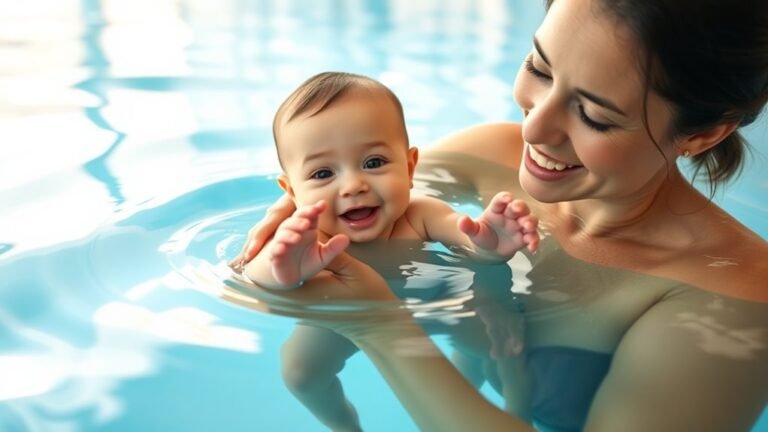
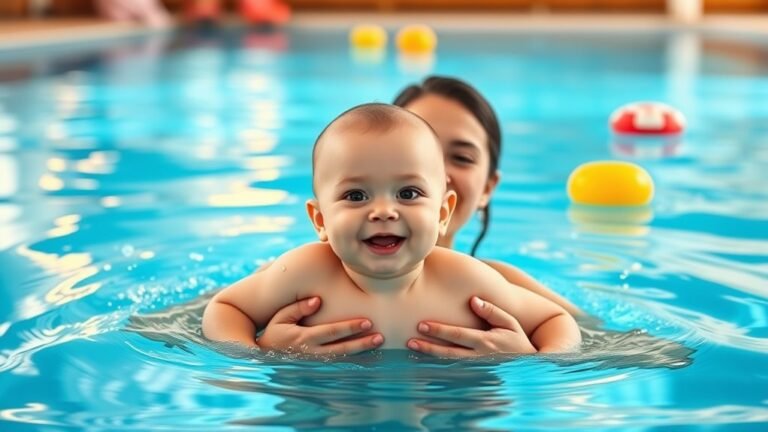
You can start taking your baby swimming safely when they’re at least six months old, as their immune system and head control are more developed by then. Baby swimming at this age reduces health risks and ensures better safety.
Make sure your baby is healthy, free from illness, and the water is warm and clean. Always supervise closely, keep sessions short, and use swim diapers.
Following these steps helps create a safe, enjoyable experience. If you want to explore more tips and benefits for baby swimming, keep going.
Recommended Age to Start Baby Swimming
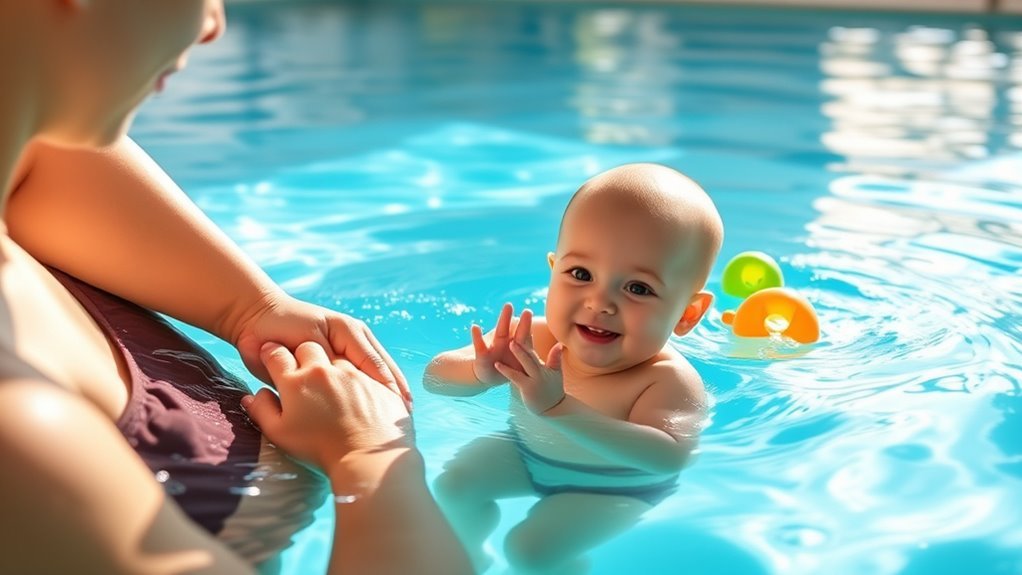
Although every baby develops at their own pace, experts generally recommend waiting until your little one is at least six months old before introducing them to swimming.
Experts suggest waiting until babies are six months old before starting swimming to ensure safety and readiness.
At this age, your baby’s immune system is stronger, and they’ve better head and neck control, which is vital for safety in the water.
Starting swimming too early may expose your baby to infections or cold stress.
When you introduce swimming, choose warm water and keep sessions short to guarantee comfort.
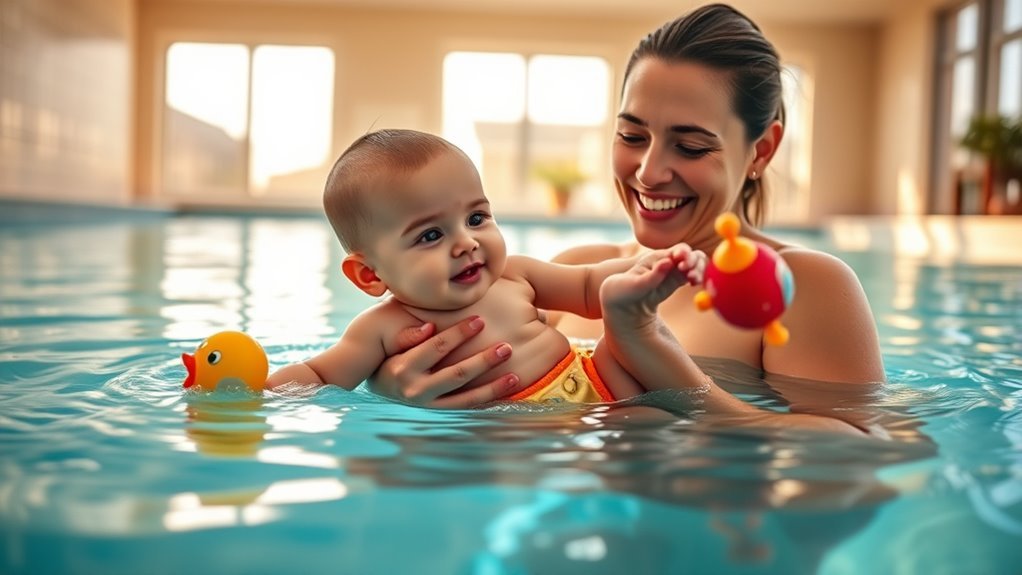
Your baby will benefit from gentle water experiences that promote bonding and motor skills.
Remember, every baby is unique, so watch for signs of readiness and comfort.
Waiting until six months helps you provide a safe, enjoyable start to their swimming journey.
Health Considerations Before Swimming

Before you take your baby swimming, make sure they’re in good health, as water activities can sometimes expose them to germs or irritants. Check for any signs of illness, such as fever or respiratory issues, which could worsen in water.
Also, verify your baby’s skin is free from cuts or rashes, as these can become infected.
Consult your pediatrician if your child has a history of ear infections or allergies before swimming.
Keep these health tips in mind:
- Avoid swimming if your baby has a cold or congestion.
- Ensure vaccinations are up to date to protect against infections.
- Use waterproof bandages for any minor wounds.
- Rinse your baby thoroughly with fresh water after swimming.
- Monitor for signs of irritation or discomfort during and after swimming.
Choosing the Right Swimming Environment
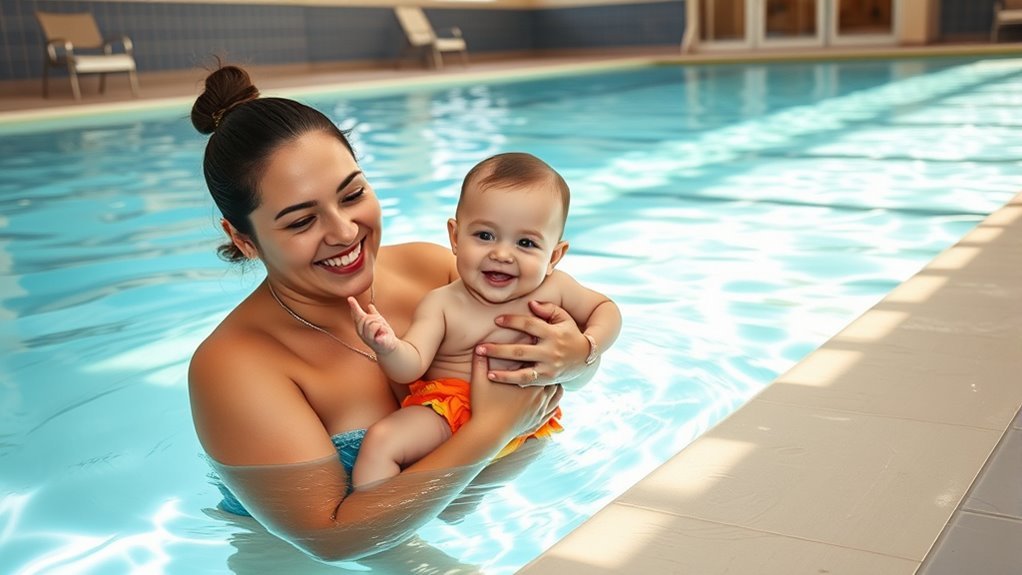
When selecting a swimming environment for your baby, prioritize safety, cleanliness, and comfort to guarantee a positive experience. Choose a pool that’s specifically designed for young children or has a shallow, warm area suitable for infants.
Make sure the water temperature is comfortable, ideally between 32-34°C (89-93°F), to prevent your baby from getting cold.
Check that the facility maintains high hygiene standards with regular water testing and cleaning.
Avoid crowded pools to reduce exposure to germs and ensure you have enough space to move freely.
If opting for natural bodies of water, pick calm, clean spots away from strong currents or pollution.
Essential Safety Precautions for Baby Swimming
Since babies are especially vulnerable in water, you must take specific safety precautions to protect them during swimming. Always stay within arm’s reach and never leave your baby unattended. Make certain the water temperature is warm enough, between 85-87°F (29-31°C), to prevent chills.
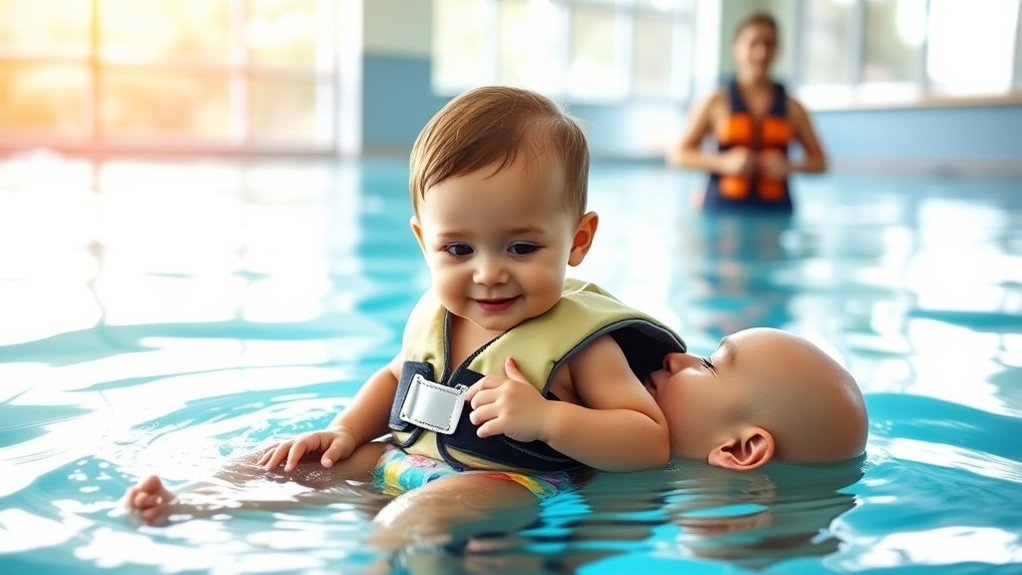
Use appropriate flotation devices designed for infants, but don’t rely on them solely for safety.
Follow these key precautions:
- Constant, close supervision at all times
- Maintain a warm pool environment to avoid hypothermia
- Use swim diapers to keep the water clean
- Avoid deep water and sudden submersion
- Keep swimming sessions short, around 10-15 minutes
Benefits of Swimming for Babies
Although swimming might seem like just a fun activity, it offers numerous developmental benefits for your baby. It helps strengthen their muscles and improve coordination, promoting overall physical growth.
Swimming also supports cardiovascular health by encouraging gentle, rhythmic movement. As your baby moves in water, their balance and motor skills develop more quickly.
Additionally, swimming can enhance cognitive development by stimulating the senses through water’s unique texture and resistance. It also boosts confidence and social skills when done in group settings.
Beyond physical gains, the bonding time you share during swimming nurtures emotional security. So, introducing your baby to swimming can support their growth in multiple ways, making it a valuable activity when practiced safely and appropriately.
Tips for a Positive First Swimming Experience
Enjoying the many benefits swimming offers starts with a positive first experience for your baby. To make that happen, you need to create a safe and fun environment that encourages comfort and trust in the water.
Here are some tips to guide you:
Choose a warm pool to keep your baby cozy and prevent chills. Keep sessions short, around 10-15 minutes, to avoid overstimulation.
Hold your baby securely and maintain eye contact to build confidence. Use gentle, playful movements and songs to make the experience enjoyable.
Always watch your baby’s reactions and never force them if they seem uneasy.
Frequently Asked Questions
How Often Should a Baby Swim Each Week?
You should swim with your baby 1 to 2 times a week to build comfort and confidence. Keep sessions short, around 10-20 minutes, and always watch closely to guarantee their safety and enjoyment during each visit.
What Type of Swimwear Is Best for Babies?
You’ll want to pick swimwear that’s like a gentle hug—soft, snug, and quick-drying.
Look for UV-protective fabrics and waterproof diapers to keep your little one comfy and safe during water adventures.
Can Babies Catch a Cold From Swimming?
Babies can’t catch a cold directly from swimming, but cold water or sudden temperature changes might weaken their immune system, making them more susceptible.
Should Babies Use Swim Diapers Every Time?
Better safe than sorry—you should use swim diapers every time your baby hits the pool. They keep things clean and prevent accidents, so you won’t have to clean up a bigger mess later on.
How to Handle a Baby’s Fear of Water?
You can handle your baby’s fear of water by introducing it gradually, staying calm, and using soothing tones. Play gentle games, hold them securely, and celebrate small successes to build their confidence and trust in the water.
Conclusion
You might wonder, “When is the perfect time to take my baby swimming?” The answer depends on health, environment, and safety, but starting around six months is often ideal.
Remember, every splash is a step toward confidence and fun. By choosing the right pool and following precautions, you’re not just introducing your baby to water—you’re opening a world of joy and growth.
So, plunge in and watch those little faces light up! Knowing when a baby can go swimming safely ensures a positive experience filled with smiles and development.