When Should You Start Swimming Lessons Step by Step
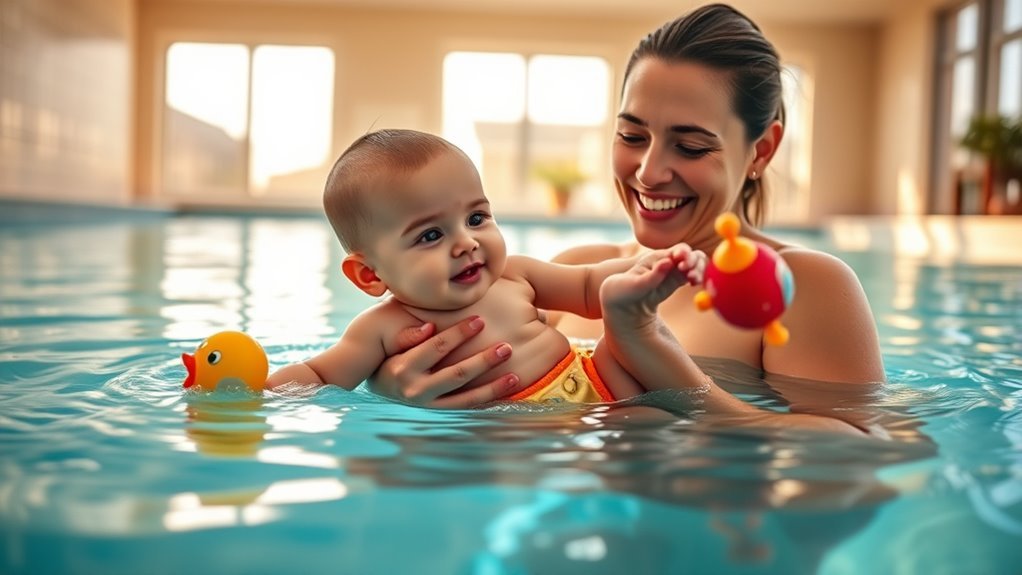
You can start swimming lessons by gently introducing your infant to water through splashing and floating to build comfort and confidence. When should you start swimming lessons? Formal swimming lessons usually begin between ages one and four, depending on your child’s readiness.
Before classes, engage toddlers with fun water activities to reduce fear and create positive associations. As they grow, focus on basic skills like kicking and blowing bubbles to build confidence. Keep going, and you’ll discover how to smoothly guide them toward advanced techniques and water safety.
Understanding Water Familiarity for Infants
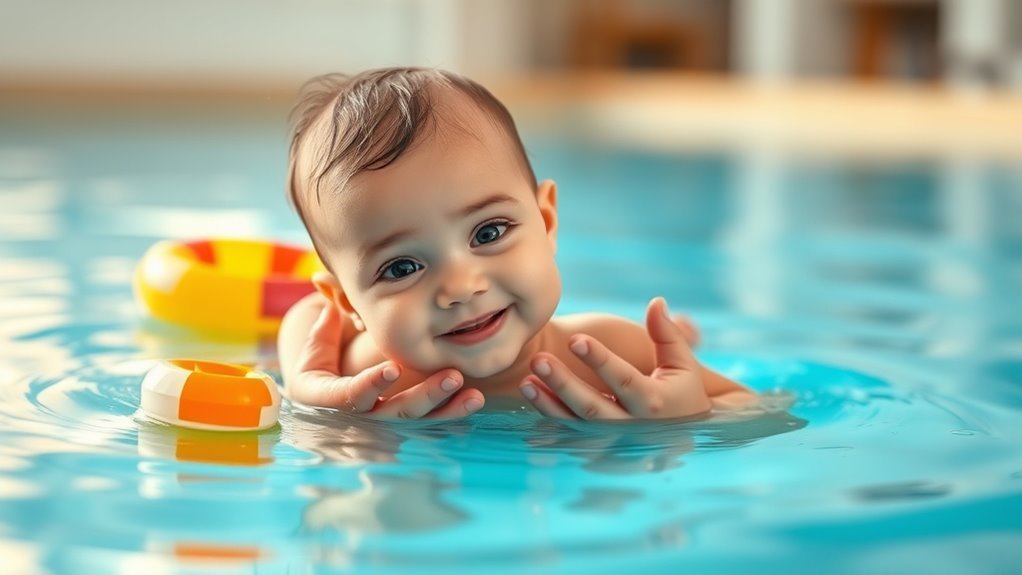
Although infants can’t swim yet, introducing them to water early helps build comfort and confidence. When you gently hold your baby in the water, they start getting used to the sensation, temperature, and sound. This familiarity reduces fear later on, making formal lessons smoother.
Introducing infants to water early builds their comfort, confidence, and eases future swim lessons.
You don’t need to teach them to swim right away; just focus on positive experiences. Splashing, floating with support, or blowing bubbles are simple ways to engage your infant.
Keep sessions short and always prioritize safety by staying close and attentive.
The goal is to create a fun, relaxed environment so your child feels secure around water. This early exposure lays the foundation for swimming skills and a lifelong love of water activities.
Ideal Age to Begin Formal Swimming Lessons
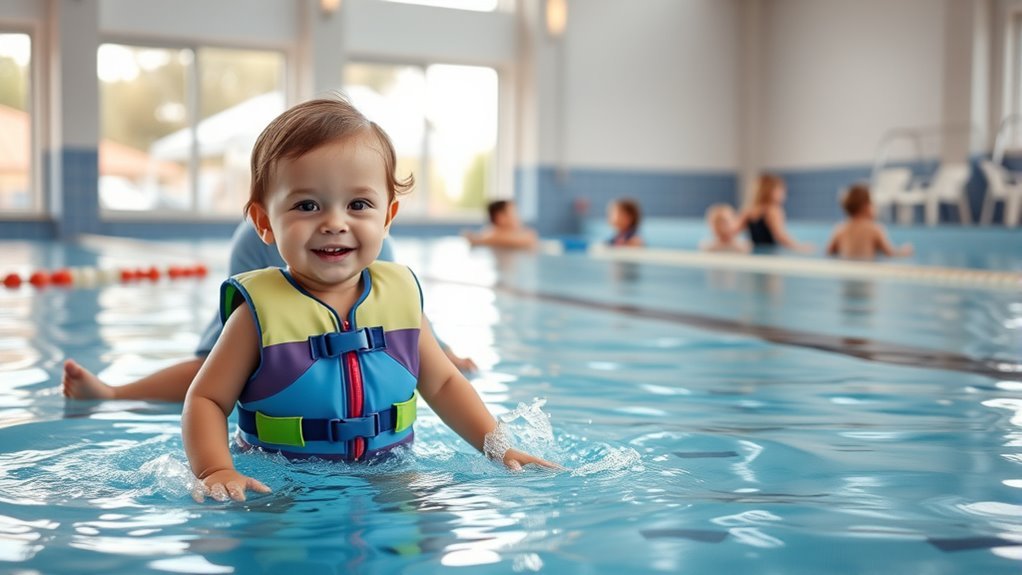
While infants benefit from early water exposure, most experts agree that starting formal swimming lessons between ages 1 and 4 offers the best balance of safety and skill development.
At this stage, your child’s motor skills and cognitive abilities have improved enough to follow simple instructions, making lessons more effective.
Additionally, their immune systems are stronger, reducing the risk of infections common in public pools.
Starting lessons too early mightn’t yield significant progress, while waiting too long could delay essential water safety skills.
Keep in mind, every child develops differently, so observe your toddler’s readiness closely.
Preparing Toddlers for Swimming Classes
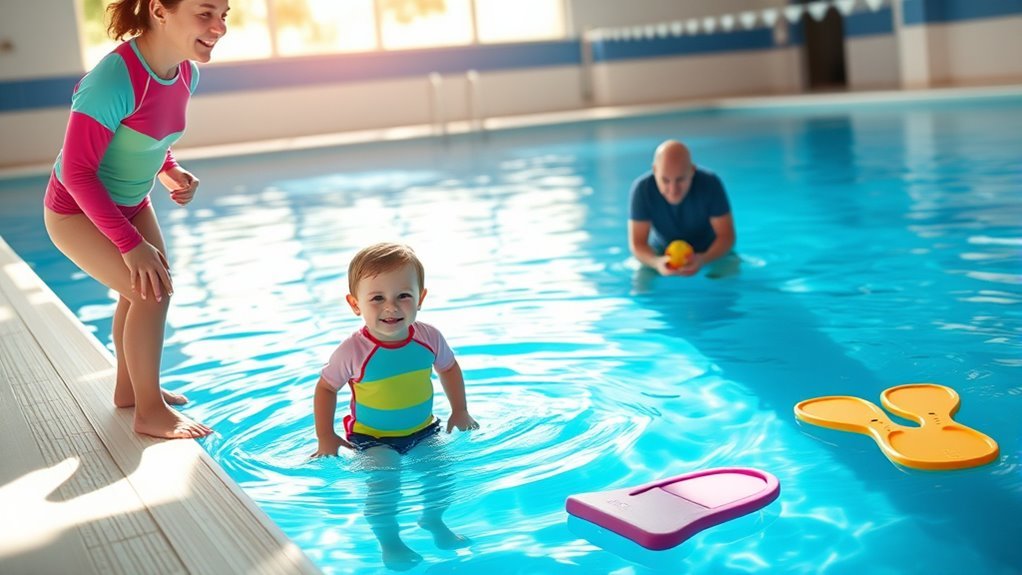
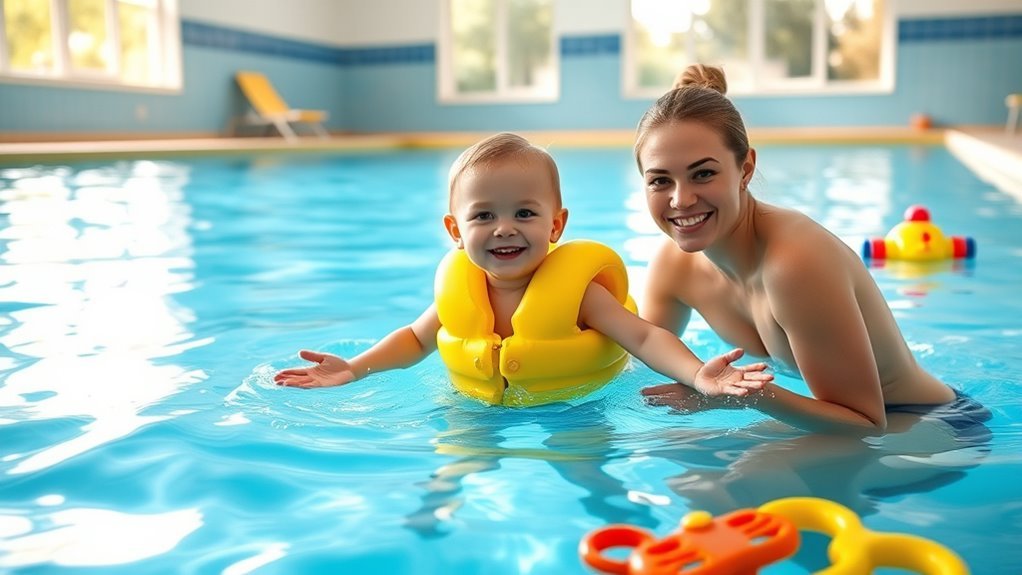
Before your toddler’s first swimming lesson, you should help them get comfortable with water by introducing fun, gentle activities at home or in shallow pools. This early exposure reduces fear and builds a positive association with water. Start with simple, playful steps that make your child feel safe and excited.
Help your toddler feel safe and excited about water with fun, gentle activities before their first swimming lesson.
Try these activities to prepare your toddler:
- Splash water together using cups or small toys.
- Practice blowing bubbles in the water.
- Encourage kicking legs while holding onto the pool edge.
- Read picture books about swimming and water safety.
- Use floating toys to engage your toddler in gentle water play.
Building Confidence in Preschool Swimmers
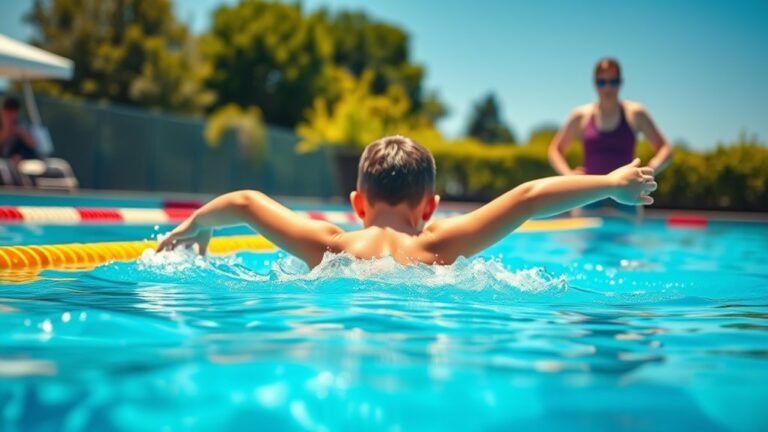
Once your preschooler feels familiar with the water, you can focus on building their confidence by encouraging independence and celebrating small achievements during swimming lessons.
Let them try simple tasks on their own, like blowing bubbles or kicking, and praise their efforts enthusiastically.
Avoid rushing or pressuring them; instead, create a positive, fun atmosphere where they feel safe to explore.
Use encouraging words and celebrate progress, no matter how small, to boost their self-esteem.
Watching you stay calm and supportive helps them trust their abilities.
Remember, confidence grows gradually, so be patient and consistent.
Teaching Basic Swimming Techniques to Early Elementary Kids
Building confidence in the water sets the stage for teaching your early elementary child basic swimming techniques. At this age, kids are ready to learn foundational skills that promote safety and enjoyment.
Focus on simple, clear instructions and positive reinforcement to keep them motivated.
Here are five key techniques to teach:
- Floating on back and front to build comfort in the water
- Blowing bubbles to control breathing and reduce fear
- Kicking from the hips with straight legs to propel forward
- Using arm strokes like dog paddle to move efficiently
- Entering and exiting the pool safely to develop good habits
Transitioning to Advanced Skills and Water Safety Awareness
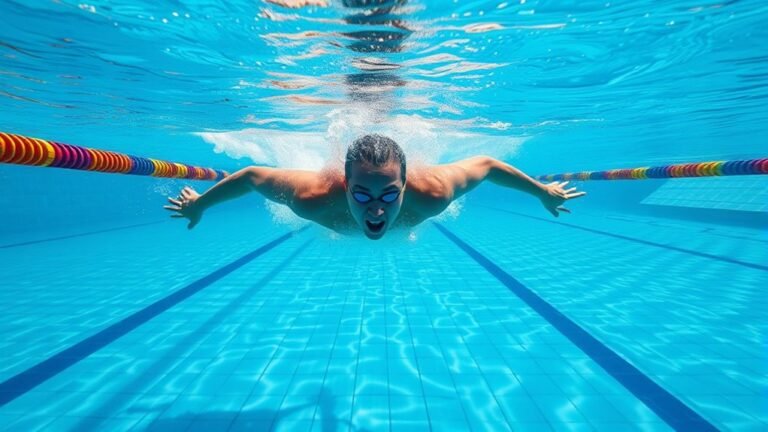
As your child masters basic swimming skills, you’ll want to introduce advanced techniques and emphasize water safety awareness to keep them confident and secure in the water. Focus on refining strokes like freestyle, backstroke, and breaststroke while teaching breath control and endurance.
Encourage practice in deeper water under supervision to build comfort and strength.
Simultaneously, stress the importance of water safety rules such as never swimming alone, recognizing pool boundaries, and understanding how to respond in emergencies.
Incorporate skills such as treading water, floating, and safe entry and exit from pools.
Frequently Asked Questions
What Swimming Gear Is Best for Beginners?
You’ll want a comfortable swimsuit, goggles that fit well to protect your eyes, and a swim cap to keep hair out of your face.
Kickboards and swim fins can help you build technique and confidence in the water.
How to Choose a Qualified Swim Instructor?
You should choose a qualified swim instructor by checking their certifications, experience, and teaching style.
Don’t hesitate to ask for references or observe a class to guarantee they create a safe, supportive learning environment for you.
Are Group Lessons or Private Lessons More Effective?
Think of learning to swim like tuning a guitar. Private lessons offer personalized tuning, so you progress faster.
Group lessons feel like band practice—fun but less focused. You’ll improve quicker with private sessions.
How Often Should Swim Lessons Be Scheduled?
You should schedule swim lessons at least twice a week for steady progress. Consistency helps build skills and confidence, but avoid overdoing it to prevent fatigue.
Adjust frequency based on your goals and comfort level.
What Are the Signs of a Good Swim School Environment?
“Actions speak louder than words.” You’ll notice a good swim school has certified instructors, clean facilities, safety measures, positive feedback, and a fun, supportive atmosphere.
It’s a place where you feel confident your child’s learning and safety come first.
Conclusion
Think of your child’s swimming journey like planting a seed. Starting with gentle water familiarity is like watering the soil—essential but tender. As they grow, formal lessons act as sunlight, helping their confidence bloom.
With each new skill, they stretch their limbs like a young tree reaching higher. By nurturing them step by step, you’ll watch them transform into a strong swimmer, ready to navigate any current with ease and safety.
When deciding when to start swimming lessons, remember that beginning early with gradual exposure builds a solid foundation. This approach ensures your child gains water confidence and essential skills safely, setting them up for success in every stroke.