How Swimming Boosts Good Muscle Growth
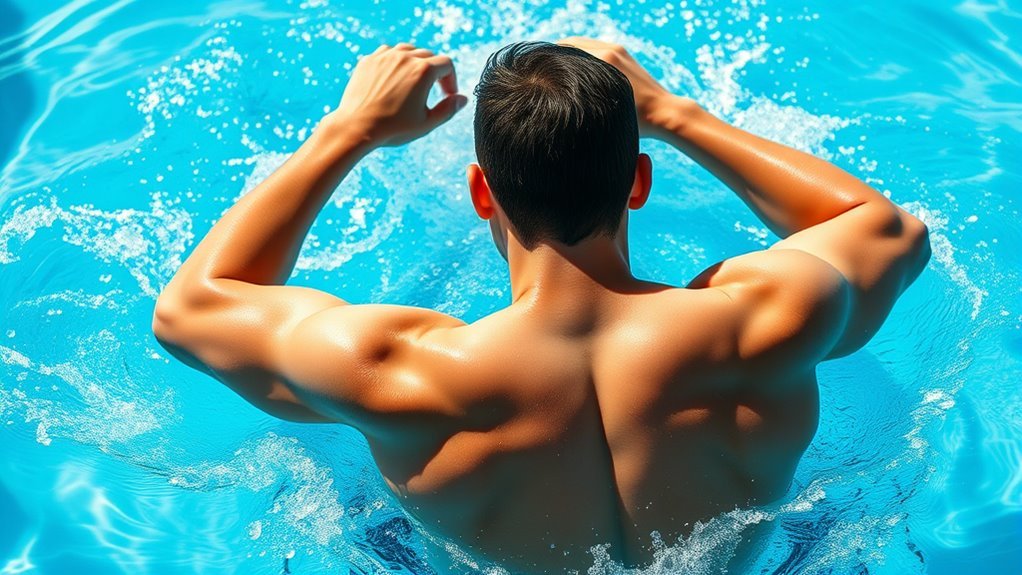
When you swim, water resistance provides a full-body workout that boosts good muscle growth. This natural resistance works your muscles in every direction, building strength without stressing your joints. Your arms, shoulders, core, and legs all engage together, enhancing muscle tone and endurance.
Swimming also targets slow-twitch muscle fibers, allowing you to sustain effort longer and recover faster. Incorporating techniques like paddles or interval sprints can further increase muscle activation.
For even greater muscle benefits, combine swimming with targeted strength exercises. Discover how to maximize those gains right here.
The Role of Water Resistance in Muscle Development
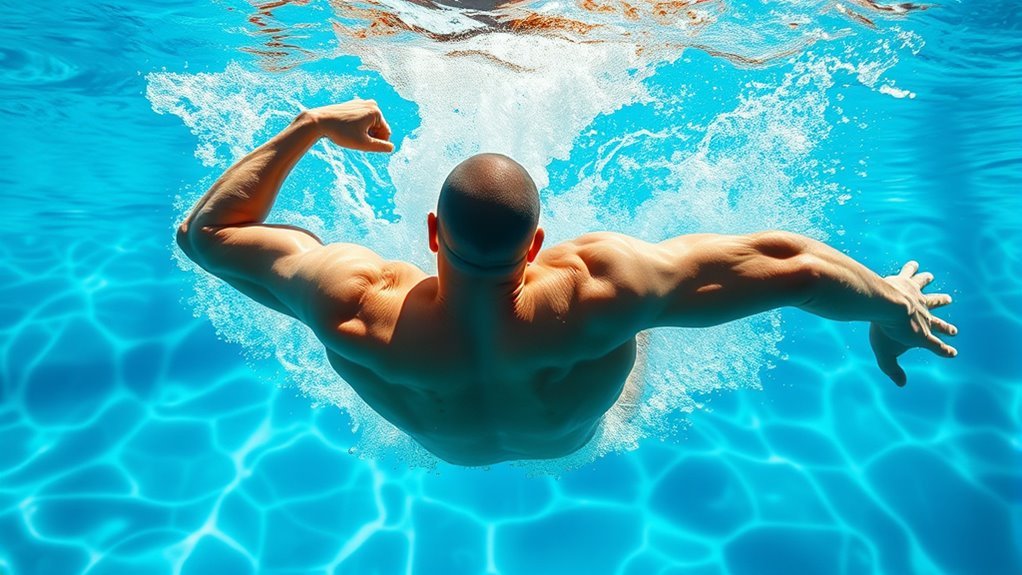
Because water provides consistent resistance in every direction, it forces your muscles to work harder during swimming. As you push and pull against this resistance, your muscles engage constantly, promoting strength and endurance.
Unlike lifting weights where resistance targets specific angles, water challenges your muscles through a full range of motion, improving functional strength. This resistance also helps you build muscle without putting excessive strain on your joints, reducing injury risk.
The continuous effort needed to move through water boosts muscle activation and calorie burn, supporting muscle growth and fat loss simultaneously. Every stroke demands coordination and power, encouraging balanced muscle development.
Key Muscle Groups Targeted by Swimming
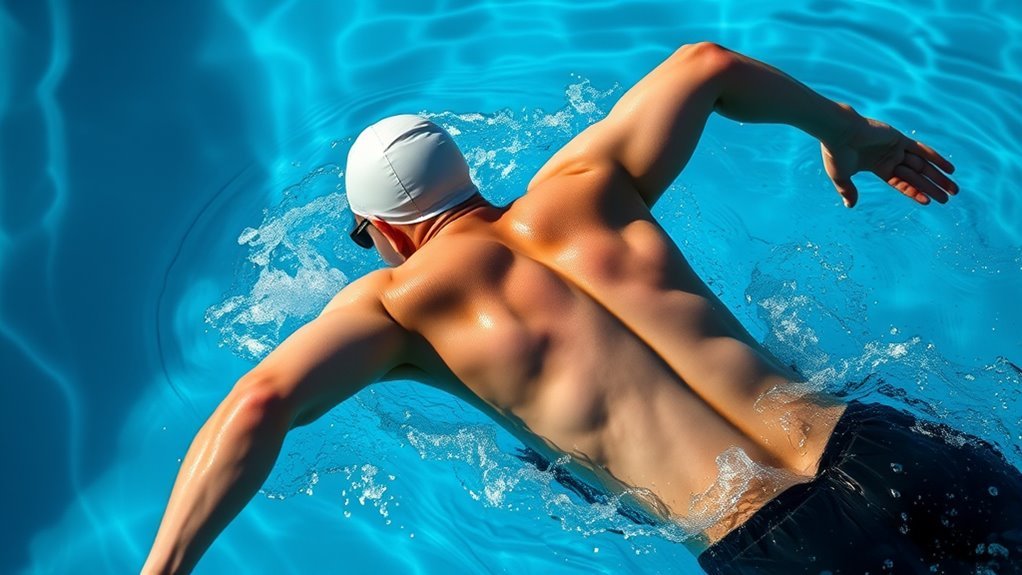
While swimming, you engage multiple key muscle groups that work together to propel you through the water. This full-body workout targets muscles you mightn’t use as intensely on land. The continuous resistance of water forces your muscles to work harder, promoting strength and growth.
Key muscle groups swimming targets include:
Latissimus dorsi: These large back muscles pull your arms down and back during strokes.
Deltoids: Your shoulder muscles stabilize and move your arms through each motion.
Core muscles: Your abdominals and lower back keep your body streamlined and balanced.
Quadriceps and hamstrings: These leg muscles power your kicks, driving forward momentum.
Enhancing Muscle Endurance Through Swimming
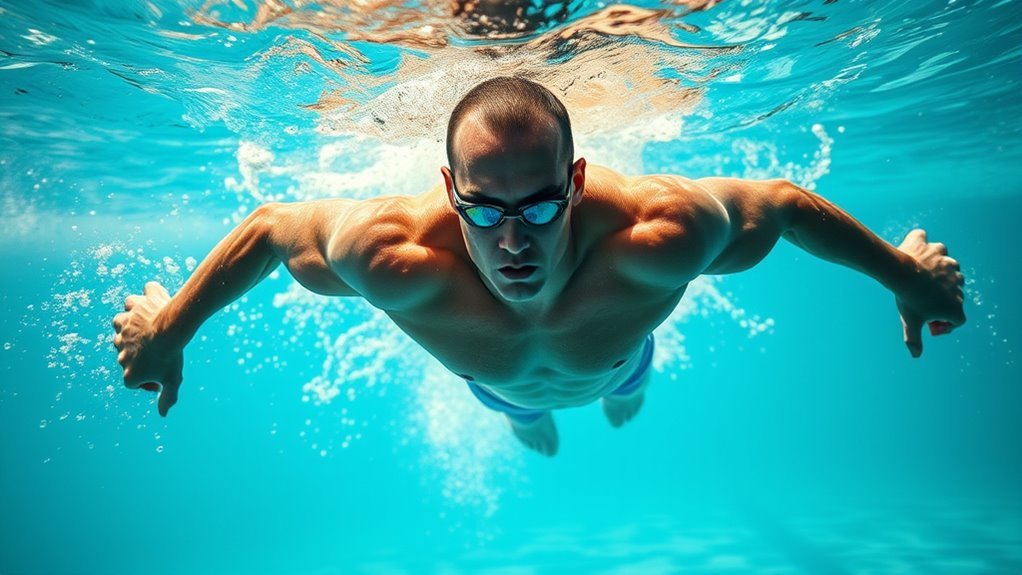
As you swim regularly, your muscles adapt to the continuous resistance water provides, boosting their endurance over time. Each stroke challenges your muscles to sustain effort longer than many land-based activities can.
This consistent resistance trains your slow-twitch muscle fibers, which are key for endurance. By engaging multiple muscle groups simultaneously, swimming enhances your overall stamina and delays fatigue.
You’ll notice improved oxygen delivery to muscles, which helps maintain performance during extended workouts.
Plus, the low-impact nature of swimming reduces joint strain, allowing you to train longer without injury.
To maximize endurance gains, vary your swim sessions with longer distances at a steady pace. This approach conditions your muscles to perform efficiently over time, improving both your endurance and overall muscle health.
Swimming Techniques That Maximize Muscle Growth
To maximize muscle growth during swimming, you need to focus on techniques that increase resistance and engage your muscles more intensely.
By refining your strokes and incorporating specific methods, you’ll stimulate muscle fibers effectively.
Try these techniques to get the most out of your swim workouts:
- Use paddles: They add water resistance, making your muscles work harder.
- Incorporate underwater dolphin kicks: This engages your core and leg muscles powerfully.
- Focus on slow, controlled strokes: This increases time under tension for muscle growth.
- Add interval training with sprints: It boosts muscle recruitment and strength.
Combining Swimming With Other Strength Training Exercises
Integrating swimming with targeted strength training exercises can amplify your muscle growth and overall fitness. While swimming builds endurance and tones muscles, strength training adds resistance, promoting muscle hypertrophy.
You can pair swimming sessions with weightlifting exercises like squats, deadlifts, and bench presses to target muscle groups swimming alone mightn’t fully engage.
Incorporate bodyweight exercises such as push-ups, pull-ups, and planks to enhance core stability and functional strength.
Balance your routine by alternating between swimming and strength workouts to allow muscles to recover and grow. This combination not only improves muscle definition but also boosts metabolic rate and reduces injury risk.
Frequently Asked Questions
How Often Should Beginners Swim to See Muscle Growth?
You should swim at least three times a week, focusing on consistent sessions lasting 30 to 45 minutes. This frequency helps your muscles adapt and grow, especially when combined with proper rest and nutrition.
Swimming regularly also improves cardiovascular health and endurance, which supports overall muscle development.
Remember to listen to your body and gradually increase intensity to avoid injury.
Does Swimming Help With Muscle Recovery After Workouts?
Absolutely, swimming helps with muscle recovery after workouts. You’ll feel the soothing effect as the water reduces inflammation and eases soreness, letting your muscles relax and repair faster.
Just plunge in and enjoy the benefits!
Can Swimming Reduce Muscle Soreness Compared to Other Exercises?
Yes, swimming can reduce muscle soreness more effectively than some exercises because the water’s buoyancy lessens joint impact while promoting circulation. This helps you recover faster and feel less pain after intense workouts or muscle strain.
The gentle resistance of water also aids in muscle relaxation and recovery. Compared to high-impact activities like running, swimming provides a low-impact alternative that minimizes stress on muscles and joints.
What Is the Best Diet to Support Muscle Growth From Swimming?
You should focus on a balanced diet rich in lean proteins, complex carbs, and healthy fats. Don’t forget plenty of fruits, vegetables, and hydration to fuel your muscles and help recovery after swimming workouts.
How Does Swimming Impact Muscle Growth in Older Adults?
Swimming helps you maintain and build muscle in older age by providing low-impact resistance exercise. It improves strength, flexibility, and endurance without stressing your joints, making it ideal for preserving muscle mass and overall fitness as you age.
Conclusion
By swimming regularly, you harness water resistance to build strong, toned muscles all over your body. Take Sarah, who combined swimming with weight training and saw her muscle endurance skyrocket within weeks.
You can target key muscle groups like your core, arms, and legs while boosting overall endurance.
So, plunge in and mix swimming with other exercises—it’s a fun, effective way to maximize your muscle growth and feel stronger every day. Boost good muscle growth by making swimming a regular part of your fitness routine.