
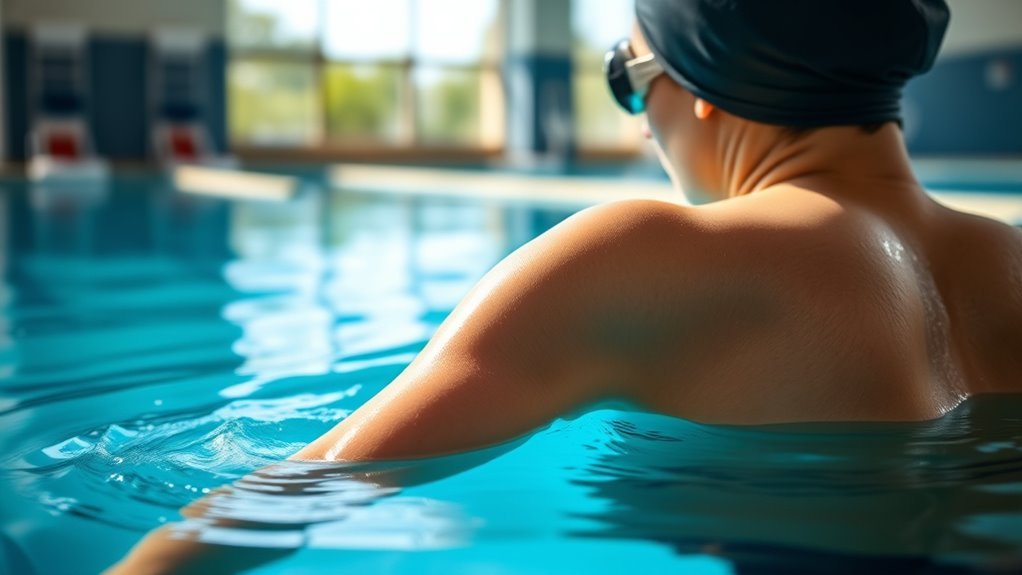
How to Use Swimming for Good Shoulder Bursitis Relief
If you have shoulder bursitis, swimming can be an excellent way to find relief and promote healing. It helps ease pain by keeping your shoulder moving gently without harsh impact.
Focus on gentle strokes like backstroke or breaststroke, which avoid excessive overhead motion and reduce strain. Always warm up before swimming to prepare your muscles and joints. Keep your movements smooth and controlled, and consider using tools like a kickboard to lessen arm effort.
Stop immediately if you feel any pain to prevent further injury. Incorporating swimming with other complementary exercises can support your recovery and improve shoulder function.
Understanding Shoulder Bursitis and Its Impact

How does shoulder bursitis affect your daily life? You might notice sharp pain when lifting your arm, making simple tasks like dressing or reaching for items frustrating.
Sharp shoulder pain can make everyday activities like dressing and reaching frustrating and difficult.
The inflammation in the bursa, a small fluid-filled sac cushioning your shoulder joints, causes stiffness and tenderness. You may find it hard to sleep on the affected side, disrupting your rest.
Over time, avoiding movement can weaken your shoulder muscles, limiting your range of motion and reducing strength. If you don’t address it, swelling and pain can worsen, impacting your work and hobbies.
Understanding these effects helps you recognize why managing shoulder bursitis early is indispensable to maintaining your daily comfort and function.
Benefits of Swimming for Shoulder Health

Although shoulder bursitis can limit your mobility, swimming offers a low-impact way to keep your shoulder joints active and promote healing. By moving your arms through water, you reduce stress on inflamed bursae while maintaining flexibility and strength.
Swimming also helps increase blood flow, which encourages tissue repair and reduces stiffness.
Here are key benefits swimming provides for your shoulder health:
- Improves joint range of motion without harsh impact
- Builds muscular support around the shoulder to stabilize the joint
- Enhances circulation to speed up healing and reduce inflammation
Recommended Swimming Strokes for Shoulder Bursitis

When managing shoulder bursitis, choosing the right swimming strokes can make a significant difference in your comfort and recovery. You’ll want to focus on strokes that minimize strain on your shoulder.
The backstroke is an excellent option because it allows you to keep your shoulders in a more natural position, reducing pressure on the bursa.
The breaststroke can also be gentle, but be cautious with the arm movement to avoid overextending.
Avoid freestyle and butterfly strokes initially, as they often require repetitive overhead motion that can aggravate your shoulder.
Listen to your body, and if a stroke causes pain, stop and try a different one.
Selecting strokes wisely helps you stay active while protecting your shoulder during healing.
Tips for Safe and Effective Swimming With Shoulder Pain
To swim safely with shoulder pain, you need to pay close attention to your body’s signals and adjust your technique accordingly. Start slow and avoid pushing through sharp pain to prevent aggravating your bursitis. Focus on smooth, controlled movements rather than speed or power to minimize strain on your shoulder.
Keep your shoulders relaxed and avoid excessive overhead motions that can irritate the bursa.
Here are some tips to help you swim effectively and safely:
- Warm up thoroughly with gentle stretches before entering the pool.
- Use a buoy or kickboard to reduce arm workload when necessary.
- Listen to your body; stop swimming if discomfort worsens.
Following these guidelines will help protect your shoulder while benefiting from swimming’s low-impact exercise.
Complementary Exercises and Care to Enhance Recovery
Since swimming alone may not fully address your shoulder bursitis, incorporating complementary exercises and proper care can expedite recovery and prevent further injury. Focus on gentle stretching to maintain flexibility and improve blood flow around your shoulder.
Incorporate strengthening exercises targeting the rotator cuff and scapular muscles to stabilize your shoulder joint, but avoid overexertion. Use ice packs after activity to reduce inflammation and relieve pain.
Make sure to maintain good posture throughout your day to reduce unnecessary shoulder strain. Additionally, consider consulting a physical therapist for personalized guidance and to ensure you’re performing exercises correctly.
Frequently Asked Questions
Can Swimming Worsen Shoulder Bursitis if Done Incorrectly?
Yes, swimming can worsen your shoulder bursitis if you use improper technique or overdo it. You’ll want to avoid strokes that strain your shoulder and focus on gentle movements to prevent increasing inflammation or pain.
How Long After a Bursitis Flare-Up Is Swimming Safe?
You can swim once the acute pain and swelling from your bursitis flare-up have considerably reduced, usually after 1-2 weeks.
Start gently, listen to your body, and avoid strokes that strain your shoulder.
Are There Specific Swimming Gear Recommendations for Shoulder Bursitis?
About 70% of swimmers find relief using specialized gear. You should choose paddles with reduced resistance and a buoyant pull buoy to support your body, easing shoulder strain while maintaining effective stroke mechanics during recovery.
These tools help distribute effort more evenly and reduce the load on the shoulder bursae, promoting healing without sacrificing training quality. Always consult with a healthcare professional or coach to select the best equipment for your condition.
Can Swimming Replace Physical Therapy for Shoulder Bursitis?
No, swimming can’t substitute physical therapy for shoulder bursitis.
You should use swimming as a complementary exercise while following your therapist’s guidance. They’ll tailor treatments to your condition and ensure proper healing and recovery.
How Often Should I Swim to See Bursitis Relief?
You should swim about three times a week to see bursitis relief. Studies show consistent low-impact exercise like swimming reduces shoulder pain by 30%, helping you regain mobility without aggravating inflammation.
Keep sessions gentle and steady.
Conclusion
Swimming can be your secret weapon against shoulder bursitis, offering relief through gentle, low-impact movement. By choosing the right strokes and listening to your body, you’ll turn the water into a healing ally rather than a source of pain.
Remember, every stroke you take is a step toward recovery—like ripples spreading across a calm lake, your efforts will create lasting relief and strength. Keep swimming, and let the water wash your pain away.
Incorporating swimming into your routine can provide effective shoulder bursitis relief, helping to reduce inflammation and improve mobility. Embrace the healing power of water and make swimming a key part of your recovery journey.