
How Many Swimming Pools Are in Australia?
You’ll find there are over 1.2 million swimming pools across Australia, with nearly one in three households owning one. Swimming pools in Australia are especially common in warmer states like Queensland and New South Wales, where outdoor living thrives year-round. From in-ground concrete to saltwater and plunge pools, you’ve got plenty of options reflecting the country’s love for water-based leisure.
Pools are more than just a luxury; they are a part of the Australian lifestyle. Climate, culture, and economy all play a role in shaping the vibrant pool scene across the nation. Keep exploring, and you’ll discover how these factors influence the popularity and variety of pools throughout Australia.
Overview of Swimming Pool Popularity in Australia
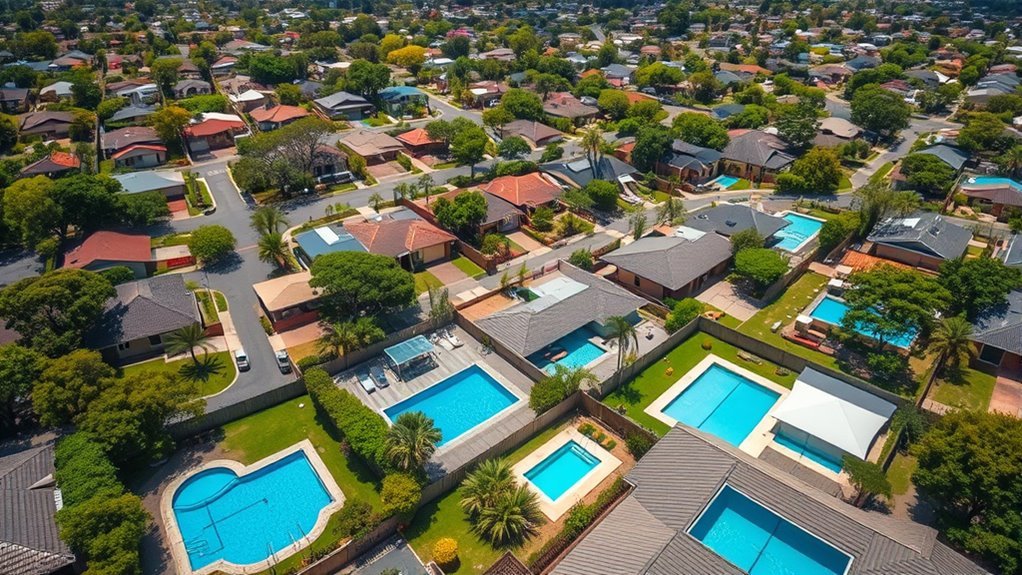
Although Australia is known for its sunny climate and outdoor lifestyle, you might be surprised to learn just how popular swimming pools are across the country. If you live here, you probably know neighbors who’ve their own pool or have spent weekends at public pools.
Australians embrace swimming pools not just for leisure but also for fitness and social gatherings. The warm weather encourages you to cool off regularly, making pools a common feature in many households.
Whether in cities or suburban areas, pools add value and enhance lifestyle quality. As you explore communities, you’ll notice that owning a pool often feels like a natural extension of enjoying the outdoors.
This popularity reflects how integral swimming pools are to Australian culture and daily life.
Types of Swimming Pools Found Across the Country
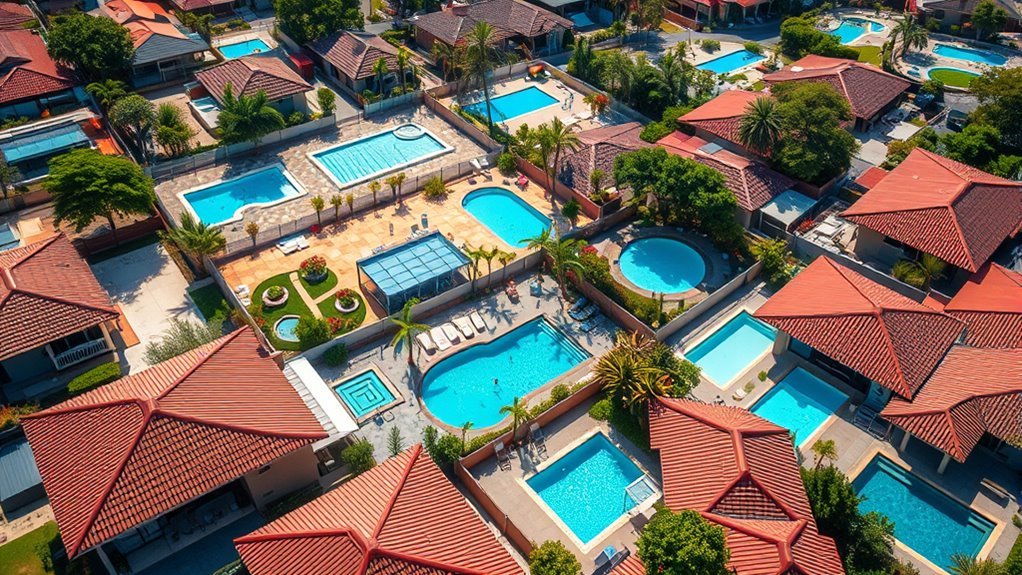
When you explore swimming pools across Australia, you’ll find a variety of types designed to suit different climates, spaces, and lifestyles.
In warmer regions, you’ll often see in-ground concrete pools that offer durability and customization.
In-ground concrete pools in warm areas combine lasting strength with tailored designs.
If space is tight, above-ground pools provide a practical, budget-friendly option.
Many coastal homes feature saltwater pools, which are gentler on the skin and require less maintenance.
You might also encounter plunge pools for small yards, perfect for cooling off without taking up much room.
Public and community pools tend to be larger, Olympic-sized or lap pools, catering to fitness and recreational needs.
No matter where you are, Australia’s pools reflect its outdoor culture and love for water-based relaxation and exercise.
Residential Swimming Pools: Distribution and Statistics
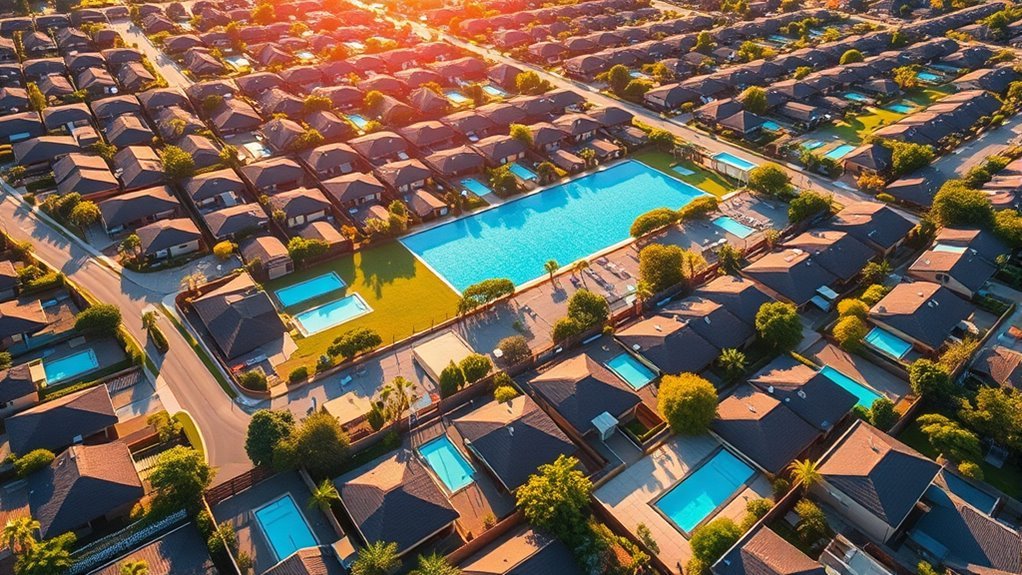
Australia boasts one of the highest rates of residential swimming pool ownership in the world, with nearly one in three households having a pool. If you live in Queensland or New South Wales, you’re more likely to have a pool, as these states lead in ownership due to their warm climates.
In contrast, cooler southern states like Tasmania and Victoria have fewer pools per household. Urban areas often show higher pool concentrations compared to rural regions, reflecting lifestyle preferences and property sizes.
Most residential pools are in private backyards and range from simple above-ground models to elaborate in-ground designs. Understanding these distribution patterns helps you grasp how swimming pools are woven into Australian life, reflecting both climate and regional culture.
Public and Community Swimming Pools in Urban and Rural Areas
While private pools dominate residential areas, public and community swimming pools play an essential role in providing access to swimming facilities for everyone. This is especially true in urban and rural locations where private ownership may be less common. These pools offer affordable options for swimming lessons, fitness, and leisure, promoting health and social inclusion.
Here’s a quick look at pool availability by area type:
| Area Type | Number of Pools (Approx.) |
|---|---|
| Major Cities | 1,200 |
| Regional Towns | 450 |
| Rural Communities | 150 |
| Suburban Areas | 800 |
| Remote Areas | 50 |
You’ll find that urban centers have more facilities, but community pools in rural areas are essential for local engagement and safety.
The Role of Swimming Pools in Australian Tourism and Resorts
Because swimming pools offer more than just a place to cool off, they play an essential role in attracting tourists to resorts across the country. When you visit these resorts, pools often become the centerpiece of your relaxation and entertainment. They enhance the overall experience, making your stay memorable.
Here’s why swimming pools matter in Australian tourism:
- They provide a family-friendly environment where everyone can enjoy.
- Pools offer a scenic backdrop for social gatherings and events.
- They help resorts stand out in a competitive market.
- Pools contribute to guests’ wellness with options like lap swimming and aquatic fitness.
Climate Influence on Swimming Pool Ownership
Tourists aren’t the only ones who benefit from swimming pools; many homeowners across the country also invest in pools to enjoy year-round comfort.
If you live in Australia’s warmer regions like Queensland or Western Australia, you’ll likely find swimming pools more common. The climate there encourages outdoor living, making pools a practical way to cool off during hot summers.
Even in milder areas, heated pools let you swim comfortably for longer periods. You might notice that pool ownership drops in cooler southern states where winters are harsher, but advances in pool heating and maintenance still make owning one appealing.
Ultimately, the climate shapes how and when you use a pool, influencing whether you’ll consider installing one at your home.
Economic Impact of the Swimming Pool Industry in Australia
Although swimming pools primarily serve recreational purposes, they also play a significant role in Australia’s economy. When you consider the industry, you’ll see it supports thousands of jobs and generates substantial revenue nationwide.
From construction to maintenance, the economic ripple effect is notable.
Here’s how the swimming pool industry impacts the economy:
- Creates employment opportunities in construction, retail, and service sectors.
- Boosts sales for pool equipment manufacturers and suppliers.
- Increases demand for related services like landscaping and cleaning.
- Contributes to local government revenues through permits and taxes.
Trends and Future Projections for Swimming Pools in Australia
As more Australians prioritize health and outdoor living, swimming pools are evolving to meet changing needs and preferences. You’ll notice a growing demand for eco-friendly pools that use less water and energy, reflecting a strong commitment to sustainability.
Smart pool technology is also gaining traction, allowing you to control temperature, lighting, and cleaning remotely.
Compact and multi-functional designs are becoming popular, especially in urban areas where space is limited.
Looking ahead, the industry expects continued growth driven by climate change and lifestyle shifts. You can expect innovations focused on wellness, such as resistance swimming and hydrotherapy features, to become standard.
If you’re considering installing a pool, staying informed about these trends will help you make choices that align with future demands.
Frequently Asked Questions
What Is the Average Cost to Build a Swimming Pool in Australia?
You’ll typically spend between $30,000 and $70,000 to build a swimming pool in Australia. Costs vary based on size, materials, and features, so plan carefully to fit your budget and preferences.
How Do Swimming Pool Regulations Vary by Australian State?
You’ll find swimming pool regulations differ by state: Queensland requires strict fencing, Victoria mandates safety barriers and self-closing gates, while New South Wales enforces regular inspections.
Always check local laws before building or maintaining your pool.
What Are the Most Common Pool Maintenance Challenges in Australia?
You’re battling a swirling storm of algae, chemical imbalances, and debris in your pool. The most common challenges in Australia are keeping water clear, balancing pH levels, and preventing filter clogs to enjoy crystal blue serenity.
Are There Eco-Friendly Swimming Pool Options Popular in Australia?
Yes, you’ll find eco-friendly pools gaining popularity in Australia. They use solar heating, natural filtration, and water-saving technology, helping you reduce chemical use and energy costs while enjoying a greener swimming experience.
How Do Swimming Pools Impact Property Values in Australian Neighborhoods?
You’ll find swimming pools often boost property values in Australian neighborhoods by making homes more attractive, especially in warmer areas.
However, maintenance costs and safety concerns might deter some buyers, so the impact can vary.
Conclusion
You’ve seen how swimming pools aren’t just water-filled spaces—they’re a reflection of Australia’s lifestyle, climate, and economy. Whether it’s the backyard oasis or a bustling community hub, pools ripple through daily life, offering joy and respite.
Imagine the countless memories made splash by splash, bringing families and friends closer. So, next time you leap into or pass one by, remember: these pools are more than just water—they’re the heartbeats of Aussie living.
With millions of swimming pools across the country, they truly embody Australia’s love for outdoor recreation and community spirit. Swimming pools in Australia are not only a source of fun but also a significant part of the nation’s identity and lifestyle.