1 Best Swim Workout for Endurance to Try in 2026
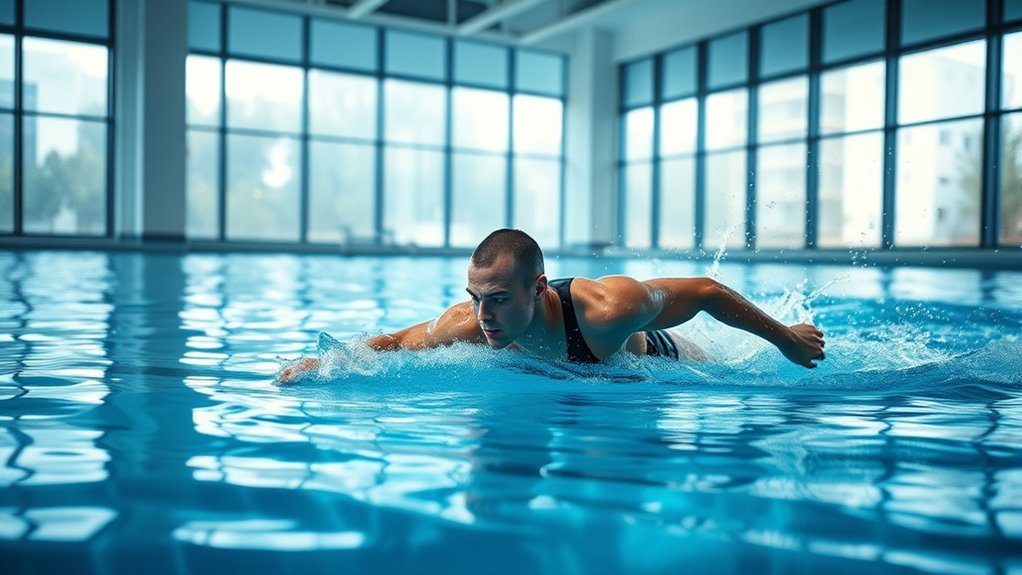
To boost your endurance in 2026, try high-intensity interval swimming that mixes freestyle, backstroke, and breaststroke. This combination engages different muscles and builds stamina fast.
Adding a resistance belt can increase the challenge and improve your efficiency in the water. Just be sure to adjust your effort to avoid burnout.
Whether you have a 25m or 50m pool, tailoring your workout duration and intensity to your skill level is key. This approach will keep you progressing steadily.
Keep exploring for more tips to optimize your swim workouts and reach your endurance goals. Swimming smarter, not just harder, makes all the difference!
| Image | Name | Editor's Rating | Price |
|---|---|---|---|

|
|
Hikeen 4M Swimming Training Resistance Belt
- Designed for stationary swimming in home & lap pools with adjustable bungee cord for resistance training
- Easy to use - attach bungee to poolside object, secure neoprene belt around waist up to 45 inches, & start...
- Provides a full body workout swimming in all styles - Freestyle, Backstroke, Breaststroke & Butterfly
- Suitable for swimmers of all ages & abilities for an effective low-impact cardio & strength training workout
- 30-Day Money Back Guarantee allows you to order risk-free
Experience effective swim training without needing a large pool with the Hikeen 4M Swimming Training Resistance Belt. This innovative tool lets you swim in place by anchoring a bungee cord to a secure poolside object. Simply fasten the neoprene belt around your waist, and you’re set for a focused, resistance-based workout.
Designed to fit waists up to 45 inches, it supports all major swim styles including Freestyle, Backstroke, Breaststroke, and Butterfly. The resistance created helps build endurance, strength, and cardiovascular fitness through low-impact training. It’s perfect for maintaining swim skills and improving overall fitness at home or in lap pools.
The neoprene material is lightweight and durable, ensuring comfort and long-lasting use. Maintenance is simple—just rinse after use and air dry to keep it in top condition. Keep in mind, the belt requires a sturdy poolside anchor and sufficient space for tether length to function properly.
This resistance belt offers a practical solution for swimmers who want a full-body workout without the need for continuous laps in a large pool, making swim training accessible anywhere.
Best for: swimmers of all ages and skill levels seeking an efficient, low-impact swim workout in smaller or home pools.
What We Like:
- Enables stationary swim training with adjustable resistance
- Comfortable neoprene belt fits up to 45-inch waists
- Supports all competitive swim strokes for versatile workouts
- Lightweight and durable design for ease of use and longevity
- Simple maintenance with quick rinse and air dry
Specification:
| Feature | Details |
|---|---|
| Manufacturer | Hikeen |
| Length | 4 meters (bungee cord) |
| Belt Size | Fits waists up to 45 in |
| Material | Neoprene |
| Color Options | Not specified |
Factors to Consider When Choosing Swim Workouts for Endurance
When picking swim workouts for endurance, you’ll want to consider training intensity levels and stroke variety to keep your sessions effective and engaging. Make sure the workout fits the pool space you have and works well with any equipment you use.
Also, look for flexibility in workout duration so you can adjust based on your schedule. That way, you can keep your routine consistent without feeling overwhelmed. It’s all about finding what works best for you and keeping things interesting!
Training Intensity Levels
Although various factors influence your swim workouts, training intensity plays a crucial role in building endurance effectively. Your intensity levels range from low to high, directly impacting cardiovascular and muscular endurance.
Swimming at moderate intensity—about 50-70% of your maximum effort—helps you build endurance steadily without burning out. When you push into high-intensity zones, around 80-95% effort, like during interval training, you rapidly boost stamina and performance.
It’s vital to adjust intensity to prevent overtraining and injury while ensuring progressive overload for gains. Keep track of your perceived exertion and heart rate to stay within the right intensity for your goals.
Stroke Variety Options
Since endurance training benefits from variety, incorporating different swim strokes like freestyle, backstroke, breaststroke, and butterfly can boost your muscle engagement and keep workouts fresh.
Switching between strokes challenges various muscle groups, improving your overall cardiovascular fitness and muscular endurance. It also helps balance your training, reducing the risk of overuse injuries from repetitive motions.
You can perform each stroke at different intensities, allowing you to target endurance building and recovery within the same session. Using a combination of strokes not only enhances your swimming efficiency but also builds stamina, helping you swim longer and more sustainably.
Pool Space Requirements
Choosing the right pool space plays a crucial role in shaping your swim workouts for endurance. If you have access to a larger pool, like an Olympic-sized 50-meter pool, you can swim longer distances without frequent turns. This helps maintain a steady rhythm and improves your endurance.
Smaller pools, such as 25-meter residential ones, force you to turn more often. That can interrupt your pace and reduce workout efficiency. Also, having open space around the pool lets you perform varied drills and supplementary exercises that boost endurance.
If pool space is limited, you might need specialized equipment like resistance belts or tether systems. These tools increase workout intensity without needing a bigger area. So, consider your pool space carefully to maximize your endurance training results.
Equipment Compatibility
Your pool space influences the type of equipment that works best for your swim workouts. Make sure your gear fits comfortably in your pool area to avoid interruptions during training.
Choose equipment that’s adjustable, like resistance belts or paddles, so you can tailor your workout intensity to your fitness level and goals. It’s important that the gear supports your swimming style and various strokes, helping you build endurance effectively.
Also, check the durability and safety of materials to prevent damage or injury with repeated use. Lastly, opt for equipment that integrates well with other training tools, letting you customize your session for a comprehensive endurance workout.
Prioritizing compatibility ensures your swim training is efficient and enjoyable. Just remember, the right gear makes all the difference!
Workout Duration Flexibility
When you tailor your swim workouts to fit your schedule and fitness level, you gain the flexibility to adjust session lengths without sacrificing progress. Shorter sessions help you build consistency, making it easier to stick with your routine.
As your endurance improves, longer swims boost your stamina and cardiovascular capacity. Varying workout durations also prevents plateaus by gradually challenging your body over time.
This flexibility lets you control training intensity, reducing the risk of burnout or overtraining. By mixing session lengths within your plan, you keep motivation high and support steady endurance development.
Ultimately, adapting your workout duration ensures your swim training fits your lifestyle while continuously pushing your endurance forward. It’s all about finding what works best for you and keeping things balanced.
User Skill Adaptability
Although endurance swim workouts aim to build stamina, they must also match your current skill level to be effective and safe. You should choose workouts that challenge you without risking injury.
Incorporate various strokes and techniques to develop your skills and keep sessions engaging. Gradually increase intensity, duration, or resistance to help your body adapt over time.
Using equipment like resistance belts or paddles can adjust difficulty, making workouts suitable whether you’re a beginner or advanced swimmer. Regularly monitor your progress and tweak the workout complexity to avoid plateaus and ensure continuous improvement.
Frequently Asked Questions
How Often Should I Swim Each Week to Build Endurance?
You should swim at least three to five times a week to build endurance. Consistency matters, so mix long, steady swims with interval training to boost your stamina.
This way, you’ll improve your overall swim performance effectively. Just keep at it regularly, and you’ll see progress over time!
What Is the Ideal Duration for an Endurance Swim Workout?
Think of your endurance swim workout as a marathon, not a sprint—you’ll want to swim for about 45 to 90 minutes. This duration challenges your stamina without burning you out, keeping progress steady and strong.
Swimming for this amount of time helps build your endurance gradually. Plus, it’s long enough to feel like a solid workout but not so long that you get exhausted too quickly. Just keep at it consistently, and you’ll see your stamina improve!
Can Swimming Improve Cardiovascular Health Effectively?
Yes, swimming can effectively improve your cardiovascular health. It boosts heart and lung function, increases endurance, and burns calories.
Plus, it’s low-impact, making it a great option if you want a full-body, heart-healthy workout. So, if you’re looking for something gentle on your joints but tough on your fitness, swimming might just be the way to go!
What Nutrition Tips Support Swim Endurance Training?
Picture fueling your muscles with colorful fruits, lean proteins, and whole grains. You’ll want to hydrate constantly, refuel with carbs post-swim, and include omega-3s to reduce inflammation.
This combo helps you swim stronger and longer every session. Keep it up, and you’ll notice the difference!
How Do I Prevent Common Swimming Injuries During Training?
You can prevent common swimming injuries by warming up properly, maintaining good technique, and incorporating strength training.
Don’t overtrain—listen to your body, rest when needed, and stretch regularly to keep muscles flexible and joints healthy.
Taking these steps helps you stay strong and swim safely. Just remember, a little care goes a long way!
Conclusion
If you want to boost your swim endurance, incorporating the Hikeen 4M Swimming Training Resistance Belt can make a big difference. Studies show that swimmers using resistance training improve endurance by up to 30%, helping you go the distance faster.
Remember to consider intensity, stroke variety, and your skill level when choosing workouts. With the right plan and gear, you’ll swim stronger and longer in no time.
Keep pushing your limits! Using tools like the Hikeen 4M Resistance Belt in your swim workouts can really elevate your endurance. By mixing up your strokes and adjusting your workout intensity, you’ll notice improvements faster. So, whether you’re training for a triathlon or just want to swim longer, incorporating resistance training into your swim routine is a smart move. Stay consistent, listen to your body, and soon enough, you’ll be swimming with greater stamina and confidence.