How Many Calories Does Swimming Burn?
You burn hundreds of calories each time you swim, making swimming an effective calorie-burning exercise. The exact number of calories burned depends on your weight, stroke, intensity, and duration. Heavier swimmers and faster, more intense sessions boost calorie burn.
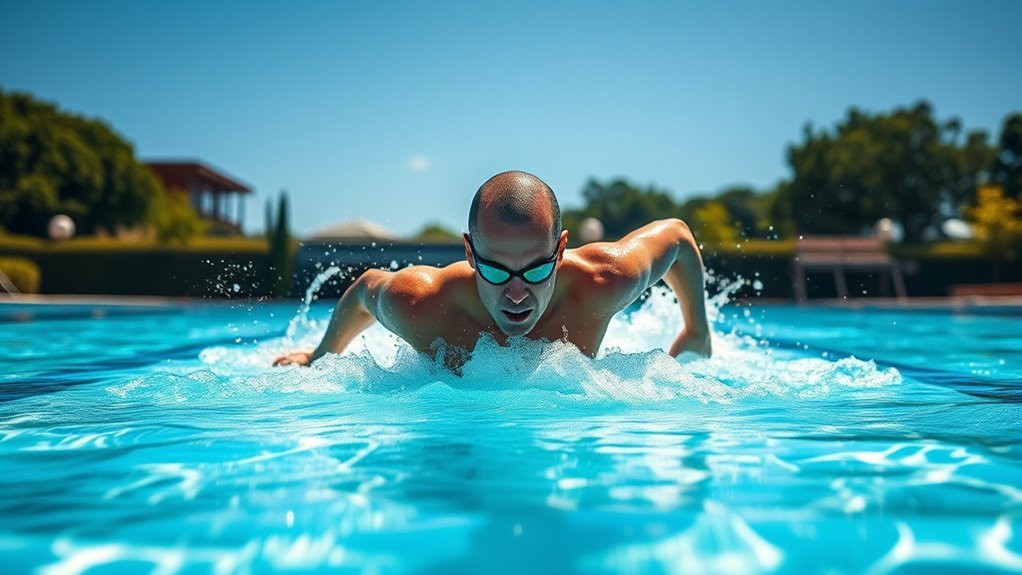
For example, the butterfly stroke is more demanding than backstroke, and longer swims burn more total calories. Swimming’s low-impact nature also makes it a great full-body workout.
Keep going to discover tips and comparisons that can help you maximize your calorie burn in the pool.
Factors Influencing Calorie Burn in Swimming
Although swimming is a great full-body workout, the number of calories you burn depends on several factors. Your weight plays a major role. Heavier swimmers typically burn more calories because their bodies require more energy to move through water.
The intensity of your swim matters too. Faster, more vigorous sessions increase calorie burn. Duration counts as well; the longer you swim, the more calories you expend.
Water temperature can influence your metabolism. Colder water forces your body to work harder to maintain its temperature, boosting calorie use.
Your swimming technique and efficiency also impact how much energy you expend.
Calorie Burn by Swimming Stroke
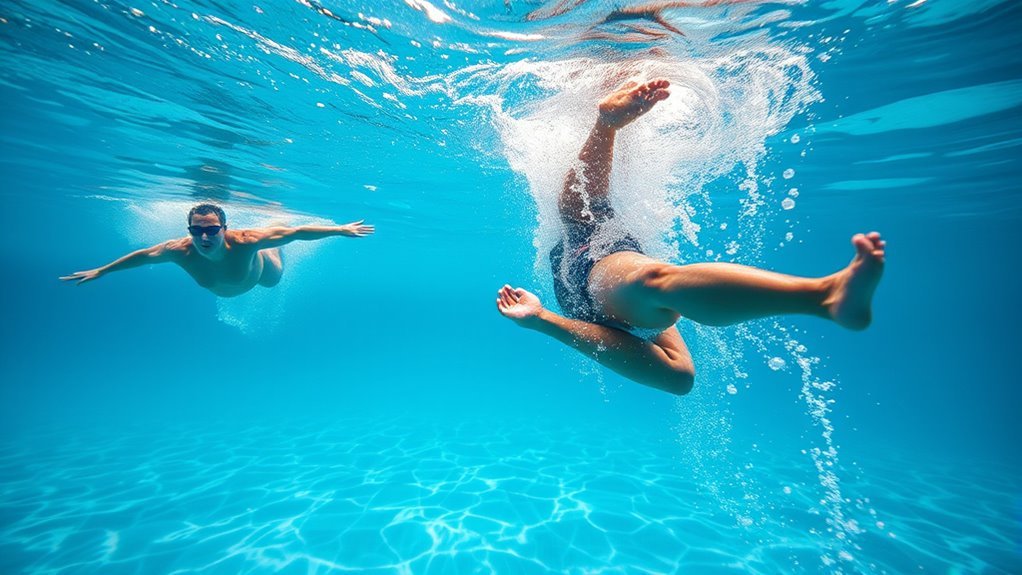
When you choose a swimming stroke, you directly impact how many calories you burn. Each stroke engages your muscles differently, affecting your overall energy expenditure.
Selecting your swimming stroke shapes muscle use and influences calorie burn significantly.
For example, the butterfly stroke is one of the most intense and can burn around 650-900 calories per hour because it requires powerful, coordinated movements.
Freestyle, or front crawl, is also efficient, burning about 500-700 calories per hour due to its continuous, steady pace.
Backstroke tends to be less demanding, usually burning 400-600 calories per hour, as it involves a gentler motion.
Breaststroke often falls in the middle, around 500-650 calories per hour, with its rhythmic, slower movements.
Knowing which stroke you prefer helps you tailor your workout to meet your calorie-burning goals effectively.
Impact of Swimming Intensity and Duration
Since swimming intensity and duration directly affect how many calories you burn, adjusting these factors can help you reach your fitness goals faster. When you swim at a higher intensity, your body works harder, increasing calorie burn. For example, sprinting or doing interval training burns more calories per minute than a leisurely swim.
Similarly, the longer you swim, the more total calories you expend. However, it’s important to find the right balance. Pushing too hard without proper rest can lead to fatigue or injury, while swimming too slowly or briefly mightn’t challenge your body enough.
Comparing Swimming to Other Cardio Exercises
Adjusting your swimming intensity and duration shapes how many calories you burn, but it’s also helpful to see how swimming stacks up against other cardio exercises. Swimming offers a full-body workout, engaging muscles you mightn’t target with running or cycling.
For instance, a 30-minute swim can burn about 250 to 400 calories, depending on effort, while running at a moderate pace might burn a similar amount but stresses your joints more. Cycling tends to burn fewer calories unless you maintain high intensity.
Unlike many cardio workouts, swimming is low-impact, making it ideal if you want to protect your joints while still torching calories.
Tips to Maximize Calorie Burn While Swimming
To maximize calorie burn while swimming, you need to focus on both technique and intensity. Start by incorporating interval training. Alternate between fast, powerful laps and slower recovery strokes to keep your heart rate elevated.
Maximize calorie burn by combining strong laps with slower recovery strokes to keep your heart rate high.
Use a variety of strokes like freestyle, butterfly, and breaststroke to engage different muscle groups and prevent plateaus. Pay attention to your form; efficient strokes reduce drag and boost speed, helping you burn more calories.
Don’t forget to maintain a consistent pace and gradually increase your swimming duration or distance over time.
Adding resistance tools, like paddles or kickboards, can also intensify your workout.
Finally, stay hydrated and fuel your body properly to sustain energy levels and maximize the effectiveness of your swim sessions.
Frequently Asked Questions
How Does Swimming Affect Muscle Tone and Strength?
Swimming tones your muscles and builds strength by engaging multiple muscle groups simultaneously. You’ll improve endurance and flexibility since water provides resistance, making your muscles work harder without harsh impact on joints.
You’ll feel stronger overall.
What Are the Best Swimming Techniques for Beginners?
You should start with freestyle and backstroke; they’re easier to learn and build confidence. Focus on controlled breathing and smooth, steady strokes. Don’t rush—practice regularly, and you’ll improve your technique and endurance quickly.
Can Swimming Help Improve Mental Health and Reduce Stress?
Like a calm lake reflecting the sky, swimming helps you clear your mind and reduce stress.
You’ll boost your mood, ease anxiety, and feel refreshed, making it a powerful tool for improving your mental health.
How Often Should I Swim to See Fitness Results?
You should swim at least 3 to 5 times a week to see fitness results. Consistency matters, so mix intensity and duration to challenge your body and improve endurance, strength, and overall health effectively.
Is Swimming Safe for People With Joint Problems?
Worried about joint pain? Swimming is gentle on your joints since water supports your body, reducing impact. You can exercise safely without aggravating issues.
Just consult your doctor first to tailor a routine that suits you.
Conclusion
Swimming can torch calories like a blazing sun, but how much you burn depends on your stroke, intensity, and duration. Whether you’re doing a leisurely breaststroke or powering through freestyle sprints, every splash counts.
Compared to other cardio workouts, swimming offers a full-body burn that’s hard to beat. To maximize your calorie loss, mix up your strokes, push your pace, and keep swimming consistently.
By incorporating these tips, you’ll experience how many calories swimming burns and feel the difference ripple through your body in no time.