Can I Go Swimming After Getting a Tattoo
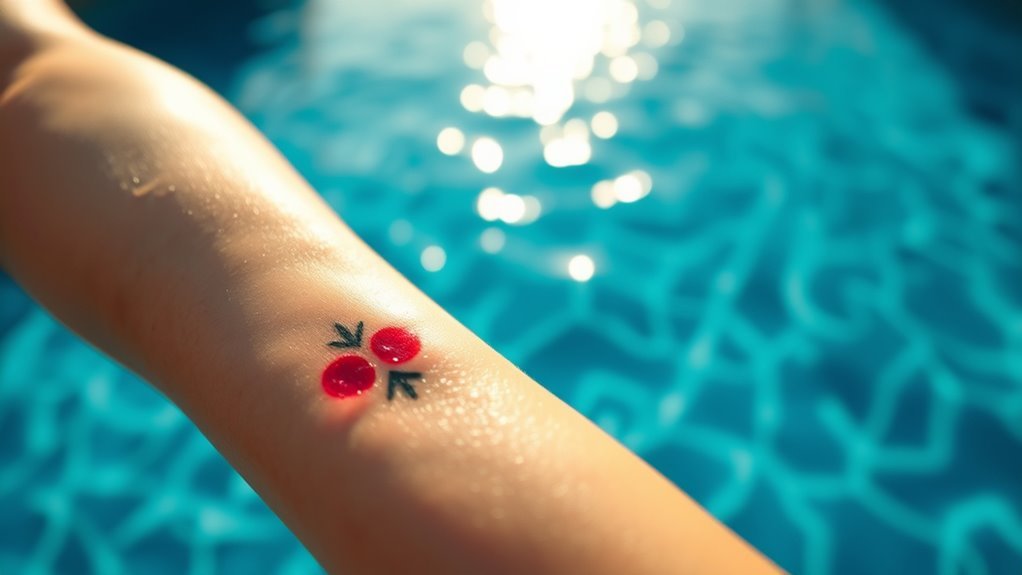
You shouldn’t go swimming for at least two to four weeks after getting a tattoo because your skin is still healing and vulnerable. Swimming too soon can expose your tattoo to pool chemicals, saltwater, and bacteria, which may irritate the area and cause infection or fading ink.
Plus, soaking your new tattoo can weaken scabs and slow down the healing process. Instead, keep your tattoo clean and dry until it fully heals.
If you want to make sure your tattoo looks great and heals properly, it helps to understand the risks and proper care methods. Taking these precautions ensures your tattoo stays vibrant and healthy.
Why Swimming Can Harm a New Tattoo
Because your new tattoo is fundamentally an open wound, swimming too soon can expose it to bacteria and irritants that may cause infection or fading.
When you swim, whether in a pool, lake, or ocean, your tattoo comes into contact with water that often contains germs, chemicals like chlorine, or salt.
These substances can irritate your skin and interfere with the healing process.
Plus, soaking your tattoo weakens the scabs and can cause premature peeling, which leads to color loss and uneven healing.
Constant moisture also prevents your skin from drying properly, increasing the risk of complications.
How Long to Wait Before Swimming
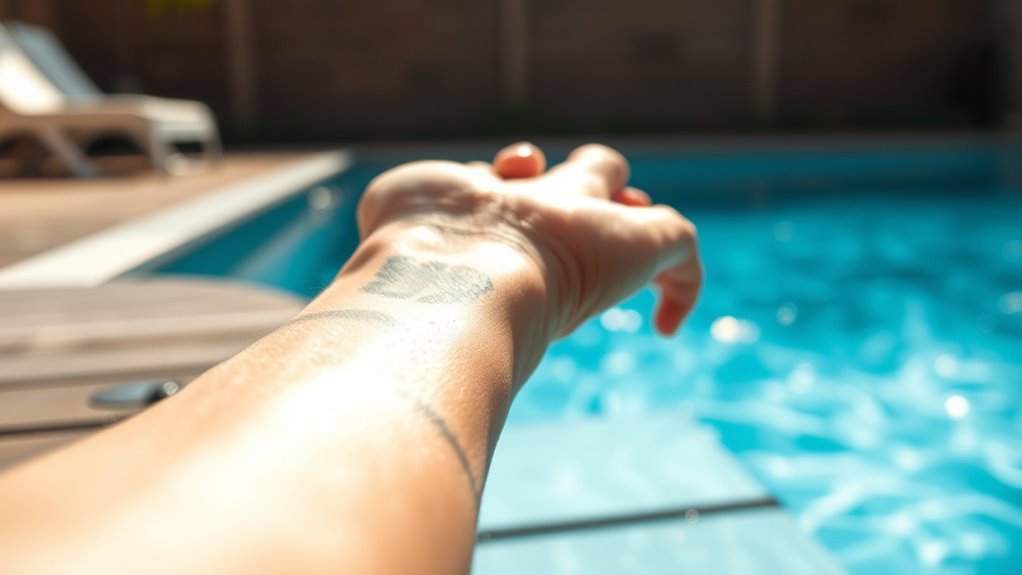
While it might be tempting to jump in the water right after getting inked, you should wait at least two to four weeks before swimming. This waiting period allows your tattoo to heal properly, reducing the risk of infection and color fading.
Healing times vary depending on your skin type, tattoo size, and aftercare, but the outer layer typically takes around two weeks to form a protective barrier. Avoid exposing your tattoo to water during this essential phase because soaking can cause scabs to soften and peel prematurely, which may affect your tattoo’s appearance.
If you’re unsure whether your tattoo is ready, look for signs like no scabbing, no redness, and fully healed skin before swimming. Remember, patience now keeps your tattoo looking great later.
Risks of Swimming in Pools, Oceans, and Hot Tubs

If you swim too soon after getting a tattoo, you risk exposing your fresh ink to harmful bacteria and chemicals found in pools, oceans, and hot tubs.
Pools contain chlorine and other disinfectants that can irritate your skin and slow healing.
Oceans expose your tattoo to saltwater and microorganisms that increase infection risk.
Hot tubs are especially risky because warm water encourages bacterial growth, making infections more likely.
Since your tattoo is fundamentally an open wound, these environments can cause redness, swelling, and even pus.
Avoiding swimming in these places until your tattoo is fully healed helps protect your skin and preserves the quality of your tattoo.
Taking this precaution ensures your new ink stays vibrant and infection-free.
Proper Tattoo Aftercare to Prevent Infection
Swimming in certain environments can put your tattoo at risk, but how you care for your tattoo immediately after getting it plays an even bigger role in preventing infection. Keep your tattoo clean and moisturized, avoid scratching or picking, and steer clear of soaking it in water until it’s healed.
Follow your artist’s advice and clean the tattoo gently with lukewarm water and mild soap.
| Step | Action | Why It Matters |
|---|---|---|
| 1 | Wash gently | Removes bacteria |
| 2 | Pat dry | Avoids irritation |
| 3 | Apply ointment | Keeps tattoo moist |
| 4 | Avoid direct water exposure | Prevents infection |
| 5 | Wear loose clothing | Allows skin to breathe |
This routine helps your tattoo heal cleanly and reduces infection risk.
Signs Your Tattoo Is Healing Well
As your tattoo begins to heal, you’ll notice specific signs that indicate it’s progressing properly. Recognizing these signs helps you feel confident about your skin’s recovery and prevents unnecessary worry.
1. Reduced Redness and Swelling
The initial redness and puffiness should gradually fade, showing your skin is calming down and healing well.
2. Peeling and Flaking
Light peeling or flaking is normal and means your skin is regenerating. Don’t pick or scratch to avoid damage.
3. Itching Sensation
Mild itching signals new skin growth underneath. It’s uncomfortable but a positive sign that your tattoo is healing.
Pay attention to these signs—they’re your tattoo’s way of telling you it’s on the right track!
Alternatives to Swimming During Tattoo Healing
While your tattoo heals, you’ll want to avoid water activities that might expose it to bacteria or cause irritation. Instead, focus on dry exercises like walking, yoga, or light stretching to keep active without risking your tattoo’s health.
Avoid water activities while healing; opt for dry exercises like walking, yoga, or light stretching to protect your tattoo.
If you enjoy cardio, try indoor cycling or using a treadmill, ensuring you keep sweat from soaking the tattoo.
For relaxation, consider meditation or gentle breathing exercises.
When showering, keep your tattoo out of direct water flow and avoid scrubbing. These alternatives help you stay active and comfortable while protecting your new ink.
Frequently Asked Questions
Can Sun Exposure Affect My New Tattoo During Healing?
Yes, sun exposure can damage your new tattoo while it’s healing. It can cause fading, irritation, and increase infection risk.
You should keep it covered or use a high SPF sunscreen once it’s partially healed.
Does Tattoo Ink Fade Faster if I Swim Often?
Yes, swimming often can make your tattoo ink fade faster because chlorine and saltwater can break down the ink and irritate your skin.
To keep your tattoo vibrant, avoid frequent swimming, especially during healing.
Are Certain Tattoo Locations More Sensitive to Water Exposure?
Yes, tattoos on joints or areas that regularly stretch, like elbows or knees, are more sensitive to water exposure.
You’ll want to be extra careful keeping them dry during healing to avoid irritation and ink fading.
Can Swimming Cause Allergic Reactions With Fresh Tattoos?
You might invite unwelcome surprises if you swim too soon; fresh tattoos can react to pool chemicals or bacteria, triggering irritation or allergic responses.
It’s best to let your skin’s new artwork heal fully before diving in.
Should I Apply Sunscreen on My Tattoo Before Swimming Later?
Yes, you should apply sunscreen on your tattoo before swimming later to protect it from UV damage. Use a broad-spectrum, waterproof sunscreen to keep your tattoo vibrant and help prevent fading while in the water.
Conclusion
You might be eager to plunge into the pool or ocean, but remember, your fresh tattoo is like a delicate canvas, not ready for water’s harsh touch. While swimming offers freedom and fun, it contrasts sharply with the careful healing your skin needs now.
Waiting patiently protects your ink and prevents infection. So, swap a swim for proper aftercare—you’ll preserve your new art and soon enjoy both without regret.
In conclusion, avoid swimming after getting a tattoo to ensure proper healing and maintain the quality of your new ink. Prioritize tattoo aftercare for the best results and a vibrant, lasting design.