How to Swim Safely With Contact Lenses
To swim safely with contact lenses, it is important to follow key guidelines for eye protection and hygiene. Choose daily disposable lenses and wear snug-fitting goggles to shield your eyes from water and germs. Always wash your hands thoroughly before handling your lenses to avoid contamination.
Avoid rubbing your eyes while wearing contacts, as this can cause irritation or dislodge the lenses. After swimming, remove your lenses promptly and clean them with the recommended contact lens solutions—never use tap water, which can harbor harmful microorganisms.
Be alert for any redness, discomfort, or changes in vision, and take breaks from wearing lenses if needed. By understanding these best practices and precautions for swimming with contact lenses, you can keep your eyes healthy and enjoy the water safely.
Understanding the Risks of Swimming With Contact Lenses
Why should you be cautious about swimming with contact lenses? Because water can carry bacteria and other microorganisms that easily cling to your lenses, increasing your risk of eye infections.
When you swim, water can also cause your lenses to shift, leading to discomfort or blurred vision.
If your lenses trap water beneath them, it creates a breeding ground for germs, raising the chance of serious issues like keratitis.
Additionally, exposure to pool chemicals like chlorine can irritate your eyes and damage your lenses.
Even natural bodies of water, such as lakes or oceans, harbor microorganisms and debris that can harm your eyes.
Understanding these risks helps you make safer choices, protecting your eye health while enjoying the water.
Choosing the Right Type of Contact Lenses for Swimming
Although swimming with contact lenses carries risks, selecting the right type can greatly reduce potential problems. If you plan to swim regularly, consider daily disposable lenses. They’re the safest option since you toss them after each use, minimizing infection risk.
Avoid using extended-wear or rigid gas permeable lenses for swimming, as they can trap water and irritate your eyes. Soft lenses, especially silicone hydrogel ones, offer better oxygen permeability, which helps keep your eyes comfortable underwater.
The Importance of Wearing Protective Swim Goggles
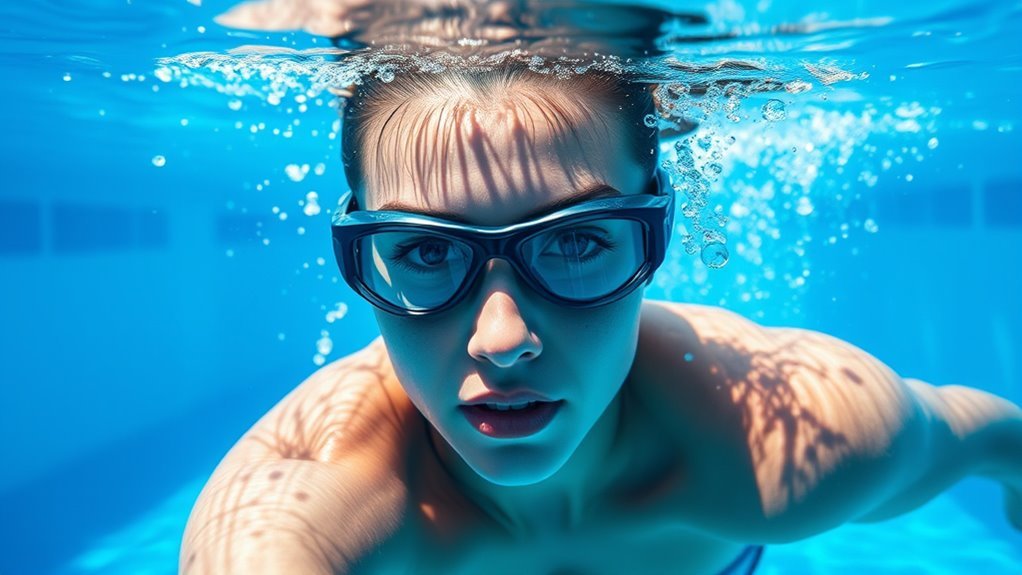
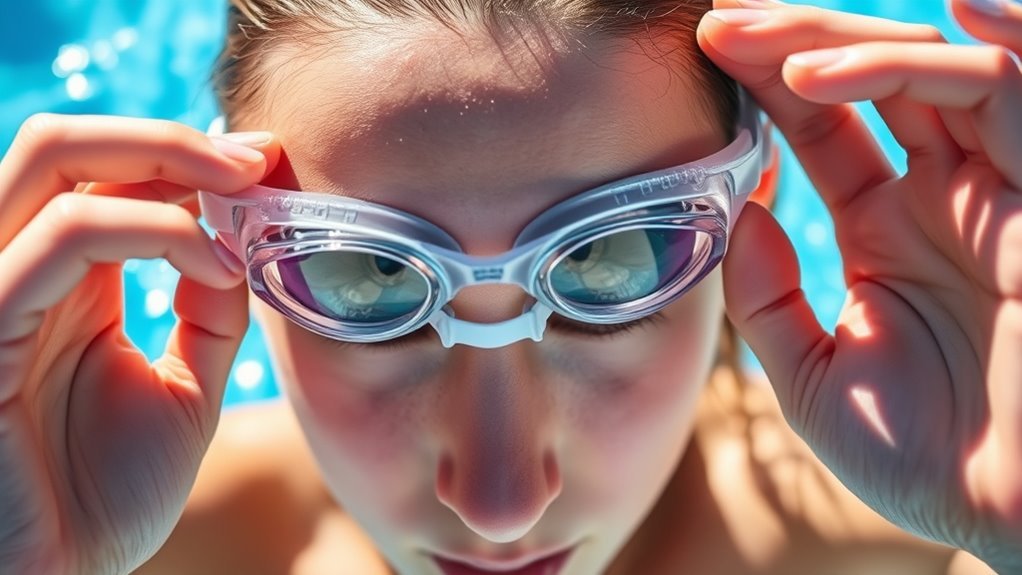
Since water can carry bacteria and irritants, wearing protective swim goggles is essential when you swim with contact lenses. Goggles create a barrier that prevents water from washing over your lenses, reducing the risk of eye infections and irritation.
Protect your eyes and lenses from bacteria and irritation by always wearing swim goggles when swimming with contacts.
Without goggles, tiny particles or microbes in the water can cling to your lenses, causing discomfort or even serious eye conditions.
You’ll also avoid losing your lenses, as goggles help keep them securely in place.
Choose goggles that fit snugly and seal well around your eyes to block out water effectively.
By wearing protective swim goggles, you protect both your eyes and your contact lenses, making your swimming experience safer and more comfortable.
Don’t skip this simple step; it’s key to maintaining good eye health while enjoying the water.
How to Properly Insert and Remove Contact Lenses Before Swimming
How should you insert and remove your contact lenses to keep your eyes safe while swimming? Start by washing and drying your hands thoroughly to avoid introducing bacteria.
When inserting, place the lens on your fingertip, check for any damage, then gently place it on your eye without rushing.
To remove, look upward, pull down your lower eyelid, and carefully pinch the lens off your eye.
Follow these tips:
- Use a mirror in a clean, well-lit area to ensure correct placement.
- Avoid using soap or lotion on your hands before handling lenses.
- Never wear lenses longer than recommended, especially when swimming.
- Remove lenses immediately if your eyes feel irritated or uncomfortable.
Proper handling reduces infection risk and helps keep your eyes healthy in the water.
Cleaning and Disinfecting Contact Lenses After Swimming
After swimming, you should clean and disinfect your contact lenses immediately to remove any bacteria, chlorine, or debris that may have accumulated.
First, wash your hands thoroughly with soap and water before touching your lenses.
Next, remove the lenses carefully and rinse them with a contact lens solution recommended by your eye care professional. Never use tap water.
After rinsing, place the lenses in a clean lens case filled with fresh disinfecting solution.
Let them soak for the time specified on the solution’s instructions to guarantee proper disinfection.
Avoid reusing old solution or topping off the case.
Regularly clean and replace your lens case to prevent contamination.
Following these steps helps maintain lens hygiene and protects your eyes after swimming.
Avoiding Common Eye Infections Linked to Swimming With Contacts
Although swimming with contact lenses can be convenient, it increases your risk of eye infections like conjunctivitis and keratitis. To protect your eyes, you need to take some precautions before, during, and after swimming.
Avoid exposing your lenses to water, as it can harbor harmful bacteria and parasites. Always wash your hands before handling lenses to prevent transferring germs. Remove your contacts immediately if your eyes feel irritated or red.
After swimming, clean and disinfect your lenses properly to kill any lurking microorganisms.
Here are four key tips to avoid common eye infections:
- Don’t swim with lenses unless necessary
- Use waterproof swim goggles to keep water out
- Avoid rubbing your eyes while wearing lenses
- Replace lenses as recommended by your eye care professional
Alternative Vision Correction Options for Swimming
If you find swimming with contact lenses risky or uncomfortable, you’re not alone. Luckily, you have alternatives that protect your eyes while ensuring clear vision.
One popular choice is prescription swim goggles. These fit snugly and keep water out, letting you swim confidently without contacts.
Another option is getting LASIK or other laser eye surgeries if you qualify, eliminating the need for lenses entirely.
You might also consider daily disposable lenses worn only during your swim and discarded immediately afterward to reduce infection risk.
Finally, some people use plano goggles with their contacts inside for extra protection, though this requires caution.
Exploring these alternatives helps you enjoy swimming safely without compromising your eye health or vision quality.
Recognizing Signs of Eye Irritation or Infection
When you swim with contact lenses, your eyes can become irritated or infected without warning. It’s important to spot early signs so you can act quickly and avoid serious damage. Pay close attention to how your eyes feel and look after swimming.
Watch for these signs:
- Redness or bloodshot eyes that don’t improve
- Persistent itching or burning sensations
- Excessive tearing or unusual discharge
- Blurred vision or increased sensitivity to light
If you notice any of these symptoms, remove your lenses immediately and rinse your eyes with sterile saline or clean water. Contact your eye care professional right away for advice.
Recognizing these signs early helps you protect your eyes and keep swimming safely with contacts.
Tips for Swimming Safely in Different Water Environments
Because each swimming environment presents unique challenges, you should adjust your contact lens care accordingly to protect your eyes.
Different swimming environments require tailored contact lens care to keep your eyes safe and healthy.
In chlorinated pools, rinse your lenses with sterile saline before and after swimming to reduce irritation.
For saltwater, consider wearing tight-fitting goggles to prevent salt from causing dryness or discomfort.
When swimming in lakes or rivers, be extra cautious, as natural waters can harbor bacteria; always use goggles and remove lenses immediately afterward to reduce infection risk.
If you swim frequently, disposable daily lenses are a safer choice since you can discard them after each session.
Avoid rubbing your eyes if they feel irritated, and always carry a fresh lens case and solution to clean your lenses promptly.
These steps help maintain your eye health across different water types.
When to Consult an Eye Care Professional After Swimming
Taking proper precautions with your contact lenses during swimming helps protect your eyes, but some situations still call for professional advice. If you experience discomfort, redness, or blurred vision after swimming, don’t ignore these signs. Promptly consulting an eye care professional can prevent complications and ensure your eyes heal properly.
Seek professional help if you notice:
- Persistent eye redness or irritation lasting more than a day
- Unusual discharge or excessive tearing after swimming
- Blurred or decreased vision that doesn’t improve after lens removal
- Pain or sensitivity to light following water exposure
Your eye care provider can assess your condition, provide treatment if needed, and guide you on safe contact lens practices for future swims.
Frequently Asked Questions
Can Swimming With Contacts Affect My Prescription Strength?
Swimming with contacts won’t change your prescription strength directly, but exposing lenses to water can cause irritation or infections.
Always wear goggles to protect your eyes and lenses, preventing discomfort and potential vision issues.
Are Daily Disposable Lenses Better for Swimming Than Monthly Lenses?
Yes, daily disposable lenses are better for swimming since you can toss them after use, reducing infection risk. Monthly lenses hold more bacteria and irritants, so daily disposables keep your eyes healthier and more comfortable in the water.
How Do Saltwater and Chlorinated Pools Differently Impact Contact Lenses?
Saltwater can cause lenses to dehydrate and irritate your eyes, while chlorinated pools might introduce chemicals that damage lens material and increase infection risk.
Always use goggles and rinse lenses thoroughly after swimming.
Can Swimming With Contacts Cause Long-Term Vision Problems?
Yes, swimming with contacts can cause long-term vision problems like infections or corneal ulcers if you’re not careful.
Always wear goggles, avoid swimming in pools or saltwater with lenses, and follow proper hygiene to protect your eyes.
Is It Safe to Wear Colored Contact Lenses While Swimming?
Wearing colored contacts while swimming is like inviting a storm into a fragile garden; it’s risky and can cause irritation or infections.
You shouldn’t do it unless you use waterproof goggles to protect your eyes and lenses.
Conclusion
Swimming with contact lenses calls for a little extra care to keep your eyes comfortable and happy. By choosing the right lenses, wearing protective goggles, and cleaning your lenses properly, you can enjoy clear vision without unwelcome surprises.
Always watch for any signs your eyes might be asking for a break, and don’t hesitate to reach out to an eye care pro if needed.
With these gentle habits, you’ll keep your eyes sparkling and ready for every swim. Remember, practicing safe swimming with contact lenses is essential to protect your eye health and maintain clear vision.