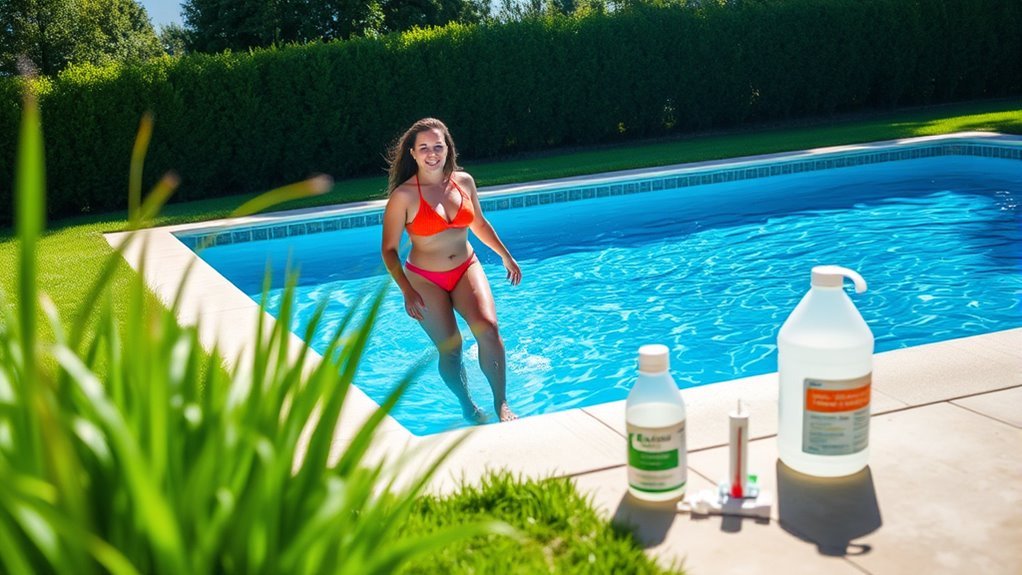
How You Can Swim Safely 4 Hours After Shocking Your Pool
You can swim safely 4 hours after shocking your pool by ensuring the chlorine level has dropped to between 1 and 3 ppm and the pH is balanced around 7.2 to 7.8. Checking these key parameters helps maintain a safe swimming environment.
Use a reliable test kit to check the water before jumping in. Also, verify the water looks clear and has no strong chemical smell.
If you follow these steps, you’ll enjoy safe swimming and can discover more tips for maintaining pool safety.
Understanding the Pool Shocking Process

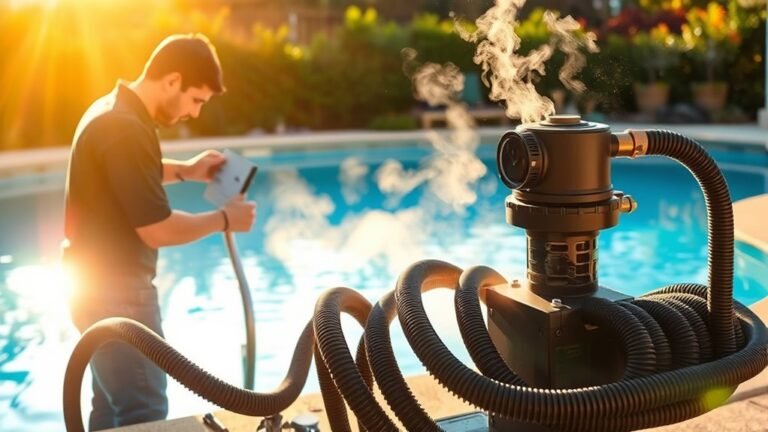
Before you jump back into the pool, it’s vital to understand how pool shocking works. When you shock your pool, you’re adding a high dose of chlorine or other chemicals to eliminate bacteria, algae, and contaminants.
This process rapidly raises the sanitizer level, killing organic matter that normal chlorine levels can’t handle. You’ll usually add the shock treatment in the evening or when the pool isn’t in use to avoid exposure.
The chemicals react with contaminants, breaking them down and clearing the water. This guarantees a safer and cleaner swimming environment.
Knowing this helps you appreciate why waiting before swimming is essential. Too soon, and you risk skin irritation or breathing in harsh chemicals.
Ideal Waiting Time After Pool Shock

Although pool shocking effectively sanitizes your water, you shouldn’t swim immediately afterward. The ideal waiting time depends on the type of shock used and pool conditions.
Typically, waiting 4 to 8 hours allows chlorine levels to drop to safe levels. Rushing in too soon risks skin irritation or respiratory issues from high chlorine.
| Shock Type | Recommended Wait Time |
|---|---|
| Calcium Hypochlorite | 8 hours |
| Sodium Hypochlorite | 4-6 hours |
| Non-Chlorine Shock | 15-30 minutes |
| Potassium Peroxymonosulfate | 30 minutes |
| Liquid Chlorine | 4-6 hours |
Follow these guidelines closely to verify your pool is safe and comfortable when you swim again.
How to Test Chlorine Levels Before Swimming
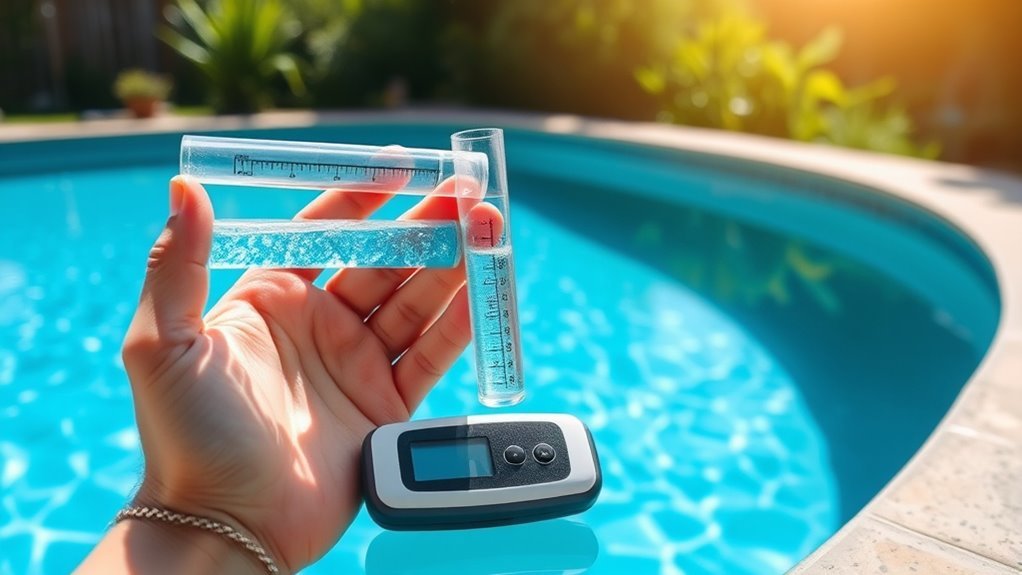
When you’ve waited the recommended time after shocking your pool, testing the chlorine levels guarantees it’s truly safe to swim. You want to make sure chlorine is at the right level, usually between 1 and 3 ppm, before diving in.
Here’s how to do it quickly and accurately:
- Use a reliable pool testing kit or test strips designed for chlorine.
- Collect water from elbow-deep in the pool for the most accurate reading.
- Follow the test kit instructions carefully to avoid errors.
- Compare your results to safe swimming standards; if chlorine is too high, wait longer.
Tips for Maintaining Safe Pool Chemistry
To keep your pool safe and inviting, you need to maintain balanced chemistry consistently. Regularly test your water’s pH, chlorine, alkalinity, and calcium hardness levels using reliable test kits.
Aim for a pH between 7.2 and 7.8 and free chlorine levels of 1–3 ppm to prevent irritation and bacteria growth.
Adjust chemicals as needed. Add pH increasers or decreasers to keep it stable. Don’t forget to monitor alkalinity, which buffers pH changes, and calcium hardness to protect surfaces from damage.
Run your pool pump daily to circulate water and evenly distribute chemicals.
Also, clean your pool regularly to reduce organic contaminants that consume chlorine.
Staying proactive with these steps ensures your pool remains safe and ready for swimming after shocking.
Signs Your Pool Is Ready for Swimming
Before you dive back in, you need to confirm that your pool’s chemical levels have returned to safe ranges. Testing your water ensures you won’t expose yourself to harmful chemicals or bacteria.
Look for these clear signs that your pool is ready for swimming:
- The chlorine level reads between 1 and 3 ppm, indicating safe disinfection
- pH levels fall between 7.2 and 7.8, so the water feels comfortable on your skin
- The water is crystal clear, free from cloudiness or debris
- No strong chemical smell lingers, signaling balanced and stable water chemistry
Frequently Asked Questions
Can I Swim Immediately After Adding Shock to My Pool?
You shouldn’t swim immediately after adding shock to your pool because the chemicals are too strong and can irritate your skin and eyes.
Wait at least 4 hours, or until chlorine levels drop to safe limits.
What Types of Pool Shock Are Safest for Quick Swimming?
You’ll find calcium hypochlorite and non-chlorine shock safest for quick swimming since they dissipate faster.
Always check label instructions and test chlorine levels before jumping in to verify the pool’s safe.
How Does Weather Affect Pool Shocking and Swim Timing?
Weather’s like a watchful gardener—sunny days help chlorine bloom fast, letting you swim sooner, while rain dilutes it, delaying your dip.
Can Pets Swim in the Pool After Shocking?
You shouldn’t let pets swim right after shocking because high chlorine levels can irritate their skin and eyes.
Wait at least 24 to 48 hours, test the water, and verify chlorine is safe before letting them in.
Are There Health Risks if Chlorine Levels Are Slightly High?
Yes, there are health risks if chlorine levels are slightly high. You might experience skin irritation, eye redness, or respiratory issues.
Always test and balance your pool’s chlorine to keep it safe and comfortable for swimming.
Conclusion
Now that you know how to give your pool a new reset, you can enjoy a splash without worries. Just remember to check those chlorine levels carefully and wait for the right moment before diving back in.
By keeping an eye on your pool’s balance and following simple safety cues, you’ll ensure your swim feels invigorating and inviting—like a gentle invitation rather than a chemical handshake.
Swim smart and enjoy every ripple safely! Remember, swimming safely 4 hours after shocking your pool means monitoring chlorine levels and maintaining the right water balance for a refreshing and safe experience.