How to Swim Safely After You Get Your Ears Pierced
To swim safely after getting your ears pierced, it is important to follow proper aftercare guidelines to prevent infection and promote healing. Wait until the initial healing period—usually 6-8 weeks for earlobes—before exposing your ears to water.
Avoid submerging your ears in pools, lakes, or other bodies of water to reduce the risk of infection from bacteria. If you must swim during the healing process, wear waterproof earplugs or a swim cap for added protection.
After swimming, rinse your ears thoroughly with fresh water and dry them completely. Avoid touching your earrings with wet hands, and continue following your aftercare routine closely. Keeping these habits in mind will support proper healing and help you avoid complications.
Understanding the Healing Process of New Ear Piercings
Although it might be tempting to jump right back into swimming, you need to understand that new ear piercings require time to heal properly. Your body treats the piercing as a wound, so it initiates a healing process that varies depending on your skin type and aftercare.
Generally, earlobe piercings take about 6 to 8 weeks to heal. Meanwhile, cartilage piercings may need several months. During this time, your skin forms a protective barrier around the jewelry to prevent infection.
Earlobe piercings heal in 6-8 weeks, while cartilage piercings require several months to fully recover.
You’ll notice some redness, swelling, and tenderness early on—that’s normal. Keeping the area clean and avoiding irritation helps speed healing.
If you rush the process, you risk prolonging discomfort. So, be patient and give your ear the time it needs to fully recover before exposing it to water or other potential irritants.
Risks of Swimming Too Soon After Piercing
If you swim too soon after getting your ears pierced, you increase the chance of infection and irritation. Pools, lakes, and oceans contain bacteria and other microorganisms that can enter the fresh piercing, leading to redness, swelling, and pain.
Your body’s natural healing barrier hasn’t fully formed yet, making it easier for harmful agents to invade.
Additionally, chlorine and saltwater can cause dryness and itching, further aggravating the delicate tissue.
This irritation can delay healing and might even result in scarring or the need to remove the jewelry. You also risk developing a more serious infection that requires medical treatment.
To protect your new piercing, it’s best to avoid swimming until it’s sufficiently healed to reduce these risks.
Essential Precautions for Swimming With Fresh Piercings
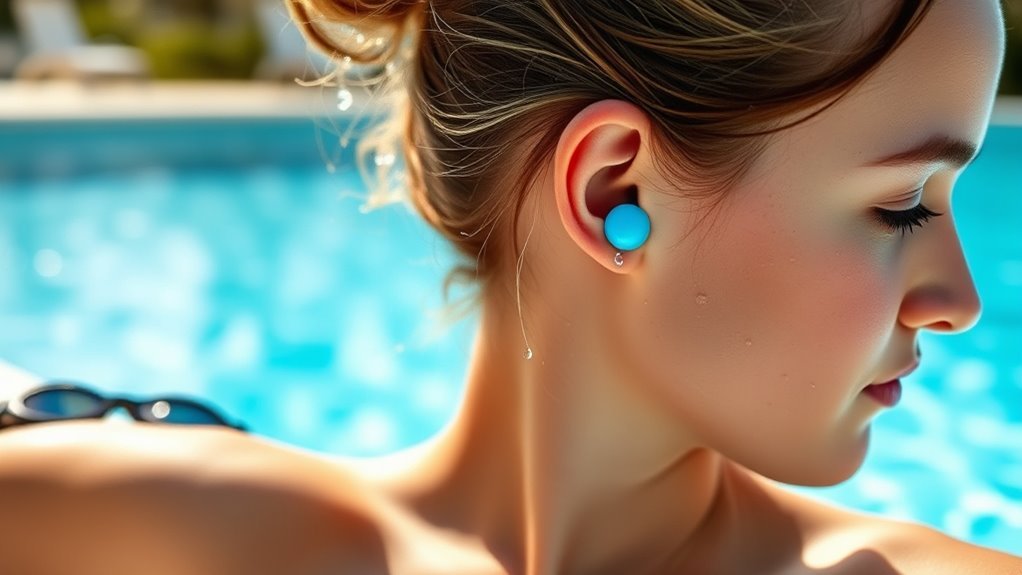
When you must swim with fresh piercings, taking specific precautions can help prevent infection and irritation. First, avoid submerging your ears fully in water whenever possible. If you can’t, make sure to rinse your ears with clean, fresh water immediately afterward to wash away any chlorine, salt, or bacteria.
Always dry your ears thoroughly using a clean towel or air dry them to prevent moisture buildup. Avoid touching or twisting your earrings with wet hands, as this increases the risk of introducing germs.
Keep your piercing site clean by following your piercer’s aftercare instructions carefully.
Finally, avoid swimming in pools, lakes, or oceans if you notice any redness, swelling, or discomfort, as these can be signs of infection needing rest and care.
Recommended Protective Gear for Water Activities
Protecting your fresh ear piercings during water activities goes beyond careful hygiene and drying. Wearing the right protective gear helps shield your piercings from waterborne bacteria and physical irritation.
Consider using waterproof earplugs designed specifically for swimmers; they create a tight seal, preventing water from entering the piercing site. Additionally, a snug-fitting swim cap adds extra protection by covering your ears completely, reducing exposure to pool or ocean water.
| Protective Gear | Purpose |
|---|---|
| Waterproof Earplugs | Prevent water from reaching piercings |
| Swim Cap | Covers ears, limits water exposure |
| Silicone Ear Covers | Soft, flexible barrier for sensitive areas |
Using these items keeps your piercings safe while you enjoy swimming without worry.
Aftercare Tips to Prevent Infection Post-Swimming
Although swimming can be invigorating, you’ll need to care for your piercings carefully afterward to prevent infection. Start by rinsing your ears with clean, fresh water as soon as you get out of the pool or ocean to remove chlorine, salt, and bacteria.
After swimming, rinse your piercings with fresh water to wash away chlorine, salt, and bacteria.
Gently pat the area dry with a clean towel. Avoid rubbing, which can irritate healing skin.
Apply a saline solution to your piercings twice daily to keep them moist and promote healing.
Avoid touching or twisting your earrings with unwashed hands, as this can introduce germs.
If you notice redness, swelling, or discharge, consult a professional promptly.
Frequently Asked Questions
Can I Swim in a Hot Tub With New Ear Piercings?
You shouldn’t swim in a hot tub with new ear piercings because the warm water can harbor bacteria, increasing infection risk.
Wait at least 6-8 weeks until your piercings fully heal to stay safe.
How Long Should I Avoid Swimming in Natural Bodies of Water?
You should avoid swimming in natural bodies of water for at least 4 to 6 weeks after getting your ears pierced. This helps prevent infections from bacteria and keeps your piercings healing properly without complications.
Are Saltwater Pools Safer Than Chlorinated Pools for New Piercings?
Saltwater pools aren’t necessarily safer than chlorinated ones for new piercings. Both contain chemicals that can irritate your piercing.
It’s best to avoid swimming until your piercing fully heals to prevent infection and promote proper healing.
Can Wearing Earrings Affect My Swimming Technique or Comfort?
You might think earrings won’t matter in water, but they can snag or irritate your skin, disrupting your stroke and comfort.
Removing them before swimming keeps your technique smooth and pain-free, letting you focus on the swim.
What Should I Do if My Piercing Jewelry Gets Lost While Swimming?
If your piercing jewelry gets lost while swimming, stop and check the area carefully. Don’t panic. Replace the jewelry promptly to avoid the hole closing. Keep a spare set handy for emergencies like this.
Conclusion
Swimming with fresh ear piercings might feel tempting, but rushing in too soon can turn a healing journey into a painful setback. While water offers freedom and fun, it also brings bacteria that can threaten your new piercings.
By waiting patiently and using protective gear, you balance enjoyment with care, ensuring your ears heal beautifully. Remember, a little caution now means you’ll dive back in confidently and comfortably later.
Following these tips on how to swim safely after you get your ears pierced will help prevent infections and promote faster healing. Protect your piercings, be patient, and enjoy swimming without worry.