How Do Tampons Absorb Water While Swimming?
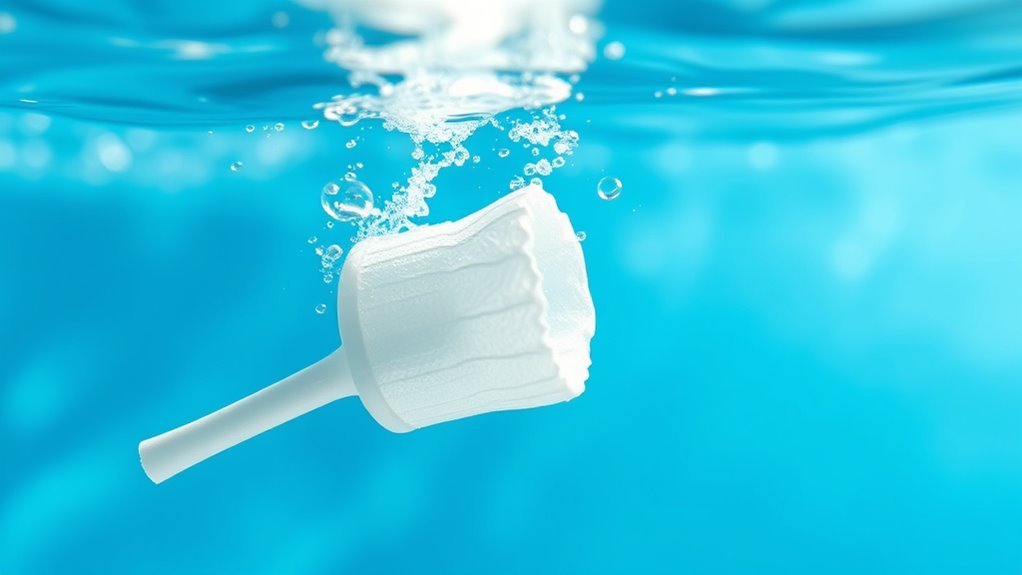
When you swim with a tampon, it does absorb some pool water, but it’s mainly designed to soak up menstrual fluid. The cotton or rayon fibers inside trap liquid through capillary action, expanding to lock in moisture while limiting excess water intake. This absorption mechanism helps maintain comfort and hygiene during swimming.
Water pressure and movement might shift its position, but the tampon’s structure helps maintain its function underwater. The fibers’ design ensures that while some water may enter, the tampon primarily absorbs menstrual flow rather than pool water.
Keep this in mind if you want to understand how tampons work during swimming and learn how to use them effectively. Proper insertion and timely changing can help you stay comfortable and confident in the water.
Understanding Tampon Composition and Materials
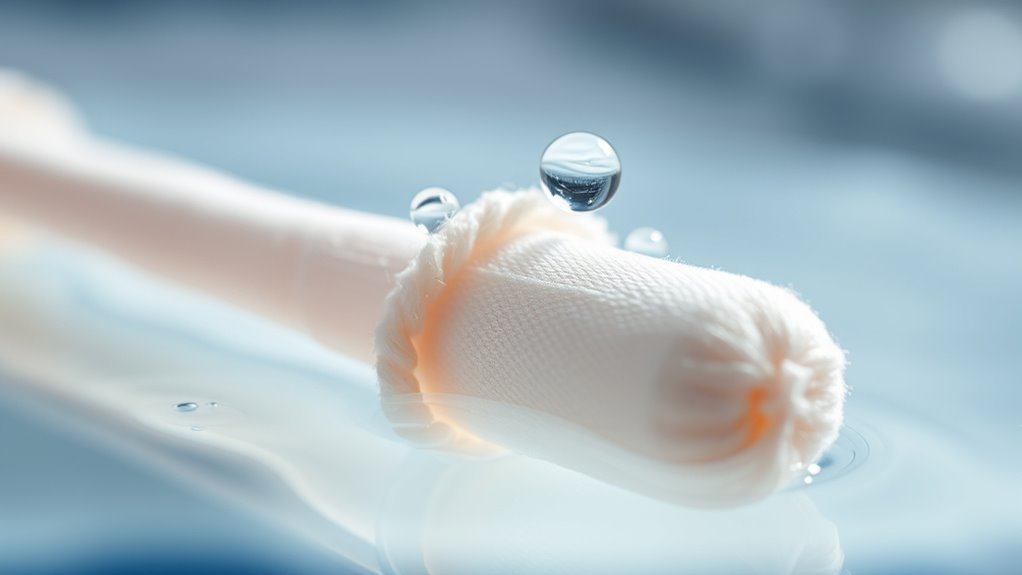
Before you can understand how tampons absorb water, it’s important to know what they’re made of. Tampons typically consist of cotton, rayon, or a blend of both. These materials are chosen for their softness and high absorbency.
Cotton fibers are naturally absorbent, while rayon, a synthetic fiber, is designed to pull liquid in quickly. You’ll also find that tampons are compressed into a compact shape, allowing them to expand and trap moisture efficiently when in use.
Some tampons include a thin, perforated covering to help maintain structure and ease insertion. Knowing these materials helps you appreciate how tampons manage moisture and maintain comfort, especially when you’re swimming or in water, as the materials work together to absorb fluids effectively without falling apart.
The Science Behind Absorption in Tampons
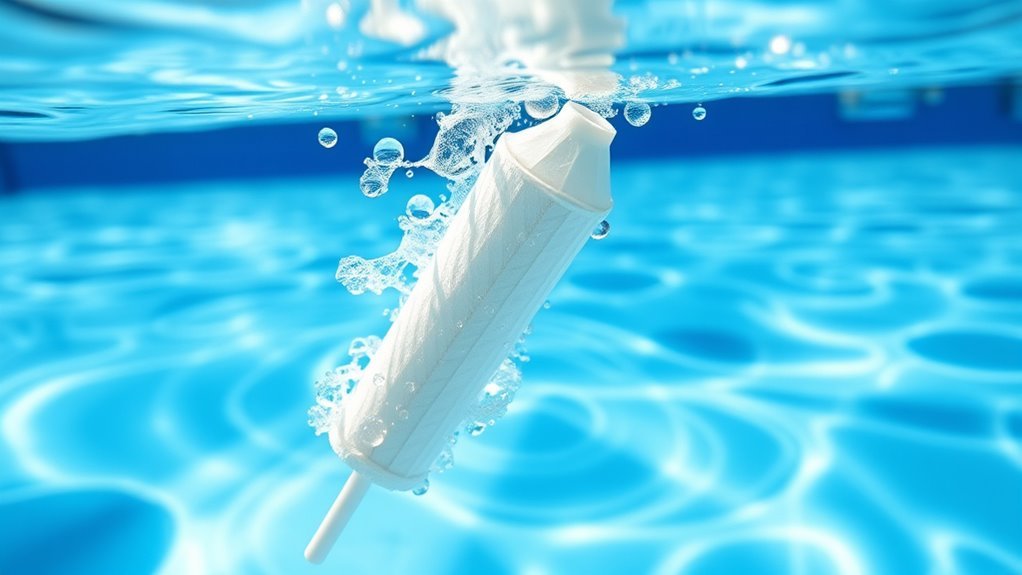
Although tampons might seem simple, the science behind their absorption is quite sophisticated. When you insert a tampon, it encounters fluid, which it draws in thanks to the material’s capillary action and absorbent fibers. These fibers swell and trap liquid, locking it inside.
The tampon’s structure maximizes surface area for quick absorption, while the superabsorbent polymers hold fluid efficiently.
Here’s a quick look at how tampons absorb fluids:
| Feature | How It Works | Benefit |
|---|---|---|
| Capillary Action | Draws fluid into fibers | Fast absorption |
| Fiber Swelling | Fibers expand with liquid | Locks fluid in place |
| Superabsorbent Polymers | Absorb many times their weight | Holds fluid securely |
This blend lets tampons absorb water reliably during swimming or daily use.
How Tampons Differentiate Between Menstrual Fluid and Water
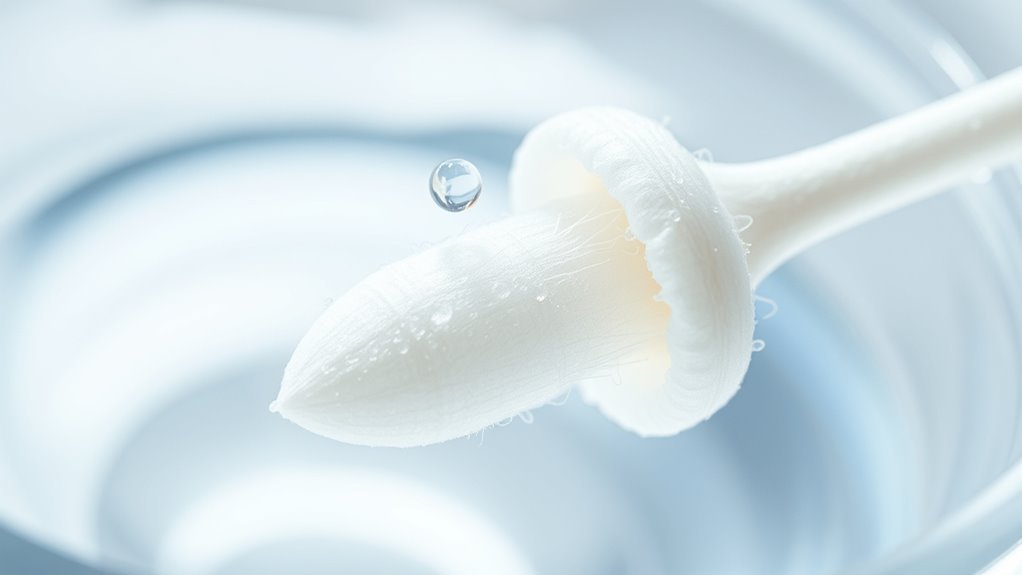
How can tampons tell the difference between menstrual fluid and water? Actually, they don’t distinguish between the two based on composition. Instead, tampons absorb liquids based on contact and exposure.
When you’re swimming, the tampon is surrounded by water, but it’s designed to absorb fluid inside your body, where menstrual blood is present. The tampon’s location creates a barrier, preventing excessive water absorption from outside.
Additionally, your body’s natural seal around the tampon minimizes water entry. Menstrual fluid tends to be more viscous and contains proteins and cells, but tampons primarily respond to liquid volume, not type.
The Role of Absorbent Fibers in Water Retention
Because tampons rely on absorbent fibers, understanding their role is key to knowing how water retention works. When you insert a tampon, these fibers, usually made from cotton or rayon, expand as they soak up fluid. They create a network that traps liquid within tiny spaces, preventing it from leaking out.
While designed to absorb menstrual fluid, these fibers also interact with water, including pool water, capturing some of it as well. However, the fibers’ structure and density help limit how much water they retain, so they don’t become overly saturated just from swimming. This balance allows tampons to maintain their function and comfort.
Effects of Swimming on Tampon Performance
When you swim with a tampon, the water pressure and movement can influence its performance. Water pushes against the tampon, which might cause it to expand differently than it would inside your body.
The constant motion from swimming can also shift the tampon slightly, affecting its absorbency. However, tampons are designed to handle some external moisture, so they don’t just soak up pool water like a sponge. Instead, they focus on absorbing menstrual flow.
Still, extended exposure to water can reduce their effectiveness over time. You might notice less comfort or slight leakage if you stay in the water too long.
It’s important to monitor how your tampon feels before, during, and after swimming to ensure it’s still working properly.
Selecting the Right Tampon for Swimming
Although tampons are designed to handle some water exposure, choosing the right absorbency level is key for swimming. You want a tampon that balances absorbency without risking leakage or discomfort. Here’s how to select the best one:
- Match absorbency to your flow: Use a light or regular tampon on lighter flow days to avoid over-absorption, which can cause dryness.
- Consider the activity duration: For longer swims, choose a tampon with higher absorbency to ensure protection throughout your time in the water.
- Look for a snug fit: A well-fitting tampon reduces the chance of water entering and helps maintain comfort while swimming.
Tips for Inserting and Removing Tampons Before and After Swimming
Choosing the right tampon is just the first step to staying comfortable while swimming. Before you hit the water, insert your tampon carefully, making sure it feels secure but not uncomfortable. Wash your hands thoroughly before and after inserting to maintain hygiene.
Give the tampon enough time to settle in, usually about 15 minutes, to ensure it absorbs as expected. After swimming, remove the tampon promptly to avoid leaks or discomfort, especially since water can affect absorption.
If you notice any resistance or discomfort, relax and try again gently. Always carry a spare tampon and a plastic bag for disposal. Following these simple tips helps you enjoy swimming confidently, knowing your tampon is working effectively without causing irritation or inconvenience.
Common Myths About Swimming With Tampons
Many people believe tampons cause discomfort or hygiene issues while swimming, but these concerns are often based on myths rather than facts. You can enjoy swimming without worries if you understand the truth behind common misconceptions.
- Tampons Get Waterlogged and Leak: Tampons are designed to absorb menstrual flow, not pool water. They don’t swell or leak because of water exposure.
- Swimming With Tampons Is Unhygienic: Properly inserted tampons remain inside your body, not exposed to pool water, so hygiene isn’t compromised.
- You Can’t Swim During Your Period: You absolutely can. Tampons offer freedom and comfort, letting you swim without interruption.
Knowing these truths helps you feel confident and comfortable in the water during your period.
Safety Considerations When Using Tampons in Water
When you use tampons in water, it’s important to follow safety guidelines to reduce the risk of irritation or infection. Always choose the right absorbency for your flow to avoid dryness or leakage.
Change your tampon before and after swimming to minimize bacteria buildup. Never leave a tampon in for more than eight hours, especially when swimming, since wet environments can increase infection risk.
Make sure your hands are clean when inserting or removing tampons to prevent introducing germs. If you experience discomfort, itching, or unusual discharge, remove the tampon and consult a healthcare professional.
Using tampons correctly and maintaining good hygiene helps you stay safe and comfortable while enjoying water activities.
Frequently Asked Questions
Can Tampons Be Reused After Swimming?
You shouldn’t reuse tampons after swimming because they absorb water and bacteria, increasing infection risk.
Always change to a fresh tampon to stay safe and comfortable, especially after being in a pool or ocean.
How Long Can You Swim With a Tampon in Place?
You could swim for hours, but it’s best to change your tampon every 4 to 8 hours to avoid discomfort or infection.
Don’t push it too long—your body’s health matters more than endless pool time.
Do Tampons Cause Infections When Used in Pools or Oceans?
Tampons themselves don’t cause infections in pools or oceans, but bacteria in water can increase risk. You should change tampons frequently and avoid swimming in contaminated water to stay safe and reduce infection chances.
Are There Alternatives to Tampons Specifically for Swimming?
Think of menstrual cups as your waterproof shield in battle. You can also try period swimwear or soft sponges—they keep you comfortable and dry while swimming, letting you enjoy the water without worrying about leaks or discomfort.
How Do Different Water Temperatures Affect Tampon Comfort?
Cold water can make tampons feel firmer and less comfortable, while warm water often helps them feel softer and more flexible.
You might notice more sensitivity in colder temperatures, so choose accordingly for your comfort.
Conclusion
Now that you know how tampons work underwater, you can swim confidently without worrying. Their absorbent fibers cleverly trap fluids, whether it’s menstrual blood or pool water, much like a sponge from the Renaissance era—surprisingly effective yet simple.
Just pick the right tampon, insert it properly, and enjoy your swim. Remember, tampons are designed to keep you comfortable and safe, even when you’re doing the backstroke or channeling your inner knight in shining armor.
In conclusion, tampons absorb water while swimming by using their specially designed absorbent fibers that lock in moisture. This feature ensures comfort and protection, making tampons ideal for swimming during your period.