How Long Does It Take to Learn to Swim Step by Step?
You can learn to swim step by step in a few weeks if you practice regularly and focus on basics like floating, breathing, and simple strokes. Learning to swim step by step helps build a strong foundation and makes the process manageable.
Start by getting comfortable in the water and mastering floating on your back and stomach. Then, work on steady kicks and coordinated arm movements while timing your breathing.
With patience and consistent effort, you’ll build confidence and endurance. Keep going, and you’ll soon discover how to refine your technique even further.
Understanding the Basics of Swimming

Before you plunge into advanced techniques, you need to understand the basics of swimming. You’ll want to master floating, breathing, and simple strokes first.
Floating helps you stay relaxed and conserve energy in the water. Practice lying on your back and stomach, feeling the water support your body.
Master floating to relax and save energy by lying on your back and stomach in the water.
Breathing is vital. Learn to exhale underwater and inhale quickly when your mouth breaks the surface. This rhythmic breathing keeps you calm and steady.
Next, focus on basic strokes like the front crawl and backstroke. These strokes combine arm movements and kicks to propel you forward efficiently.
Getting Comfortable in the Water

Once you start spending time in the water, your comfort level will increase naturally. Familiarizing yourself with sensations like buoyancy and water temperature helps reduce anxiety.
Try simple exercises such as walking in the shallow end, blowing bubbles, or submerging your face to build confidence. Remember, patience is key; everyone adjusts at their own pace.
| Activity | Purpose | Feeling to Notice |
|---|---|---|
| Walking in Shallow | Acclimate to water | Stability, wetness |
| Blowing Bubbles | Control breathing | Relaxation, rhythm |
| Face Submersion | Overcome fear | Calmness, water pressure |
| Floating Support | Trust buoyancy | Weightlessness, balance |
These steps prepare you mentally and physically for swimming lessons ahead.
Learning Fundamental Swimming Techniques

As you gain comfort in the water, you’ll start focusing on mastering fundamental swimming techniques like floating, kicking, and breathing rhythm. These basics form the foundation for all your swimming progress.
Mastering foundational skills like floating, kicking, and breathing rhythm sets the stage for swimming success.
Here’s what you’ll work on:
- Body Position: Keep your body streamlined and horizontal to reduce drag.
- Kicking: Use steady, controlled kicks from your hips, not your knees.
- Arm Movements: Practice smooth, coordinated strokes to propel yourself forward.
- Breathing Coordination: Time your breaths with your strokes to maintain oxygen flow without disrupting your rhythm.
Practicing Breathing and Floating Skills
Although it may feel challenging at first, practicing breathing and floating skills helps you build confidence and control in the water. Start by learning to hold your breath comfortably and exhale slowly underwater. This steady breathing rhythm keeps you relaxed and prevents panic.
Next, focus on floating on your back and stomach. To float, keep your body horizontal, stretch out your limbs, and remain calm to maintain buoyancy. You can use a wall or pool edge for support as you practice, gradually reducing reliance on it.
Mastering these basics gives you a solid foundation, making it easier to stay calm and balanced in the water. Consistent practice of breathing and floating sets you up for smoother progress in swimming.
Mastering Different Swimming Strokes
How do you move from floating and breathing to actually swimming? The key is mastering different strokes, each with unique techniques that propel you through water efficiently.
Start with the freestyle stroke, focusing on alternating arm movements and rhythmic breathing. Then, try the backstroke, which requires you to lie on your back and coordinate arm and leg kicks.
Begin with freestyle’s alternating arms and rhythmic breaths, then progress to backstroke on your back with coordinated kicks.
The breaststroke involves simultaneous arm pulls and frog-like kicks, emphasizing timing.
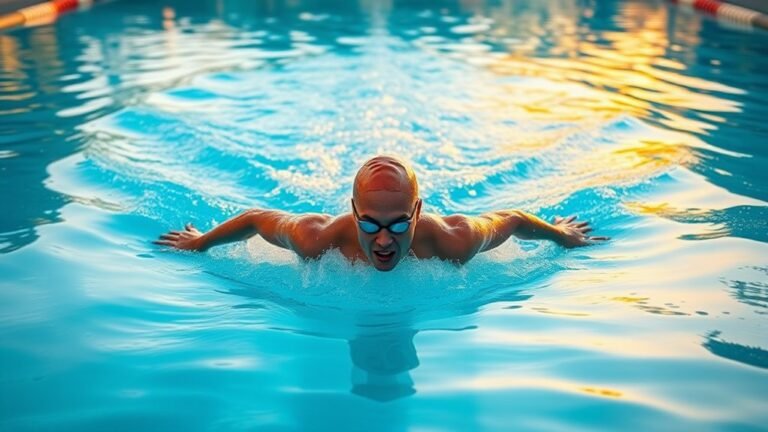
Lastly, the butterfly stroke is more advanced, demanding strong core engagement and simultaneous arm movement with a dolphin kick.
To master these strokes, focus on:
- Proper body positioning to minimize drag
- Coordinated breathing patterns
- Smooth, controlled arm and leg movements
- Consistent practice to build muscle memory and technique
These steps help you swim confidently and effectively.
Building Endurance and Confidence
Once you’ve learned the basic strokes, you’ll want to focus on building endurance and confidence in the water. Start by swimming shorter distances and gradually increase your laps.
Consistent practice helps your muscles adapt and your breath control improve, making you feel more comfortable. Confidence grows as you recognize your progress and feel secure in your abilities.
| Practice Focus | Benefit |
|---|---|
| Short laps | Builds muscle memory |
| Controlled breathing | Enhances oxygen intake |
| Steady pacing | Prevents fatigue |
| Rest intervals | Allows recovery |
| Repetition | Strengthens swimming habits |
Tips for Accelerating Your Swimming Progress
If you want to speed up your swimming progress, focusing on targeted techniques and smart practice routines can make a big difference. Start by setting clear, achievable goals for each session to maintain motivation and track improvement.
Incorporate feedback from a coach or experienced swimmer to fine-tune your form. Don’t overlook dryland exercises; strengthening your core and improving flexibility will enhance your efficiency in the water.
Finally, consistency is key. Regular practice beats occasional long sessions.
Here are some tips to accelerate your progress:
- Practice drills that isolate specific strokes or skills
- Use video recordings to analyze and adjust your technique
- Gradually increase your swimming distance and intensity
- Rest adequately to allow muscle recovery and prevent burnout
Stick to these strategies, and you’ll swim faster and stronger.
Frequently Asked Questions
What Swimming Gear Is Best for Beginners?
You’ll want a comfortable swimsuit, goggles to protect your eyes, a swim cap to keep hair out of your face, and a kickboard for practicing kicks.
These basics help you focus on learning and build confidence quickly.
How Do I Prevent Ear Infections From Swimming?
You can prevent ear infections by drying your ears thoroughly after swimming, using earplugs, and avoiding inserting objects into your ears.
Also, try tilting your head to help water drain out and consider a swim cap for extra protection.
Can Swimming Help With Weight Loss?
Yes, swimming can help you lose weight by burning calories and boosting metabolism. It’s a full-body workout that tones muscles and improves cardiovascular health, so you’ll get fit while enjoying the water.
What Are the Best Pools for Learning to Swim?
Don’t worry about fancy pools; you’ll learn best in warm, shallow pools with clear markings and lifeguards.
Community centers and swim schools offer these, making sure you feel safe and confident as you practice your strokes.
How Often Should I Swim Each Week to Improve?
You should swim at least three times a week to improve steadily. Consistent practice helps build strength and technique, but listen to your body to avoid burnout.
Combining lessons with practice sessions maximizes your progress.
Conclusion
Learning to swim is like tending a garden—you start by preparing the soil, getting comfortable with the water’s embrace, and planting the seeds of basic skills. With patience, practice, and steady care, those seeds grow into strong strokes and confident endurance.
Remember, every small splash is progress, and with time, your swimming will bloom brilliantly. Keep nurturing your journey, and you’ll soon glide through the water with ease and grace.
Understanding how long it takes to learn to swim step by step is key to setting realistic goals. Stay committed, and watch your skills develop steadily as you move through each stage of learning.