
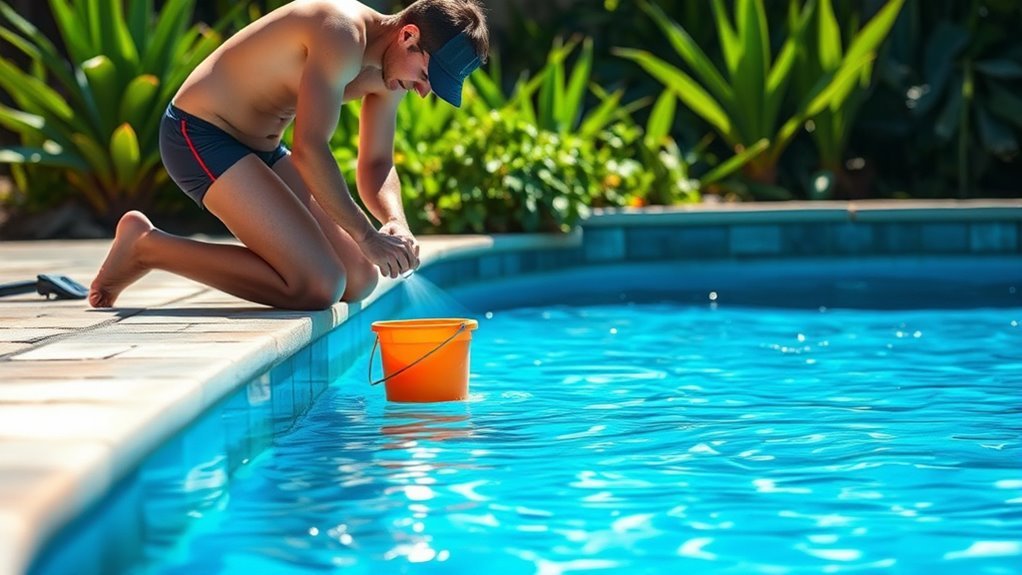
10 Steps to Find a Leak in Your Swimming Pool
To find a leak in your swimming pool, start by checking the water level daily to spot unusual drops. Monitoring water loss is crucial for early leak detection. Inspect equipment like pumps and filters for moisture or damage, then examine the liner closely for tears or cracks.
Use a dye test near suspect spots and look for wet areas around the pool deck. After heavy rain or use, continue to monitor water loss carefully. You can try a leak detection dye kit or call a professional if needed.
Keep going to uncover detailed steps and tips to successfully find a leak in your swimming pool. Following these methods will help you maintain your pool’s integrity and avoid costly repairs.
Check the Water Level Regularly
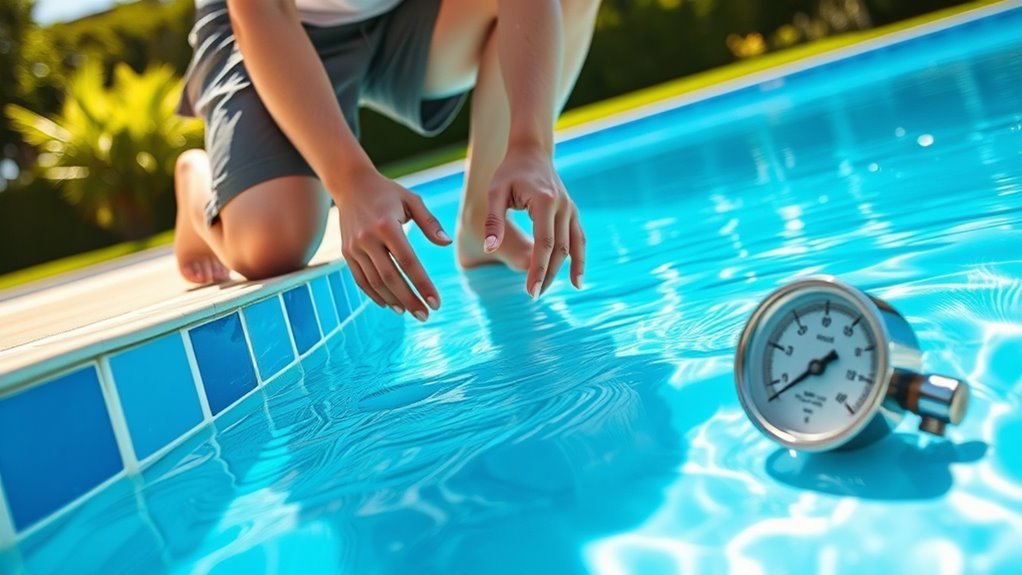
Although small fluctuations in your pool’s water level are normal, you should check it regularly to spot any unusual drops that might indicate a leak. Make it a habit to measure the water level daily, preferably in the morning before using the pool.
Mark the water line on the pool wall with a piece of tape or a waterproof marker to track changes easily.
If you notice the water dropping more than an inch per day without heavy use or evaporation, that’s a red flag.
Keep in mind that wind and sun can cause evaporation, so compare your pool’s water loss to a nearby container of water left outside.
If your pool loses water markedly faster, it’s time to investigate further for leaks.
Inspect the Pool Equipment
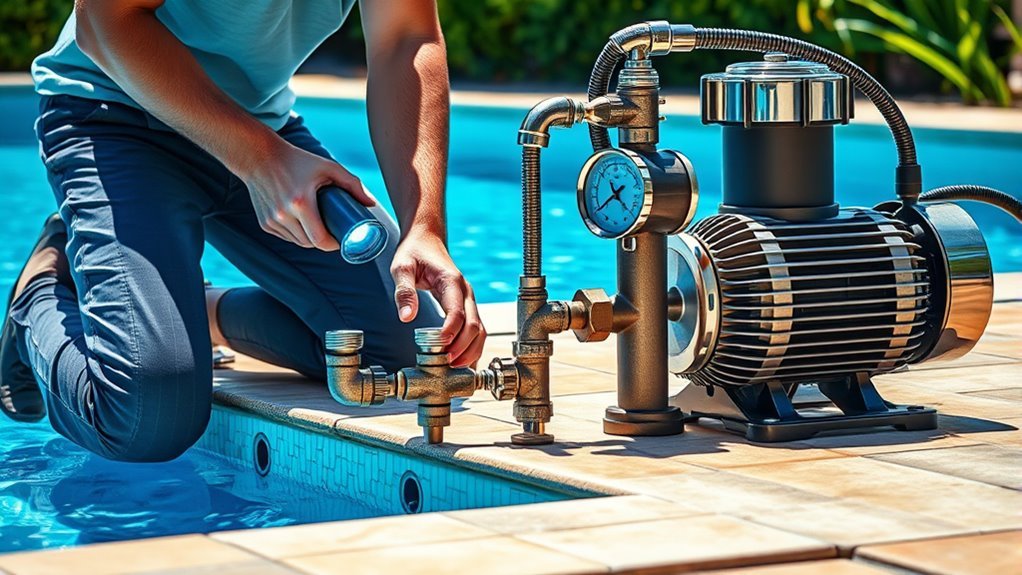
When you suspect a leak, start by inspecting your pool equipment closely, as faulty pumps, filters, or valves often cause water loss. Check around the pump for wet spots or pooling water, which can indicate a seal failure or crack.
Inspect the filter housing and connections for any drips. Make sure all valves are tightly closed and not leaking. Turn off the system and listen for unusual sounds that might suggest air entering the lines.
Examine hoses and pipe joints for visible cracks or wear. If your pool has a heater or chlorinator, inspect those units for leaks too.
Catching equipment leaks early prevents bigger problems and saves water.
Regularly maintaining and inspecting your pool’s mechanical parts is key to keeping your pool leak-free and efficient.
Examine the Pool Liner for Tears or Cracks
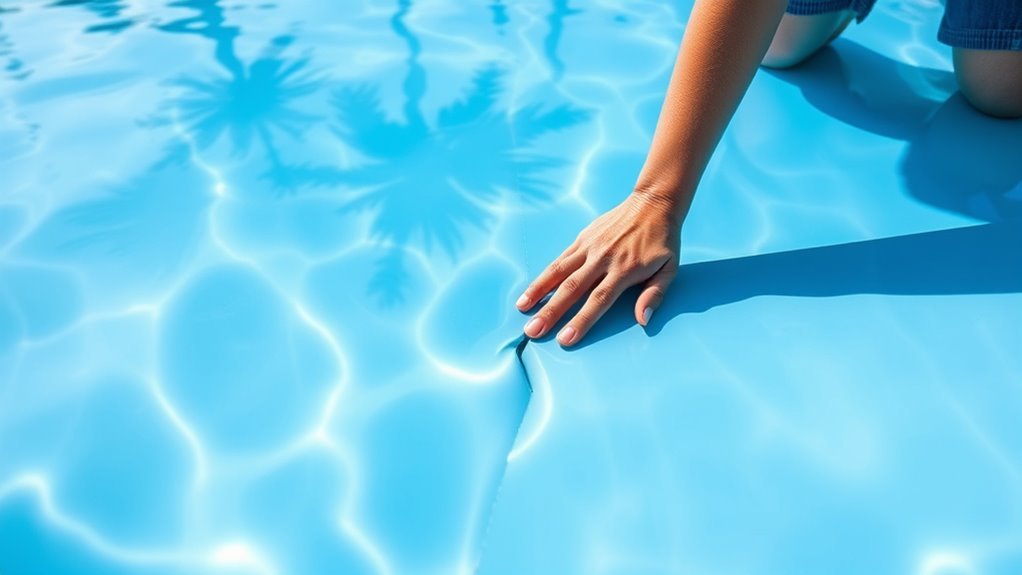
After checking your pool equipment for leaks, turn your attention to the pool liner, as damage here can also cause significant water loss. Carefully inspect the entire liner surface, focusing on areas that experience the most stress, such as corners, steps, and seams.
Look closely for any visible tears, cracks, or holes. Use a bright flashlight to spot smaller punctures that might be hard to see in daylight. If the water level drops consistently and you notice any peeling or bubbling in the liner, these are signs of damage.
Don’t forget to examine around fittings and skimmers, as these spots are prone to wear. Catching liner damage early helps prevent larger issues and costly repairs, so take your time during this inspection.
Conduct a Dye Test Near Suspected Areas
How can you pinpoint the exact location of a leak in your pool liner? Conduct a dye test near suspected areas. First, turn off the pool pump to stop water movement, allowing the dye to flow naturally toward the leak.
Then, take a small amount of food coloring or a specialized dye and slowly release it close to the suspected tear or crack. Watch carefully. If there’s a leak, the dye will be sucked into the hole or tear, clearly marking the spot.
Be patient and steady; sudden movements can disperse the dye and make it harder to see. This method helps you confirm the leak’s location precisely before proceeding with repairs, saving time and effort.
Look for Wet Spots Around the Pool Deck
Although leaks often start underwater, you can spot their effects by checking for wet spots around the pool deck. These damp areas might indicate water seeping from cracks or plumbing issues beneath the surface. Walk around your pool deck and look for puddles, unusually moist soil, or discoloration on the concrete.
Here’s what to look for:
| Sign | What it Indicates |
|---|---|
| Persistent dampness | Possible underground leak |
| Cracked or sunken deck | Water erosion underneath |
| Pool water level drop | Leak source nearby |
Test the Pool Plumbing for Leaks
When you suspect a leak, checking your pool plumbing is a crucial next step. Start by turning off the pump and marking the water level in the skimmer with a piece of tape. Then, close all valves to isolate the plumbing lines.
Suspect a leak? Turn off the pump, mark the skimmer water level, and close valves to isolate plumbing lines.
Turn the pump back on and observe the water level over 24 hours. If the water level drops faster than expected, the leak is likely in the plumbing.
Next, inspect visible pipes and fittings for cracks or dampness.
You can also perform a pressure test on the lines by using a pressure gauge; a drop in pressure indicates a leak.
Fixing or replacing faulty pipes promptly prevents further water loss and damage. If you can’t find the leak, consider calling a professional for a thorough inspection.
Monitor the Pool After Rain or Heavy Use
After checking your pool plumbing for leaks, keep a close eye on the water level following rain or heavy pool use. Rain can temporarily raise your pool’s water level, masking slow leaks. Once the water settles, monitor how quickly it drops.
Heavy use, like frequent swimming or water activities, can also cause water loss through splashing or evaporation. Distinguish these from leaks by tracking water levels over several days without rain or use.
Use a marked reference point on the pool wall to measure changes accurately. If the water level consistently drops beyond normal evaporation rates, it’s a strong sign of a leak.
Staying vigilant after these events helps you catch leaks early, preventing costly repairs and maintaining your pool’s health.
Use a Leak Detection Dye Kit
If you suspect a leak but can’t pinpoint its location, a leak detection dye kit can help you identify the problem quickly. Simply squirt the dye near suspected areas like around fittings, cracks, or the pool’s liner. The dye will move toward the leak, revealing its exact spot. Make sure the water is still when you do this to see the dye’s movement clearly.
| Step | What to Do |
|---|---|
| Prepare the pool | Turn off pumps and wait for still water |
| Apply the dye | Squeeze dye near suspected leak areas |
| Observe movement | Watch if dye is drawn into cracks or holes |
Using this method, you can save time and avoid unnecessary repairs.
Hire a Professional Leak Detection Service
Although using a dye kit can help identify leaks, some issues require professional expertise to locate and fix. If you’ve tried basic methods without success, hiring a professional leak detection service is the next smart move.
Experts use advanced tools like electronic listening devices, pressure testing, and infrared cameras to pinpoint leaks you might miss. They can quickly identify leaks in underground pipes, pool liners, or complex plumbing systems. This saves you time and prevents costly water loss.
When you choose a professional, make sure they’re certified and experienced with pools similar to yours. Getting a thorough assessment ensures you understand the problem’s scope before moving on to repairs.
Don’t hesitate to call in the pros. It’s an investment that protects your pool’s longevity.
Repair or Replace Damaged Components
When you’ve identified the source of the leak, you’ll need to decide whether to repair or replace the damaged components to restore your pool’s integrity.
For minor cracks or holes, patch kits or waterproof sealants can provide an effective, quick fix.
However, if the damage is extensive or affects key parts like pipes, pumps, or liners, replacement is often the safer choice.
Inspect the affected area carefully to assess the severity. Keep in mind that temporary repairs might hold off water loss but won’t prevent future leaks if the component is compromised.
Prioritize durable, quality materials when replacing parts to ensure long-term performance and avoid recurring issues.
If you’re unsure, consulting a pool professional can help you make the best decision for your specific situation.
Frequently Asked Questions
How Often Should I Check My Pool for Leaks?
You should check your pool for leaks at least once a month, especially during heavy use or after storms. Regular inspections help you catch problems early, saving you time, money, and preventing bigger damage down the line.
Can Pool Leaks Cause Health Issues?
Pool leaks can cause health issues, like turning your backyard into a swamp of germs overnight! You’ll risk bacteria growth and poor water quality, which can lead to skin irritations, infections, and respiratory problems if left unchecked.
What Tools Are Best for DIY Leak Detection?
You’ll want a dye tester, a bucket, and a pool leak detection kit. A pressure tester helps check pipes, while a flashlight lets you spot cracks. These tools make DIY leak detection easier and more accurate.
How Much Does Professional Leak Detection Typically Cost?
You’ll typically pay between $200 and $600 for professional leak detection, depending on your pool’s size and complexity. Some companies charge a flat fee, while others include repair costs separately.
Can Pool Leaks Damage Surrounding Landscaping?
Yes, pool leaks can damage landscaping. In fact, 30% of leaks cause soil erosion around pools, leading to plant root damage and instability.
You’ll want to fix leaks quickly to protect your yard and plants.
Conclusion
Finding a leak in your pool might seem tricky, but don’t give up just yet. You’ve checked the water level, inspected equipment, and even tried a dye test. Yet, the mystery might still be hiding in plain sight.
Keep a close eye on those wet spots or unusual dips after heavy use. If the answer still escapes you, calling in a pro could be the game-changer.
Your perfect pool is closer than you think! Remember, effective leak detection and timely repair are key to maintaining a beautiful, functional swimming pool.