How to Heat a Swimming Pool for Free With a Step-By-Step Guide
You can heat your swimming pool for free by harnessing the power of sunlight and minimizing heat loss. Using natural methods to warm your pool water is both eco-friendly and cost-effective. Start by covering your pool with a snug solar cover to trap heat and prevent evaporation.
Position your pool or solar rings to receive maximum sun exposure, ideally facing south without any shade. Try making a DIY solar heater by coiling a black hose in the sun and circulating water through it. This simple setup can significantly increase your pool’s temperature.
Add windbreaks around the pool area to reduce cooling breezes. Always cover the pool at night to retain heat. Keep reading to discover more smart ways to boost your pool’s warmth naturally.
Understanding the Basics of Pool Heating
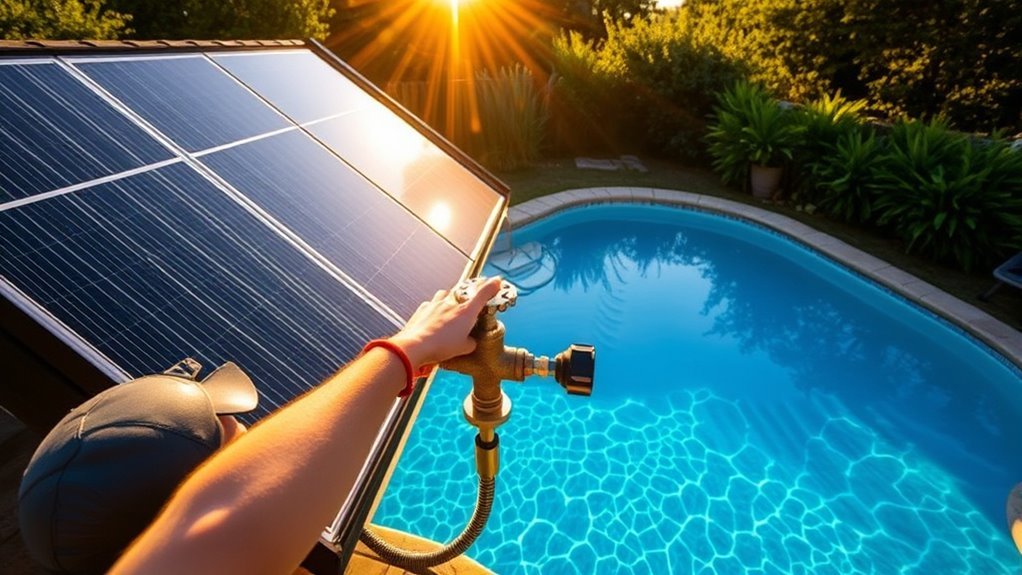
Although heating a swimming pool might seem complicated, understanding the basics makes it much easier. You need to grasp how heat transfers to water and what factors cause heat loss.
Heating your pool is simpler when you understand heat transfer and how heat escapes from water.
The sun naturally warms your pool through radiation, but water also loses heat through evaporation, convection, and conduction. Knowing this helps you choose the right methods to retain warmth efficiently.
For free heating, you rely on natural energy sources like sunlight, which can appreciably raise your pool’s temperature during the day. You should also consider your pool’s size, location, and local climate, as these impact how much heat you can capture and retain.
Once you understand these core principles, you’ll be better equipped to keep your pool comfortably warm without spending money on energy.
Maximizing Solar Gain With Pool Covers
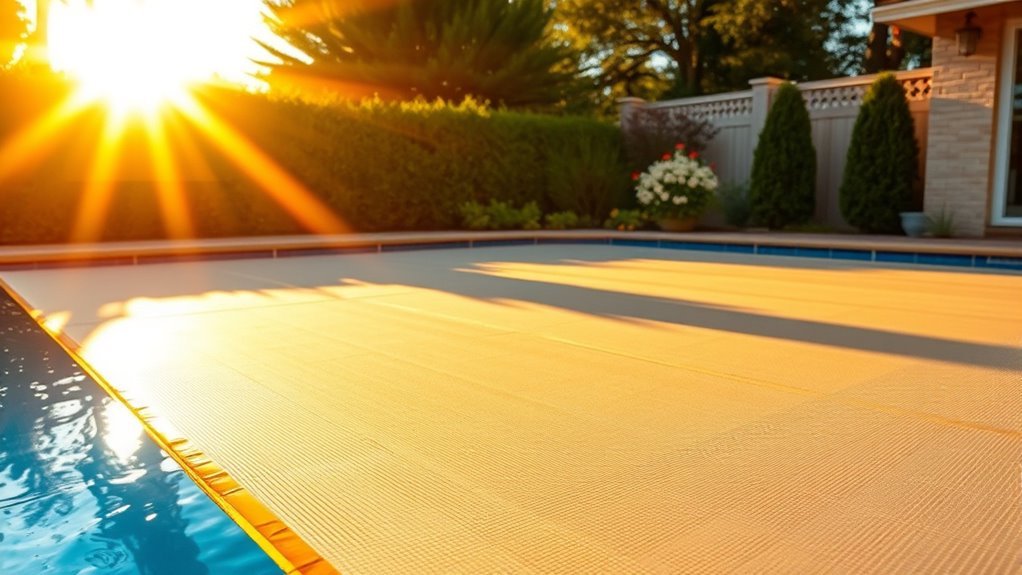
When you want to boost your pool’s temperature without extra costs, using a pool cover is one of the most effective strategies. A quality solar cover traps the sun’s heat and prevents evaporation, which causes significant heat loss.
You should choose a cover designed to let sunlight pass through while keeping warmth from escaping. Always cover your pool when it’s not in use, especially overnight, to maintain the heat gained during the day.
Make sure the cover fits snugly and is free of holes to maximize efficiency. By reducing evaporation and insulating the water, the cover can raise your pool temperature by several degrees, extending your swimming season without increasing your energy bill.
This simple step makes your solar heating efforts much more effective.
Using Solar Pool Rings and Mats
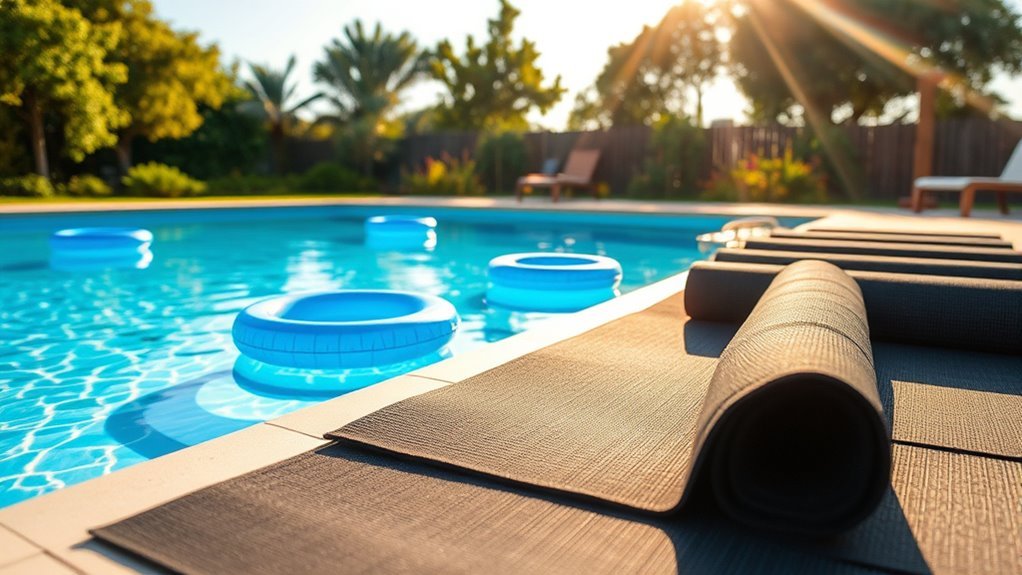
Since solar pool rings and mats float directly on your pool’s surface, they capture and transfer the sun’s warmth efficiently, making them a convenient way to heat your water without extra energy costs.
You simply place these lightweight, durable devices on the water, where they absorb sunlight and reduce evaporation, helping retain heat longer.
Solar rings form overlapping circles that cover parts of your pool, while mats offer a larger, connected surface area for better heat absorption.
Both options are easy to install, remove, and store when not in use.
Using them alongside a pool cover can further boost their effectiveness.
Positioning Your Pool for Optimal Sun Exposure
To maximize your pool’s warmth, you’ll want to position it where it catches the most sunlight throughout the day. Avoid shady spots near tall trees or buildings that block the sun during peak hours. Ideally, choose a location that receives direct sunlight from morning until late afternoon.
Consider these key factors when positioning your pool:
South-facing orientation: Pools facing south typically get the most consistent sun exposure.
Avoid obstructions: Keep the area free of overhanging branches or structures that cast shadows.
Elevation and terrain: Place your pool on level ground with minimal slope to reduce shading and optimize sun exposure.
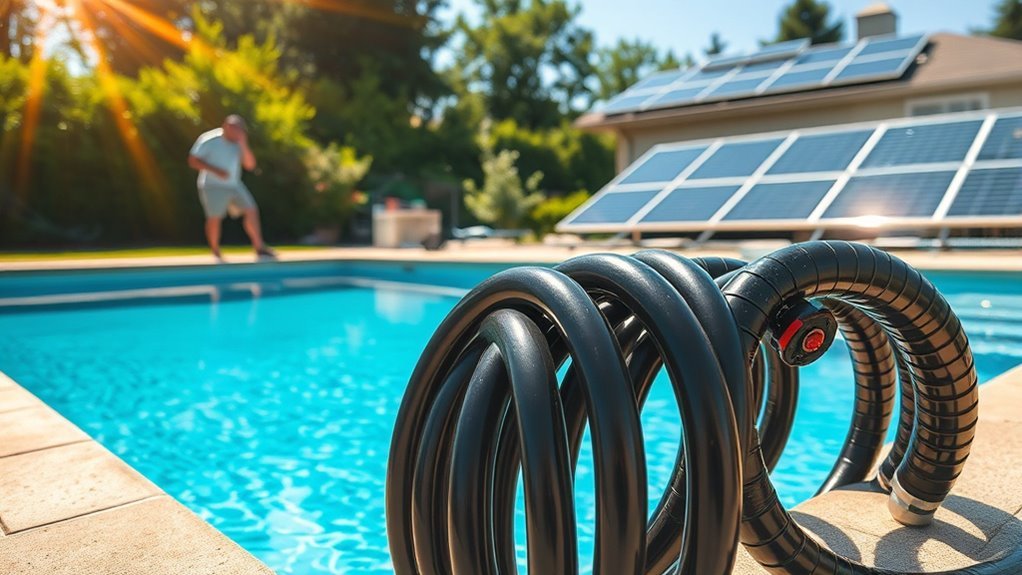
Creating a DIY Solar Heater With Black Hose
Although the sun provides natural warmth, you can boost your pool’s temperature by creating a simple DIY solar heater using a black hose.
Start by coiling a long black garden hose in a sunny spot, ideally on a flat surface that gets direct sunlight all day.
Coil a long black garden hose in a sunny, flat area for maximum solar heat absorption.
Connect one end of the hose to your pool’s pump outlet and place the other end back into the pool.
As water circulates, it flows through the hose, heating up from the sun’s rays. The black color absorbs heat effectively, warming the water before it returns to the pool.
Make sure the hose is free of kinks and lies flat for ideal flow.
This affordable method uses solar energy to raise your pool’s temperature without extra costs or complex equipment.
Utilizing Windbreaks to Retain Heat
While heating your pool with a solar hose harnesses the sun’s energy, protecting that warmth from escaping is just as important. Wind can quickly cool your pool by causing heat loss through evaporation and convection.
To retain heat effectively, you should use windbreaks around your pool area. Consider these options to block the wind and conserve warmth:
- Install tall fences or walls to shield against prevailing winds.
- Plant dense shrubs or hedges that act as natural barriers.
- Use portable windbreak screens that you can adjust as needed.
These windbreaks reduce the chilling effect of wind, helping your pool water stay warmer longer without extra energy input.
Harnessing Heat From Your Pool Pump
Since your pool pump generates heat as it runs, you can capture and reuse that warmth to help heat your pool water without extra cost. One simple method is installing a heat exchanger or coil around the pump’s motor.
Capture your pool pump’s heat with a heat exchanger to naturally warm your pool water at no extra cost.
As the pump operates, the coil absorbs the heat, transferring it to the water circulating through it. You can also direct the warmed water back into the pool, raising the overall temperature gradually.
Make sure to insulate the pump and pipes to minimize heat loss during this process. This setup uses energy already expended by the pump, making it an efficient, eco-friendly way to boost your pool’s warmth.
Harnessing pump heat requires minimal investment and maintenance but can noticeably improve your swimming comfort.
Tips for Maintaining Warm Water Overnight
Capturing heat from your pool pump helps raise the water temperature during the day, but keeping that warmth overnight requires additional strategies. To prevent heat loss when the sun goes down, you need to act deliberately.
Start by using a pool cover. It traps heat and blocks evaporation, which cools your water quickly.
Next, consider adding a solar blanket on top of the cover for extra insulation.
Finally, reduce water movement overnight since pumps can cool the water. Turning off or lowering the pump speed helps retain heat.
- Use a high-quality pool cover to minimize heat loss
- Add a solar blanket for added insulation
- Turn off or slow the pump to decrease heat loss from water movement
These simple steps help you maintain warm pool water without extra energy costs.
Frequently Asked Questions
Can I Use Pool Heating Methods in Winter Climates?
You can use pool heating methods in winter climates, but effectiveness varies. Solar covers and heat pumps help retain warmth, though supplemental heating might be necessary.
Insulating your pool also boosts efficiency during colder months.
How Do Different Pool Shapes Affect Heating Efficiency?
Your pool’s shape can make heating feel like a Herculean task or a breeze! Compact shapes like circles heat faster, while sprawling, irregular pools lose more heat.
Are There Any Safety Concerns With DIY Solar Heaters?
Yes, you should watch out for leaks, overheating, and electrical hazards if you use pumps. Make sure your materials are safe, connections secure, and monitor temperatures regularly to prevent accidents when building a DIY solar heater.
Regular maintenance and inspections are essential to catch potential issues early. Using proper insulation and protective gear can also enhance safety. Always follow recommended guidelines to minimize risks.
What Is the Environmental Impact of Solar Pool Heating?
You might be surprised how little solar pool heating impacts the environment! It cuts down on fossil fuel use and emissions, making your pool eco-friendly while saving energy.
Just make sure your materials are recyclable.
How Long Does It Take to Noticeably Warm the Pool Water?
You’ll typically notice your pool warming within a day or two, depending on sunlight and water volume.
Consistent sunny days speed it up, while cooler weather or larger pools take longer to feel that cozy warmth.
Conclusion
By using these simple, free methods, you’ll turn your pool into a warm oasis without spending a dime on energy. Think of your pool as a sponge soaking up the sun’s warmth—cover it, position it right, and harness natural heat sources to keep the water cozy.
With a little effort and creativity, you can enjoy longer swims and warmer dips, making every pool day feel like a sunny embrace. These easy steps to heat a swimming pool for free not only save money but also extend your swimming season naturally.
Implementing these strategies ensures you’ll get the most out of your pool while staying eco-friendly and budget-conscious. Embrace these innovative ways to heat your pool and enjoy a comfortably warm swim all season long.