
How to Teach a Toddler to Swim in 10 Easy Steps
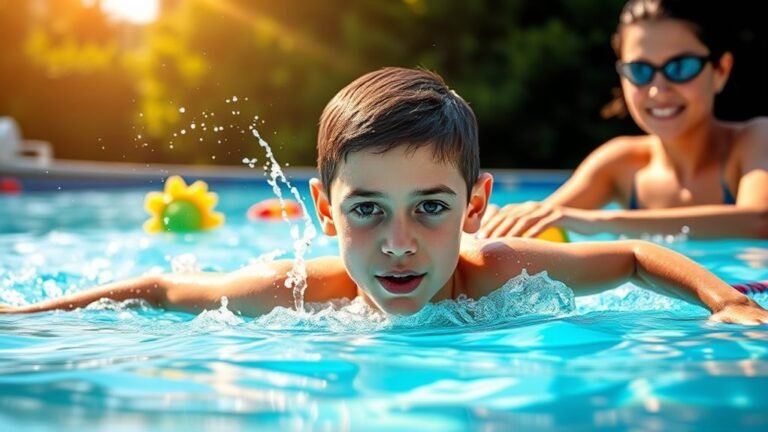
Start by familiarizing your toddler with shallow water using toys to make it fun. Choose well-fitting swim gear for comfort and safety. Teaching a toddler to swim begins with creating a positive and enjoyable environment.
Teach floating and blowing bubbles to help your child control their breath. Then, introduce gentle kicking to build basic swimming skills. Use playful games to build confidence and gradually increase water depth.
Practice safe entry and exit together, reinforcing skills with patience and consistent sessions. Keep things positive and supportive to help your toddler enjoy swimming. There’s more you can do to help them progress smoothly.
Start With Water Familiarization

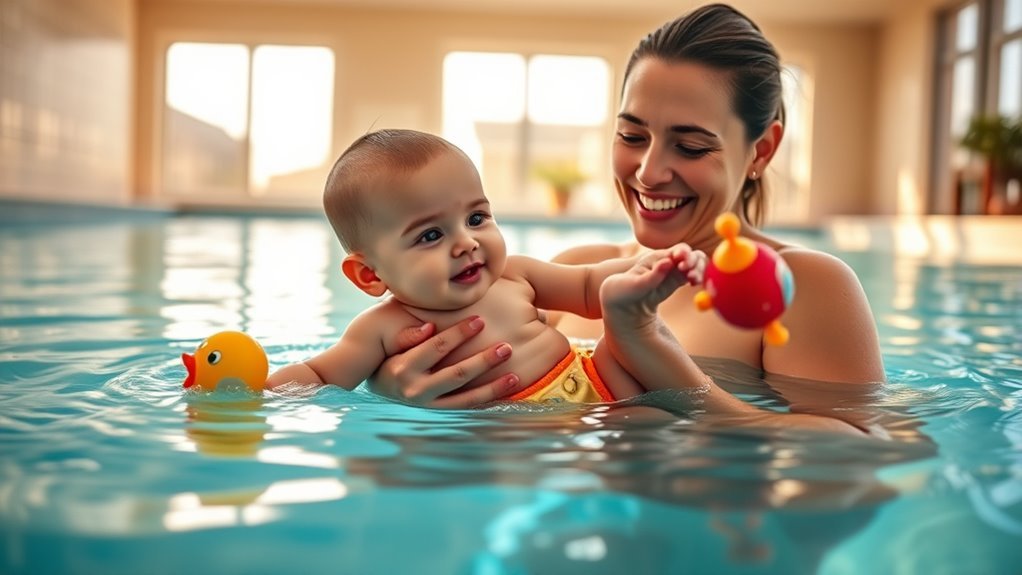
Before your toddler can learn proper swimming techniques, you need to help them get comfortable in the water. Start by introducing them to shallow areas where they can sit and splash safely.
Encourage gentle play with toys to make water fun and less intimidating. Let them feel the water on their skin, splash around, and gradually submerge their hands or feet.
Stay close, offering reassurance and positive encouragement. Use a calm and cheerful tone to build their trust, making the experience enjoyable rather than scary.
Avoid rushing; each child adapts at their own pace. By patiently fostering familiarity with water, you’ll set a solid foundation for swimming lessons, helping your toddler feel secure and ready to move on to actual swimming skills.
Choose the Right Swimming Gear

When you’re ready to move beyond water familiarization, choosing the right swimming gear becomes essential for your toddler’s comfort and safety. Start with a well-fitting swimsuit that allows freedom of movement without being too loose or tight.
A swim diaper is a must to keep the pool clean and prevent accidents. Invest in toddler-sized swim goggles to protect their eyes from chlorine and help them feel more confident underwater.
Consider a swim cap to keep hair out of their face and reduce drag.
For added safety, use a properly fitted life vest or floatation device approved for toddlers. Avoid relying solely on inflatable toys, as they don’t guarantee safety.
Selecting appropriate gear sets a solid foundation for enjoyable and secure swim lessons.
Practice Basic Floating Techniques

How can you help your toddler feel comfortable and confident in the water? Start by practicing basic floating techniques together. Floating builds trust and teaches your child to relax, which is essential for swimming.
Helping your toddler float builds trust and relaxation, key steps toward confident swimming skills.
Here’s how to begin:
- Support your toddler’s back and head gently while they lie on their back in the water. Encourage them to keep their body relaxed and eyes on the ceiling.
- Use a reassuring voice to keep your toddler calm and motivated during floating attempts.
- Gradually reduce the support as your child gains confidence, allowing them to float independently for short periods.
Consistent practice in a safe environment will help your toddler master floating, laying a strong foundation for future swimming skills.
Teach Breath Control Exercises
Once your toddler feels at ease floating, you can introduce breath control exercises to help them manage breathing in the water. Start by encouraging your child to take a deep breath on land, then gently submerge their face briefly in the water while holding their breath.
Praise their effort to build confidence. Gradually increase the time they keep their face underwater, always watching closely for signs of discomfort.
You can make it fun by blowing bubbles together or playing simple games where they blow bubbles underwater. This teaches them to exhale steadily while submerged.
Keep sessions short and positive so your toddler stays comfortable and interested.
Consistent practice will help your child develop essential breath control skills that are vital for safe swimming.
Introduce Gentle Kicking Movements
Introducing gentle kicking movements helps your toddler build the leg strength and coordination needed for swimming. Start by supporting their body gently while encouraging them to kick their legs in the water.
Keep the movements slow and relaxed to avoid overwhelming them.
Here are three tips to guide you:
- Demonstrate Kicks: Show your toddler how to kick by making slow, deliberate movements with your own legs.
- Use Floatation Aids: Let them hold onto a kickboard or float while practicing kicks to build confidence.
- Encourage Rhythm: Praise their attempts and help them find a steady, gentle rhythm to keep their kicks consistent and effective.
Encourage Arm Movement Coordination
As your toddler becomes more comfortable with kicking, you can start encouraging arm movement coordination to help them develop a balanced swimming technique. Begin by showing simple, slow arm motions like reaching forward and pulling back.
Encourage your toddler’s arm movements alongside kicking to build balanced, coordinated swimming skills.
Use clear demonstrations and guide their arms gently through the motions while supporting their body. Encourage them to move their arms in a rhythmic pattern, matching their kicks.
Keep sessions short and positive to maintain their interest. Praise every attempt to build confidence and reinforce learning.
Remember, coordination takes practice, so be patient and consistent. Avoid overwhelming your toddler; focus on smooth, basic movements before progressing to full strokes.
This step sets a strong foundation for swimming skills and helps your child feel more comfortable moving through the water efficiently.
Use Games to Build Water Confidence
While developing swimming skills, you can boost your toddler’s confidence in the water by turning lessons into fun, engaging games. These playful activities make your child feel safe and excited, which is key to building comfort in water.
Here are three games to try:
- Bubble Blowing: Encourage your toddler to blow bubbles in the water. This helps them get used to putting their face near the water without fear.
- Treasure Hunt: Toss colorful, floating toys into shallow water and have your child retrieve them, improving their reaching and kicking skills.
- Splash Dance: Play music and splash together, making water movement enjoyable and less intimidating.
Using games keeps your toddler motivated and enthusiastic to learn more in each session.
Gradually Increase Water Depth Exposure
A key step in helping your toddler become a confident swimmer is to gradually increase their exposure to deeper water. Start by letting them play and move in shallow areas where they feel secure.
Begin your toddler’s swim journey by encouraging play in shallow water where they feel safe.
Once they’re comfortable, slowly guide them to stand or sit where the water reaches their chest.
Stay close and offer plenty of encouragement. This helps them adjust to the sensation of water around their body without fear.
Watch their reactions carefully. If they seem uneasy, take a step back to shallower water until they regain confidence.
Keep sessions short and positive to maintain their interest.
By steadily increasing depth, you build their comfort and trust in the water, laying a strong foundation for swimming skills.
Practice Safe Entry and Exit Methods
Before your toddler fully enjoys swimming, you need to teach them how to enter and exit the water safely. This helps prevent accidents and builds their confidence around the pool.
Here’s how you can guide them:
- Use the steps or shallow end: Show your toddler how to use pool steps or enter through a gradual slope. Avoid jumping or diving until they’re ready.
- Hold their hand: Always hold their hand during entry and exit, providing steady support and reassurance.
- Teach to exit promptly: Encourage your toddler to exit the water carefully when they’re cold or tired to avoid slips or cramps.
Reinforce Swimming Skills With Consistent Practice
Once your toddler feels comfortable entering and exiting the water safely, you can focus on strengthening their swimming skills. Consistent practice is key to building confidence and muscle memory.
Set regular swim sessions, even if they’re short, to keep your toddler engaged without overwhelming them. Use fun games and simple drills to reinforce kicking, blowing bubbles, and floating. Praise their efforts to encourage a positive attitude toward swimming.
Be patient and adapt each session to their mood and energy levels. Remember, frequent exposure helps them retain skills and reduces fear.
Frequently Asked Questions
At What Age Is It Safe to Start Formal Swim Lessons?
You can start formal swim lessons around 1 year old, but it’s safest to begin between 2 and 4 years.
Always guarantee lessons are with certified instructors and focus on water safety and comfort first.
How Can I Prevent Ear Infections After Swimming?
Dry ears thoroughly, use earplugs, and tilt your child’s head to drain water. Don’t let water linger, don’t ignore discomfort, and don’t delay consulting a doctor if infection signs appear. You’ll keep their ears healthy!
What Are the Signs of Water Anxiety in Toddlers?
You’ll notice your toddler clinging tightly, crying, or refusing to enter the water. They might show tense body language, avoid eye contact, or panic during splashes.
Recognizing these signs helps you respond with patience and reassurance.
Should Toddlers Wear Swim Diapers in All Pools?
Better safe than sorry. You should have your toddler wear swim diapers in all pools. They help keep the water clean and prevent accidents, making swimming safer and more enjoyable for everyone involved.
How Do I Choose a Qualified Swim Instructor?
You’ll want to check certifications like YMCA or Red Cross, read reviews, and ask about their experience with toddlers.
Make sure they’re patient, friendly, and use safety-first teaching methods to keep your child comfortable and confident.
Conclusion
Teaching your toddler to swim is like planting a seed—you nurture it with patience, consistency, and care. By starting with water familiarization and gradually building skills through fun games and practice, you’ll help your little one grow confident and safe in the water.
Stick with these steps, and soon swimming will feel as natural to your toddler as walking. Keep encouraging, stay positive, and enjoy every splash-filled moment together! Remember, teaching a toddler to swim requires dedication, but the rewarding experience of watching them thrive in the water makes it all worthwhile.