What Raises Ph in a Swimming Pool?
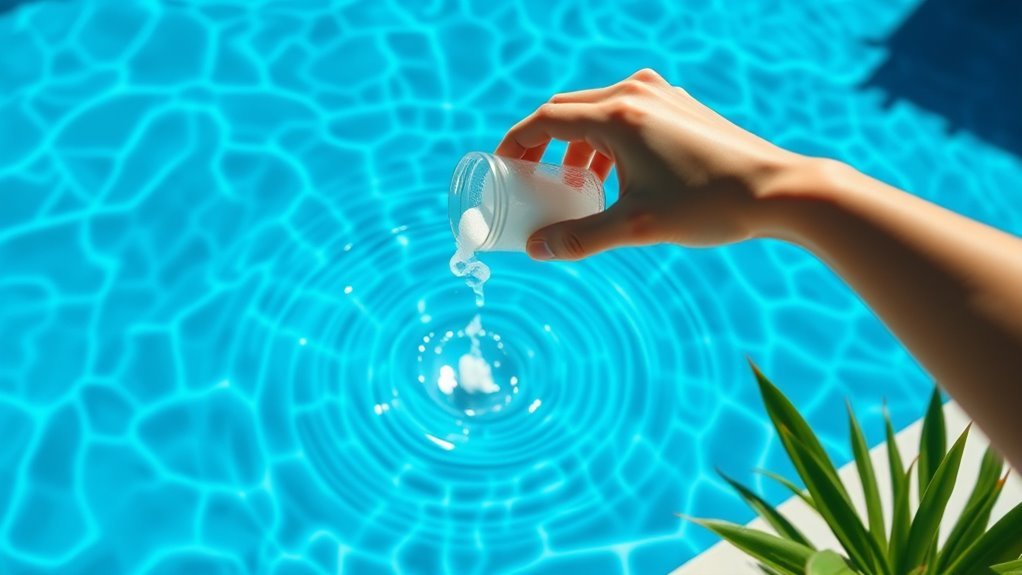
You’ll notice your pool’s pH rises when you add chemicals like calcium hypochlorite or liquid chlorine since they’re alkaline. The water source matters too—hard water or alkaline fill water can boost pH. Plus, swimmers bring in oils and sweat, and sunlight breaks down chlorine, which all push pH up.
Environmental debris and rainwater also play a role. Keep monitoring to manage these factors, and you’ll find ways to maintain balanced water.
Impact of Alkalinity on Pool Ph

How does alkalinity affect your pool’s pH? Alkalinity acts as a buffer, stabilizing your pool’s pH levels and preventing sudden changes. When alkalinity is too low, your pH can swing wildly, making it hard to maintain balance.
On the other hand, if alkalinity is too high, your pH may rise and become difficult to lower. You want to keep total alkalinity in the ideal range, usually between 80 and 120 ppm.
This balance helps your pool water resist drastic pH shifts caused by environmental factors like rain or swimmers.
Regularly testing and adjusting alkalinity guarantees your pH stays steady, protecting your pool equipment and providing a comfortable swimming environment. Managing alkalinity is key before addressing pH directly.
Effects of Pool Chemicals on Ph Levels

Although maintaining proper alkalinity is essential, the pool chemicals you add also play a major role in raising or lowering your pool’s pH. For example, chlorine products like calcium hypochlorite tend to increase pH because they’re alkaline.
On the other hand, liquid chlorine (sodium hypochlorite) also raises pH but to a lesser extent. If your pool’s pH is climbing, you might consider using muriatic acid or sodium bisulfate, which lower pH effectively.
Additionally, stabilizers like cyanuric acid can slightly influence pH levels over time. It’s important to test your pool water regularly because adding chemicals without checking pH can cause imbalances.
Role of Pool Water Source and Fill Water
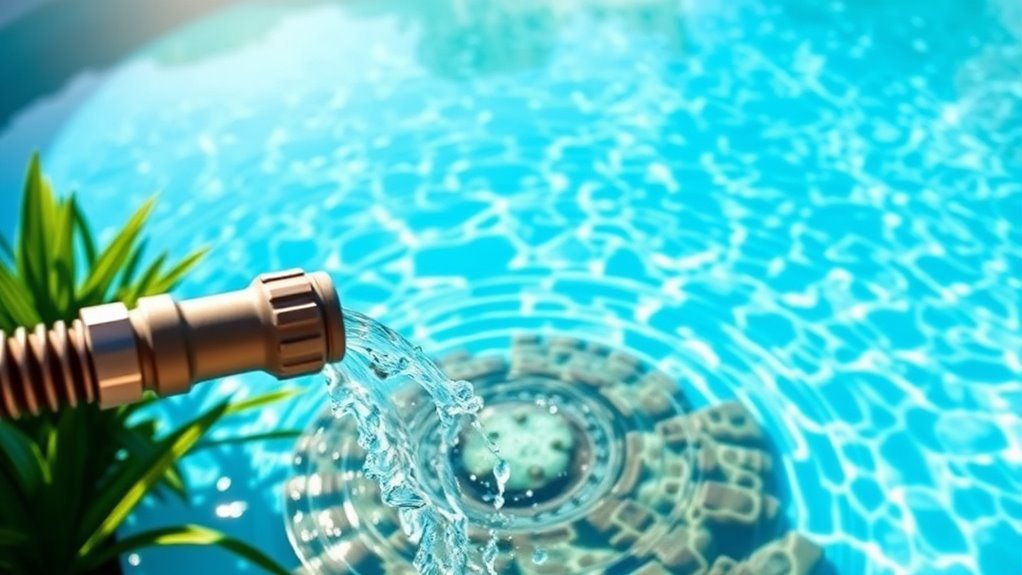
Since the water you use to fill your pool contains varying minerals and chemicals, it directly impacts your pool’s pH levels. If your source water is hard, containing high levels of calcium or magnesium, it can cause your pool’s pH to rise over time.
Well water often has a higher pH and alkalinity compared to municipal water, which may require you to adjust your pool chemistry more frequently.
Conversely, soft water or rainwater tends to have lower pH, but once mixed in, your pool’s pH can still shift depending on the initial water makeup.
Always test your fill water before adding it to your pool, so you can anticipate any pH changes and treat accordingly, keeping your pool balanced and comfortable.
Influence of Pool Usage and Environmental Factors
When you use your pool regularly or leave it exposed to the environment, various factors can cause its pH levels to rise. Swimmers introduce sweat, oils, and lotions, all of which can increase alkalinity and push pH upward.
Sunlight plays a significant role too. UV rays break down chlorine, reducing its effectiveness and allowing pH to climb.
Leaves, dirt, and debris add organic matter that interacts with pool chemicals, altering pH balance.
Additionally, rainwater, especially if it’s alkaline, can raise pH when it dilutes your pool water.
Wind can blow dust and pollen into the pool, further affecting chemical levels.
To keep pH stable, you’ll need to monitor these influences regularly and adjust your chemical treatments accordingly.
Consequences of High Ph in Swimming Pools
If you let the pH in your swimming pool climb too high, you’ll quickly notice several problems that affect both water quality and swimmer comfort. High pH can cause cloudy water, scaling on pool surfaces, and reduce the effectiveness of chlorine, making it harder to keep your pool sanitized.
Swimmers might experience eye and skin irritation, and your equipment could suffer damage over time.
| Consequence | Impact |
|---|---|
| Cloudy Water | Reduced visibility and appeal |
| Scaling | Deposits on pool surfaces and equipment |
| Chlorine Inefficiency | Poor disinfection and algae growth |
| Skin & Eye Irritation | Discomfort and redness |
| Equipment Damage | Corrosion and costly repairs |
Keeping pH balanced is vital to avoid these issues and maintain a safe, inviting pool.
Strategies to Prevent and Correct High Ph
High pH levels can quickly lead to several frustrating problems in your pool, but you don’t have to let it get out of control. To keep your pool water balanced, you need a proactive approach.
Here are four key strategies to prevent and correct high pH:
- Test Regularly: Check your pool’s pH at least twice a week to catch issues early.
- Use pH Reducers: Add muriatic acid or sodium bisulfate carefully to lower pH when it rises above 7.8.
- Control Alkalinity: Maintain total alkalinity between 80-120 ppm to stabilize pH levels.
- Monitor Water Sources: Fill your pool with water that has a neutral pH and low alkalinity to avoid spikes.
Frequently Asked Questions
How Often Should I Test My Pool’s Ph Levels?
You should test your pool’s pH levels at least twice a week, especially during heavy use or hot weather. Regular checks help you keep the water balanced and prevent damage to your pool and equipment.
Can Pool Ph Affect Swimwear or Pool Equipment?
Yes, if your pool’s pH is too high, it can damage swimwear fabric and corrode pool equipment. You should regularly balance pH to protect your gear and keep everything in good condition.
What Tools Are Best for Accurately Measuring Pool Ph?
Like a compass guiding a sailor, a digital pH meter gives you quick, precise readings. You can also use reliable test strips or liquid test kits, but digital meters offer the accuracy you’ll need to maintain your pool’s balance.
Does Ph Level Impact the Effectiveness of Chlorine?
Yes, pH level directly impacts chlorine’s effectiveness. When pH is too high, chlorine becomes less active, so you won’t disinfect properly.
You should keep pH balanced around 7.2-7.6 to maximize chlorine’s sanitizing power.
Can Natural Remedies Help Balance Pool Ph?
You might be surprised, but yes, natural remedies can help balance your pool’s pH. Things like baking soda raise pH, while vinegar lowers it, giving you gentle, effective control without harsh chemicals.
Conclusion
When your pool’s pH climbs like a rising tide, it can turn your crystal-clear oasis into a murky swamp. You’ve got to keep an eye on alkalinity, chemicals, and even the water source to prevent this sneaky climb.
Think of your pool as a delicate balance—too much pH throws the whole system off. By staying proactive and adjusting as needed, you’ll keep your water sparkling and inviting, ready for every splash and dive.
Understanding what raises pH in a swimming pool is key to maintaining that perfect balance. By monitoring factors that increase pH levels, you can effectively manage your pool’s chemistry and enjoy clean, clear water all season long.