When Can Baby Start Swimming Lessons Guide
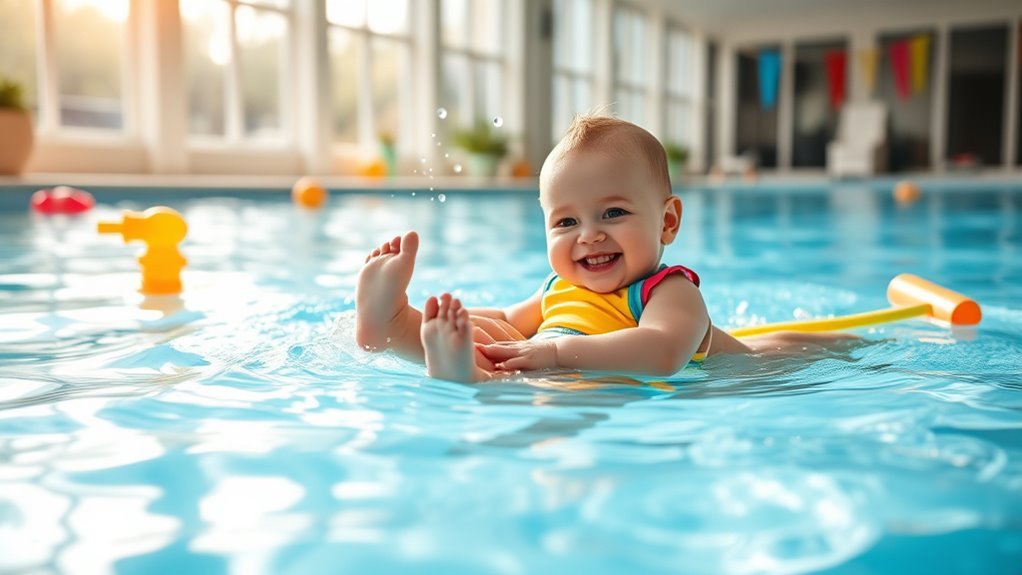
You can start swimming lessons with your baby around six months old when they have better head control and can safely enjoy the water. This is the ideal time for baby swimming lessons as it helps build confidence and motor skills early on. Before that, focus on gentle water familiarization during bath time.
Make sure your little one is healthy, vaccinated, and comfortable in a warm, clean pool with certified instructors. Early swimming lessons provide a safe environment for your baby to explore water. Keep the lessons fun and engaging to maintain their interest.
Starting early also helps your baby develop important water safety skills. Keep exploring to discover how to choose the right program and prepare your baby for success. With the right approach, baby swimming lessons can be a joyful experience for both of you.
Benefits of Early Swimming Lessons for Babies
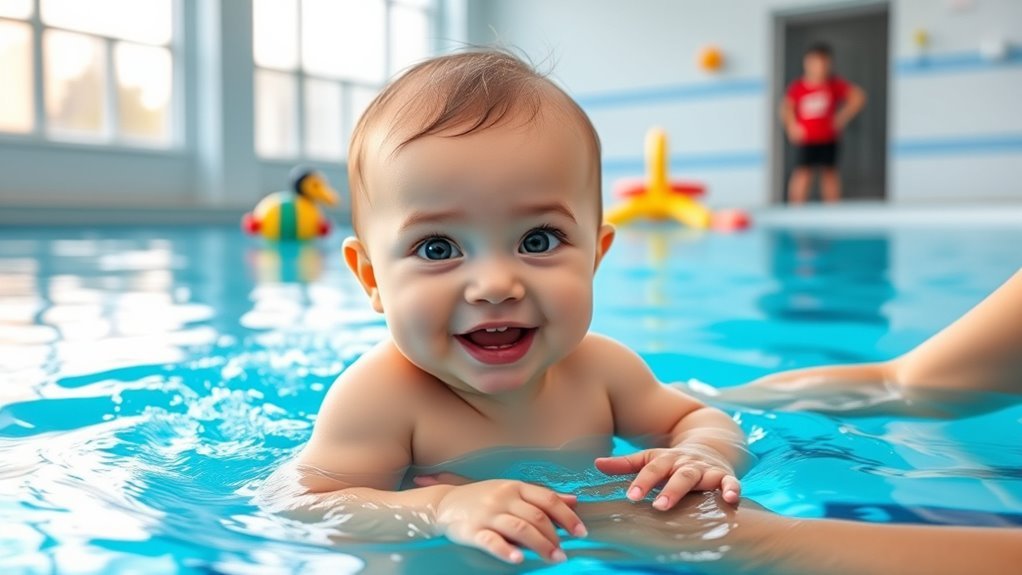
Although it might seem early, starting swimming lessons with your baby can offer numerous benefits. You’ll notice improved motor skills and coordination as your little one learns to move through the water.
These lessons also boost their confidence and comfort around water, which is vital for safety later on. You’ll enjoy quality bonding time, strengthening your connection through shared activities.
Plus, swimming can promote better sleep patterns and overall physical health by engaging their muscles gently.
Early exposure often helps babies develop social skills too, as they interact with instructors and other children.
Recommended Age to Start Baby Swimming Classes
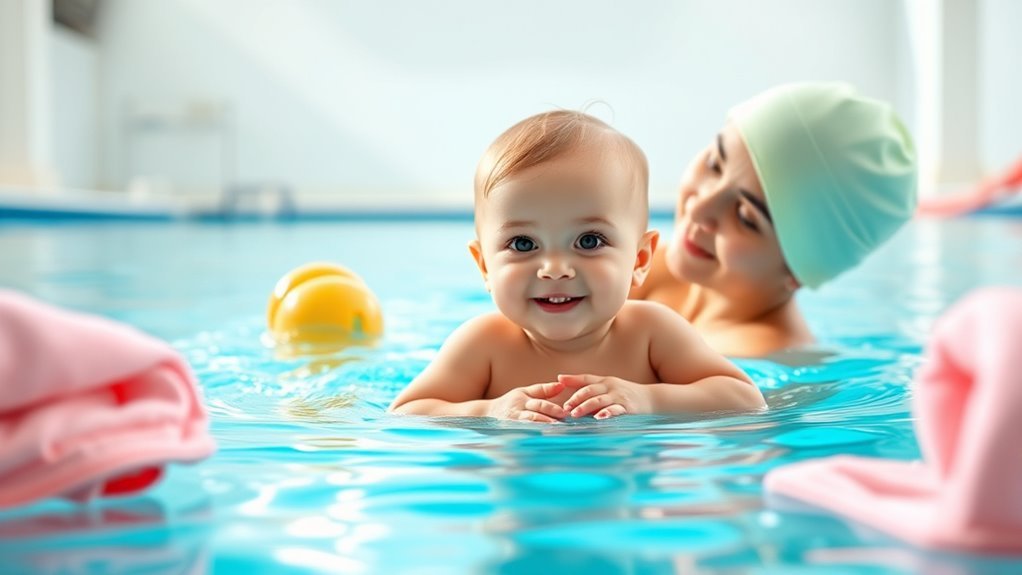
While every baby develops at their own pace, experts generally recommend starting swimming lessons around six months of age. At this stage, your baby has better head control and can begin to enjoy water activities safely.
Before six months, lessons focus more on water introduction than swimming skills.
Here are key points to consider:
- Babies 6 months+ can learn basic water comfort and safety.
- Early lessons promote bonding and water familiarity.
- Classes emphasize gentle water exposure, not actual swimming.
- You’ll notice your baby’s increasing confidence and enjoyment.
- Infant swimming programs often include parent participation.
Starting at the right age helps your baby build essential water skills and a positive attitude towards swimming. Always choose age-appropriate classes with certified instructors to ensure a safe and fun experience.
Health and Safety Considerations Before Starting
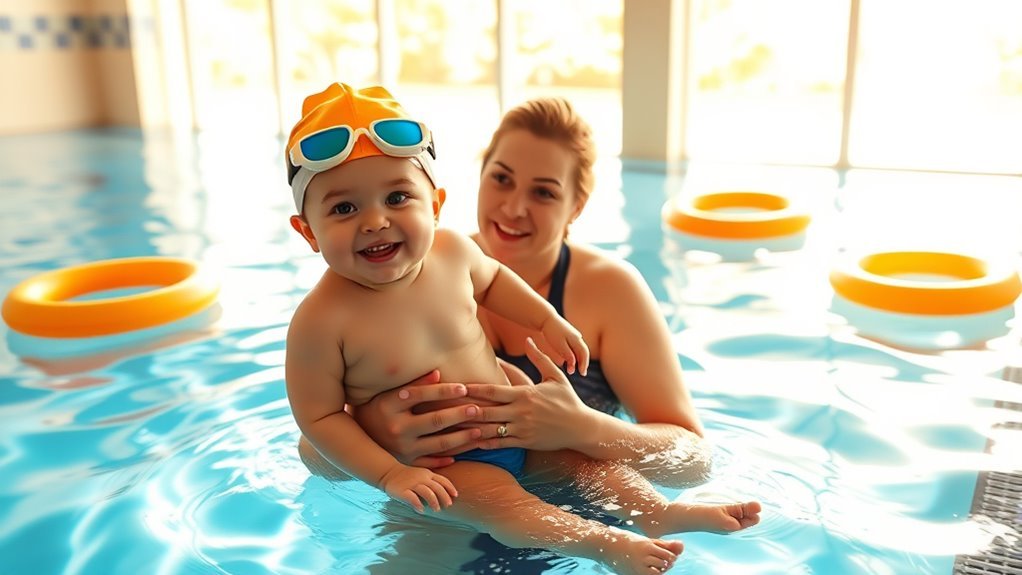
Before your baby takes their first splash in swimming lessons, you need to make certain they’re healthy and ready for water activities. Check with your pediatrician to ensure your baby’s immune system is strong enough and that there are no underlying health issues, like ear infections or respiratory problems.
Make sure your baby is up to date on vaccinations, especially if the pool is public. Watch for signs of skin irritation or rashes, which could worsen in chlorinated water.
Also, ensure the pool maintains proper hygiene and temperature, ideally between 85-87°F (29-31°C), to keep your baby comfortable and safe.
Remember, never leave your baby unattended near water, even during lessons.
Prioritize your baby’s health and safety to create a positive swimming experience from the start.
How to Choose the Right Swimming Program for Your Baby
Ensuring your baby’s health and comfort sets the stage for selecting the right swimming program. You’ll want a program that balances safety, fun, and skill-building.
Start by checking the instructors’ certifications and experience with infants. Look for small class sizes to ensure personalized attention. The pool environment should be warm and clean, ideal for babies’ sensitive skin.
Choose a program that emphasizes water safety and gradual skill development, not just play. Also, consider the schedule and location to fit your routine comfortably.
Certified instructors experienced with babies
Small class sizes for individual focus
Warm, clean, and well-maintained pool
Emphasis on safety and gradual skill-building
Convenient schedule and location for you
These factors help you find the perfect fit for your baby’s first swimming experience.
Preparing Your Baby for Their First Swimming Lesson
Getting your baby ready for their first swimming lesson means focusing on comfort and confidence in the water. Start by introducing your baby to water gradually at home, using bath time to get them accustomed to the feeling.
Dress them in a well-fitting swim diaper and comfortable swimwear to prevent distractions during the lesson. Make sure they’re well-rested and fed beforehand to keep them calm and happy.
Bring familiar items like a favorite towel or toy to create a soothing environment. Communicate positively, using gentle words and smiles to build trust.
Arrive early to let your baby adjust to the new surroundings. By preparing thoughtfully, you’ll help your little one feel secure and ready to enjoy their first splash in the pool.
What to Expect in Baby Swimming Classes
Once your baby is comfortable and ready, you’ll want to know what happens during their swimming classes. Baby swimming lessons focus on safety, comfort, and fun, helping your little one get used to water in a gentle, supportive environment. You’ll notice activities designed to build trust and basic water skills.
Here’s what to expect in a typical class:
- Gentle water introduction through songs and games
- Assisted floating and kicking exercises
- Simple breath control and blowing bubbles
- Parent-led support and bonding activities
- Short sessions with plenty of breaks to keep your baby happy
These classes aim to create a positive experience while gradually building your baby’s confidence and water awareness.
Tips for Making Swimming Fun and Comfortable
Although some babies take to water naturally, you can make swimming lessons more enjoyable by creating a calm and playful atmosphere. Use soothing tones, gentle touches, and fun toys to keep your baby engaged. Keep sessions short and positive to build comfort without overwhelming them. Remember, your relaxed attitude helps your baby feel safe.
Here’s a quick guide to make swimming fun and comfortable:
| Tip | Action | Benefit |
|---|---|---|
| Use Toys | Bring floating toys | Encourages play |
| Calm Voice | Speak softly and smile | Builds trust |
| Warm Water | Ensure ideal temperature | Keeps baby cozy |
| Short Sessions | Limit to 15-20 minutes | Prevents fatigue |
| Gentle Entry | Enter water slowly | Reduces fear |
Signs Your Baby Is Ready to Progress in Swimming Skills
When your baby starts showing curiosity about the water and responds confidently during lessons, it’s a clear sign they’re ready to advance their swimming skills. You’ll notice they’re more comfortable holding their breath and submerging their face briefly.
They might begin attempting to kick or paddle with guidance, showing increased coordination. Their attention span also improves, allowing for longer focus during activities.
Plus, they’ll respond well to simple instructions or cues from you or the instructor.
Look for these signs your baby is ready to progress:
- Comfortable with water on their face and brief submersion
- Attempts to kick or paddle with your support
- Maintains eye contact and follows simple directions
- Shows excitement or enthusiasm to get back in the water
- Increased endurance during swimming activities
Frequently Asked Questions
What Swim Gear Is Essential for Babies During Lessons?
You’ll need a well-fitting swim diaper, a comfortable swimsuit, and a swim cap if indoors. Goggles are optional but helpful.
Also, bring a towel and a warm change of clothes to keep your baby cozy post-lesson.
How Do Swimming Lessons Affect a Baby’s Sleep Patterns?
Swimming lessons often tire your baby out like a gentle wave crashing ashore, helping them sleep more soundly.
You’ll notice they fall asleep faster and rest deeper, thanks to the physical activity and sensory stimulation they experience.
Can Swimming Lessons Help With a Baby’s Motor Skill Development?
Yes, swimming lessons can boost your baby’s motor skills by strengthening muscles and improving coordination.
You’ll see them develop better balance and movement control as they practice kicking and reaching in the water during lessons.
Are There Any Contraindications for Babies With Common Illnesses?
You shouldn’t start swimming lessons if your baby has a fever, contagious illness, or open wounds. Always check with your pediatrician first to make certain swimming is safe, especially if your baby has respiratory issues or ear infections.
How Do Swimming Classes Handle Emergencies With Infants?
When emergencies ripple through the pool, instructors act like lifeguards of calm, swiftly performing CPR and emergency protocols. They’re trained to spot distress early, ensuring your baby’s safety dances at the forefront, no matter what.
Their quick response and thorough training help minimize risks and keep the environment safe. Parents can feel reassured knowing that professionals are always ready to handle any situation with care and expertise.
Conclusion
Remember when you first learned to ride a bike, wobbling but determined? Starting baby swimming lessons feels just like that—an exciting journey where small splashes build big confidence.
Studies show babies as young as six months can begin, soaking up benefits like improved coordination and water safety skills. Trust your little one’s pace, choose the right class, and enjoy each joyful kick and splash.
With patience, swimming becomes their new favorite adventure. Knowing when can baby start swimming lessons helps parents provide the best early water experiences, ensuring safety and fun every step of the way.