What Is the Best Age to Start Baby Swimming Lessons?
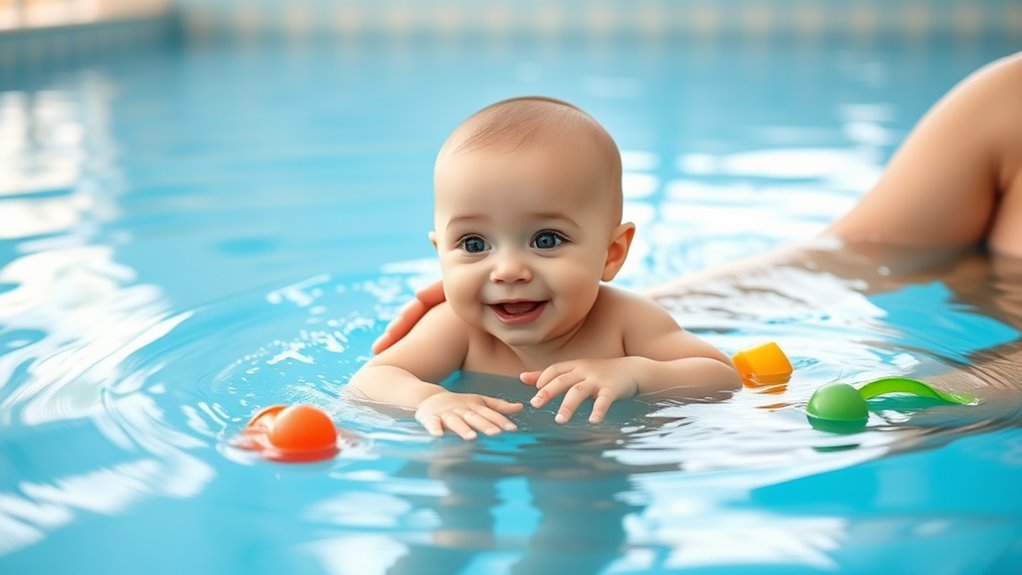
You should start your baby’s swimming lessons around six months old, when they have better motor skills and neck strength. Starting baby swimming lessons at this age helps build water confidence, supports physical development, and creates a safe, enjoyable experience.
Make sure you choose a program with warm water, certified instructors, and a calm environment. If you’re curious about safety tips, finding the right class, and making lessons fun for your baby, keep exploring these important points.
Benefits of Early Swimming Lessons for Babies
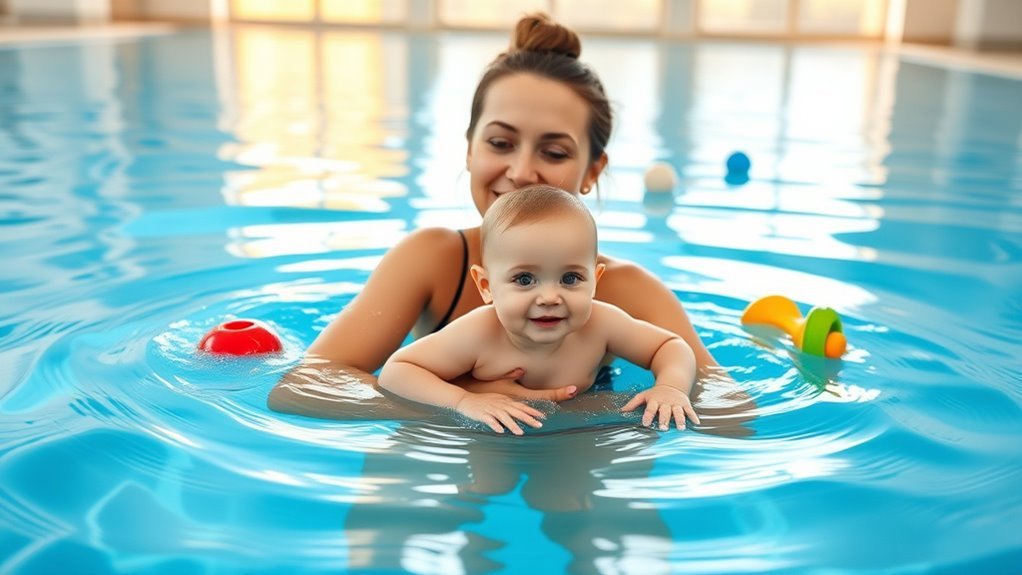
Although you might hesitate to introduce your baby to water early on, starting swimming lessons at a young age offers numerous benefits. You’ll help your little one build water confidence, reducing fear and promoting comfort in aquatic environments.
Early exposure supports motor skill development as your baby learns to move and coordinate in water. You’ll also boost their physical strength and cardiovascular health through gentle, fun exercise.
Plus, swimming lessons strengthen your bond, offering quality interaction and trust-building moments.
These lessons can enhance your baby’s social skills by interacting with other infants and instructors.
Starting early also encourages water safety awareness from the beginning, laying a foundation that could prevent accidents later.
Recommended Age Ranges According to Experts
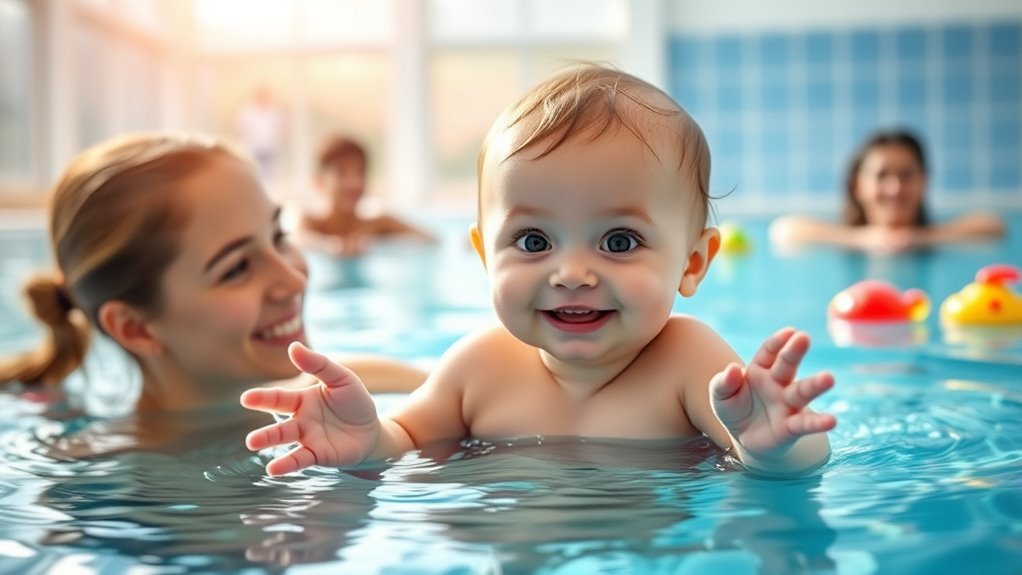
When you’re deciding the best time to start swimming lessons, experts generally recommend beginning around six months old. At this age, your baby’s motor skills and neck strength are better developed, making lessons more effective and enjoyable.
Some programs even accept infants as young as three months, focusing on water familiarization rather than formal instruction.
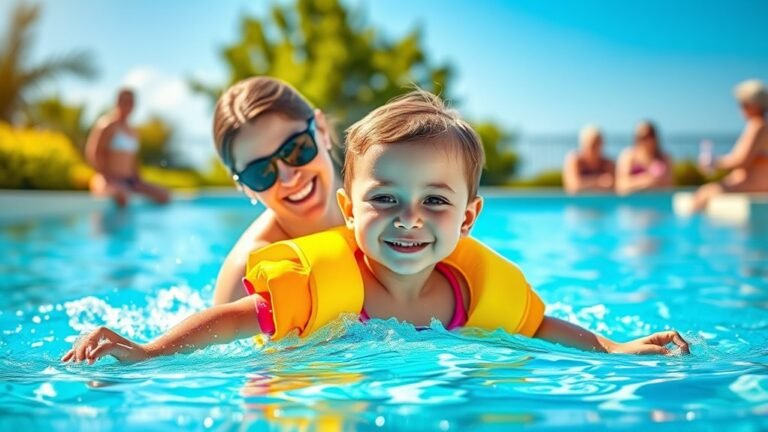
Between six months and three years old, lessons typically emphasize water safety, comfort, and basic skills.
From six months to three years, focus is on water safety, comfort, and foundational swimming skills.
After age three, children can start learning more structured swimming techniques.
Keep in mind that every child develops differently, so watch your baby’s readiness cues. Starting too early mightn’t yield the best results, but waiting too long could miss valuable early learning opportunities.
Trust expert guidelines as a helpful starting point tailored to your child’s growth.
Safety Considerations Before Starting Lessons
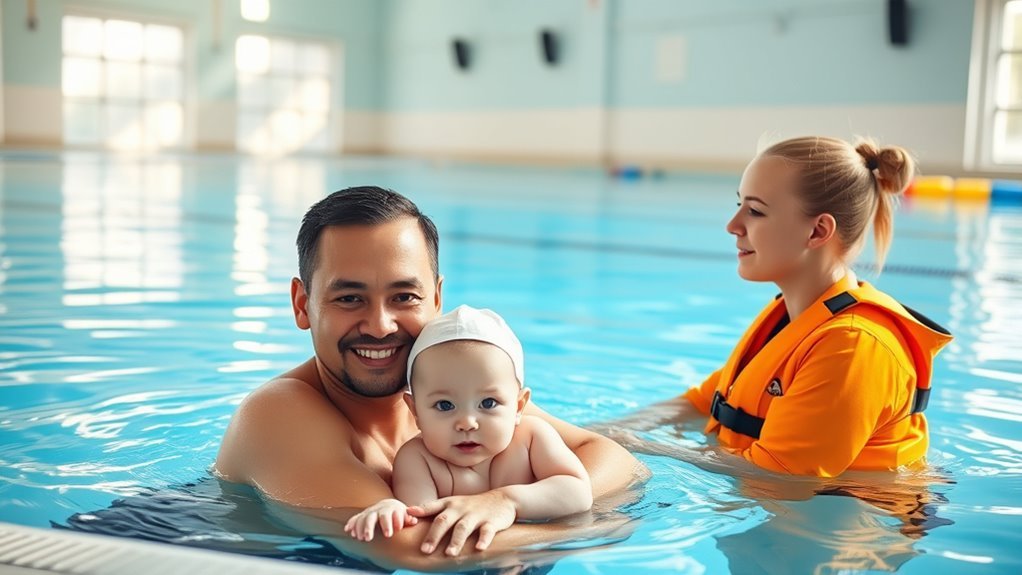
Before you start swimming lessons with your baby, prioritize safety by making sure the pool environment meets hygiene and temperature standards suitable for infants. A clean, warm pool reduces risks of infections and discomfort.
Also, check that lifeguards or trained instructors are present to supervise every session closely. Make certain your baby is healthy; avoid lessons if they’ve any contagious illness or skin conditions.
Lastly, use appropriate swim diapers to maintain water cleanliness.
Keep these safety tips in mind before beginning:
- Confirm pool temperature is between 85-87°F (29-31°C) for infant comfort
- Verify the pool’s sanitation practices and water quality
- Ensure instructors are certified in infant CPR and water safety
- Watch your baby closely, never leaving them unattended near water
Taking these precautions helps create a safe, enjoyable experience for your little one.
How to Choose the Right Swimming Program
Ensuring your baby’s safety in the pool is just the first step; selecting a swimming program that fits your child’s needs and your family’s schedule comes next. Look for classes led by certified instructors who specialize in infant swimming. Consider class size, pool cleanliness, and water temperature to guarantee comfort.
Also, check the program’s flexibility to accommodate your busy life.
| Factor | What to Look For |
|---|---|
| Instructor | Certified, experienced |
| Class Size | Small for personalized care |
| Pool Environment | Clean, warm, safe |
| Schedule Flexibility | Options that fit your routine |
Choosing the right program sets a solid foundation for your baby’s swimming journey.
Tips for Making Baby Swimming Enjoyable and Stress-Free
Although introducing your baby to swimming can feel overwhelming, you can make the experience enjoyable and stress-free by focusing on comfort and fun. Start by creating a calm environment where your baby feels safe and supported.
Pay attention to their cues and don’t push them beyond their comfort zone.
Here are some tips to help you:
- Keep sessions short and sweet to hold their interest.
- Use gentle, playful touches and soothing tones.
- Bring familiar toys or floats to provide reassurance.
- Celebrate small achievements to boost confidence.
Frequently Asked Questions
Can Baby Swimming Improve Cognitive Development?
Yes, baby swimming can improve cognitive development by stimulating your baby’s brain through sensory experiences and physical activity.
You’ll notice better coordination, focus, and confidence as they explore water safely and enjoyably.
Are There Any Health Risks From Chlorinated Pools for Babies?
Yes, chlorinated pools can irritate your baby’s skin, eyes, and respiratory system.
To protect your little one, you should rinse them off after swimming and choose well-maintained pools with balanced chlorine levels.
How Often Should Babies Attend Swimming Lessons Weekly?
Immerse yourself once or twice a week to keep your baby’s excitement flowing like gentle waves. Consistent, brief swims help build confidence and skills without overwhelming, letting you both enjoy splashy, joyful learning moments together.
What Equipment Is Needed for Baby Swimming Lessons?
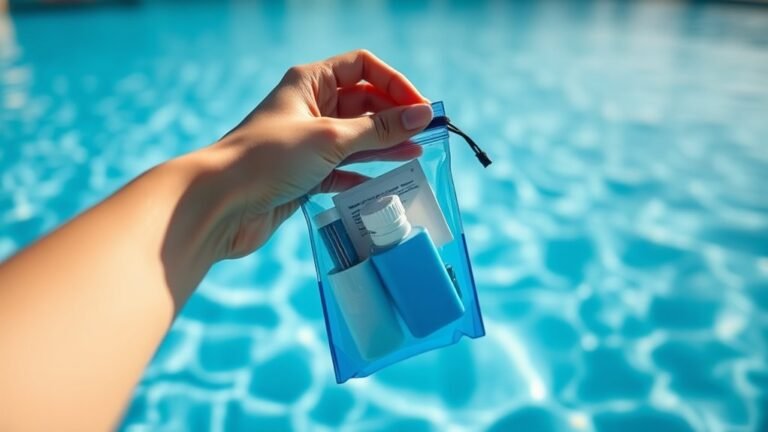
You’ll need swim diapers, a well-fitted swimsuit, a swim cap if desired, and a towel. Some pools require water shoes.
Also, bring a flotation device approved for infants and plenty of snacks and water for breaks.
Can Premature Babies Start Swimming Lessons Early?
You might think premature babies can plunge in early, but you shouldn’t rush; their immune systems are still fragile.
Always consult your pediatrician before starting swimming lessons to guarantee your little one’s safety and readiness.
Conclusion
Starting baby swimming lessons at the right age can set the stage for a lifetime of confidence and safety in the water. By choosing a program that fits your baby’s needs and keeping safety top of mind, you’ll turn each splash into a joyful discovery.
Remember, early lessons are like planting seeds—nurture them with patience and care, and watch your little one grow into a strong, happy swimmer. Plunge in and enjoy every moment!
The best age to start baby swimming lessons varies, but many experts recommend beginning around 6 months. This timing supports water acclimation and builds essential skills early on.
Incorporating baby swimming lessons into your routine promotes not only fun but also water safety and physical development. Make sure to select classes designed specifically for infants to ensure a positive and safe experience.