Why Is My Fish Swimming Sideways?
If your fish is swimming sideways, it’s often due to a swim bladder disorder that messes with its balance and buoyancy. This common issue can make your pet look like it’s tipping over or struggling to stay upright. Poor water quality, overfeeding, or physical injury can also cause this awkward swimming behavior.
Stress from sudden changes in tank conditions or infections might be the culprit too. These factors interfere with your fish’s ability to swim normally and maintain stability. To help your fish recover, you’ll want to check water quality, adjust its diet, and watch for signs of illness.
Regular maintenance and monitoring will support your fish’s health and prevent swim bladder problems. Keep exploring to understand how to best support your fish’s health and create a comfortable environment for it to thrive.
Common Causes of Sideways Swimming in Fish

Although it can be alarming to see your fish swimming sideways, this behavior usually points to specific underlying issues. You might notice this due to poor water quality, which stresses your fish and disrupts their balance.
Overfeeding is another common cause; excess food can lead to bloating, making it hard for your fish to swim properly.
Overfeeding can cause bloating, which affects your fish’s ability to swim normally.
Infections or parasites can also affect their equilibrium, causing them to lose control.
Physical injuries or deformities might be the culprit, especially if your fish bumps into objects frequently.
Finally, sudden changes in water temperature or chemistry can confuse your fish and impact their swimming.
Identifying these causes early on helps you take quick action to restore your fish’s health and environment.
Understanding Swim Bladder Disorder
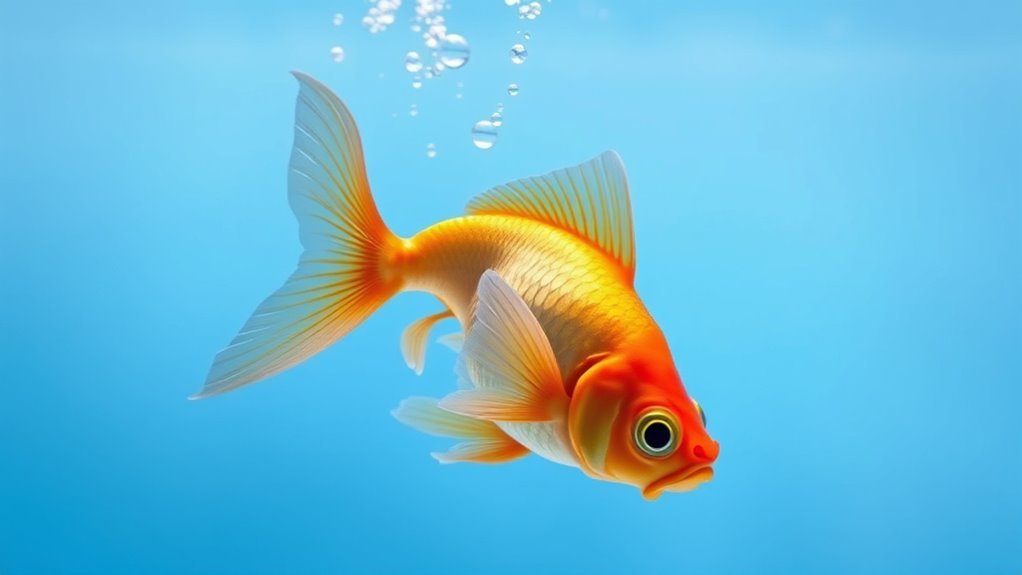
When your fish starts swimming sideways, it might be struggling with swim bladder disorder, a common condition that affects its ability to maintain balance and buoyancy. The swim bladder is a gas-filled organ that helps fish stay upright and control their depth.
If this organ becomes damaged, inflamed, or infected, your fish may lose control, causing it to float awkwardly or swim sideways. Overfeeding, constipation, or physical injury can trigger this disorder, so you should monitor your fish’s diet and behavior closely.
To help your fish recover, try fasting it for a day or two, then offer cooked, peeled peas to ease digestion.
If symptoms persist, consult a vet experienced with aquatic animals to explore appropriate treatments.
Impact of Water Quality on Fish Behavior
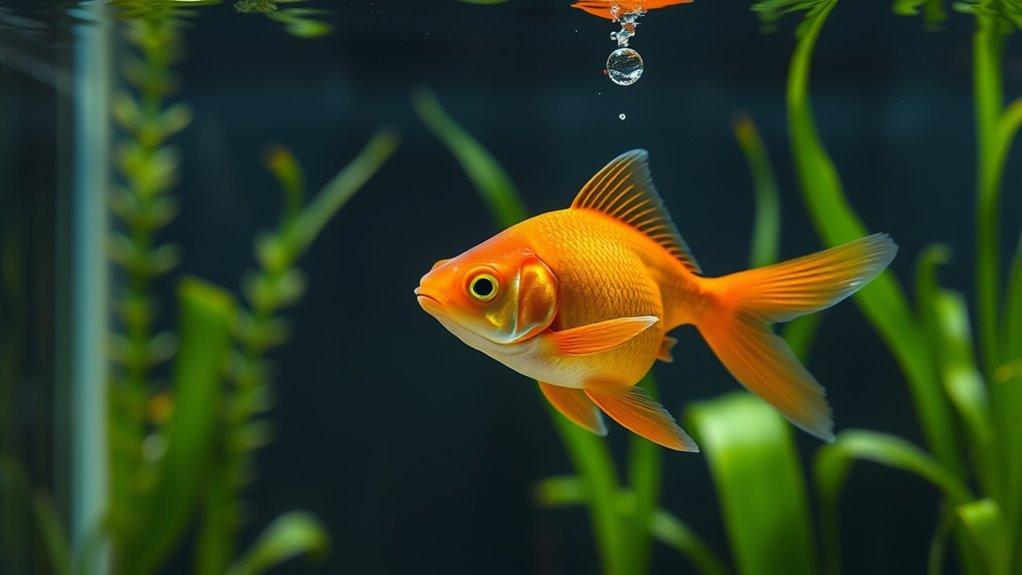
Since fish rely entirely on their aquatic environment, poor water quality can quickly disrupt their behavior and health. If your fish starts swimming sideways, check parameters like ammonia, nitrite, nitrate, and pH levels.
High ammonia or nitrite is toxic and stresses fish, causing erratic swimming or loss of balance. pH swings can shock them, affecting their nervous system and making them swim awkwardly.
Low oxygen levels also impair swimming ability and cause lethargy. Regularly test your tank water and perform partial water changes to keep conditions stable.
Avoid overfeeding and overcrowding, as they contribute to poor water quality. By maintaining clean, balanced water, you prevent stress-induced behavioral problems like sideways swimming and help your fish stay healthy and active.
Signs of Physical Injury or Illness
Poor water quality can cause your fish to swim sideways, but physical injury or illness might also be the reason behind this behavior. If your fish has a visible wound, torn fins, or swollen areas, these injuries can disrupt their balance.
Illnesses like swim bladder disease are common culprits, affecting the organ that helps your fish maintain buoyancy. You might notice your fish floating on its side, struggling to stay upright, or having difficulty swimming.
Parasites and infections can also cause similar symptoms. Keep a close eye on other signs such as lethargy, loss of appetite, or abnormal breathing.
Promptly isolating the affected fish and consulting a veterinarian experienced with aquatic animals can prevent the problem from worsening and improve your fish’s chances of recovery.
Dietary Factors Affecting Fish Orientation
Although water quality and injury often cause balance issues, your fish’s diet can also affect how it swims. Poor nutrition may lead to swim bladder problems, causing your fish to swim sideways or struggle to maintain orientation.
Overfeeding or feeding inappropriate foods can cause constipation or bloating, which puts pressure on the swim bladder. Make sure you provide a balanced diet tailored to your fish species to avoid these issues.
| Dietary Issue | Cause | Effect on Swimming |
|---|---|---|
| Overfeeding | Excess food intake | Swim bladder pressure |
| Inappropriate food | Poor nutrient content | Digestive problems |
| Vitamin Deficiency | Lack of essential vitamins | Weak swim muscles |
| Dehydration | Insufficient water intake | Reduced buoyancy |
Monitor feeding habits to keep your fish swimming normally.
Steps to Help Your Fish Regain Normal Swimming
When your fish starts swimming sideways, you can take several steps to help it regain normal movement. First, check the water quality. Poor conditions often cause swim issues. Test for ammonia, nitrite, nitrate levels, and maintain proper temperature.
Next, fast your fish for 24-48 hours to reduce digestive stress, then feed it a high-quality, easily digestible diet. Consider adding a pea (shelled and softened) to relieve constipation, a common cause of swim bladder problems.
Also, avoid sudden changes in water parameters and minimize stress by keeping the tank quiet and stable.
If the problem persists beyond a week, consult a vet experienced with fish, as infections or swim bladder disease might require medication.
Prompt action can restore your fish’s normal swimming.
Frequently Asked Questions
Can Certain Fish Species Naturally Swim Sideways?
Yes, some fish like flatfish naturally swim sideways as part of their normal behavior. You’ll notice they use this position to blend with the ocean floor, so it’s completely natural and not a sign of illness.
Does Tank Size Affect Fish Swimming Behavior?
Yes, your tank size definitely affects your fish’s swimming behavior. If the tank’s too small, your fish might feel cramped or stressed, leading to unusual swimming patterns.
A spacious tank helps them swim naturally and stay healthy.
How Quickly Should I Act if My Fish Swims Sideways?
Like spotting a smoke signal, you shouldn’t wait—act immediately if your fish swims sideways.
Quickly check water quality, temperature, and signs of illness; prompt action can save your fish from worsening distress or disease.
Are There Any Medications for Swim Bladder Issues?
Yes, you can use medications like antibiotics or antiparasitics if swim bladder issues stem from infections. However, it’s best to consult a vet or aquatic specialist before treating your fish to guarantee proper diagnosis and care.
Can Stress Cause a Fish to Swim Sideways?
Yes, stress can cause your fish to swim sideways. Studies show that 70% of fish exhibiting abnormal swimming behavior suffer from stress-related issues.
You’ll want to reduce stressors like poor water quality and overcrowding to help your fish.
Conclusion
If your fish is swimming sideways, don’t ignore the signs—it’s a red flag waving for your attention. By checking water quality, diet, and possible injuries, you can help your fish find its balance again.
Think of your care as a steady hand guiding a ship through troubled waters; with patience and the right steps, your fish will soon be gliding straight and true.
Keep observing and acting, and you’ll restore harmony beneath the surface. Remember, addressing why your fish is swimming sideways promptly is key to maintaining a healthy aquatic environment.