How Long After You Shock Your Pool Can You Swim
After you shock your pool, you should wait at least 8 hours before swimming to let chlorine levels drop to a safe range, typically between 1-3 ppm. This waiting period ensures the water is safe and comfortable for swimmers. The exact time depends on the type and amount of shock used, pool size, and weather conditions.
Always test your water’s chlorine and pH before jumping in to avoid irritation. Monitoring these levels helps maintain a healthy swimming environment. Want to know how different shocks affect wait times and tips to speed up recovery? Keep exploring for more.
Understanding Pool Shock and Its Purpose
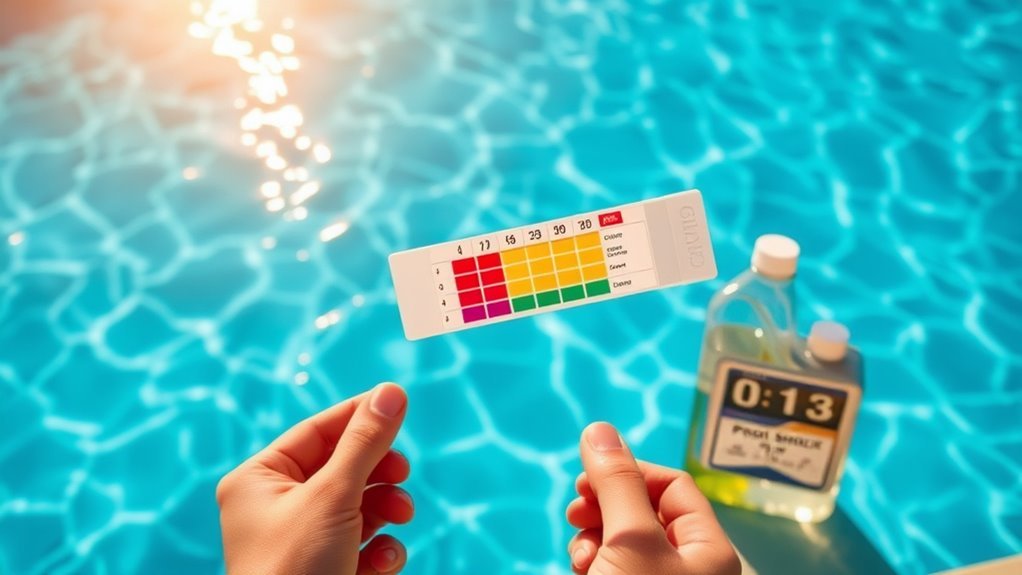
Although pool shock might sound intimidating, it’s simply a powerful treatment that kills bacteria, algae, and other contaminants in your water. When you shock your pool, you’re adding a high dose of chlorine or other oxidizing chemicals to quickly raise its sanitizer level.
This process breaks down organic waste and clears cloudy water, helping maintain a safe, clean swimming environment. You’ll use pool shock especially after heavy use, a rainstorm, or when algae starts to appear.
It’s a vital step to prevent illnesses and keep your pool sparkling. Understanding why and when to shock your pool helps you maintain proper water balance, ensuring that your pool stays inviting and hygienic without overusing chemicals.
Typical Waiting Time After Shocking Your Pool

Since pool shock raises chlorine levels considerably, you need to wait before swimming to avoid skin and eye irritation. Typically, waiting at least 8 hours after shocking your pool is recommended.
This timeframe allows chlorine levels to drop back to safe ranges, usually between 1 and 3 parts per million (ppm). Many pool owners prefer shocking in the evening, so the pool is ready by morning.
However, always test your pool’s chlorine levels before jumping in. If the levels are still high, give it more time.
Remember, rushing back in too soon can cause discomfort and harm your skin and eyes.
Factors Influencing Safe Swimming Time

Because chlorine levels and pool conditions vary, the time you should wait after shocking your pool can change. Several factors influence when it’s safe for you to swim again.
The type and amount of shock you use directly affect how long chlorine stays elevated. If you apply a heavy dose or use a fast-dissolving shock, chlorine levels may remain high longer.
Weather conditions matter too. Hot, sunny days speed up chlorine breakdown, potentially shortening wait times.
Pool size and water circulation also play roles; better circulation helps distribute and dilute chlorine faster.
Lastly, recent pool use or contaminants can require more shock, extending the safe swimming wait.
Keep these in mind to ensure you swim safely after shocking your pool.
How to Test Pool Water Before Swimming
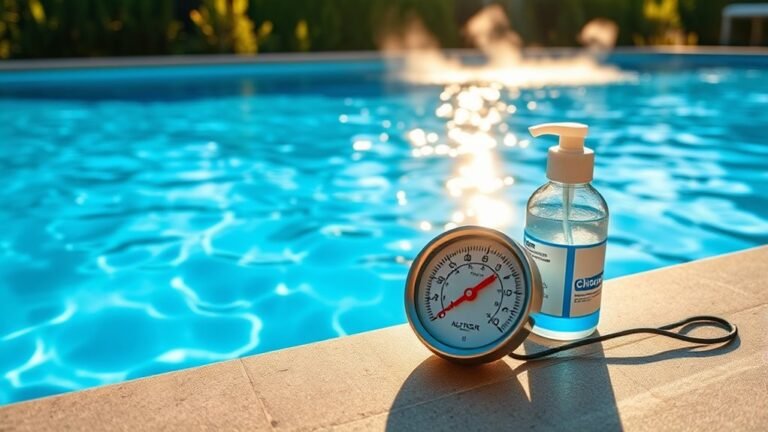
Understanding the factors that influence safe swimming time helps you know when to check your pool’s water before jumping back in. To test your pool water, grab a reliable test kit or test strips designed for pools.
First, measure the free chlorine level; it should be between 1 and 3 ppm for safe swimming.
Next, check the pH level. It needs to stay between 7.2 and 7.8 to avoid skin irritation and maintain chlorine efficiency.
Also, test alkalinity, aiming for 80 to 120 ppm to stabilize pH.
If your test kit includes cyanuric acid, ensure it’s within recommended limits (usually 30 to 50 ppm).
Testing regularly after shocking helps you confirm the pool is safe before you dive back in.
Effects of Different Types of Pool Shock
When you choose a type of pool shock, you directly impact how quickly and effectively your pool clears contaminants. Calcium hypochlorite, or “cal hypo,” acts fast and raises chlorine levels quickly, but it can increase calcium hardness, which may lead to scaling if overused.
Lithium or potassium peroxymonosulfate, known as non-chlorine shock, oxidizes impurities without adding chlorine, allowing you to swim sooner, but it doesn’t sanitize as thoroughly.
Sodium dichlor offers a slower release of chlorine and stabilizes it under sunlight, making it gentler on your pool but requiring longer wait times before swimming.
Understanding these effects helps you pick the right shock for your needs and know when it’s safe to jump back in.
Tips for Faster Recovery of Pool Water
Although pool shock is essential for maintaining clean water, you’ll want to speed up the recovery process to get back to swimming sooner. First, run your pool pump and filter continuously after shocking to circulate water and filter out contaminants effectively.
Next, test and adjust your pool’s pH and chlorine levels regularly; balanced water recovers faster and prevents irritation. You can also brush the pool walls and floor to loosen debris and algae, helping the shock work better.
Regularly balancing pH and chlorine, plus brushing surfaces, speeds recovery and enhances shock effectiveness.
Avoid adding more chemicals right after shocking, as this can disrupt the balance.
Ultimately, keep the pool covered when not in use to minimize contamination and maintain temperature, which aids in quicker chemical stabilization.
Following these tips, you’ll enjoy clean, safe water in less time.
Safety Precautions When Swimming After Shocking
Once you’ve taken steps to restore your pool’s balance after shocking, it’s important to keep safety in mind before jumping back in. First, always test your pool’s chlorine and pH levels using reliable test strips or kits.
Don’t swim until chlorine levels drop below 3 ppm and pH is between 7.2 and 7.8.
High chlorine can irritate your skin, eyes, and respiratory system. Avoid swimming immediately after shocking, as chemical residues may cause discomfort or health issues.
Also, keep children and pets away from the pool during this waiting period.
If you notice a strong chemical smell, it means chlorine is still too high.
Finally, follow the manufacturer’s instructions on shock products for specific wait times.
Prioritizing these safety steps ensures a healthy and enjoyable swim.
Frequently Asked Questions
Can Pool Shock Damage Pool Equipment or Liners?
Yes, pool shock can damage your pool equipment or liners if used improperly. You should always follow the instructions carefully, avoid over-shocking, and rinse equipment afterward to prevent corrosion or liner discoloration.
Taking these precautions will help extend the lifespan of your pool equipment and liners. Proper handling and usage are key to maintaining a safe and clean pool environment.
How Often Should I Shock My Pool During Summer?
To keep your pool sparkling, you’ll want to shock it about once a week during summer.
If you notice cloudy water or after heavy use, giving it a little extra attention won’t hurt at all.
What Are the Signs of Pool Shock Overdose?
You’ll notice a strong chlorine smell, skin or eye irritation, and cloudy water if you overdose your pool shock.
You might also see algae dying off rapidly. If these happen, wait longer before swimming.
Can Pets Swim in the Pool After Shocking?
You shouldn’t let pets swim right after shocking the pool. Wait until the chlorine levels drop to safe limits, usually below 3 ppm, to protect their sensitive skin and eyes from irritation or harm.
Is Pool Shock Harmful to Plants Near the Pool?
Pool shock can harm nearby plants because its strong chemicals contrast with their delicate nature.
You should rinse any splashes off plants promptly and consider shielding them during treatment to protect their health and growth.
Conclusion
After shocking your pool, you might feel like waiting forever before you can dive back in—but don’t worry, it’s usually just a few hours! Imagine your pool as a superhero recovering from a big battle; it needs time to regain its strength.
Test the water, watch those chlorine levels drop, and soon enough, you’ll be splashing around safely, like you never left. Patience now means endless fun later!
Remember, how long after you shock your pool can you swim depends largely on the chlorine levels. Always ensure the pool is safe by testing before jumping in.