
7 Factors That Affect How Long It Takes to Swim a Mile
How long it takes you to swim a mile depends on several factors that influence your performance. Key elements like your swimming technique, stroke efficiency, and overall fitness all play crucial roles in determining your time. These factors help reduce drag, save energy, and maintain speed throughout your swim.
Your endurance level determines how long you can sustain a steady pace without tiring. The type of stroke you choose also affects your speed, with freestyle typically being the fastest option.
Additionally, pool length and the number of turns you make can significantly impact your overall time. Water conditions and the gear you use, such as wetsuits or goggles, also influence your swim performance.
Finally, staying mentally focused and pacing yourself properly are essential to maintain consistency. By exploring and improving these areas, you can effectively boost your swim times.
Swimming Technique and Efficiency
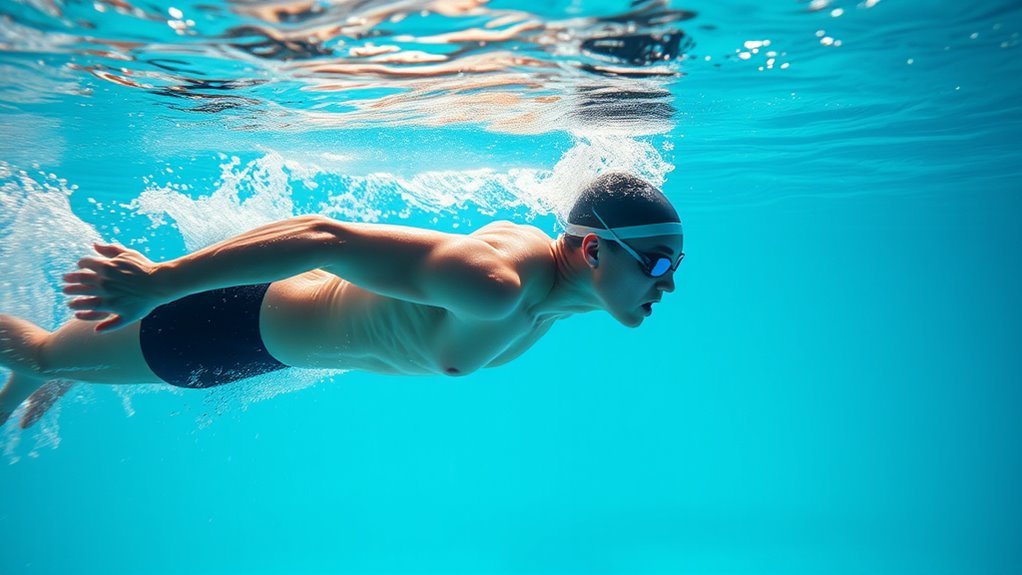
Although many factors influence your mile swim time, your swimming technique and efficiency play a crucial role. When you refine your stroke, you reduce drag and conserve energy, allowing you to move through the water more smoothly.
Focus on maintaining a streamlined body position, keeping your head aligned with your spine, and minimizing unnecessary movements.
Efficient breathing techniques also help you maintain a steady rhythm without disrupting your momentum.
Pay attention to your kick; a consistent, controlled flutter kick supports propulsion without wasting energy.
Practicing drills that emphasize proper hand entry, pull, and rotation can sharpen your form.
Personal Fitness and Endurance Levels

Improving your swimming technique sets a strong foundation, but your personal fitness and endurance levels ultimately determine how well you sustain speed throughout the mile. If you want to swim faster, you need to build cardiovascular strength and muscular endurance.
Regular aerobic exercises like running or cycling can boost your lung capacity and stamina, helping you maintain a steady pace. Strength training, especially for your core, shoulders, and legs, improves your power in the water.
As your fitness improves, you’ll find it easier to avoid fatigue and keep your technique sharp from start to finish. Remember, consistent training tailored to your current fitness level will gradually increase your endurance, letting you swim longer distances without slowing down.
Type of Swimming Stroke Used
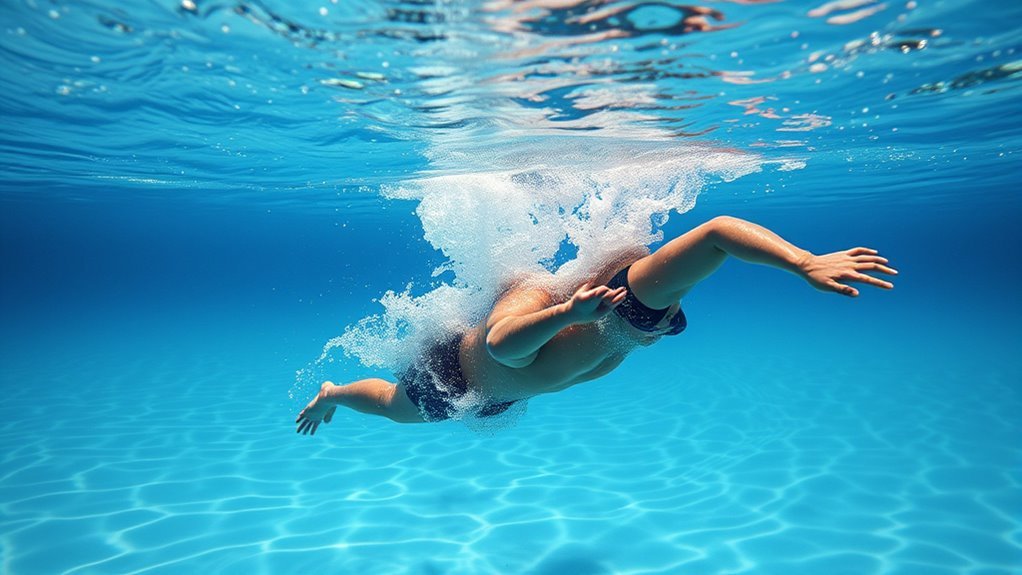
How you choose your swimming stroke can considerably impact your mile swim time. Different strokes vary in speed and energy demands, so selecting the right one for your skill level and fitness is essential.
Choosing the right swimming stroke significantly affects your mile time, depending on speed, energy, skill, and fitness.
Freestyle, or front crawl, is the fastest stroke, making it the go-to for most swimmers aiming to minimize their time.
Breaststroke and butterfly require more technique and energy, often slowing your pace over long distances.
Backstroke offers a moderate speed but can be less efficient for endurance swimming.
If you want to improve your mile time, focus on mastering the freestyle stroke’s technique to maximize propulsion and reduce drag.
Ultimately, your stroke choice should balance speed with your stamina to maintain a consistent pace throughout the mile.
Pool Length and Turn Frequency
When you swim in a shorter pool, you’ll make more turns, which can either help or hinder your overall mile time depending on your turning skills. Frequent turns give you chances to push off the wall, gaining speed, but poorly executed turns can slow you down.
In contrast, longer pools mean fewer turns, so you rely more on sustained swimming speed.
| Pool Length | Number of Turns in 1 Mile |
|---|---|
| 25 yards | 70 |
| 50 meters | 32 |
| 25 meters | 64 |
Understanding this helps you tailor your training. If your turns are strong, shorter pools might boost your speed, but if not, longer pools could be more effective for improving your mile time.
Water Temperature and Conditions
Why does water temperature matter so much for your mile swim time? When the water’s too cold, your muscles can stiffen, making each stroke less efficient and slowing you down. Conversely, if the water’s too warm, your body might overheat, leading to quicker fatigue.
Ideally, temperatures between 78°F and 82°F help you maintain ideal muscle function and endurance.
Besides temperature, water conditions like currents, waves, or choppiness also impact your speed. Strong currents can push you back or pull you off course, while waves force you to adjust your strokes and breathing rhythm, both costing extra energy.
Knowing how water temperature and conditions affect you lets you prepare better and adjust your pace, helping you swim your mile more confidently and efficiently.
Use of Swimming Gear and Equipment
Water temperature and conditions set the stage for your swim, but the gear you choose plays a big role in how efficiently you move through the water. Wearing a well-fitted swimsuit designed for speed can reduce drag, helping you slice through the water more easily.
Goggles that offer clear vision prevent you from wasting time adjusting or struggling to see. A swim cap not only cuts down resistance but also keeps your hair out of your face.
If you’re swimming in open water, a wetsuit can provide buoyancy and warmth, allowing you to maintain a steady pace without tiring quickly.
Choosing the right equipment tailored to your swim environment boosts your performance and can shave valuable seconds off your mile time.
Mental Focus and Pacing Strategies
Although physical preparation sets the foundation, mastering your mental focus and pacing strategies can make the difference between a good swim and a great one.
You need to stay mentally sharp to maintain consistency throughout the mile.
Here are four ways to enhance your mental focus and pacing:
- Set Realistic Splits: Break the mile into manageable segments, aiming for consistent times.
- Visualize Success: Picture your perfect stroke and steady pace before and during the swim.
- Use Breathing Patterns: Control your breathing to stay calm and focused under fatigue.
- Monitor Your Effort: Tune in to your body’s signals to avoid burning out too early.
Frequently Asked Questions
How Does Age Impact Mile Swim Times?
Your mile swim times usually slow down as you age because your muscle strength and endurance decrease. However, staying consistent with training and maintaining good technique can help you swim efficiently despite getting older.
Can Diet Influence Swimming Speed?
You might think diet doesn’t matter much, but it actually can. When you eat right, fueling your body with carbs and protein, you’ll have more energy and quicker recovery, helping you swim faster mile times.
Does Gender Affect How Fast You Swim a Mile?
Yes, gender can affect how fast you swim a mile because men typically have more muscle mass and cardiovascular capacity. However, your training, technique, and endurance play an even bigger role in your swimming speed.
How Important Is Swimming Experience?
Swimming experience is your secret weapon; it’s vital. The more you practice, the smoother and faster your strokes become, shaving minutes off your mile.
Without experience, you’ll struggle to maintain pace and efficiency in the water.
What Role Does Swimming in Open Water Play?
Swimming in open water challenges you with currents, waves, and visibility, making it tougher than pool swimming. You’ll need extra skills and mental toughness, which can slow your pace but build your endurance and confidence.
Conclusion
Now that you know the seven key factors affecting your mile swim time, you hold the compass to navigate your progress. By honing your technique, boosting fitness, choosing the right stroke, and minding conditions, you can slice through the water like a knife through butter.
Remember, every detail counts—from pool length to mental focus. Keep these in check, and you’ll swim your best mile yet, turning challenges into your own personal victory lap.
Focusing on these factors will help you improve endurance, speed, and overall performance in your mile swim. Stay consistent and watch your times drop as you master the elements that affect how long it takes to swim a mile.