How to Decide the Age Babies Can Start Swimming Lessons
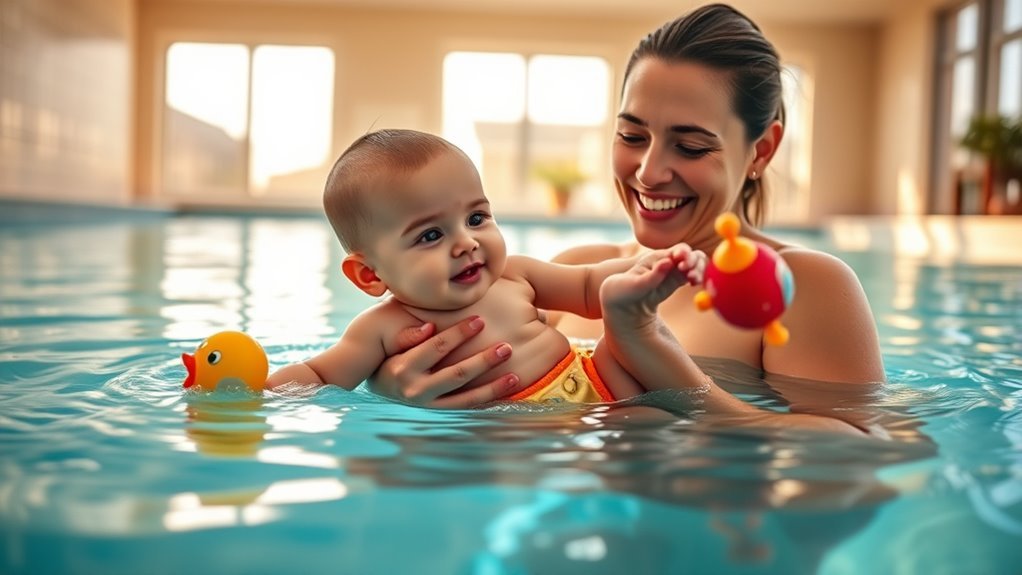
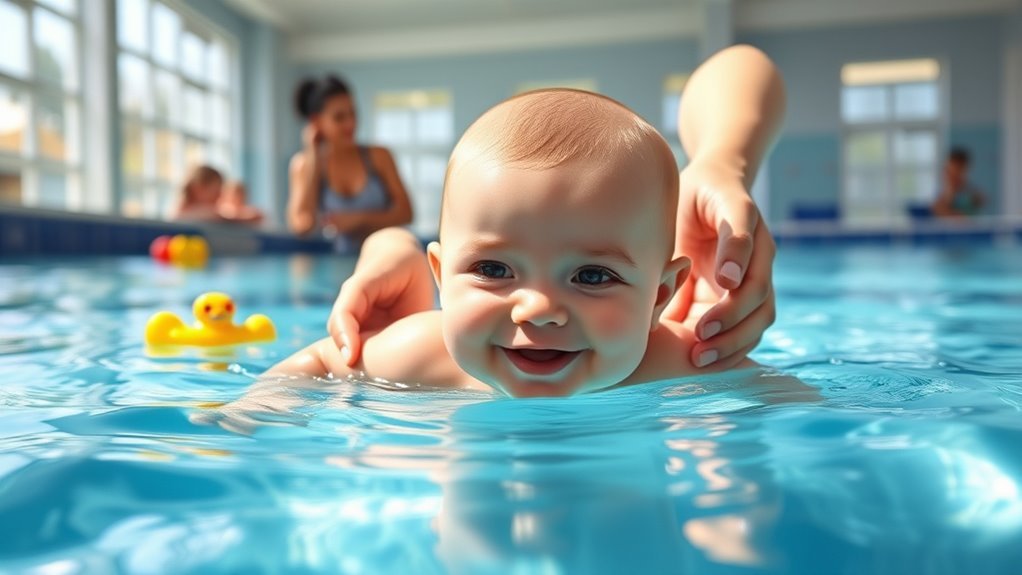
You can start your baby’s swimming lessons around six months, once they have good head and neck control and show comfort in water during baths. Knowing the right age babies can start swimming lessons is crucial to ensure safety and enjoyment. Make certain your little one is healthy, free from colds or skin issues, and up to date on vaccinations before you begin.
Look for signs like curiosity and calmness in water. Always consult your pediatrician first. If you want to know how to guarantee safety and make swimming fun, keep exploring these tips.
Understanding Infant Swimming Readiness
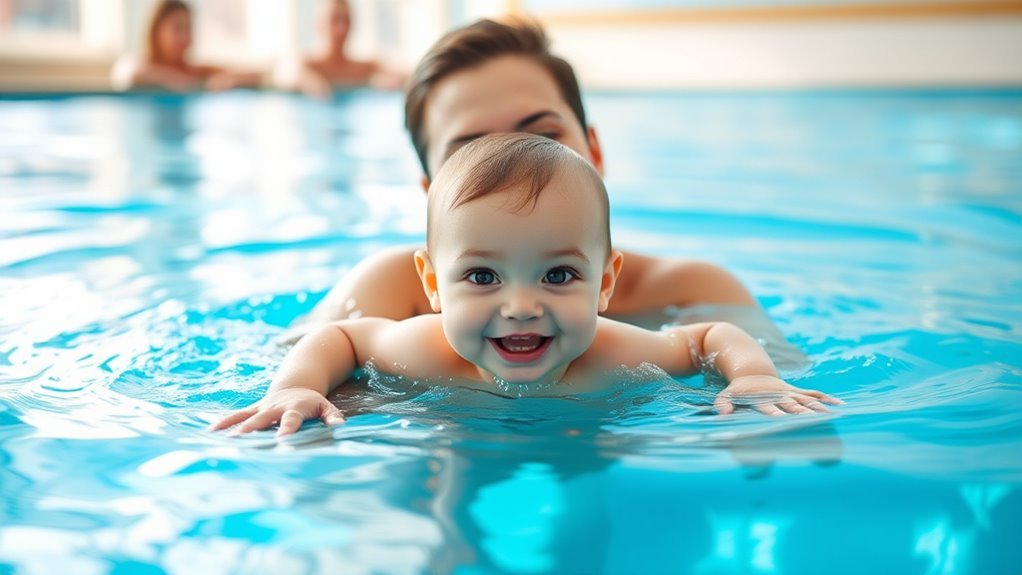
Before you jump into scheduling lessons, it’s important to recognize when your baby is truly ready for swimming. You’ll want to look for signs like good head and neck control, which usually develop around two to three months.
Your baby should also be comfortable in water and show interest without distress. Keep in mind that every infant develops at their own pace, so don’t rush.
Pay attention to your baby’s physical and emotional cues during bath time—it’s a good way to gauge their comfort with water. If your little one seems calm and curious, you’re likely on the right track.
Recommended Minimum Age for Baby Swimming Lessons
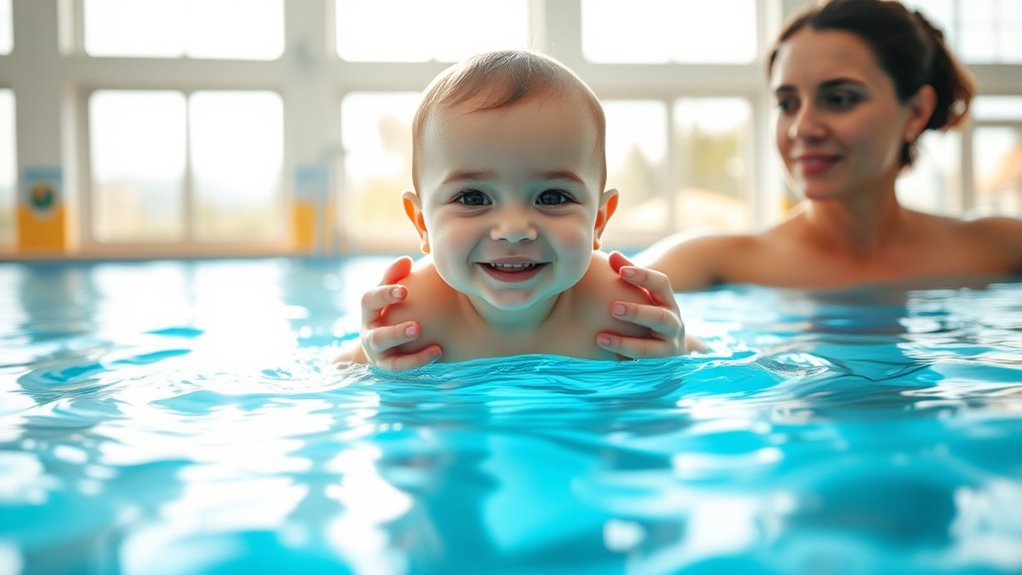
While every baby develops differently, experts generally recommend starting swimming lessons at around six months old. At this age, babies often have better head control and can comfortably enjoy the water with proper supervision.
Before six months, their immune systems and temperature regulation aren’t quite ready for pool environments. You’ll want to consider your baby’s physical readiness and comfort level to make the experience positive.
| Age Range | Developmental Milestone | Swimming Lesson Suitability |
|---|---|---|
| 0-3 months | Limited head control | Not recommended |
| 3-5 months | Emerging motor skills | Cautiously considered |
| 6-12 months | Improved head and neck control | Ideal starting period |
| 12-18 months | Greater mobility | Suitable for advanced lessons |
| 18+ months | Increased independence | Ready for structured lessons |
Health Considerations Before Starting Swimming
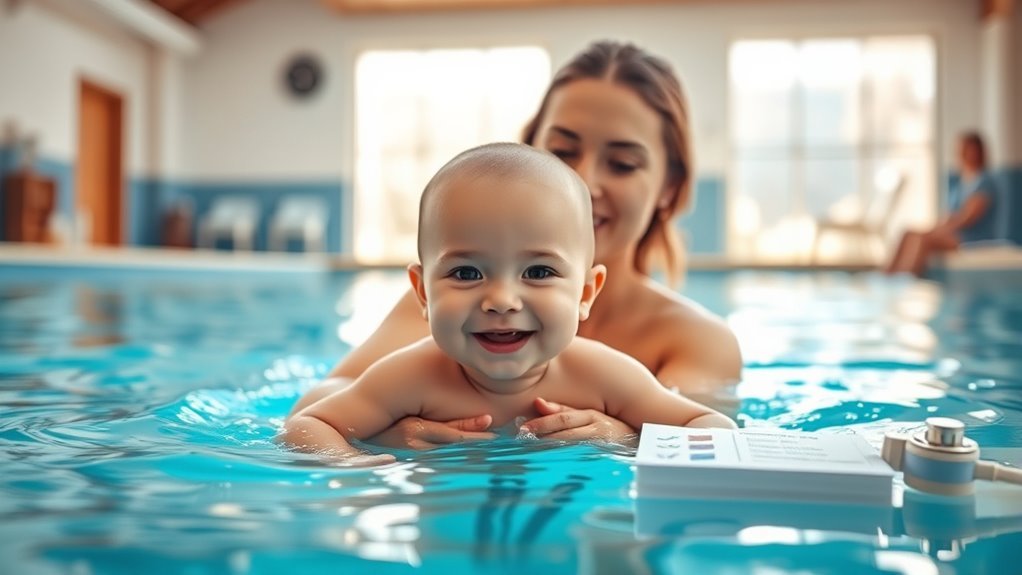
Because swimming involves exposure to water and close contact with others, you should guarantee your baby is in good health before starting lessons.
Ensure your baby is healthy before swimming lessons due to water exposure and close contact with others.
To ensure your little one is ready, consider these key points:
- Check for any respiratory issues like colds or infections, which can worsen in a humid pool environment.
- Confirm your baby has no skin conditions or open wounds that could get irritated or infected.
- Make sure your baby’s vaccinations are up to date, reducing the risk of contagious illnesses.
- Monitor their overall energy and mood; a lethargic or unusually fussy baby may need more rest before swimming.
Taking these steps helps create a safe and enjoyable experience for your baby in the water.
Benefits of Early Swimming for Babies
When you introduce your baby to swimming at an early age, you help boost their physical development and confidence in the water. Swimming encourages muscle strength, coordination, and balance as your baby learns to move in a new environment.
It also promotes cardiovascular health and lung capacity, supporting overall growth. Beyond the physical benefits, early swimming fosters water safety awareness, which is essential for preventing accidents later on.
You’ll notice improved sleep patterns and reduced fussiness after sessions, thanks to the calming effects of water. Additionally, these lessons enhance your bonding experience as you engage in close, trusting interactions.
Starting swimming early sets a foundation for a lifetime of healthy habits and positive associations with physical activity.
Signs Your Baby Is Ready for Swimming Lessons
Introducing your baby to swimming early can bring many benefits, but it’s important to recognize when they’re truly ready for lessons. Knowing the right signs guarantees a positive experience for both of you.
Here are four key indicators your baby is ready:
- Head control: Your baby can hold their head up steadily without support.
- Interest in water: They show curiosity or enjoyment during bath time or pool visits.
- Physical health: They’re free from illnesses and have received necessary immunizations.
- Age guidelines: They meet the minimum recommended age, usually around 6 months.
If your baby meets these signs, they’re likely prepared to start swimming lessons safely and confidently.
Always consult your pediatrician before beginning.
Choosing the Right Swimming Program for Infants
Although finding the perfect swimming program for your infant may feel overwhelming, focusing on key factors like instructor qualifications, class size, and safety measures will help you make an informed choice.
Look for instructors certified in infant CPR and experienced with babies, ensuring they understand your child’s needs.
Choose instructors certified in infant CPR who have experience and truly understand your baby’s unique needs.
Smaller class sizes allow for more personalized attention and a safer environment.
Pay attention to the program’s approach. Gentle, play-based lessons encourage positive associations with water.
Check the pool’s cleanliness, temperature, and accessibility to ensure comfort.
Also, consider the program’s schedule and location for convenience.
Safety Guidelines for Baby Swimming Activities
Because babies are especially vulnerable in water, you must prioritize safety at every step of their swimming activities. To keep your little one safe, follow these essential guidelines:
- Always stay within arm’s reach, providing constant supervision.
- Ensure the water temperature is warm enough (around 32°C or 89.6°F) to prevent chills.
- Use swim diapers and clean pools to maintain hygiene and reduce infection risks.
- Choose pools with certified lifeguards and clear emergency protocols.
How to Prepare Your Baby for Their First Swim
Ensuring your baby’s safety in the water sets the foundation for a positive swimming experience. Before their first swim, get them comfortable with water by gently splashing or wiping their face.
Use a snug swimsuit and swim diapers to keep things hygienic. Always bring a warm towel and keep your baby close to maintain body heat.
| Preparation Step | What to Do | Why It Helps |
|---|---|---|
| Water Familiarization | Splash softly on face | Builds comfort with water |
| Proper Gear | Swimsuit and swim diaper | Maintains hygiene |
| Warmth | Wrap in towel immediately | Prevents chills |
These steps make your baby feel secure and ready for fun, safe swimming lessons.
Common Concerns Parents Have About Baby Swimming
When you consider enrolling your baby in swimming lessons, you probably have questions about their safety and readiness. It’s normal to worry about how your little one will handle being in water.
Here are common concerns parents often face:
- Will my baby be safe in the water, especially around other kids?
- Is my baby physically and emotionally ready for swimming lessons?
- Could swimming cause ear infections or other health issues?
- What if my baby feels scared or overwhelmed during the lesson?
Understanding these concerns helps you make informed decisions.
Swimming lessons designed for infants focus on safety and gradual exposure, ensuring your baby gets comfortable without pressure.
Always consult your pediatrician and choose certified instructors who specialize in baby swimming.
Tips for Making Swimming Enjoyable and Stress-Free for Babies
Although introducing your baby to swimming can feel intimidating, you can make the experience fun and calm by following a few simple tips. Start by choosing a warm, shallow pool and keep sessions short, about 15 to 20 minutes, to prevent overstimulation.
Always hold your baby securely and speak soothingly to build trust. Bring familiar toys or floats to create a playful environment. Watch your baby’s cues closely; if they seem upset or tired, take a break or end the session.
Gradually increase time and activities as your baby gets comfortable. Remember to dress your baby in a swim diaper and rinse them well afterward to protect their skin.
Frequently Asked Questions
What Swimming Gear Is Best for Babies in Lessons?
You’ll want snug swim diapers, a well-fitting swim cap, and a comfortable swimsuit.
Consider baby float suits for added safety, and use gentle, tear-free swim goggles if your baby tolerates them during lessons.
How Do Swimming Lessons Impact Baby Sleep Patterns?
Just like a vintage cuckoo clock, swimming lessons can help regulate your baby’s sleep patterns by tiring them out and promoting relaxation.
You’ll notice your little one naps deeper and sleeps longer after a fun splash session.
Can Swimming Lessons Help With Infant Colic?
Yes, swimming lessons can help with infant colic by promoting relaxation and improving digestion.
You’ll notice your baby might calm down after gentle water activities, making colic symptoms easier to manage through soothing movement.
Are There Cultural Differences in Baby Swimming Practices?
You’ll find baby swimming practices vary worldwide, like unique dances in water. In some cultures, babies dive early to embrace nature, while others wait, symbolizing protection and gradual growth.
Your choice reflects your values and traditions.
How Do Instructors Handle Babies With Allergies During Lessons?
Instructors ask about your baby’s allergies beforehand and adjust lesson plans accordingly. They’ll avoid triggers, use hypoallergenic products, and keep emergency meds handy.
Don’t hesitate to share all details so they can keep your baby safe and comfortable.
Conclusion
Deciding when your baby can start swimming means knowing the right age, checking their health, and spotting readiness signs. It means following safety guidelines, preparing them gently, and easing any worries you might have.
It means embracing the benefits, making lessons fun, and building confidence in the water. By balancing caution with encouragement, you’ll help your baby enjoy swimming safely, happily, and confidently from their very first splash.
Understanding how to decide the age babies can start swimming lessons is key to ensuring a positive experience. Prioritizing safety and readiness will give your baby the best start in the water.