
Is 70 Degrees Outside Too Cold to Swim?
You can swim comfortably when it’s 70 degrees outside, but remember water often feels colder because it retains less heat than air. Your body loses heat faster in water, especially if it’s cool or windy, which might make you feel chilly sooner. Wearing a wetsuit and staying active helps keep you warm.
Feeling cold or numb means it’s time to get out. Keep in mind, there’s more to think about for a safe, warm swim in these conditions.
Understanding Air Temperature vs. Water Temperature
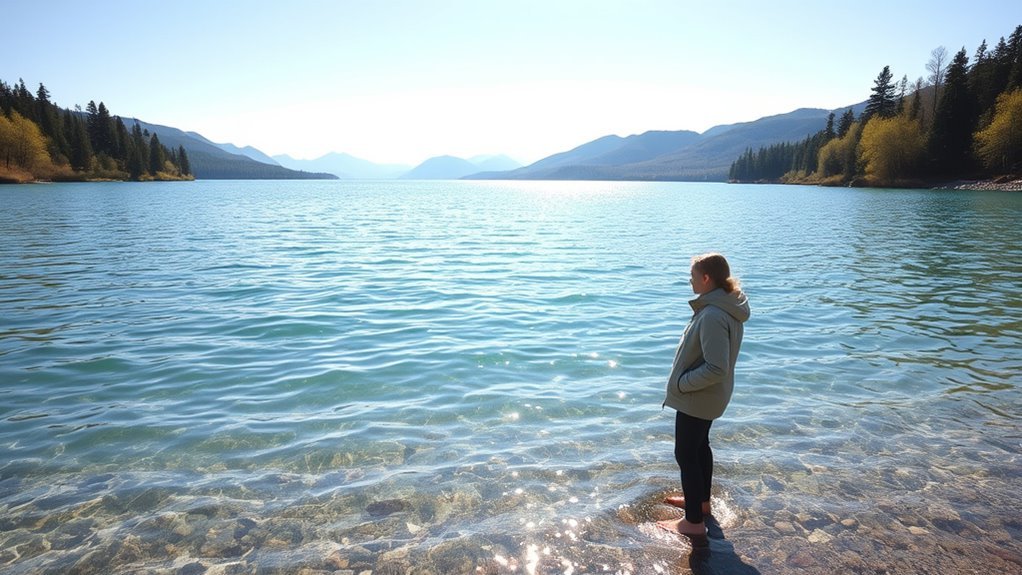
Although the air temperature might feel comfortable at 70 degrees, the water temperature can be quite different and often cooler. You might expect the water to match the air, but water holds temperature differently, usually lagging behind air changes.
Even on a warm day, water can remain chilly because it absorbs heat more slowly and loses it gradually. When you step into water at or below 70 degrees, you’ll likely notice it feels colder than the air.
This happens because water draws heat away from your body much faster than air does. Understanding this difference helps you prepare better, whether it’s choosing the right swimwear or deciding how long to stay in.
How Body Temperature Affects Swimming Comfort
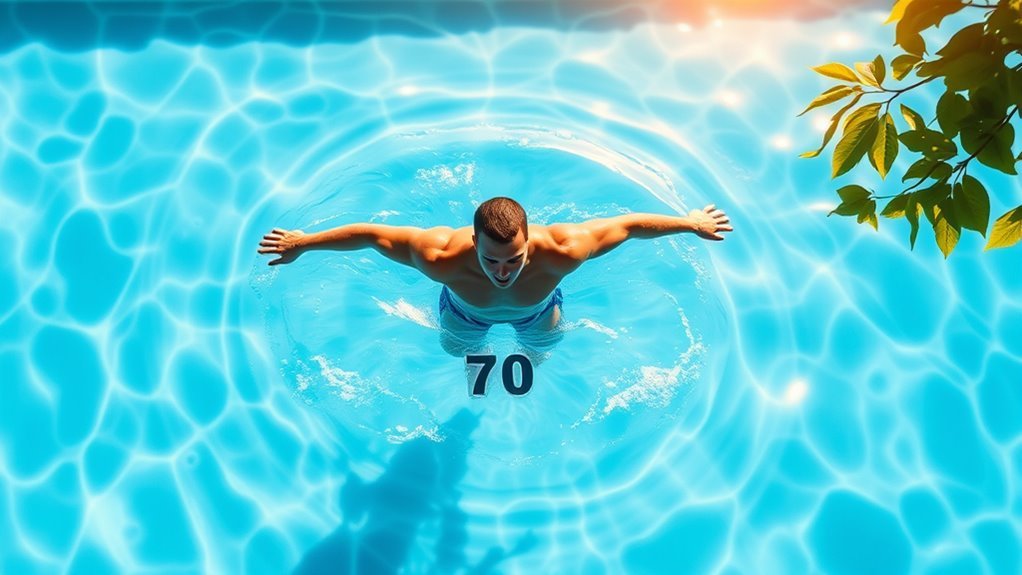
When you swim, your body temperature plays a crucial role in how comfortable you feel in the water. Your body naturally loses heat to cooler water, which can make you shiver or feel numb if it’s too cold. But if you’re active, your muscles generate heat, helping maintain your core temperature.
How you feel depends on how well your body balances heat loss and production.
| Feeling | Body Response |
|---|---|
| Warm & Relaxed | Core temp stable |
| Slight Chill | Mild heat loss |
| Shivering | Rapid heat loss |
| Numbness | Extreme heat loss |
| Fatigue | Body conserving energy |
Understanding these signs helps you know when to get out or keep going safely.
The Role of Wind Chill and Humidity
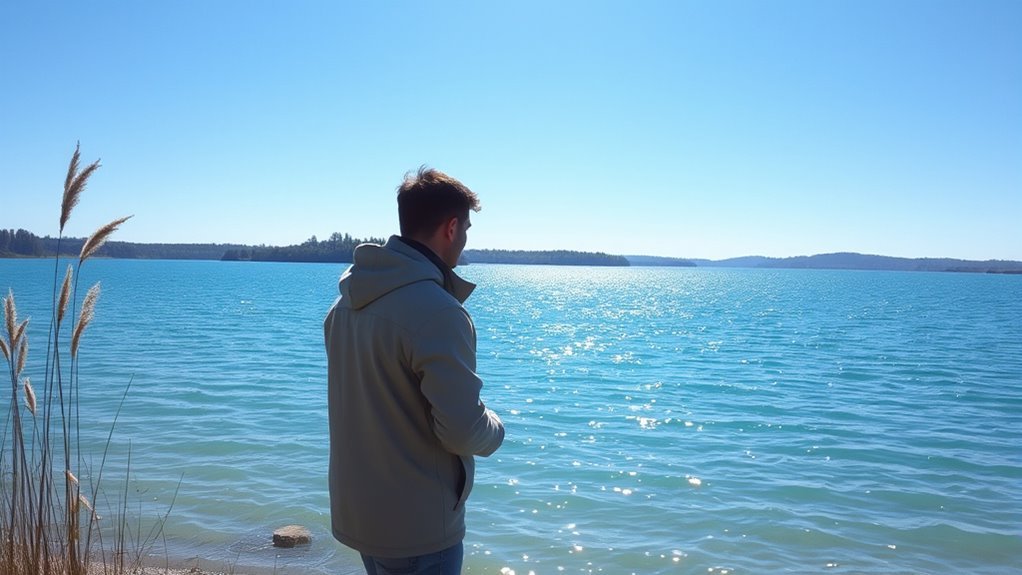
Since wind chill and humidity directly affect how your body loses heat, they considerably influence your swimming comfort in 70-degree water. When you swim, your body cools faster if the air is dry or windy, making you feel colder once you exit the water.
Here’s how wind chill and humidity impact you:
- Wind Chill: Strong winds strip away the thin layer of warm air around your skin, accelerating heat loss and causing a chill that can make swimming feel colder than the actual temperature.
- Low Humidity: Dry air increases evaporation from your skin, cooling you faster and potentially leading to discomfort during or after your swim.
- High Humidity: Moist air slows evaporation, helping you retain heat longer and feel warmer despite the same water temperature.
Knowing these factors helps you dress and prepare better for your swim.
Health Considerations for Swimming in Cooler Weather
Because your body loses heat more quickly in cooler water, swimming at 70 degrees or below requires extra caution to avoid hypothermia and muscle cramps. You should be aware of how your body reacts and know the warning signs.
Cold water can cause your muscles to tighten, reducing coordination and increasing injury risk. Also, prolonged exposure might lower your core temperature dangerously.
| Health Risk | Symptoms | Immediate Action |
|---|---|---|
| Hypothermia | Shivering, confusion | Get out, warm up gradually |
| Muscle cramps | Sudden pain, stiffness | Stretch, hydrate |
| Cold shock | Gasping, rapid breath | Control breathing, exit |
Stay alert to these signs to keep your swim safe and enjoyable.
Tips for Staying Warm When Swimming in 70-Degree Weather
Although 70-degree water feels chilly, you can stay comfortable by preparing properly before and during your swim. Here are three simple tips to help you stay warm:
- Wear a wetsuit or swim skin. These provide insulation and reduce heat loss, keeping your body temperature stable.
- Warm up on land first. Do some light exercises to increase your core temperature before entering the water.
- Limit your time in the water. Take breaks or swim shorter distances to avoid prolonged exposure to cooler temperatures.
Personal Preferences and Psychological Factors in Cold Swimming
While physical preparation helps you handle cooler water, your mindset plays a big role in how comfortable you feel swimming in 70-degree temperatures.
If you approach the swim with confidence and a positive attitude, you’re more likely to enjoy the experience despite the chill.
Your personal tolerance for cold varies. What feels brisk to one person might feel invigorating to another.
Mental strategies like focusing on your breathing, setting small goals, or visualizing warmth can help you stay calm and overcome initial discomfort.
Also, past experiences shape your expectations. If you’ve swum in colder water before, 70 degrees might feel quite manageable.
Ultimately, listening to your body and respecting your limits ensures you stay safe and enjoy your swim.
Frequently Asked Questions
What Types of Swimsuits Are Best for Swimming in Cooler Water?
You’ll want wetsuits or neoprene swimsuits since they trap heat and keep you warm in cooler water. Full-body suits offer extra insulation, while sleeveless options provide flexibility.
Choose based on how chilly the water feels.
Can Swimming in 70-Degree Weather Improve Your Metabolism?
Yes, swimming in 70-degree weather can boost your metabolism because your body works harder to maintain its temperature.
You’ll burn more calories, especially if you swim vigorously or spend extended time in the cooler water.
How Long Can You Safely Swim in 70-Degree Water?
You can safely swim in 70-degree water for about 20 to 30 minutes, depending on your tolerance.
Stay alert for signs of chill or fatigue, and warm up promptly afterward to avoid hypothermia risks.
Are There Specific Exercises to Prepare for Cold Water Swimming?
Wondering how to prep for cold water swimming? You should practice breathing exercises, gradually expose yourself to colder water, and build endurance with cardio workouts.
These steps help your body adapt and keep you confident in chilly conditions.
Does Swimming in Cooler Water Affect Muscle Recovery?
Yes, swimming in cooler water can speed up muscle recovery by reducing inflammation and soreness. You’ll feel less muscle fatigue and recover faster, but don’t stay too long or you risk stiffness and cramps.
Conclusion
Swimming when it’s 70 degrees outside isn’t about the number—it’s about how your body feels, much like dipping into the invigorating yet unpredictable waters of a modern-day Odyssey. You might find it bracing, even invigorating, or chilly enough to make you think twice.
Listen to your body, prepare for the wind and humidity, and remember: just as Odysseus adapted to every challenge, you can find your comfort zone in cooler swims. With the right mindset and precautions, swimming at 70 degrees can be a refreshing and enjoyable experience.