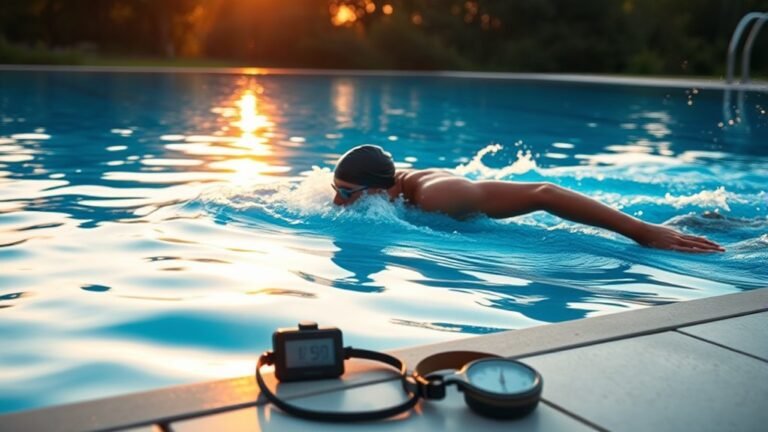

How You Can Go Swimming Safely With a Tampon
You can swim safely with a tampon by choosing one with light to regular absorbency and inserting it properly before you get in the water. Swimming with a tampon is a great way to stay active during your period without worry. Make sure your hands are clean, place the tampon snugly inside, and leave the string outside for easy removal.
Wear a well-fitting swimsuit to keep it secure and change your tampon every 4 to 8 hours to stay fresh. These steps help prevent leaks and maintain your comfort while swimming. Keep these tips in mind, and you’ll feel confident and comfortable—there’s more helpful advice coming up.
Understanding How Tampons Work in Water

Although you might worry about tampons absorbing water while swimming, they’re designed to expand only when they come into contact with your menstrual flow.
Tampons expand only when they absorb menstrual flow, not pool or ocean water.
When you swim, the tampon sits snugly inside you, blocking menstrual fluid without soaking up pool or ocean water.
Its absorbent core is protected by a special layer that prevents water from entering and causing swelling. This means you won’t feel uncomfortable or have the tampon lose its effectiveness while you’re in the water.
However, it’s important to insert the tampon properly before swimming to ensure it stays secure.
Selecting the Right Tampon for Swimming

Now that you know how tampons work in water, choosing the right one for swimming helps you stay comfortable and confident. Opt for a tampon with a suitable absorbency level—light to regular is usually best to avoid leakage without feeling bulky.
Look for tampons labeled as “swimming-friendly” or “sport” since they’re designed to hold up well in water. A compact, smooth applicator makes insertion easier, ensuring a secure fit.
Avoid super or ultra-absorbent tampons for swimming, as they can feel uncomfortable and aren’t necessary unless your flow demands it. Remember, the right tampon minimizes worries, lets you focus on enjoying the water, and keeps you feeling fresh throughout your swim session.
Choose wisely, and you’ll have a safe, carefree experience.
Proper Tampon Insertion Before Swimming
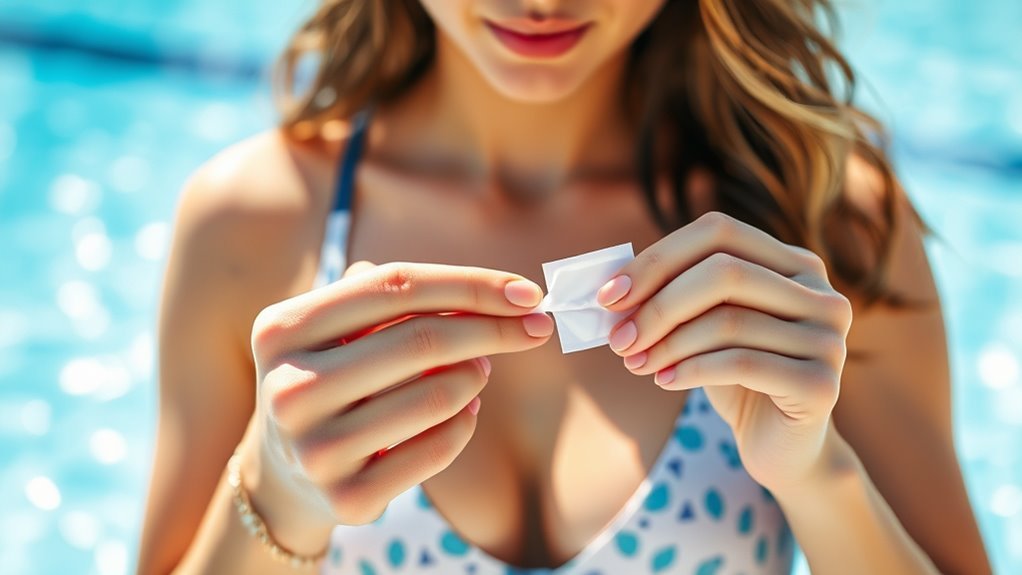
Before you jump into the pool, make sure you insert your tampon correctly to prevent leaks and guarantee comfort. Start by washing your hands thoroughly to keep things sanitary.
Find a comfortable position, sitting on the toilet or standing with one leg raised usually works best. Gently unwrap the tampon and hold it with your fingers at the grip area.
Insert the tampon into your vaginal opening at a slight upward angle, aiming toward your lower back. Push it in until your fingers touch your body and the tampon feels comfortably in place.
If you’re using an applicator, slide it in until your fingers reach your body, then push the plunger to release the tampon fully. Remove the applicator and dispose of it properly.
Check that the string hangs outside your body for easy removal.
Tips for Comfort and Leak Prevention
Once your tampon is securely in place, focus on how to stay comfortable and prevent leaks while swimming. Choose the right absorbency to avoid overflow and guarantee a snug fit. Avoid changing your tampon right before swimming to reduce irritation.
Wear a well-fitting swimsuit to support your tampon and prevent shifting. Rinse off after swimming to feel fresh and avoid any discomfort.
| Tip | Why It Helps | How To Do It |
|---|---|---|
| Choose proper absorbency | Prevents leaks | Use lowest absorbency needed |
| Insert snugly | Avoids shifting | Follow insertion steps precisely |
| Wear tight swimsuit | Supports tampon in place | Pick secure, comfortable swimwear |
| Rinse after swimming | Maintains hygiene | Shower or rinse with water |
When and How to Change Your Tampon
How often should you change your tampon when swimming? It’s best to switch tampons every 4 to 8 hours, even if you’re in the pool. Change yours before you swim to guarantee maximum absorbency and reduce the risk of leaks.
Change your tampon every 4 to 8 hours, ideally before swimming, to ensure absorbency and prevent leaks.
When you’re ready to change, find a clean restroom or private spot. Wash your hands thoroughly before removal. Gently pull the string downward and forward to remove the tampon. Dispose of it properly in a trash bin; never flush.
Then, insert a fresh tampon following the instructions on the package, making sure it feels comfortable and secure.
Keeping this routine helps prevent infections and maintains hygiene, letting you enjoy swimming without worry.
Don’t forget to monitor how your body feels during your swim.
Additional Swimwear and Hygiene Considerations
Although tampons provide reliable protection, choosing the right swimwear and practicing good hygiene can enhance your comfort and safety while swimming.
Opt for snug-fitting swimsuits that hold everything securely in place, preventing any shifting of your tampon. Dark-colored swimwear can help you feel more confident, just in case of minor leaks.
After swimming, change your tampon promptly to reduce the risk of irritation or infection. Always wash your hands before and after changing your tampon to maintain cleanliness.
Consider bringing a waterproof bag for used tampons to keep things hygienic while on the go.
Finally, listen to your body. If you feel any discomfort or unusual symptoms, take a break and check in with your healthcare provider.
Frequently Asked Questions
Can Tampons Be Reused After Swimming?
No, you shouldn’t reuse tampons after swimming. Once a tampon is wet, it loses its effectiveness and can increase infection risk.
Always use a fresh tampon to stay safe and comfortable in the water.
Do Tampons Affect Swimming Performance?
Tampons don’t slow you down, don’t distract your focus, and don’t affect your stroke. You’ll swim just as fast and feel just as strong because tampons stay discreet and won’t interfere with your performance.
Are Tampons Safe for All Water Temperatures?
Yes, tampons are generally safe for all water temperatures. Just make sure you insert one properly and change it regularly to avoid discomfort or infections, no matter if you’re swimming in warm or cold water.
Can Tampons Cause Infections From Pool Water?
Think of your tampon as a shield, not a magnet for germs. It won’t cause infections from pool water if you change it regularly and maintain hygiene.
Just don’t leave it in too long, and you’ll be safe.
How Long After Swimming Can I Leave a Tampon In?
You shouldn’t leave a tampon in for more than 8 hours, even after swimming. Change it as soon as you can to reduce infection risk and stay comfortable.
Don’t wait too long after getting out.
Conclusion
Swimming with a tampon can be safe and comfortable when you choose the right one and insert it properly. Remember, “prevention is better than cure”—so always change your tampon before and after swimming to avoid leaks or infections.
Pair it with suitable swimwear and maintain good hygiene to enjoy your time in the water confidently.
With these simple steps, you can plunge in worry-free and make the most of every swim. Swimming safely with a tampon means selecting the right product, changing it timely, and following good hygiene practices for a comfortable experience.