How Long Does It Take to Learn to Swim Quickly
You can learn to swim quickly within a few weeks if you practice consistently and focus on the basics like breathing and kicking. Building comfort in the water and receiving professional lessons will speed up your progress. Practicing about 3-4 times a week for 30-45 minutes helps build muscle memory and confidence.
Your age and mindset also play important roles, but dedication is the key factor. Keep going, and you’ll soon discover ways to boost your progress even more. With steady effort, swimming skills can improve rapidly.
Factors Influencing Swimming Learning Speed
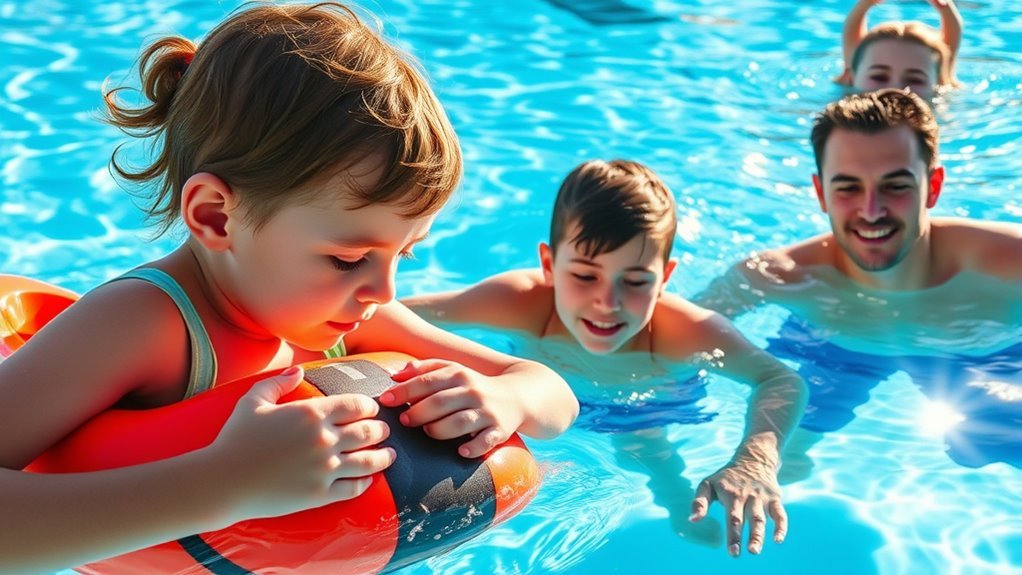
Although everyone learns at their own pace, several key factors influence how quickly you can pick up swimming skills. Your comfort level in the water plays a huge role; if you’re anxious, progress might slow down.
Everyone learns swimming differently, but being comfortable and relaxed in the water speeds up your progress.
Physical fitness also matters. Strong muscles and good endurance help you move more efficiently.
How often you practice is vital; consistent sessions speed up muscle memory development.
Access to good instruction and feedback helps you correct mistakes early, preventing bad habits.
Your age and coordination affect how fast you absorb techniques, too.
Finally, your mindset impacts learning speed. Staying patient and positive keeps you motivated.
Essential Swimming Skills to Master First
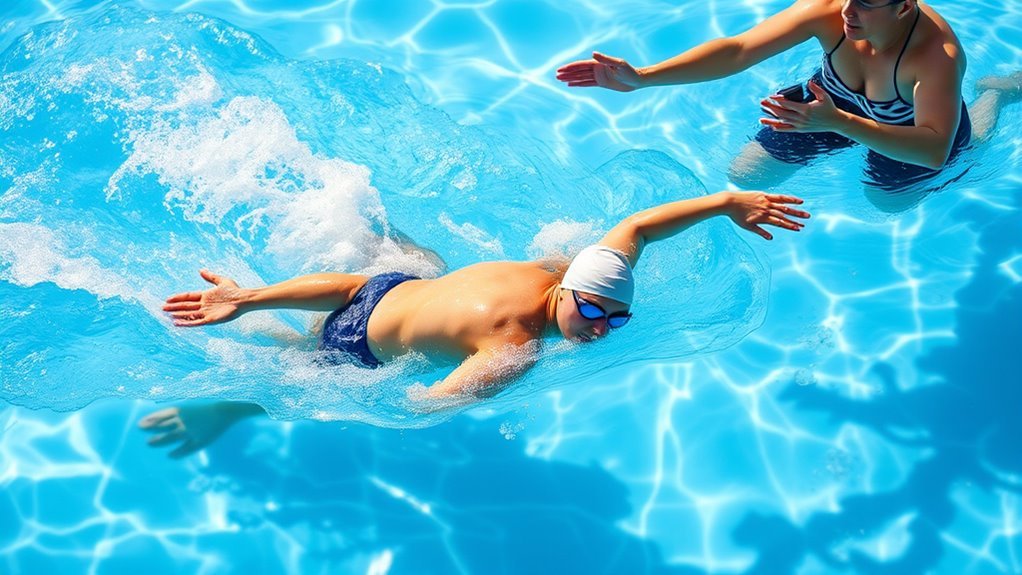
Where should you begin when learning to swim? Start by mastering basic water comfort skills, like floating on your back and front. These build confidence and help you relax.
Next, focus on breathing techniques. Learn to exhale underwater and inhale quickly at the surface. Without proper breathing, swimming feels exhausting.
Then, practice simple kicks, such as the flutter kick, to propel yourself efficiently. Combine these with arm movements, starting with the basic front crawl stroke.
Don’t forget to develop proper body positioning; keeping your body horizontal reduces drag.
Ultimately, get comfortable with entering and exiting the water safely.
Recommended Practice Frequency and Duration
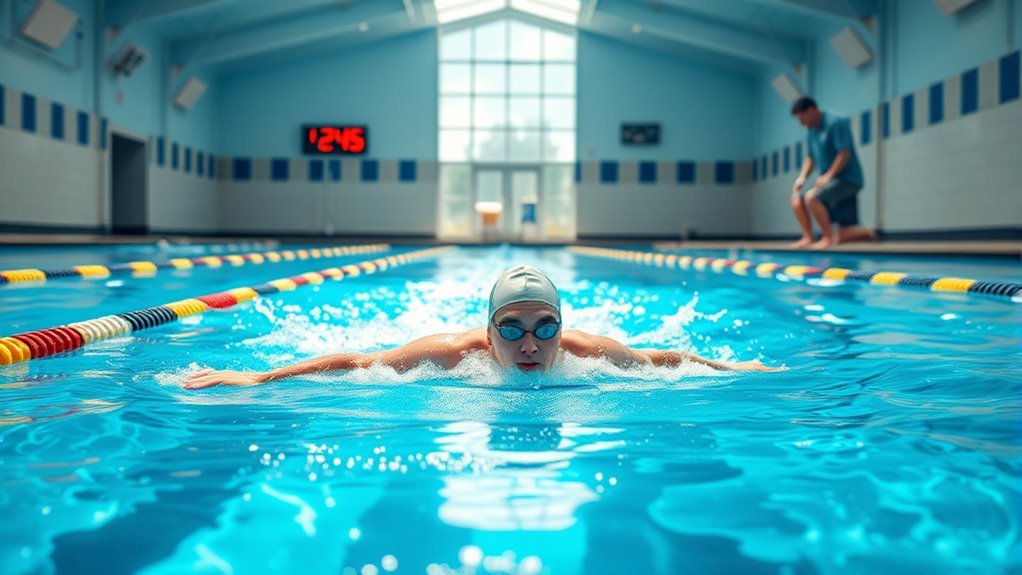
Once you’ve got a handle on the basic swimming skills, the next step is to establish a consistent practice routine. Practicing regularly helps build muscle memory and boosts your confidence in the water.
Aim for short, focused sessions rather than long, exhausting ones to avoid fatigue and maintain motivation.
| Practice Frequency | Session Duration | Focus Area |
|---|---|---|
| 3-4 times per week | 30-45 minutes | Technique & endurance |
| 5-6 times per week | 20-30 minutes | Speed & stamina |
| Daily (if possible) | 15-20 minutes | Drills & flexibility |
Benefits of Professional Swim Lessons
Because professional swim lessons provide expert guidance, you’ll learn proper techniques faster and avoid developing bad habits. Instructors tailor their teaching to your skill level, ensuring you grasp essentials like breathing, stroke mechanics, and water safety efficiently.
They also offer immediate feedback, so you can correct mistakes on the spot rather than practicing errors that slow your progress. Additionally, professional lessons create a structured environment that keeps you motivated and accountable, making consistent practice easier to maintain.
You’ll benefit from their experience in handling common challenges and fears, which helps build your confidence in the water. Ultimately, investing in professional swim lessons accelerates your learning curve, making your journey to swimming quickly more effective and enjoyable.
How Age Affects Learning to Swim Quickly
While professional lessons speed up your progress, your age also plays a significant role in how quickly you learn to swim. Younger learners often pick up techniques faster due to greater flexibility and fewer fears about water. Kids tend to absorb new motor skills quickly, making early childhood an ideal time to start.
Age influences swimming progress; younger learners often grasp techniques faster due to flexibility and less fear.
However, adults can still learn efficiently, especially with consistent practice and proper instruction. Your mindset matters too—being patient and open to learning helps regardless of age.
Older beginners might take a bit longer to build muscle memory and confidence, but that doesn’t mean you can’t swim well.
Ultimately, your dedication and effort influence your progress more than age alone, so focus on steady improvement rather than rushing the process.
Tips for Building Confidence in the Water
Although stepping into the water can feel intimidating at first, building your confidence starts with small, manageable steps. Begin by familiarizing yourself with the water’s feel. Stand in the shallow end and gradually immerse yourself.
Remember, confidence grows with practice and patience.
Here are four tips to boost your water confidence:
- Set achievable goals: Focus on simple skills like blowing bubbles or floating.
- Practice regularly: Consistent exposure makes the water feel less foreign.
- Use flotation aids: They provide support and safety while you build skills.
- Celebrate progress: Acknowledge every small achievement to stay motivated.
Common Challenges and How to Overcome Them
Building confidence in the water sets a strong foundation, but you’ll still face common challenges as you learn to swim. Fear of water often holds people back; tackle it by gradually immersing yourself and practicing breath control exercises.
Building confidence is key, but overcoming fear and practicing breath control are essential early steps in learning to swim.
Struggling with coordination? Break down strokes into smaller movements and focus on mastering each step before combining them. Fatigue can slow progress, so pace yourself and build endurance with consistent practice.
If you find breathing timing tricky, practice rhythmic breathing exercises outside the pool to develop muscle memory.
Ultimately, don’t get discouraged by slow progress. Swimming improves with patience and persistence.
Using Technology and Tools to Accelerate Learning
If you want to speed up your swimming progress, leveraging technology and tools can make a significant difference. They provide instant feedback, help track your improvement, and keep you motivated.
Here are four ways to use technology to accelerate your learning:
1. Wearable Swim Trackers
Monitor your stroke count, distance, and pace in real time.
2. Underwater Cameras
Record your technique to identify and correct mistakes.
3. Swimming Apps
Access customized training plans and instructional videos.
4. Virtual Coaching
Get expert advice remotely with video analysis and live feedback.
Frequently Asked Questions
What Type of Swimwear Is Best for Beginners?
You should choose a comfortable, well-fitting swimsuit that won’t restrict your movement. For beginners, a one-piece suit or swim trunks with a snug fit work best, letting you focus on learning without distractions or adjustments.
How Does Swimming Improve Overall Fitness?
Swimming boosts your fitness by engaging 85% of your muscles, improving cardiovascular health, strength, and flexibility.
You’ll burn calories efficiently while reducing joint impact, making it a full-body workout that’s both effective and gentle on your body.
Can Swimming Help With Rehabilitation After Injury?
Yes, swimming helps with rehabilitation after injury by providing low-impact resistance that strengthens muscles without stressing joints. You’ll improve flexibility, reduce pain, and speed recovery while staying active safely during your healing process.
What Are the Most Common Swimming Strokes?
The most common swimming strokes you’ll use are freestyle, backstroke, breaststroke, and butterfly. Each stroke targets different muscles and techniques, so practicing all helps you become a well-rounded swimmer fast.
How to Prevent Ear Infections While Swimming?
Don’t let water sneak into your ears like an uninvited guest; wear earplugs or a swim cap, dry your ears thoroughly after swimming, and use a vinegar-alcohol mix to keep bacteria at bay and prevent infections.
Conclusion
Learning to swim quickly is like riding a bike—you’ll get the hang of it faster with consistent practice and the right guidance. Focus on mastering essential skills, stay confident, and don’t shy away from professional lessons or helpful tools.
Remember, your age and dedication play a big role, but with patience and persistence, you’ll be swimming smoothly before you know it. Keep pushing yourself, and the water will soon feel like second nature.
In conclusion, how long does it take to learn to swim quickly depends on your commitment and the techniques you use. With regular practice and proper instruction, you can achieve swimming skills efficiently and enjoy the process.