How You Can Wear Tampons Safely in a Swimming Pool
You can wear tampons safely in a swimming pool by choosing the right absorbency for your flow and inserting the tampon properly before you swim. Proper tampon use in a swimming pool helps prevent leaks and maintains hygiene. Make sure it fits snugly and change it every 4 to 8 hours, especially before and after your swim, to avoid discomfort or infection.
Always wash your hands before insertion and carry extra tampons in a waterproof pouch. Keep an eye out for any signs you need to change it, so you stay comfortable and protected. There’s more to learn about staying confident and clean during pool time.
Understanding How Tampons Work in Water

Although it might seem tricky at first, you can wear tampons safely in a pool by understanding how they function in water. Tampons are designed to absorb menstrual flow inside your body, not water from the pool.
When you’re submerged, the tampon stays dry because it’s sealed inside your vaginal canal, preventing pool water from getting in. This means it won’t swell up or lose effectiveness just because you’re swimming.
The key is proper insertion: make sure it fits snugly to avoid leaks. Also, changing your tampon before and after swimming reduces any risk of discomfort or infection.
Choosing the Right Absorbency for Swimming
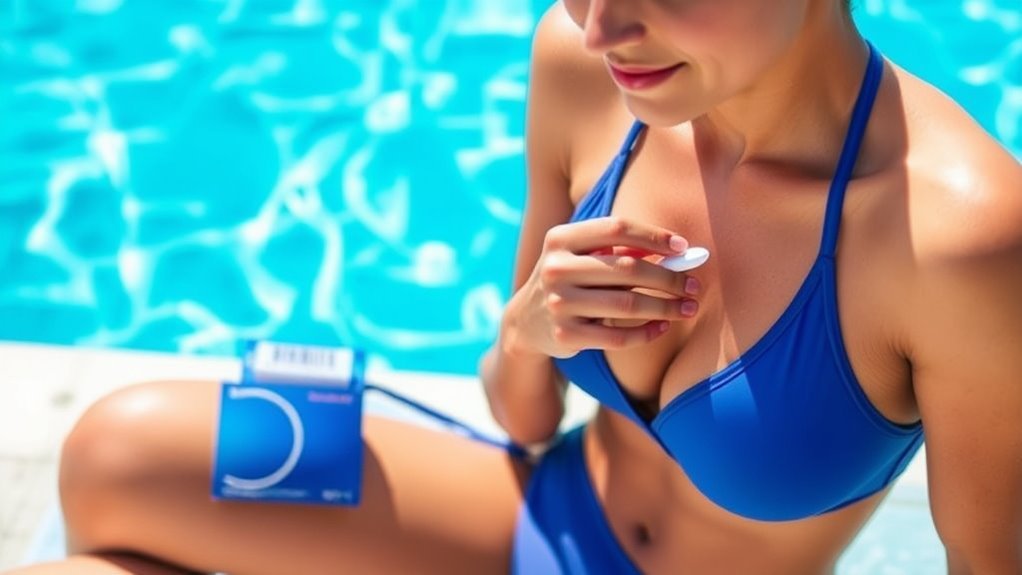
When you go swimming, picking the right tampon absorbency is essential to stay comfortable and leak-free. Choosing a tampon that matches your flow prevents leaks and keeps you feeling secure in the water.
For light flow days, use a light absorbency tampon to avoid dryness. Medium absorbency works well for moderate flow, providing balanced protection. On heavy flow days, go for a super absorbency tampon to ensure maximum coverage without frequent changes.
| Flow Level | Recommended Absorbency |
|---|---|
| Light Flow | Light |
| Moderate Flow | Regular/Medium |
| Heavy Flow | Super |
Always match your tampon absorbency to your flow to swim confidently and comfortably without worrying about leaks.
Proper Insertion Techniques Before Swimming

Before you plunge into the pool, make sure you insert your tampon correctly to guarantee comfort and prevent leaks. Start by washing your hands thoroughly to keep things hygienic.
Find a comfortable position, sitting on the edge or standing with one leg raised works well. Gently insert the tampon applicator or tampon itself, aiming it toward your lower back, not straight up.
Push it in until your fingers touch your body, then withdraw the applicator if you’re using one. Make sure the string hangs outside your body for easy removal.
Check that the tampon feels comfortable and isn’t causing any pressure. Proper insertion ensures the tampon sits securely, minimizing the risk of leaks while you swim, so you can focus on enjoying the water.
Timing Your Tampon Change Around Swim Sessions
Since tampons need regular changing to stay safe and effective, you should plan your swim sessions around your tampon schedule. Changing your tampon before swimming helps prevent leaks and reduces the risk of infections.
Plan your swim around tampon changes to prevent leaks and reduce infection risk.
Aim to insert a fresh tampon about 15 to 30 minutes before you get in the pool for maximum comfort and protection. Also, be mindful of how long you’ve worn your tampon before and after swimming.
Keep these tips in mind:
- Change your tampon every 4 to 8 hours, even on swim days
- Avoid swimming if your tampon has been in for more than 8 hours
- Carry extra tampons in a waterproof pouch for quick changes
- Change immediately after swimming if possible
- Listen to your body and change sooner if you feel discomfort
This timing keeps you safe and confident while you swim.
Tips for Maintaining Hygiene While Swimming
Although swimming is a invigorating activity, you need to take extra care to keep yourself clean and prevent infections while wearing a tampon. Rinse off before and after swimming to remove bacteria. Always use fresh tampons and never reuse them.
Change your tampon soon after swimming to avoid prolonged moisture exposure.
| Tip | Why It Helps | Quick Reminder |
|---|---|---|
| Shower before swim | Removes surface bacteria | Use soap and water |
| Use fresh tampon | Prevents bacterial growth | Insert right before swim |
| Change tampon early | Avoids moisture buildup | Change within 2 hours |
Signs It’s Time to Change Your Tampon in the Pool
When you’re swimming with a tampon, it’s important to recognize the signs that it’s time to change it. Staying aware helps you avoid discomfort and maintain hygiene.
Here are key indicators to watch for:
- Feeling wetness or leakage inside your swimsuit
- Experiencing unusual odor or irritation
- The tampon has been in for more than 4-6 hours
- Noticing a change in your flow or spotting
- Feeling uncomfortable or sensing the tampon has shifted
If you notice any of these signs, find a private spot to change your tampon as soon as possible. Changing timely keeps you feeling fresh and reduces the risk of infections or discomfort while you enjoy your swim.
What to Do If You Experience Discomfort or Leakage
If you start feeling discomfort or notice leakage while wearing a tampon in the pool, take immediate action to prevent irritation or infection. Exit the water as soon as possible and head to a restroom or changing area.
At the first sign of discomfort or leakage while swimming with a tampon, leave the water promptly to check and change it.
Carefully remove the tampon and check for any signs of damage or incorrect placement. Dispose of the used tampon properly. Rinse your hands thoroughly before inserting a fresh tampon to maintain hygiene.
If discomfort persists after changing, consider taking a break from tampons and consult a healthcare professional if needed. Leakage may indicate that the tampon is saturated or inserted incorrectly, so ensure you use the correct absorbency and insertion technique next time.
Prioritizing your comfort and safety helps you enjoy swimming without worry.
Alternatives to Tampons for Swimming During Your Period
Since not everyone finds tampons comfortable or convenient for swimming during their period, exploring alternatives can help you stay active without worry. You’ve got plenty of options that keep you protected and confident in the pool.
Here are some great alternatives to tampons for swimming:
Menstrual Cups: Reusable, leak-proof, and swim-friendly.
Period Swimwear: Specially designed underwear that absorbs flow.
Soft Cups: Flexible, disposable cups that sit at the vaginal opening.
Menstrual Discs: Similar to cups but fit differently, offering comfort and protection.
Pads Designed for Swimming: Some brands make water-resistant pads for light flow days.
Try different options to see what suits your comfort and lifestyle best while enjoying your swim.
Myths and Facts About Swimming With Tampons
Although many people hesitate to swim while wearing tampons, the truth is you can do so safely and comfortably. One common myth is that tampons can get lost inside you while swimming, but that’s impossible because your cervix blocks that path.
Another misconception is that swimming will cause leaks or increase infection risk. In reality, tampons are designed to absorb menstrual flow internally, keeping you dry in the water when used correctly.
You might also hear that tampons aren’t hygienic for swimming, but changing them before and after your swim minimizes any risk.
Frequently Asked Questions
Can Tampons Cause Infections if Worn Too Long While Swimming?
Yes, if you wear tampons too long while swimming, they can increase your risk of infections like toxic shock syndrome.
Change your tampon every 4-8 hours and use the correct absorbency to stay safe and comfortable.
Are There Specific Tampon Brands Better Suited for Swimming?
You won’t find a miracle tampon brand that turns you into a swim champion overnight, but brands like Tampax and Playtex offer reliable, leak-proof options perfect for swimming.
Just change regularly, and you’re good to go!
How Do Chlorine and Pool Chemicals Affect Tampon Safety?
Chlorine and pool chemicals don’t affect tampon safety directly, but they can irritate sensitive skin.
You should change tampons promptly and rinse off after swimming to minimize irritation and maintain hygiene while you enjoy the pool.
Can Tampon Strings Cause Issues While Swimming?
Yes, tampon strings can sometimes cause issues while swimming by snagging on swimwear or pool surfaces.
To avoid this, you should trim the string short and tuck it inside your swimsuit before entering the water.
Is It Safe to Swim With a Tampon During Heavy Flow Days?
Yes, you can swim with a tampon during heavy flow days, but change it more often to avoid leaks and infections.
Make sure it’s inserted properly and consider using a higher absorbency tampon for better protection while swimming.
Conclusion
You might think wearing tampons in a pool is tricky, but it’s actually straightforward once you know how to choose the right absorbency and insert them properly. By timing your changes and staying aware of hygiene, you can swim comfortably without worry.
Funny enough, the very water you’re cautious about can help keep you fresh. So next time you plunge into the water, remember—
swimming with tampons isn’t just safe, it’s smart and simple! Swimming with tampons is a convenient and hygienic way to enjoy the pool without interruptions.