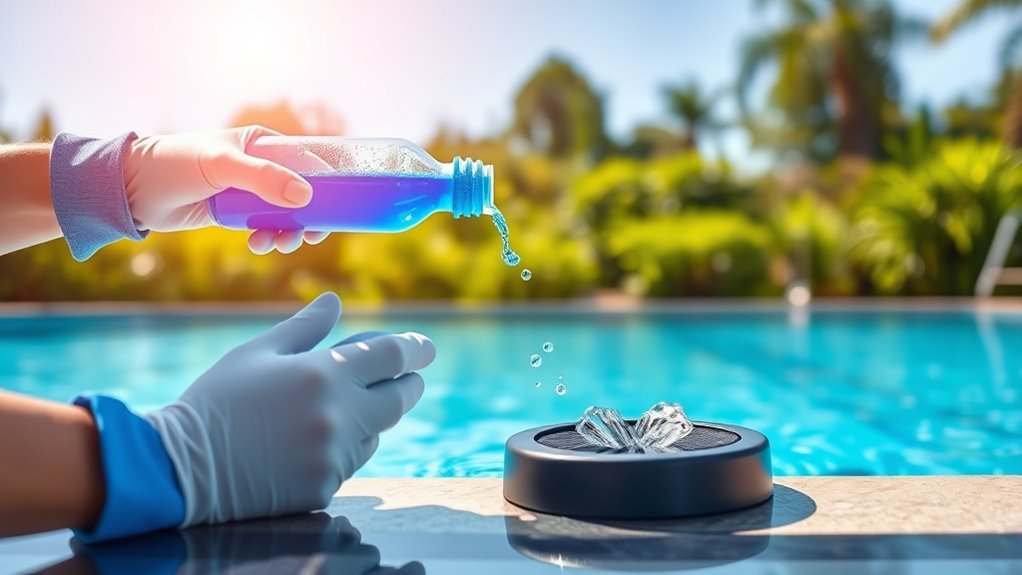
How to Get Rid of Phosphates in Your Swimming Pool
To get rid of phosphates in your swimming pool, start by testing the phosphate levels with a reliable kit. Phosphates can lead to algae growth, so managing them is key to maintaining clear water. Remove debris like leaves to cut phosphate sources, and avoid runoff or fertilizers nearby.
When levels are high, apply a phosphate remover following instructions carefully while the pump runs. Then, retest after 24-48 hours to ensure the phosphates are reduced. Keep your water balanced and clean consistently to prevent buildup.
If you want to keep your pool crystal clear, understanding these steps can help you stay ahead. Regular maintenance and monitoring phosphate levels are essential for a healthy swimming pool environment.
Understanding the Role of Phosphates in Pool Water
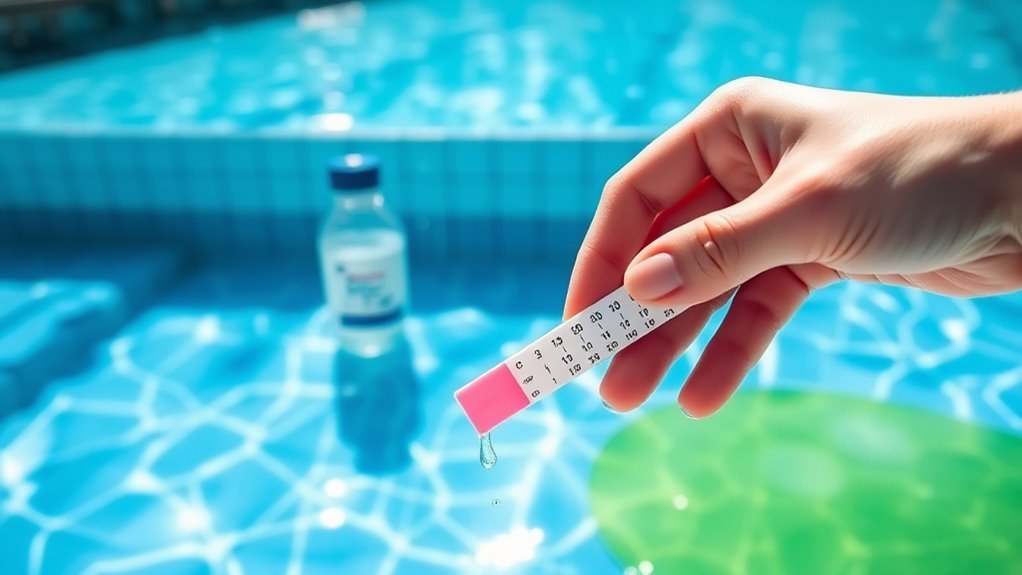
Although you mightn’t notice them, phosphates play an essential role in your pool’s ecosystem by serving as a primary food source for algae. When phosphates enter your pool from leaves, fertilizers, or even tap water, they provide nutrients that help algae grow rapidly.
Phosphates fuel algae growth in pools, often entering through leaves, fertilizers, or tap water.
This growth can turn your pool water green and cloudy, making it less enjoyable and harder to maintain. Understanding this connection helps you realize why controlling phosphate levels is fundamental.
While phosphates themselves don’t harm swimmers, their impact on water clarity and cleanliness is significant. By managing phosphates, you reduce algae’s ability to thrive, keeping your pool clearer and your maintenance easier.
Knowing this sets the stage for effective phosphate removal strategies to maintain a healthy pool environment.
Testing Your Pool Water for Phosphate Levels
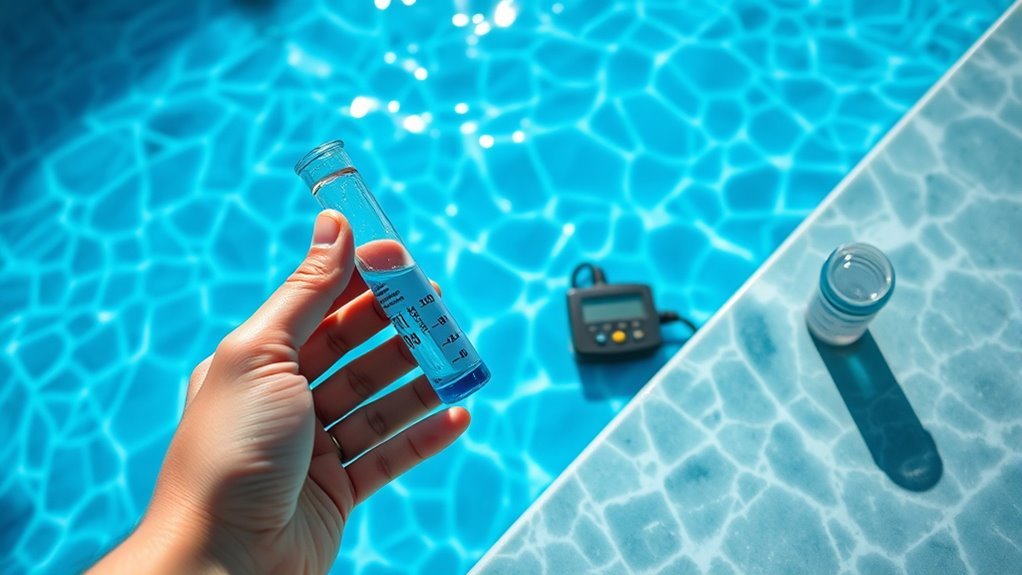
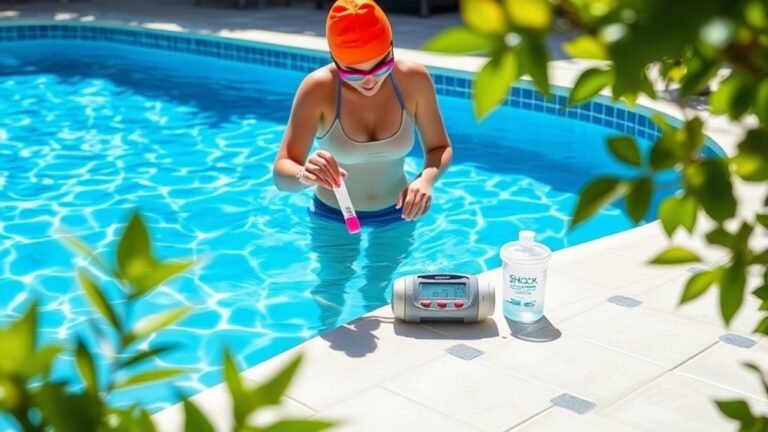
Since controlling phosphate levels is key to preventing algae growth, you’ll want to regularly test your pool water to know exactly where you stand. Testing kits are affordable and easy to use, giving you a clear phosphate reading in minutes.
You can choose between liquid test kits or test strips depending on your preference.
Here’s a quick guide to phosphate level readings:
| Phosphate Level (ppb) | Pool Condition | Recommended Action |
|---|---|---|
| 0 – 100 | Ideal | Maintain routine testing |
| 101 – 300 | Elevated | Use phosphate remover |
| Above 300 | High, algae likely | Treat immediately & retest |
Regular testing helps you act quickly and keep your pool crystal clear.
Common Sources of Phosphates in Swimming Pools
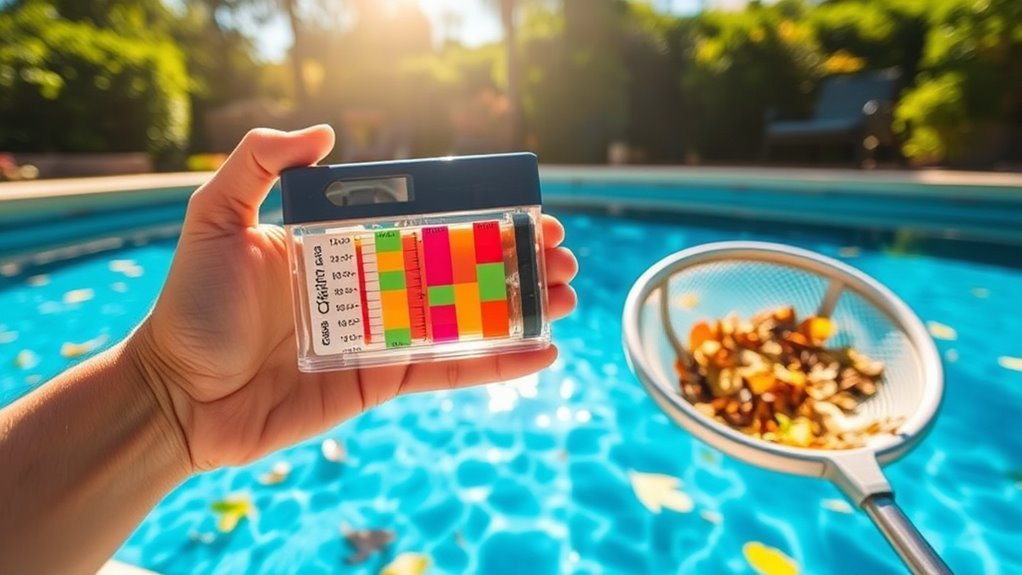
When you fill or maintain your pool, phosphates can sneak in from several common sources. Tap water often contains phosphates, so each refill adds a bit to your pool.
Fertilizers used around your yard can wash into the pool during rain or watering, introducing phosphates indirectly.
Runoff from yard fertilizers can carry phosphates into your pool during rain or watering.
Leaves, grass clippings, and other organic debris that fall into the water release phosphates as they decompose.
Even some algaecides and pool chemicals contain phosphates as stabilizers or ingredients.
Rainwater itself may carry phosphates from the environment.
Using Phosphate Removers Effectively
Knowing where phosphates come from makes it easier to tackle them head-on. When you use a phosphate remover, start by testing your pool water to determine phosphate levels. Follow the product instructions carefully. Overdosing won’t help and can waste chemicals.
Add the remover to the pool water evenly, preferably when the pump is running to ensure thorough circulation. Allow time for the chemicals to bind with phosphates, usually 24 to 48 hours, before retesting.
If phosphate levels remain high, you may need a second treatment.
Preventative Measures to Minimize Phosphate Buildup
Although phosphate removers help control buildup, taking preventative measures can save you time and effort in the long run. To minimize phosphate accumulation, regularly clean your pool and maintain proper filtration.
Avoid introducing external phosphate sources like garden runoff or fertilizer near the pool. Skimming debris and vacuuming prevent organic matter from decomposing, which releases phosphates.
| Preventative Action | Why It Helps | Frequency |
|---|---|---|
| Regular Skimming | Removes organic debris | Daily |
| Vacuuming Pool Floor | Prevents phosphate release | Weekly |
| Filter Maintenance | Ensures efficient filtration | Bi-weekly |
| Control Nearby Fertilizer | Reduces phosphate source | Ongoing |
Maintaining Balanced Water Chemistry for Long-Term Clarity
To keep your pool water clear and inviting, you need to maintain balanced water chemistry consistently. Regularly test your pool’s pH, alkalinity, and calcium hardness levels using reliable test kits.
Aim for a pH between 7.2 and 7.6 and total alkalinity between 80 and 120 ppm to prevent scale formation and corrosion.
Calcium hardness should stay within 200 to 400 ppm to protect pool surfaces.
Proper sanitizer levels, like chlorine, help control algae and bacteria that feed on phosphates. When you keep these chemicals balanced, you reduce conditions that encourage phosphate buildup and cloudiness.
Adjust chemicals as needed based on test results, and don’t forget to shock your pool periodically.
Consistent maintenance is key to long-term water clarity and a healthier swimming environment.
Frequently Asked Questions
Can Phosphates Harm Pool Equipment or Surfaces?
Phosphates themselves won’t directly harm your pool equipment or surfaces, but they fuel algae growth, which can cause damage and staining.
Are Phosphate Removers Safe for All Pool Types?
Yes, most phosphate removers are safe for all pool types, but you should always check the product label. Some formulas may be stronger, so testing on a small area first helps prevent damage to surfaces or equipment.
How Often Should I Test for Phosphates in My Pool?
Think of phosphates as sneaky weeds in your garden. You should test your pool water every two weeks to catch them early. Regular checks keep your water clear and healthy, preventing algae from taking root.
Can Natural Methods Reduce Phosphate Levels Effectively?
Natural methods can help reduce phosphate levels, but you won’t get quick or consistent results. You’ll need to combine regular cleaning, proper filtration, and adding phosphate-removing plants or beneficial bacteria for better effectiveness over time.
Do Phosphates Affect Swimmers’ Skin or Health?
Phosphates don’t directly harm your skin or health, but they fuel algae growth, which can irritate your skin and eyes.
Conclusion
So, you’ve learned how phosphates love to throw wild pool parties, feeding algae like it’s an all-you-can-eat buffet. But don’t just sit there letting your pool turn into a swampy science experiment!
Test those phosphate levels regularly and zap them with removers. Keeping your water chemistry balanced is key—think of it as a yoga contest for your pool’s health.
Follow these steps, and you’ll have a sparkling pool that says, “Sorry algae, you’re not invited!” To get rid of phosphates in your swimming pool effectively, consistent testing and treatment are essential.