How Wide Is a Swimming Lane?
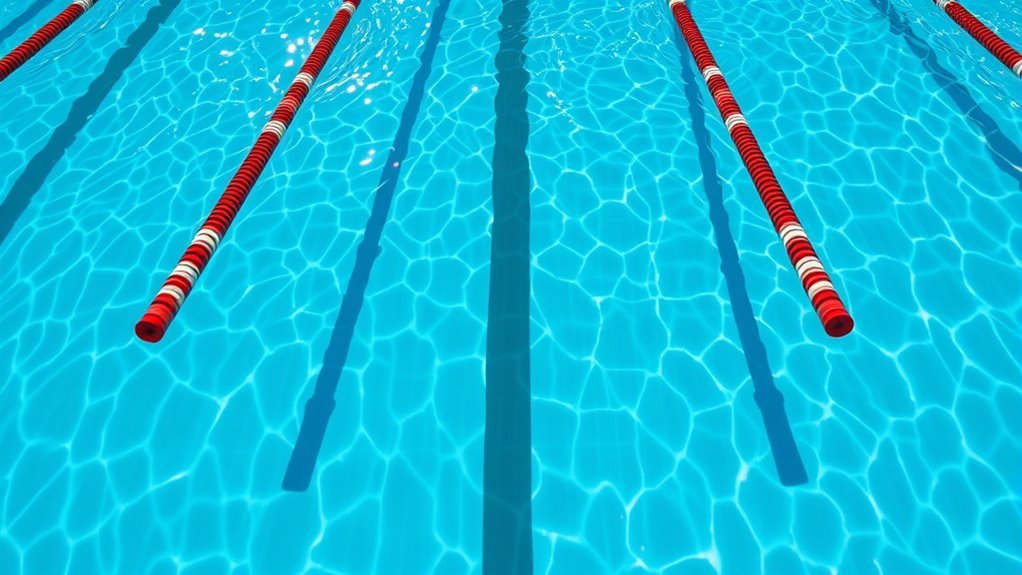
You’ll find that an official swimming lane is exactly 2.5 meters wide to meet competition standards and keep things fair for every swimmer. This lane width helps reduce turbulence and gives you enough room to swim smoothly without bumping into others. Understanding swimming lane width is key for both competition and recreational swimming.
Recreational pools often have wider or varied lane sizes to fit their space and needs. The width of swimming lanes can impact your performance and safety in the water. There’s a lot more to explore about how these measurements influence your swimming experience.
Standard Dimensions of Competitive Swimming Lanes
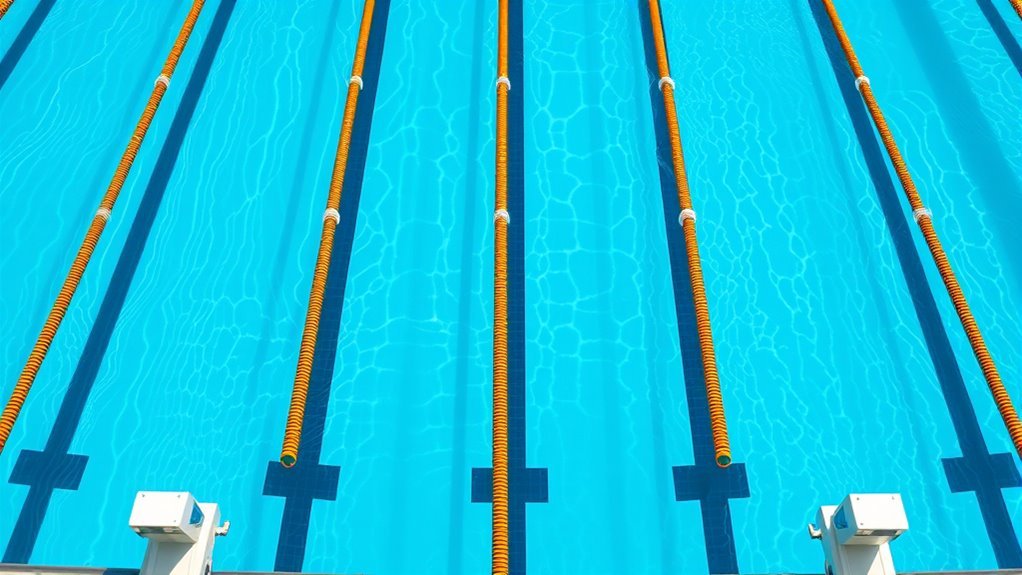
When you step into a competitive swimming pool, you’ll notice each lane has specific dimensions designed to guarantee fairness and safety. Each lane measures exactly 2.5 meters (about 8.2 feet) wide, ensuring swimmers have enough space to move without interference.
This width is standardized by FINA, the international swimming federation, for official competitions. The lane lines themselves act as barriers to reduce waves and keep swimmers in their lanes.
The pool is typically 25 or 50 meters long, but the lane width remains consistent regardless of length. Knowing these precise measurements helps you understand how competitive swimming maintains fairness, allowing every swimmer equal opportunity to perform at their best without worrying about cramped or uneven lanes.
Variations in Lane Widths for Recreational Pools
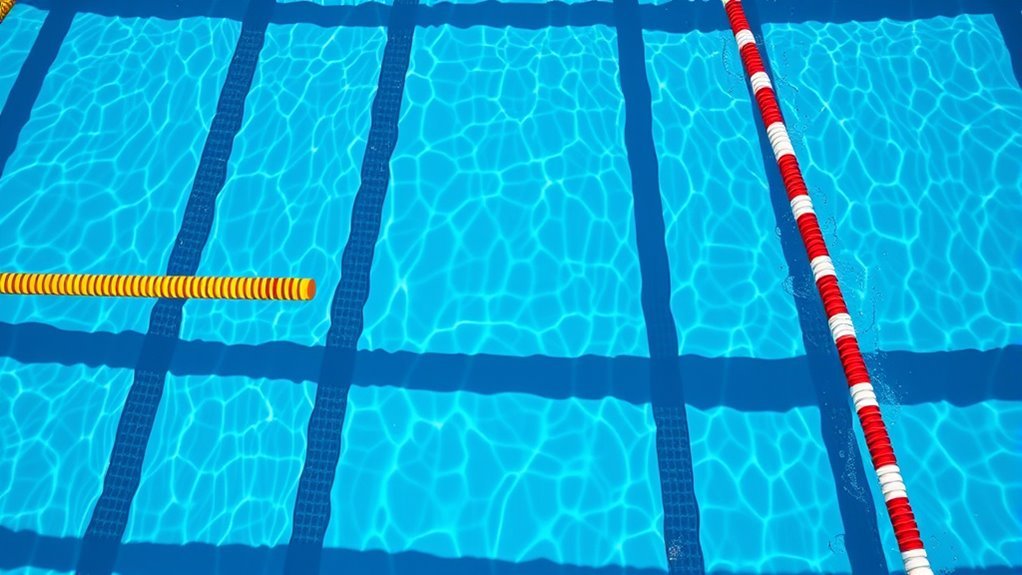
While competitive swimming lanes stick to strict widths, recreational pools offer more flexibility to suit different needs and spaces. When you’re setting up or using a recreational pool, lane widths can vary markedly, often ranging from 6 to 10 feet or more.
This variation lets you adapt the pool to your available space and how you plan to use it, whether for casual laps, family fun, or water exercises. Because these pools aren’t bound by official regulations, you can prioritize comfort over competition standards.
Keep in mind, though, narrower lanes might feel cramped if several swimmers use them simultaneously, while wider lanes provide more room to move freely. So, you get to decide what works best based on your pool’s purpose and the number of swimmers.
Importance of Lane Width in Swim Competitions
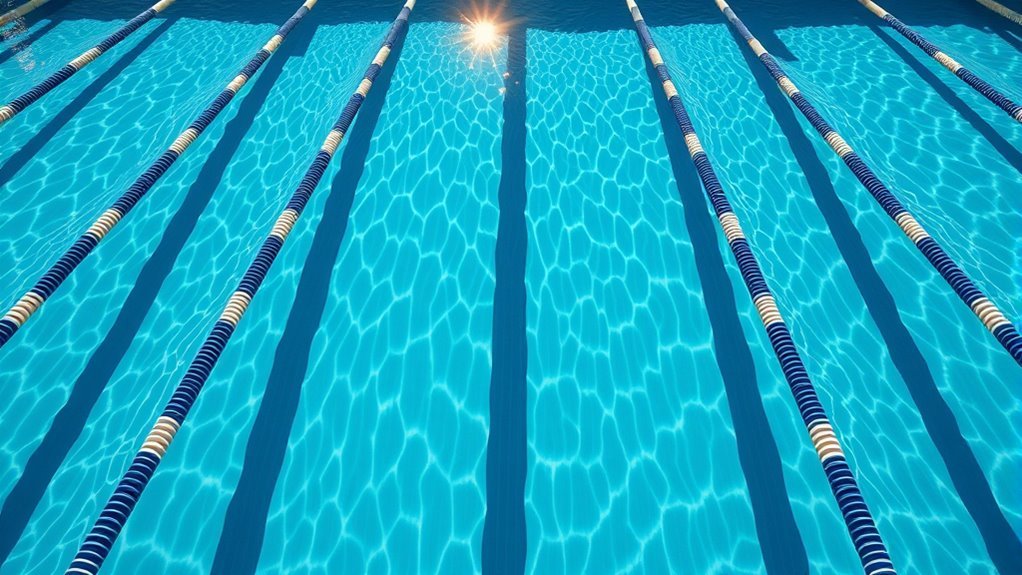
Because precise lane widths directly impact swimmer performance, competitions enforce strict standards to guarantee fairness and safety. When you swim in a competition, each lane measures exactly 2.5 meters wide, ensuring everyone gets an equal amount of space.
This consistency prevents any unfair advantage or disadvantage caused by narrower or wider lanes. Officials also maintain proper lane widths to reduce turbulence from adjacent swimmers, helping you focus on your race without extra resistance.
How Lane Width Affects Swimmer Performance
Although lane width might seem like a minor detail, it substantially influences your swimming performance. When lanes are too narrow, you risk bumping into the ropes or neighboring swimmers, which can disrupt your rhythm and slow you down.
Wider lanes give you more space to execute your strokes efficiently and maintain a straight path, minimizing wasted energy. You’ll find it easier to breathe and position yourself ideally without worrying about collisions or distractions.
Additionally, ample lane width helps reduce the turbulence created by other swimmers, allowing your swim to feel smoother.
The Role of Lane Lines and Markings
Beyond lane width, lane lines and markings play a key role in guiding your swim. They help you stay on course, maintain speed, and execute turns efficiently. Here’s how they assist you:
Lane lines and markings are essential for staying on course, maintaining speed, and mastering efficient turns in swimming.
- Lane Lines: These floating ropes reduce waves and turbulence, giving you a smoother swim and helping you avoid drifting into neighboring lanes.
- Center Line Markings: Dark lines on the pool floor act as visual guides, helping you swim straight without veering off.
- T-Shaped Turn Indicators: Positioned near pool ends, these markings signal when to prepare for your flip turn or finish.
- Lane Number Markers: These help you orient yourself in the pool and identify your assigned lane quickly.
Together, these elements keep your swim precise and focused, enhancing your overall performance.
Comparing Lane Widths in Olympic vs. Local Pools
When you step into an Olympic pool, you’ll notice the lanes feel more spacious compared to those in many local pools. Olympic swimming lanes are standardized at 2.5 meters (about 8.2 feet) wide to accommodate elite athletes and reduce wave interference.
In contrast, local pools often have lanes ranging from 1.8 to 2.1 meters wide, depending on the facility’s size and purpose. This narrower width suits casual swimmers but can feel cramped during busy sessions.
The extra width in Olympic pools helps swimmers maintain a straight path without bumping into lane lines, improving both performance and comfort.
Safety Considerations Related to Lane Width
Since lane width directly affects how much space you have while swimming, it plays a crucial role in safety. When lanes are too narrow, you risk bumping into other swimmers or the lane dividers, which can cause injuries or disrupt your rhythm.
Here’s what you should keep in mind about safety and lane width:
- Adequate space reduces collisions and allows smoother turns.
- Wider lanes provide better visibility, helping you stay aware of others.
- Proper lane width minimizes turbulence, making swimming easier and safer.
- It ensures lifeguards can monitor swimmers effectively without obstructions.
How Pool Size Influences Lane Width
Although pool size varies widely, it directly impacts how wide each swimming lane can be. When you have a larger pool, you can afford wider lanes, giving swimmers more room and reducing collisions.
Smaller pools often mean narrower lanes, which can limit swimmer comfort and speed. Understanding these differences helps you set appropriate lane widths based on your space.
| Pool Length (meters) | Number of Lanes | Typical Lane Width (meters) |
|---|---|---|
| 25 | 6 | 2.0 |
| 50 | 8 | 2.5 |
| 50 | 10 | 2.0 |
This table shows how lane width adjusts with pool size and lane count, balancing space efficiently.
Adjusting Lane Widths for Different Swim Strokes
Pool size and lane count set the foundation for lane width, but you’ll want to fine-tune the width based on the type of swim stroke being practiced.
Different strokes require varied space to ensure safety and performance. Here’s how you can adjust lane widths:
- Freestyle and Backstroke: Standard widths around 2.5 meters work well since these strokes involve streamlined, linear movement.
- Butterfly: Increase lane width slightly to accommodate the wide arm movement and reduce interference.
- Breaststroke: Allow extra space for the lateral kick and wider arm pulls.
- Training Lanes: You can narrow these lanes for drills focusing on technique rather than full stroke range.
Innovations and Trends in Swimming Lane Design
How can modern technology reshape the way swimming lanes are designed? You’ll find innovations like smart lane dividers that use sensors to monitor swimmers’ speed and position, helping coaches provide real-time feedback.
Materials have evolved too; now, you can get lane ropes made from eco-friendly, durable composites that reduce wave turbulence, improving swimmers’ performance.
Eco-friendly, durable lane ropes now minimize wave turbulence, enhancing swimmer performance in modern pools.
Adjustable lane widths are trending, allowing pools to customize space based on event type or swimmer ability.
You might also see LED lighting integrated into lanes, enhancing visibility and safety during night swims or competitions.
These trends aim to optimize space, boost swimmer comfort, and provide valuable data.
Frequently Asked Questions
What Materials Are Used to Make Swimming Lane Ropes?
Swimming lane ropes use durable materials like high-strength plastic or polyethylene, often combined with foam floats to keep them buoyant.
You’ll find they’re designed to reduce waves and clearly separate lanes for swimmers.
How Often Should Lane Lines Be Replaced in Public Pools?
You should replace lane lines in public pools every 1 to 3 years, depending on wear and tear. Regularly inspect for damage or fading to guarantee safety and maintain proper lane separation during swimming activities.
Frequent checks help identify issues early, preventing accidents and ensuring a smooth swimming experience. Proper maintenance also extends the lifespan of lane lines, making replacements less frequent.
Can Swimming Lane Widths Be Customized for Therapy Purposes?
Yes, you can customize swimming lane widths for therapy. Pools often adjust lane lines to accommodate different exercises and equipment, ensuring enough space for safe, effective therapy sessions.
These adjustments are tailored to individual needs and mobility levels, providing an optimal environment for rehabilitation and aquatic therapy. This customization helps therapists design specific programs that enhance patient comfort and progress.
What Is the History Behind Standardized Swimming Lane Widths?
Imagine organizing a race where everyone runs different distances—chaos, right? Standardized swimming lane widths began in the early 20th century to guarantee fairness and consistency, just like setting equal lanes in track events for swimmers worldwide.
How Do Pool Temperature and Water Quality Affect Lane Usage?
You’ll find that warmer pool temperatures and clean water encourage more lane use since swimmers feel comfortable and safe.
Conversely, cold or poorly maintained water can reduce usage as swimmers avoid discomfort or health risks.
Conclusion
You might think a swimming lane is just a simple strip of water, but its width can make you feel like you’re gliding through a vast ocean or squeezing through a narrow river. Every inch matters, shaping your speed, safety, and style.
So next time you plunge in, remember—the lane’s width isn’t just space; it’s your personal race track, your watery runway, and your ultimate swimming stage all rolled into one. Understanding how wide a swimming lane is can enhance your performance and enjoyment in the pool.