

How to Use Swimming for Good Hip Bursitis Relief
You can use swimming for good hip bursitis relief by choosing low-impact strokes like backstroke or breaststroke that reduce pressure on your hips. The water supports your body, letting you move gently without pain. This makes swimming an excellent exercise option for those suffering from hip bursitis.
Start with short sessions, gradually increasing the time as your comfort improves. Stop immediately if you experience any discomfort during your swim. Incorporate warm-ups and cool-downs to prepare your muscles and prevent strain.
Using flotation devices can provide added support and stability in the water. Strengthening nearby muscles through swimming helps improve hip stability and eases pain. Explore different techniques and routines to make swimming even more effective for your recovery.
Understanding Hip Bursitis and Its Impact on Movement

Although hip bursitis might sound unfamiliar, it’s a common condition that causes pain and limits your hip movement. You experience inflammation in the bursae, small, fluid-filled sacs that cushion your hip joint.
When these sacs swell, you’ll feel sharp or aching pain on the outside of your hip, especially when you walk, climb stairs, or lie on the affected side. This pain can make it hard for you to move freely and perform everyday activities.
If you ignore it, your hip might become stiff, and you could develop a limp to avoid discomfort. Understanding how bursitis affects your hip helps you recognize the importance of gentle movement and proper care, so you can manage symptoms effectively and protect your joint from further damage.
Benefits of Swimming for Hip Bursitis Relief

Since swimming puts minimal stress on your hip joints, it offers an excellent way to stay active while easing bursitis pain. You can maintain your fitness without aggravating inflammation, which is essential for healing.
The buoyancy of water supports your body, reducing pressure on the hips and allowing gentle movement that promotes flexibility.
Swimming also improves blood circulation, helping to reduce swelling and speed up recovery.
By engaging multiple muscle groups, you strengthen the muscles around your hip, offering better joint stability and preventing future flare-ups.
Plus, the low-impact nature of swimming means you can exercise consistently without risking further injury.
Recommended Swimming Strokes for Hip Bursitis
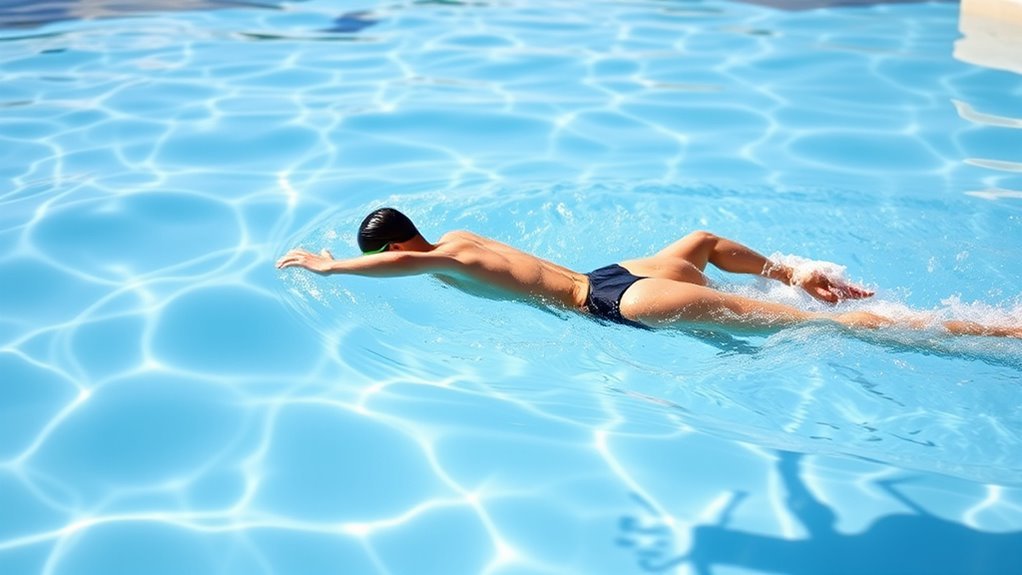
When choosing swimming strokes for hip bursitis, you’ll want to focus on those that minimize hip strain while maximizing gentle movement. Certain strokes provide low-impact exercise that helps ease pain and improve mobility without aggravating your condition.
Here are five recommended swimming strokes to try:
Here are five gentle swimming strokes to reduce hip strain and aid recovery.
- Backstroke: Keeps hips aligned and reduces pressure during movement.
- Breaststroke: Uses controlled leg kicks, limiting excessive hip rotation.
- Sidestroke: Offers a gentle, relaxed motion that’s easy on hips.
- Elementary Backstroke: Combines slow, deliberate arm and leg movements.
- Flutter Kick with Kickboard: Allows isolated leg work with support to avoid strain.
Avoid strokes that involve strong twisting or heavy hip action to prevent flare-ups. Focus on smooth, flowing motions for the best relief.
Tips for Starting a Safe Swimming Routine
To start a safe swimming routine for hip bursitis, you should gradually build your time and intensity in the water to avoid overloading your hips. Begin with short sessions, around 10-15 minutes, and increase duration as your comfort improves.
Focus on gentle strokes like backstroke or freestyle, which reduce hip strain. Always warm up with light movements before swimming and cool down afterward to prevent stiffness.
Listen to your body. If you feel pain or discomfort, stop and rest. Using a flotation device can help support your body and ease pressure on your hips.
Finally, maintain good posture in the water to promote proper alignment. These tips will help you enjoy swimming safely while managing hip bursitis effectively.
Complementary Exercises to Enhance Hip Recovery
In addition to swimming, incorporating complementary exercises can speed up your hip bursitis recovery and improve overall hip strength. These exercises target muscles around your hip to reduce strain and support healing.
You can easily add them to your routine without overloading your joints.
These exercises seamlessly fit into your regimen, promoting healing while protecting your joints from extra strain.
Try including:
- Hip bridges to strengthen glutes and lower back
- Clamshells for hip abductor activation
- Gentle leg lifts to improve hip mobility
- Standing hip stretches to maintain flexibility
- Core strengthening moves like planks for stability
Frequently Asked Questions
Can Swimming Worsen Hip Bursitis Symptoms Initially?
Yes, swimming can worsen hip bursitis symptoms initially if you overdo it or use improper technique.
You should start slowly, focus on gentle movements, and gradually increase intensity to avoid aggravating your hip bursitis.
How Long Does It Take to See Improvement From Swimming?
You’ll usually start seeing improvement in about 2 to 4 weeks if you swim regularly and gently.
Just make sure you don’t push too hard, or your symptoms might flare up before they get better.
Is Swimming Suitable for All Ages With Hip Bursitis?
You’ll be glad to know 80% of people with hip bursitis, regardless of age, find swimming suitable. It’s low-impact and gentle, so you can comfortably exercise and relieve pain, whether you’re young or a senior.
Should I Use a Flotation Device While Swimming for Bursitis?
Yes, you should use a flotation device while swimming for bursitis. It helps reduce pressure on your hips, supports proper form, and prevents strain, making your exercise safer and more effective as you heal.
Using a flotation device allows you to focus on gentle movements without overloading the affected area. This support can facilitate a smoother recovery and enhance your overall swimming experience.
Can Swimming Replace Physical Therapy for Hip Bursitis?
Swimming can be a helpful friend, but it shouldn’t replace physical therapy for hip bursitis.
You’ll get the best results combining both, as therapy targets specific muscles and movements swimming alone can’t fully address.
Conclusion
You might think managing hip bursitis means giving up on activity, but swimming changes the game completely. As you glide through the water, you’re not just easing pain—you’re rebuilding strength without strain.
Imagine feeling lighter, moving freer, and reclaiming your days. It’s not magic, just the right stroke and routine.
Ready to plunge in and discover how swimming can transform your hip health? The relief you’re craving might be just a splash away. Swimming offers an effective way for good hip bursitis relief by combining low-impact exercise with therapeutic movement.