How to Increase Swimming Pool Ph Step by Step
To increase your swimming pool pH, start by testing the current level using a reliable kit. Knowing how to increase swimming pool pH is essential for maintaining clear, comfortable water. Identify if the pH is below 7.2, which indicates the water is too acidic.
Next, choose an appropriate chemical like sodium carbonate (soda ash) to raise the pH quickly. Calculate the correct dosage based on your pool size, wear safety gear, and sprinkle the chemical evenly around the pool.
Run the pump to circulate the water and retest the pH after a few hours. By following these steps, you’ll keep your pool comfortable and safe. There’s more to learn about maintaining the perfect chemical balance in your pool water.
Understanding Pool Ph and Its Importance
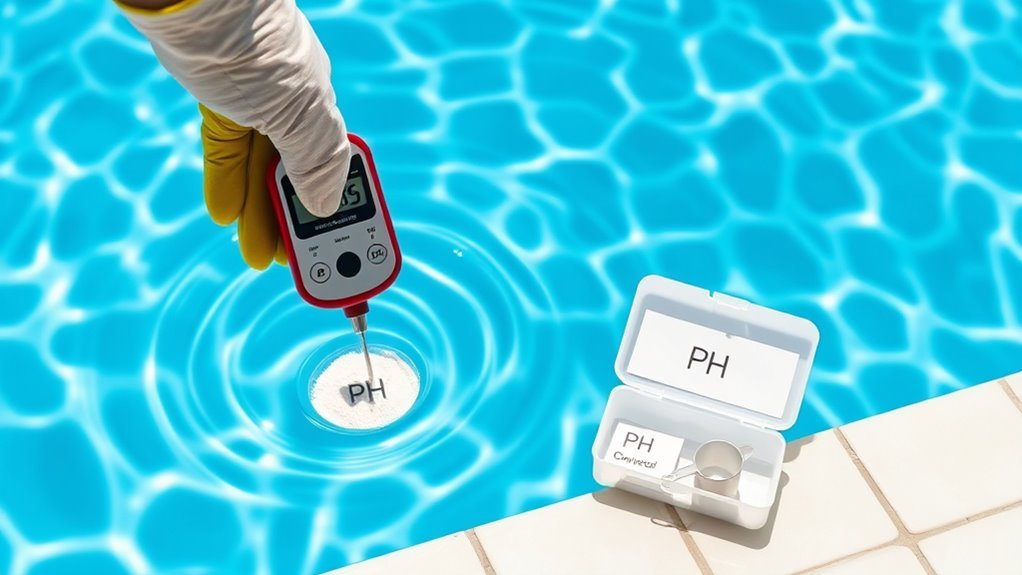
Although it may seem technical, understanding your pool’s pH is essential for maintaining clean, safe water. The pH measures how acidic or basic your pool water is, on a scale from 0 to 14. Ideally, you want it between 7.2 and 7.8.
If the pH drops below this range, the water becomes acidic and can corrode pool surfaces, damage equipment, and irritate swimmers’ skin and eyes.
On the other hand, if the pH is too high, the water turns alkaline, leading to cloudy water, scale buildup, and reduced effectiveness of chlorine.
By keeping the pH balanced, you ensure your pool stays inviting, protects your investment, and keeps swimmers comfortable.
Knowing this helps you take the right steps to adjust your pool’s chemistry effectively.
Testing Your Pool’s Current Ph Level
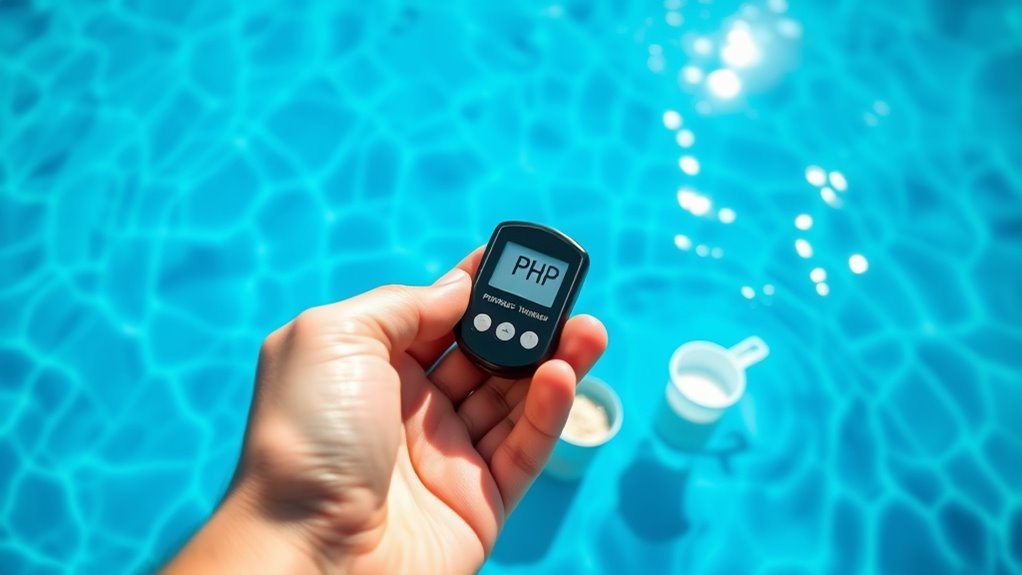
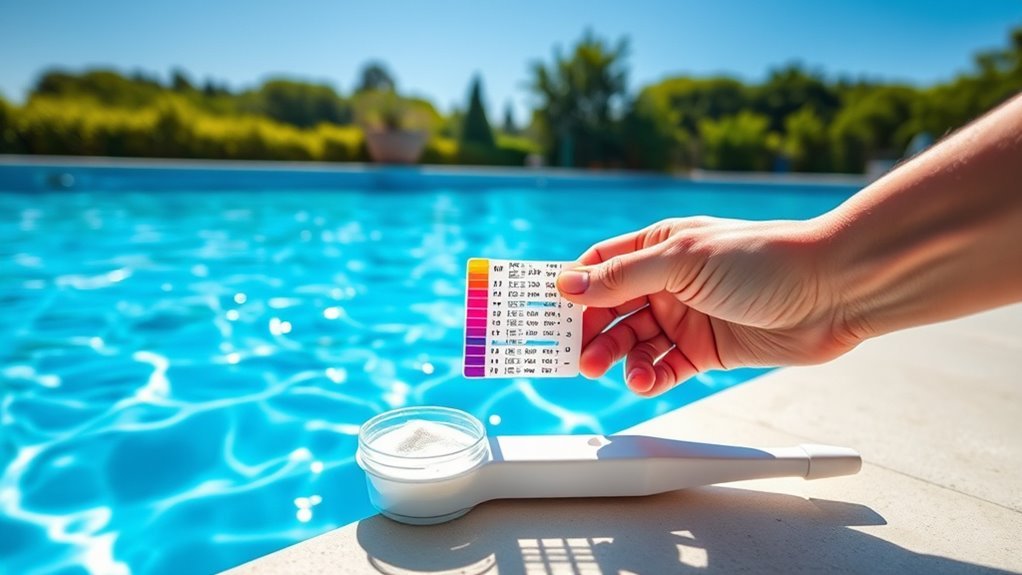
Before you adjust your pool’s pH, you need to know its current level. Testing is simple and essential to keep your water balanced.
Use a reliable test kit or digital tester to get accurate results. Collect water from about 18 inches below the surface for a true reading. Test in the morning before adding chemicals.
Here’s a quick guide to interpreting your pH test:
| pH Range | Water Condition | Action Needed |
|---|---|---|
| 7.0-7.4 | Slightly acidic | Increase pH |
| 7.5-7.8 | Ideal balance | Maintain current level |
| 7.9-8.0 | Slightly alkaline | Monitor, no change |
Regular testing keeps your pool safe and comfortable.
Identifying Causes of Low Ph in Pools
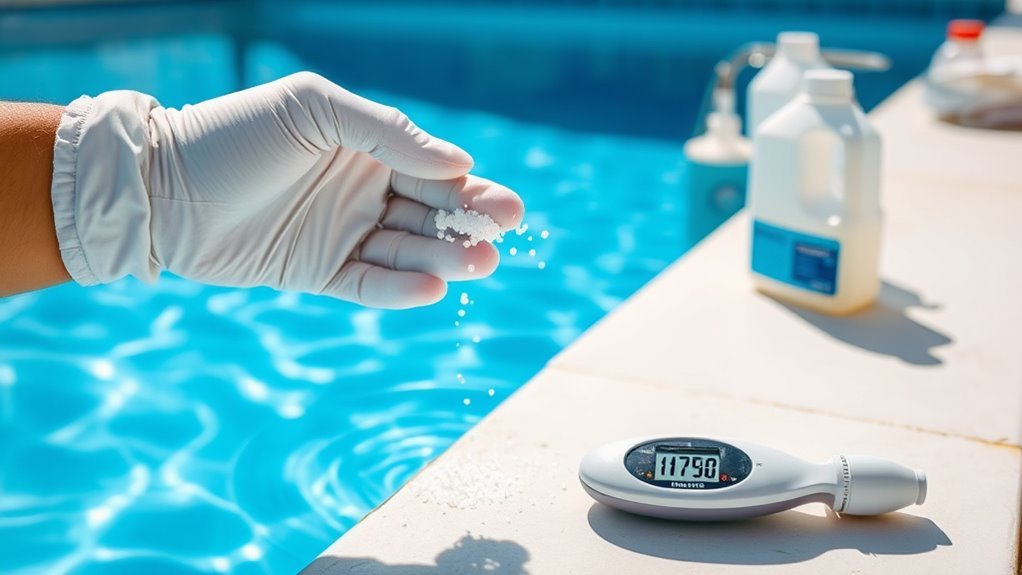
When your pool’s pH drops below the ideal range, several factors could be at play. Rainwater, which is naturally acidic, can lower your pool’s pH, especially after heavy storms.
High swimmer load also affects pH because body oils, sweat, and urine introduce contaminants that alter water chemistry.
Using acidic chemicals like chlorine or algaecides without balancing them properly can contribute to low pH levels.
Additionally, carbon dioxide buildup from poor aeration can cause acidity to rise.
If you’ve recently added too much acid to your pool, this will obviously reduce pH.
Finally, water source changes, like filling your pool from a well or municipal supply with different mineral content, may shift the pH.
Identifying these causes helps you address the issue properly and maintain balanced water chemistry.
Selecting the Right Chemicals to Raise Ph
Since maintaining the right pH is essential for pool health, you’ll want to choose chemicals that effectively raise it without causing other imbalances. Sodium carbonate (soda ash) and sodium bicarbonate (baking soda) are common options, but they differ in how they affect alkalinity.
Knowing which to use helps you keep your pool balanced and comfortable.
| Chemical | Effect on pH and Alkalinity |
|---|---|
| Sodium Carbonate | Raises pH quickly, minimal alkalinity change |
| Sodium Bicarbonate | Raises alkalinity more, mild pH increase |
| Potassium Carbonate | Raises pH efficiently, less common |
| Lithium Carbonate | Rare, but effective for pH increase |
Choose based on your pool’s specific needs to maintain water clarity and swimmer comfort.
Calculating the Amount of Ph Increaser Needed
Although choosing the right chemical is essential, you also need to calculate the exact amount of pH increaser to add. Adding too much can overshoot your target, while too little will be ineffective.
Here’s how to determine the right dose:
- Measure your pool’s current pH using a reliable test kit.
- Note your pool’s volume in gallons or liters.
- Refer to the pH increaser product label for dosage guidelines per volume and pH adjustment.
- Calculate the required amount based on the difference between your current pH and the desired level.
Safely Adding Ph Increaser to Your Pool
Before you add the pH increaser, make sure to wear protective gloves and goggles to prevent skin and eye irritation. Next, measure the calculated amount of increaser precisely.
Slowly sprinkle it evenly around the pool’s perimeter, avoiding dumping it all in one spot. Allow the product to dissolve naturally without stirring.
| Step | Action | Tip |
|---|---|---|
| 1 | Wear gloves and goggles | Safety first |
| 2 | Measure the pH increaser | Use a proper measuring tool |
| 3 | Distribute evenly around pool | Prevent concentrated spots |
| 4 | Let it dissolve naturally | Avoid manual stirring |
Following these steps ensures safe handling and effective pH adjustment.
Circulating the Water for Even Distribution
Once you’ve added the pH increaser, you’ll need to circulate the water to make certain the chemical spreads evenly throughout the pool. Proper circulation prevents uneven pH levels, which can cause scaling or corrosion.
Follow these steps to guarantee even distribution:
Ensure even distribution by following these simple steps for optimal pool water balance.
- Turn on your pool pump and filtration system immediately after adding the chemical.
- Run the pump continuously for at least 4 hours to allow thorough mixing.
- Adjust return jets to direct water flow around the pool for better circulation.
- Avoid swimming or adding other chemicals during this period to let the pH stabilize.
Retesting Ph Levels After Treatment
After circulating the water to distribute the pH increaser evenly, you’ll want to check the pH levels again to see how effective the treatment was. Grab your pool test kit or digital tester and take a sample from about elbow depth, away from the return jets.
Test the water and note the pH reading. If it’s still below the ideal range of 7.4 to 7.6, you may need to add more pH increaser in small increments, circulating and retesting after each addition.
Avoid adding too much at once to prevent overshooting the target. Accurate retesting guarantees you achieve balanced pH, making your pool safe and comfortable.
Maintaining Balanced Ph for Long-Term Pool Health
Keeping your pool’s pH balanced over time requires regular testing and timely adjustments to prevent issues like corrosion or scaling. You’ll want to stay proactive to make sure your pool remains safe and comfortable.
Here’s how to maintain balanced pH for long-term pool health:
- Test your pool’s pH at least twice a week, more often in hot weather.
- Use pH increasers or decreasers as needed, following package instructions carefully.
- Regularly clean your pool to remove debris that can affect pH levels.
- Monitor alkalinity levels, as they help stabilize pH and prevent drastic swings.
Frequently Asked Questions
Can Pool Ph Affect the Lifespan of Pool Equipment?
Yes, pool pH can affect your equipment’s lifespan. If you don’t keep it balanced, acidic or basic water can corrode pipes, damage filters, and wear out surfaces faster.
You should check and adjust pH regularly to protect everything.
How Does Weather Impact Pool Ph Levels?
Weather impacts your pool’s pH by causing fluctuations; rain often lowers pH due to acidity, while hot, sunny days can raise pH as water evaporates. You’ll need to test and adjust more frequently during changing weather.
Are There Natural Alternatives to Chemical Ph Increasers?
Yes, you can use natural alternatives like baking soda to raise your pool’s pH safely. It’s gentle and effective, but remember, regular testing guarantees you keep the right balance without overcorrecting.
What Are the Signs of Ph Imbalance in Swimmers?
You’ll notice stingy eyes like a thousand tiny needles and itchy skin that feels like sandpaper. Swimmers might also complain about a strong chlorine smell or irritated throats. Classic signs your pool’s pH is wildly out of balance.
How Often Should Pool Ph Be Tested During Peak Season?
You should test your pool’s pH at least 2-3 times a week during peak season. Frequent testing helps you catch imbalances early, so you can adjust chemicals and keep the water safe and comfortable for swimmers.
Conclusion
Now that you know how to test your pool’s pH, identify causes of low pH, and select the right chemicals, you’re ready to take action.
Measure carefully, add the pH increaser reliably, and circulate the water thoroughly. Then, retest to ensure balance.
Keep monitoring, keep adjusting, and keep your pool’s pH in check for clear, safe, and enjoyable swimming all season long. By following these steps to increase swimming pool pH, your pool will thank you!