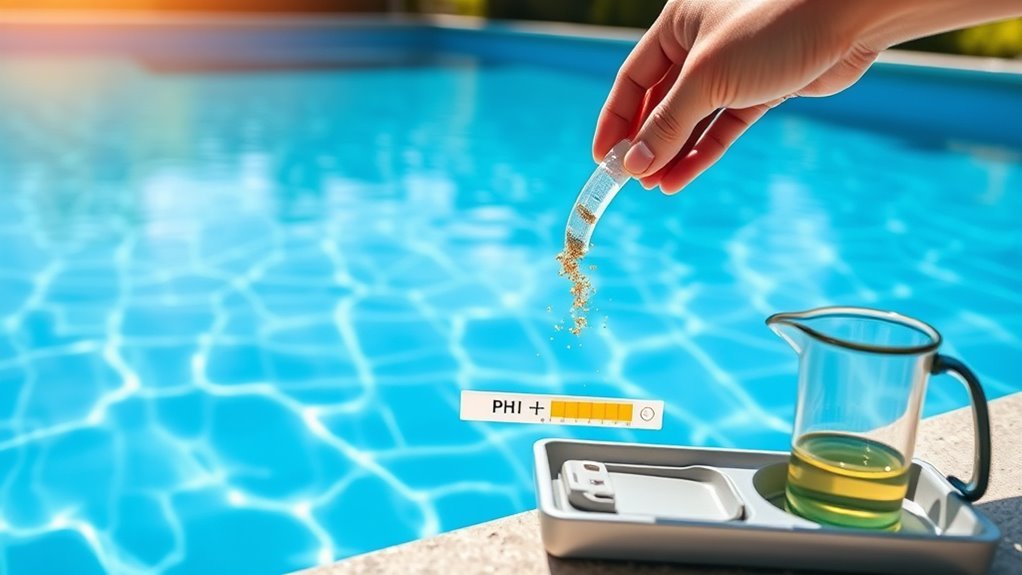
How to Raise Ph in Your Swimming Pool in 5 Easy Steps
To raise your swimming pool’s pH effectively, start by testing the water using a reliable pool testing kit to determine the current pH level. Knowing this helps you understand how much adjustment is needed to keep your pool water safe and comfortable.
Next, choose a proper pH increaser, such as soda ash, which is specifically designed for pools. Carefully calculate the exact amount required based on your pool size and the current pH reading. This step ensures you add the right dosage without overcorrecting.
Add the pH increaser slowly to the pool water while running the pump to help distribute the chemical evenly. After about an hour, retest the water’s pH level. Make small adjustments as necessary until the pH is balanced.
Following these simple steps will help you maintain a safe and inviting swimming pool. There’s more helpful information available if you want to learn about other pool maintenance tips.
Test Your Pool Water’s Ph Level
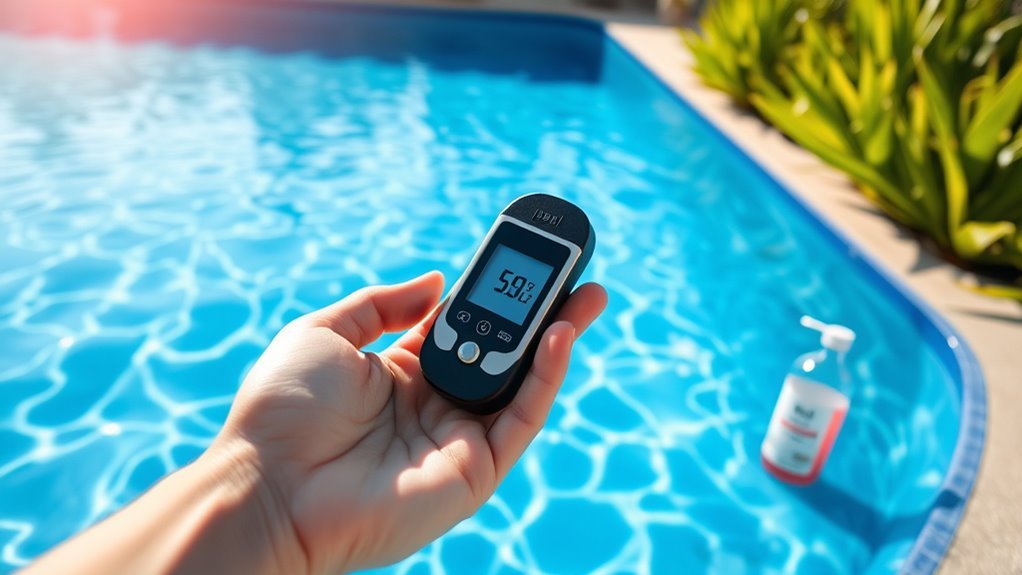
Before you adjust anything, you need to test your pool water’s pH level accurately. Grab a reliable pool testing kit or pH test strips designed specifically for pools.
Take a water sample from about 18 inches below the surface to get a true reading. Dip the test strip or use the testing solution according to the instructions. Compare the color change to the chart provided with your kit.
Your ideal pH range should be between 7.2 and 7.8. If the pH is below 7.2, your water is too acidic, and you’ll need to raise it.
Testing regularly, especially after heavy rain or pool use, helps maintain balanced water and prevents damage to pool equipment and discomfort for swimmers.
Accurate testing is your first step toward perfect pool water.
Choose the Right Ph Increaser
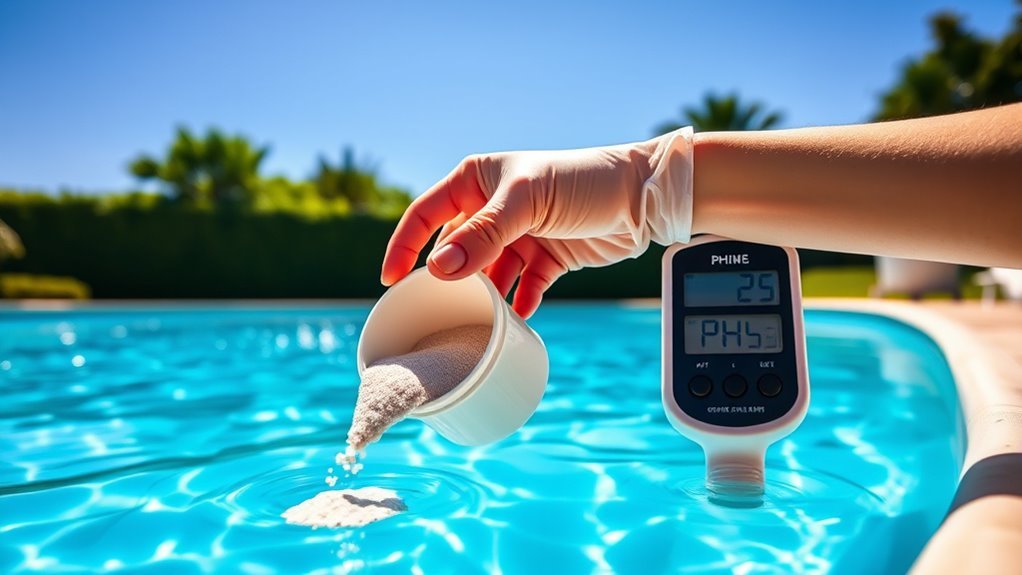
When you need to raise your pool’s pH, selecting the right increaser guarantees effective and safe adjustment. Most pool owners use soda ash (sodium carbonate) as the primary pH increaser since it quickly boosts pH without drastically altering alkalinity.
Choosing soda ash ensures a quick, effective pH boost without significantly changing alkalinity.
Baking soda (sodium bicarbonate), on the other hand, raises alkalinity more than pH, so it’s less effective if your goal is strictly increasing pH. Make sure to choose a product formulated specifically for pools to avoid contaminants that could harm your water chemistry.
You’ll find pH increasers in granular or liquid forms. Granules are easier to store and measure, while liquids disperse faster.
Always read the label for application instructions and safety precautions to keep your pool balanced and your swimmers safe.
Calculate the Required Amount of Ph Increaser
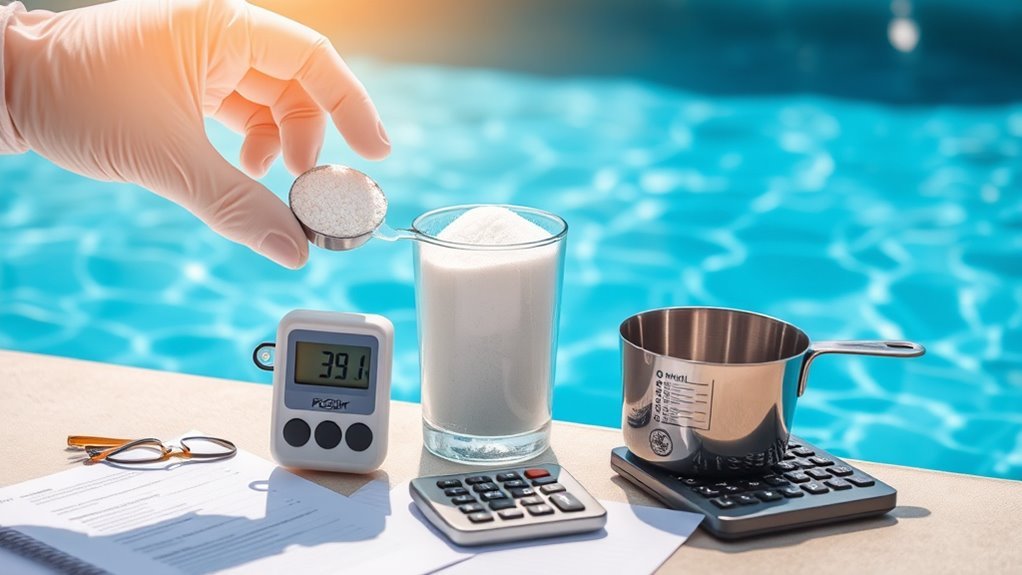
Once you’ve chosen the right pH increaser, the next step is figuring out exactly how much you need to add. Start by testing your pool’s current pH level and noting the volume of water in your pool.
Most pH increaser products include a dosage chart or instructions based on pool size and desired pH change. Use this information to calculate the amount needed.
For example, if your pool holds 10,000 gallons and your pH is 7.0, but you want to raise it to 7.6, the product label will guide you on the exact quantity required.
Always measure carefully and avoid guessing, as adding too much can cause pH to spike, leading to other water balance problems.
Add the Ph Increaser to Your Pool
How exactly should you add the pH increaser to your pool for the best results? First, make sure your pool’s pump and filter are running to help distribute the chemical evenly.
Next, carefully measure the calculated amount of pH increaser you need. Slowly broadcast it across the surface of the pool, focusing on deep water areas rather than the shallow end or near the skimmer to prevent immediate dilution.
Avoid pouring it all in one spot to reduce the risk of concentrated high pH zones.
After adding, allow the water to circulate for at least an hour. This helps the pH increaser mix thoroughly with the pool water, ensuring a more accurate balance before you proceed with any further testing or adjustments.
Retest and Adjust as Needed
After letting the pH increaser circulate for an hour, you should retest your pool’s pH levels to see if they’ve reached the desired range.
If the pH is still too low, don’t worry. You can add more increaser in small increments.
Remember, raising pH is a gradual process, so avoid overcorrecting. Keeping your pool’s pH balanced ensures comfortable swimming and protects equipment.
Stay patient and attentive during this step.
- Feel the satisfaction of a perfectly balanced pool
- Enjoy crystal-clear water that invites you in
- Protect your investment by preventing corrosion
- Swim with confidence knowing your water is safe
- Experience peace of mind with every pH test you perform
Adjust as needed, then retest until your pool’s pH sits between 7.4 and 7.6.
Frequently Asked Questions
How Often Should I Check My Pool’s Ph Level?
You should check your pool’s pH level at least twice a week, especially during heavy use or after rain. Regular testing helps you maintain balanced water, preventing damage and keeping your pool safe and comfortable.
Can High Ph Cause Skin Irritation?
Yes, high pH can cause skin irritation; studies show up to 30% of swimmers report dryness or itching.
If your pool’s pH rises above 7.8, you’ll likely notice discomfort or redness after swimming.
What Causes Ph Levels to Drop in Pools?
You’ll see pH levels drop in pools due to rainwater, swimmer sweat, body oils, and acidic contaminants.
Also, adding chlorine or using acidic pool chemicals can lower pH, so regular testing and balancing are essential for comfort.
Is It Safe to Swim Immediately After Adding Ph Increaser?
You shouldn’t swim immediately after adding pH increaser; wait at least 4 hours. This allows the chemical to distribute evenly, preventing skin or eye irritation.
Always test the water before swimming to ensure safety.
Can Pool Plants Affect Ph Balance?
Think of pool plants as tiny chefs stirring the water’s chemistry; yes, they can affect pH balance by releasing acids or bases. You’ll want to monitor pH regularly to keep your pool perfectly balanced.
Conclusion
Raising your pool’s pH is easier than you think—just follow these simple steps, and you’ll have a perfectly balanced swim in no time. Remember, treating your pool is like tuning a musical instrument; a little adjustment goes a long way. Keep testing and tweaking until the water feels just right.
With patience and care, your pool will stay crystal clear and inviting all season long. Jump in and enjoy the refreshing benefits of a well-maintained swimming pool. Maintaining the right pH level not only ensures comfort but also protects your pool equipment and surfaces.
By following these easy steps to raise pH in your swimming pool, you’ll enhance water quality and create the perfect environment for fun and relaxation.