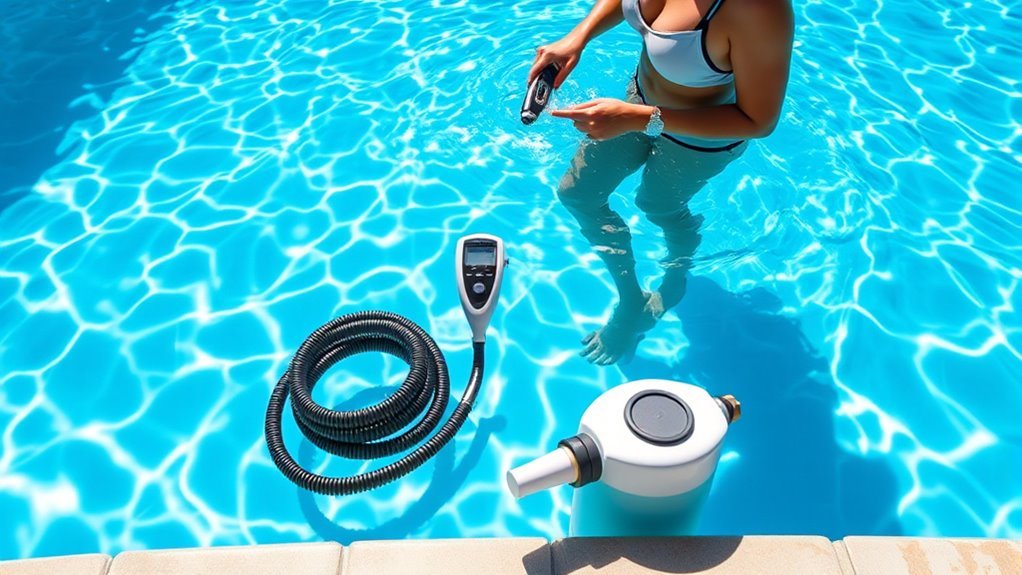
How Do You Maintain a Saltwater Swimming Pool in 10 Essential Steps
To maintain your saltwater swimming pool, regularly test and balance the water chemistry, keeping the pH between 7.2 and 7.8 and salt levels around 2700-3400 ppm. Proper chemical balance is essential for a safe and enjoyable swimming environment.
Clean the salt cell every few months to ensure efficient operation. Shock the pool every 1-2 weeks to eliminate contaminants and maintain water clarity.
Maintain your pump and filter by checking for proper function and cleaning as needed. Remove debris weekly to prevent clogging and algae growth. Control algae with appropriate chemicals to keep the pool sparkling.
When winterizing, lower water levels, add stabilizers, and cover the pool to protect it during colder months. Follow these steps, and you’ll keep your saltwater pool sparkling and ready all year. Keep going to uncover detailed tips for lasting pool care.
Test and Balance Pool Water Chemistry
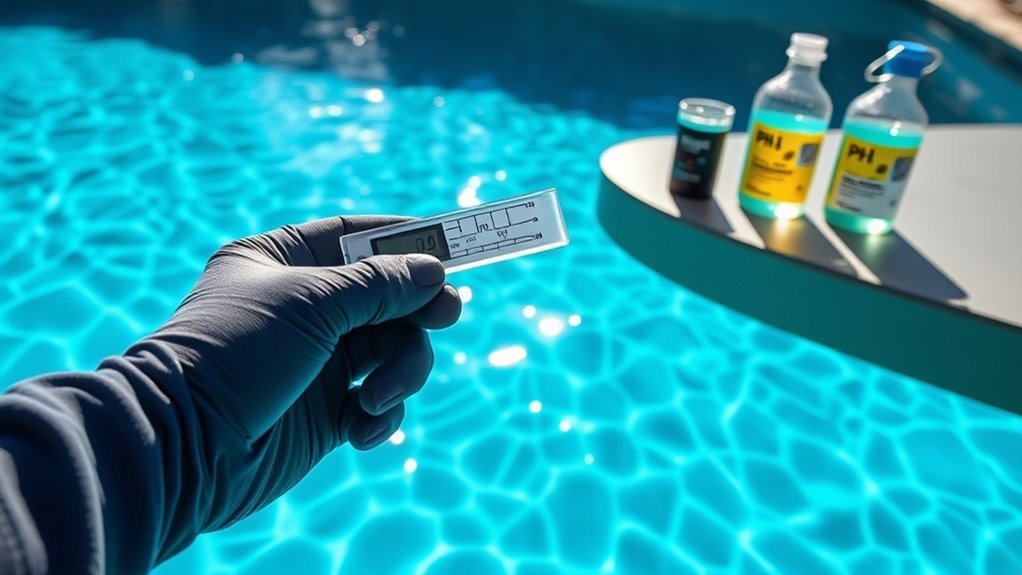
Before you add any chemicals, test your saltwater pool’s water to make sure the levels are balanced. Grab a reliable test kit or strips and check key factors like pH, alkalinity, and chlorine levels.
Your pH should sit between 7.2 and 7.8 to keep the water comfortable and prevent corrosion or scaling.
Maintain your pool’s pH between 7.2 and 7.8 to ensure comfort and protect surfaces from damage.
Total alkalinity needs to range from 80 to 120 ppm to stabilize pH fluctuations.
Chlorine should stay between 1 and 3 ppm to ensure effective sanitation without irritating swimmers.
If you notice any imbalances, adjust them carefully using appropriate chemicals.
Check Salt Levels Regularly
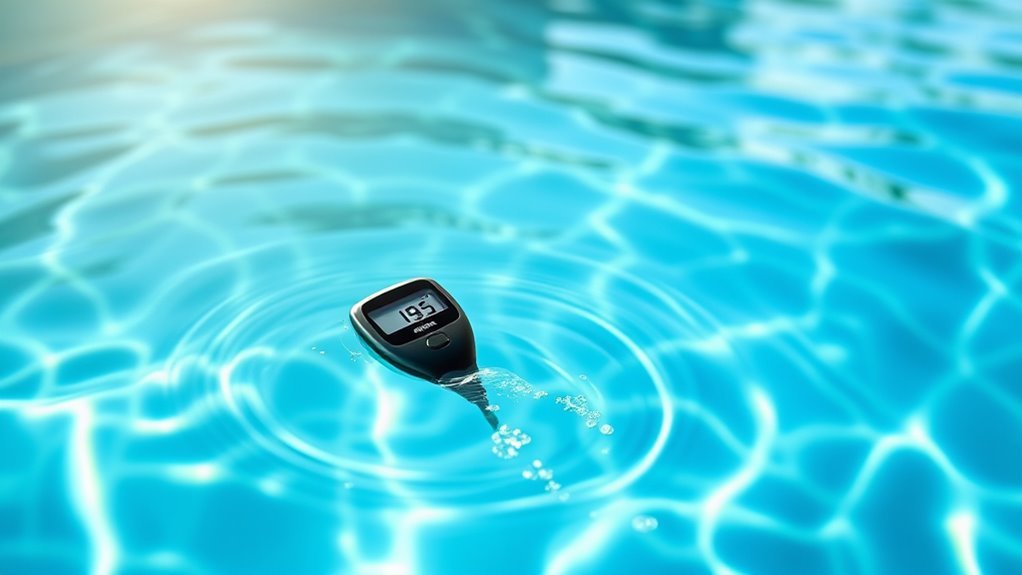
Since salt levels directly affect your pool’s sanitation system, you need to check them regularly to keep everything running smoothly. Use a reliable saltwater test kit or digital meter to measure the salt concentration in your pool water.
The ideal range typically falls between 2700 and 3400 ppm, depending on your system’s specifications. If the salt level dips too low, your chlorinator won’t produce enough chlorine, leading to poor sanitation.
Conversely, too much salt can damage equipment and cause corrosion.
Test your salt levels at least once a week, especially during heavy use or after heavy rain. Adjust the salt by adding pure pool-grade salt or diluting the water as needed. Staying vigilant with salt levels guarantees your pool stays clean, safe, and enjoyable.
Clean the Salt Cell
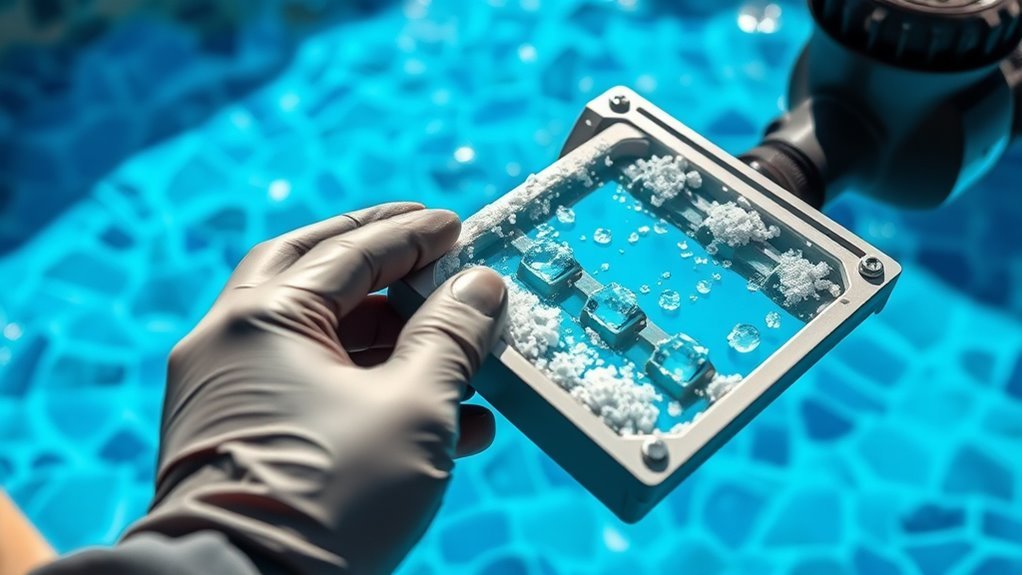
How often do you clean your salt cell? Regular cleaning is essential to keep your saltwater pool running efficiently.
Regular cleaning of your salt cell is key to maintaining an efficient saltwater pool system.
Over time, calcium and other minerals build up on the cell plates, reducing chlorine production.
Aim to clean your salt cell every 3 to 6 months, or more often if you notice lower chlorine levels.
To clean your salt cell effectively:
Turn off the pool system and remove the cell carefully.
Soak the cell in a mixture of 1 part muriatic acid to 10 parts water for 15-30 minutes.
Rinse thoroughly with fresh water before reinstalling.
Monitor and Maintain Ph Levels
Although saltwater pools require less chemical adjustment than traditional pools, you still need to monitor and maintain the pH levels regularly to keep the water balanced and safe. Test your pool’s pH at least twice a week using a reliable testing kit.
Aim for a pH between 7.4 and 7.6, which is ideal for swimmer comfort and equipment longevity. If the pH rises above 7.6, add a pH reducer like muriatic acid or sodium bisulfate following the product instructions.
If it drops below 7.4, use a pH increaser such as soda ash. Always add chemicals gradually and retest after a few hours.
Keeping the pH stable prevents corrosion, scaling, and irritation, ensuring your saltwater pool stays inviting and functional.
Shock the Pool Periodically
A regular shock treatment helps keep your saltwater pool clean and clear by eliminating contaminants that normal chlorination might miss. Shocking your pool breaks down organic waste, kills bacteria, and prevents algae growth, ensuring a safe swimming environment.
You should shock the pool every 1-2 weeks or after heavy use, storms, or noticeable water cloudiness.
When shocking your pool, remember to:
- Use the right type of shock compatible with saltwater systems
- Run the pump and filtration system during and after treatment
- Avoid swimming until chlorine levels return to safe limits
Inspect and Clean the Pool Filter
Since your pool filter plays a crucial role in maintaining water clarity, you need to inspect and clean it regularly to guarantee maximum performance. Start by turning off your pool pump to ensure safety.
Open the filter housing and check for any debris or buildup that could block water flow. For sand filters, backwash according to the manufacturer’s instructions to flush out trapped dirt.
If you have a cartridge filter, remove it carefully and hose off any dirt or algae. Avoid using harsh chemicals on the filter media.
For diatomaceous earth (DE) filters, backwash and replenish the DE powder as needed.
Regularly inspecting and cleaning your filter prevents strain on your system and keeps your saltwater pool sparkling clear. Aim to do this every few weeks or after heavy pool use.
Maintain the Pool Pump and Equipment
While keeping your pool filter clean is essential, you also need to maintain the pool pump and equipment to guarantee everything runs smoothly. Regularly check the pump for leaks, unusual noises, or vibrations that might indicate a problem. Make sure the pump basket is free of debris to prevent strain on the motor.
Also, inspect all connections and seals to avoid water loss or equipment damage. Don’t forget to lubricate the pump’s O-rings to keep them from drying out and cracking.
Here are three key maintenance tasks to focus on:
- Clean the pump basket weekly to ensure proper water flow
- Check and tighten any loose fittings or electrical connections
- Lubricate seals and O-rings monthly to maintain airtight seals
These steps help extend your equipment’s lifespan and keep your saltwater pool running efficiently.
Remove Debris and Vacuum the Pool
Keeping your pool equipment in good shape sets the stage for effective cleaning. Start by regularly removing leaves, twigs, and other debris from the water’s surface using a skimmer net. This prevents clogging your filtration system and keeps the water clear.
Next, vacuum the pool floor to eliminate dirt and sediment that settle at the bottom. Choose a manual or automatic vacuum depending on your preference and pool size. Move the vacuum slowly to ensure thorough cleaning without stirring up debris.
Don’t forget to check and clean your vacuum’s filter afterward. By consistently removing debris and vacuuming, you maintain water clarity and reduce strain on your pool’s circulation system, helping your saltwater pool stay inviting and healthy all season long.
Prevent and Treat Algae Growth
How can you stop algae from taking over your saltwater pool? The key is consistency in prevention and quick action if algae appear. Regularly check your pool’s chlorine levels since saltwater pools rely on chlorine generated by the salt cell to keep algae at bay.
Also, maintain proper pH balance to optimize chlorine effectiveness. When you notice algae growth, treat it immediately with an algaecide designed for saltwater pools and brush the pool surfaces to dislodge algae.
Keep these tips in mind to prevent and treat algae growth:
- Maintain chlorine levels between 1-3 ppm and pH between 7.2-7.6.
- Use a saltwater-compatible algaecide regularly as a preventative measure.
- Brush pool walls and floors weekly to prevent algae buildup.
Winterize Your Saltwater Pool Properly
As temperatures drop, you’ll need to prepare your saltwater pool for winter to prevent damage and make sure it’s ready for use when warmer weather returns. Start by thoroughly cleaning the pool and balancing the water chemistry.
Prepare your saltwater pool for winter by cleaning thoroughly and balancing the water chemistry before temperatures drop.
Lower the water level below the skimmer to avoid freezing damage.
Next, drain the pump, filter, heater, and salt cell to protect your equipment from freezing temperatures. Use a pool antifreeze in the plumbing lines to prevent ice damage.
Cover the pool with a durable winter cover to keep debris out and minimize maintenance.
Regularly check the cover throughout winter to ensure it stays secure and water doesn’t accumulate. Proper winterizing saves you time and money by protecting your pool and equipment during the cold months.
Frequently Asked Questions
What Are the Benefits of a Saltwater Pool Over a Traditional Chlorine Pool?
You’ll enjoy softer water that’s gentler on your skin and eyes with a saltwater pool.
Plus, it requires less frequent chemical adding, saving you time and reducing harsh chlorine odors compared to traditional pools.
How Long Does It Take for a Saltwater Pool to Convert Salt Into Chlorine?
You’ll find it takes about 24 to 48 hours for your saltwater pool to convert salt into chlorine. It’s not an overnight success, but once running, your pool stays sparkling with minimal fuss.
Can Saltwater Pools Cause Corrosion to Poolside Furniture or Surfaces?
Yes, saltwater pools can cause corrosion to poolside furniture or surfaces if salt spray or splash reaches them.
You should rinse and protect metal or porous materials regularly to prevent damage and extend their lifespan.
Is It Safe for Pets to Swim in a Saltwater Pool?
Yes, it’s generally safe for pets to swim in saltwater pools, but you should rinse them off afterward to prevent skin irritation.
Also, make sure your pet doesn’t drink the pool water, as salt can upset their stomach.
How Often Should I Replace the Salt Cell in My Saltwater Pool System?
You should replace your salt cell every 3 to 5 years, depending on usage and maintenance. Regularly check for calcium buildup or reduced performance, and clean it as needed to extend its lifespan before replacing.
Conclusion
Keeping your saltwater pool in top shape isn’t rocket science, but it does take consistent care. By following these 10 essential steps, you’ll stay ahead of any issues and enjoy crystal-clear water all season long.
Remember, a little effort now saves you from a big headache later. So, roll up your sleeves, stick to the routine, and your pool will be the envy of the neighborhood in no time! Maintaining a saltwater swimming pool requires dedication, but with these simple maintenance tips, you can ensure your pool remains clean, safe, and inviting all year round.