What Causes Mustard Algae in Swimming Pools?
You’re dealing with mustard algae in your pool because poor circulation, inadequate filtration, and imbalanced water chemistry have created perfect conditions for it to thrive. Mustard algae is a common swimming pool problem that can be frustrating to manage. This algae loves shady, warm spots and resists normal chlorine levels, making it stubborn to remove.
If your pH and sanitizer levels aren’t right, or you skip regular brushing and cleaning, mustard algae will quickly take hold. The key factors contributing to mustard algae growth include stagnant water and low chlorine effectiveness. By understanding these causes, you can prevent and control this persistent algae.
Keep going, and you’ll find out how to fight it effectively. Proper maintenance and treatment strategies are essential to keep your pool clear and algae-free.
Understanding Mustard Algae Characteristics
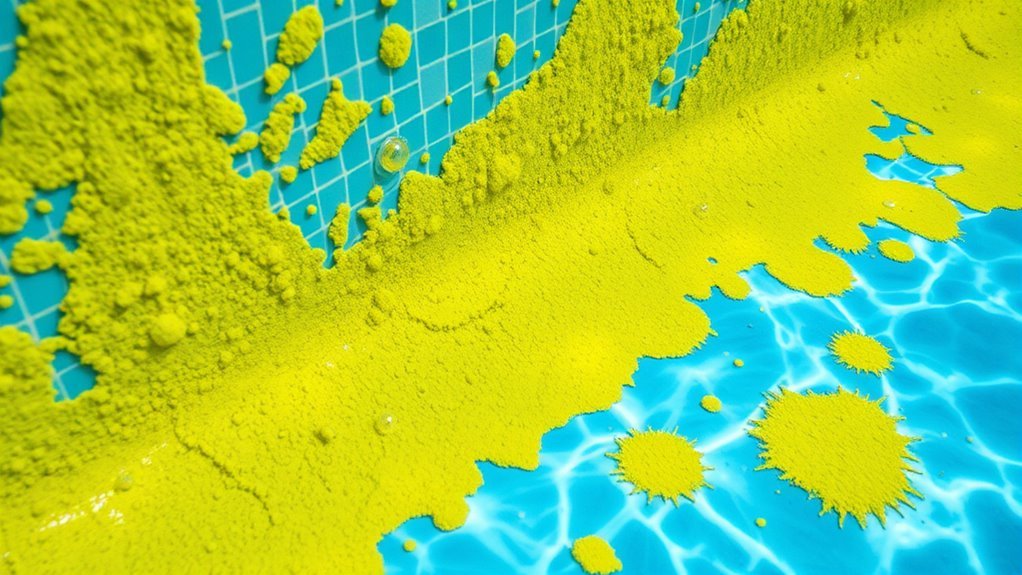
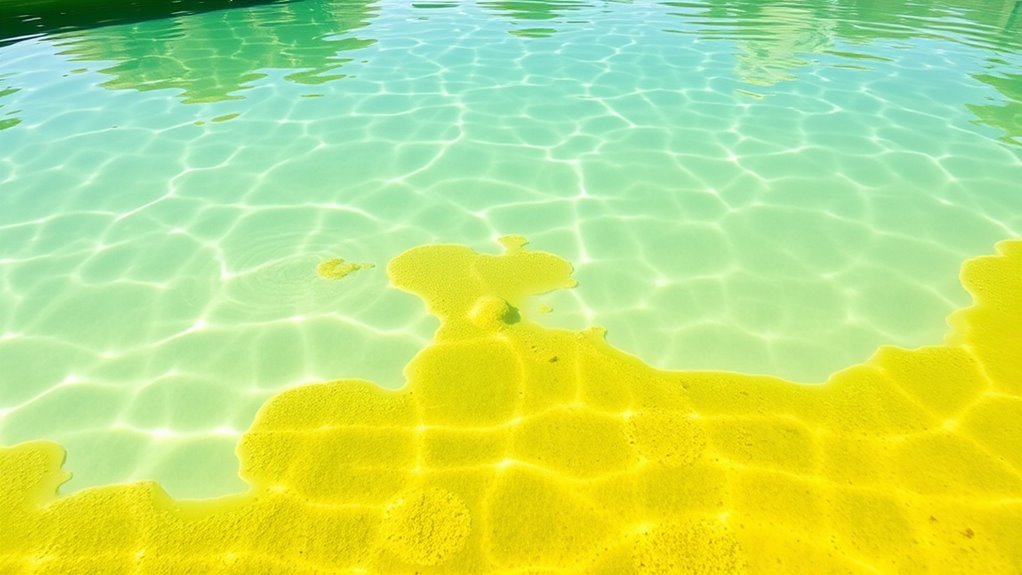
Although you mightn’t notice it immediately, mustard algae can quickly take hold in your pool because of its unique characteristics. It appears as a yellow-green, powdery substance that clings tightly to pool surfaces, making it harder to remove than typical green algae.
Unlike green algae, mustard algae thrives in low-light areas and can resist standard chlorine levels, so you can’t rely on regular maintenance alone. It also forms a slimy layer that helps it stick to walls, floors, and even pool steps.
You’ll often find it hiding in shaded corners or behind pool ladders. Knowing these traits helps you identify mustard algae early and take swift action before it spreads, keeping your pool clean and safe for swimming.
Common Environmental Conditions Favoring Mustard Algae
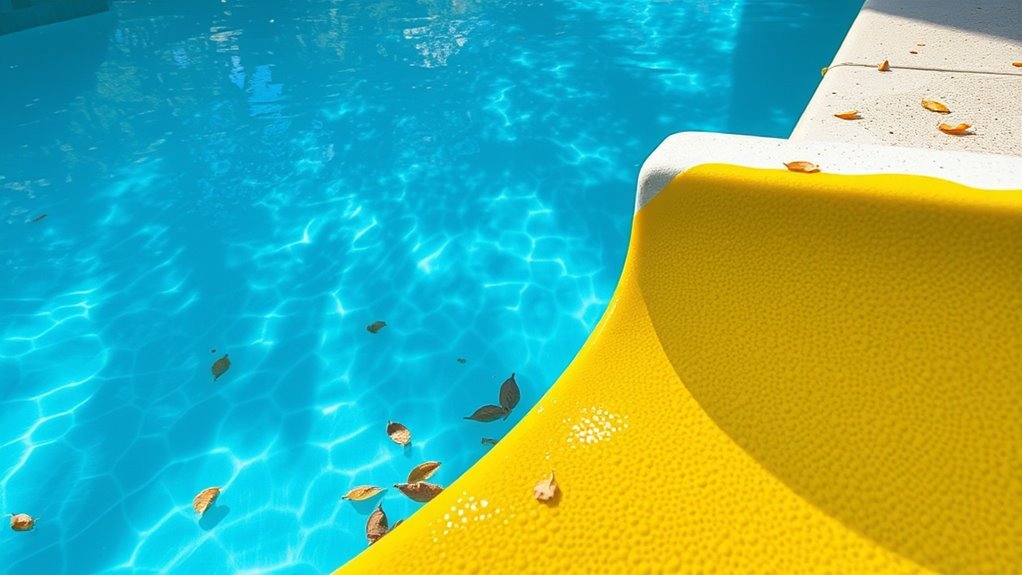
When your pool has poor circulation or limited sunlight, mustard algae find the perfect environment to thrive. Stagnant water allows algae spores to settle and multiply without disturbance.
Shaded areas, such as those covered by trees or pool covers, reduce sunlight exposure, which ironically favors mustard algae since they prefer low light conditions.
Additionally, warm water temperatures between 75°F and 85°F accelerate their growth.
If your pool’s filtration system isn’t running long enough or is underperforming, debris and nutrients accumulate, fueling algae development.
You’ll often notice mustard algae lurking in corners, steps, or along the pool walls where water flow is weakest.
Impact of Water Chemistry on Mustard Algae Growth
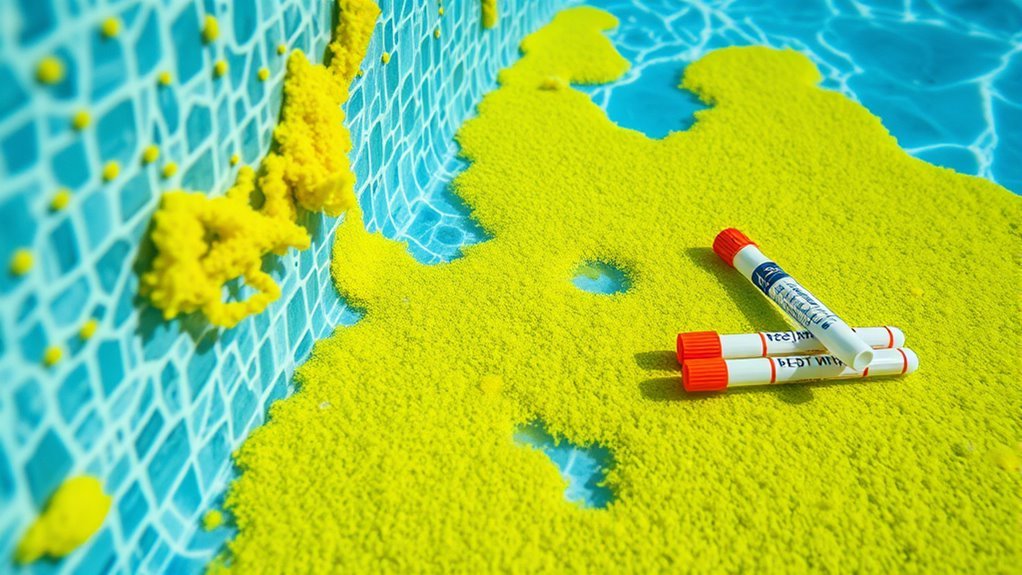
Improving circulation and sunlight helps, but you also need to keep a close eye on your pool’s water chemistry to control mustard algae. This algae thrives when chemical levels are off balance, so maintaining the right conditions is vital. Focus on these three key factors:
- pH Level: Keep your pool’s pH between 7.2 and 7.6. If it’s too high or too low, algae can flourish.
- Chlorine Levels: Maintain free chlorine levels between 1 and 3 ppm. Insufficient chlorine creates an ideal environment for mustard algae growth.
- Alkalinity: Balanced alkalinity (80-120 ppm) stabilizes pH levels. When alkalinity drifts, pH fluctuates, making it easier for algae to establish.
Role of Pool Maintenance in Preventing Algae
Since algae can quickly take hold if given the chance, you need to stay proactive with your pool maintenance to keep it under control. Regularly brushing the pool walls and floor prevents mustard algae from clinging and growing.
Stay proactive—regularly brush pool walls and floors to prevent mustard algae growth.
Skimming debris daily removes organic matter that feeds algae. You should also clean your pool filters as clogged filters reduce water clarity and can create a breeding ground for algae.
Maintaining proper sanitizer levels is essential. Don’t let chlorine drop too low. Testing your water frequently helps you catch imbalances early before algae can thrive.
Finally, shock your pool on a schedule to eliminate algae spores and bacteria effectively.
Consistent, thorough maintenance is your best defense against mustard algae invading your swimming pool.
Effects of Poor Circulation and Filtration
If your pool circulation and filtration systems don’t work properly, mustard algae can quickly take hold. Poor circulation means water isn’t moving evenly, creating stagnant spots where algae thrive.
Ineffective filtration leaves debris and nutrients in the water, feeding algae growth.
To prevent this, focus on these key points:
1. Check Pump Functionality
Ensure your pump runs long enough daily to circulate all the water, preventing dead zones.
2. Clean or Replace Filters Regularly
Dirty filters can’t trap particles well, allowing algae nutrients to accumulate.
3. Maintain Proper Flow Rates
Adjust valves and remove blockages to keep water moving efficiently throughout the pool.
Sources and Spread of Mustard Algae in Pools
Though mustard algae often start from microscopic spores, you can introduce them into your pool through contaminated swimsuits, pool toys, or even windblown debris. These tiny spores hitch a ride on anything that’s been in an infected pool or natural water source.
Once introduced, mustard algae spread quickly, especially in areas with poor circulation or inadequate filtration. If you don’t clean your pool walls and floors regularly, the algae find a perfect place to cling and grow.
Rainwater runoff carrying organic matter can also bring spores into your pool.
To prevent mustard algae from spreading, always rinse off swimsuits and toys before using the pool, keep your filtration system running efficiently, and clean your pool surfaces consistently. Staying vigilant helps you keep your pool algae-free.
Frequently Asked Questions
Can Mustard Algae Cause Health Issues for Swimmers?
Yes, mustard algae can cause skin irritation and allergic reactions when you swim in contaminated water.
It’s important you treat your pool promptly to keep it safe and comfortable for everyone using it.
What Products Effectively Kill Mustard Algae in Pools?
You’ll want to use a strong algaecide, like copper-based or chlorine shock treatments, to sweep away mustard algae’s golden haze. These products break down its stubborn roots, restoring your pool’s crystal-clear sparkle and inviting swim.
How Long Does Mustard Algae Take to Appear in a Neglected Pool?
Mustard algae can appear in a neglected pool within just a week, especially if the water chemistry is off and filtration is poor.
If you don’t act quickly, it’ll spread and become harder to remove.
Is Mustard Algae Harmful to Pool Equipment or Surfaces?
Mustard algae isn’t directly harmful to your pool equipment or surfaces, but it can cause slippery areas and staining. If you don’t treat it promptly, it might lead to corrosion or damage over time, so act fast to keep things safe.
Can Natural Remedies Prevent or Eliminate Mustard Algae?
You can prevent mustard algae naturally. Over 60% of pool owners use remedies like vinegar or baking soda effectively. Just remember, natural treatments often need repetition and proper pool maintenance to fully eliminate algae buildup.
Conclusion
If you want to keep your pool sparkling like a clear blue gem, you’ve got to stay ahead of mustard algae’s sneaky invasion. By balancing water chemistry, maintaining strong circulation, and keeping a keen eye on cleanliness, you’ll starve this stubborn foe of the perfect conditions it craves.
Think of your pool as a delicate garden—nurture it well, and you’ll watch algae fade away like a shadow at noon. Proper pool maintenance and regular cleaning are key to preventing mustard algae growth.
In conclusion, controlling water chemistry, ensuring efficient circulation, and diligent cleaning are essential to avoid mustard algae in swimming pools. These steps create an environment where mustard algae cannot thrive, keeping your pool clean and inviting all season long.