How Long After a Tattoo Can I Swim Safely
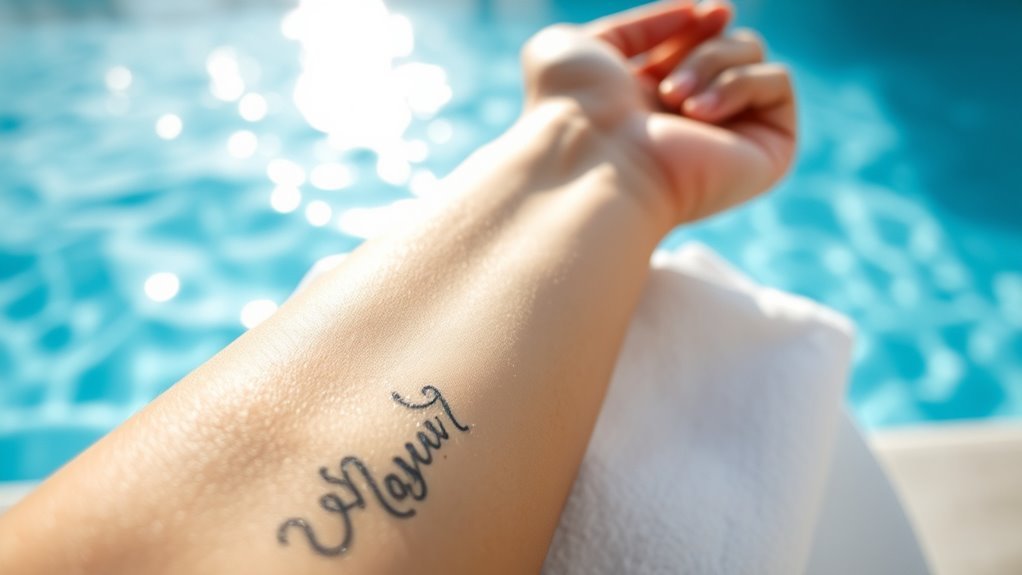
You should wait at least two to four weeks after getting your tattoo before swimming. Proper tattoo care is essential during this healing period to ensure your skin recovers fully. Your skin needs time to heal, allowing scabs to form and peel naturally without risk of infection.
Swimming too soon exposes the open wound to bacteria, chlorine, or salt, which can cause irritation, fading, or scarring. Only swim once your tattoo shows no redness or peeling and feels settled. Keep your tattoo protected and healthy by following proper care; there’s more to know about safeguarding your ink.
Understanding the Tattoo Healing Process
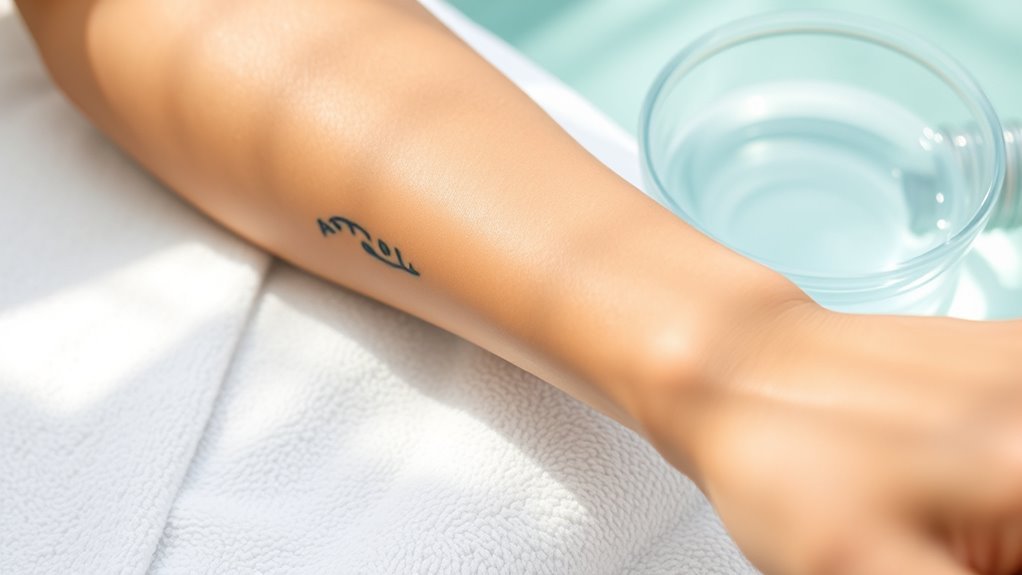
Although getting a tattoo is exciting, you need to understand how your skin heals to protect your new ink properly. When you get tattooed, your skin experiences tiny wounds as the ink penetrates the dermis.
Getting a tattoo creates tiny wounds in your skin that need proper care to heal and protect your new ink.
This triggers your body’s natural healing process, which usually takes about two to four weeks. During this time, your skin forms a scab to protect the area while new skin cells regenerate underneath.
You might notice redness, swelling, and peeling. These are all normal signs of healing. It’s essential to keep the tattoo clean and moisturized to prevent infections and promote ideal healing.
Avoid picking at scabs or scratching, as this can damage the ink and increase the risk of scarring. Understanding this process helps you care for your tattoo effectively.
Why Swimming Too Soon Can Harm Your Tattoo
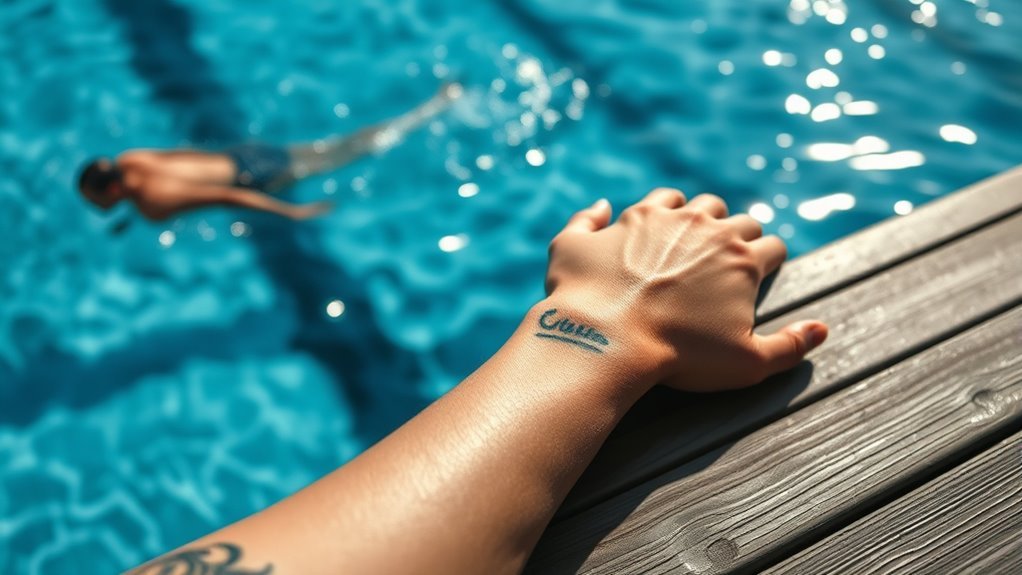
Because your tattoo is fundamentally an open wound during the healing process, swimming too soon exposes it to bacteria and chemicals that can cause infection or fading.
When you jump into pools, lakes, or oceans, your fresh tattoo meets countless microorganisms and harsh substances like chlorine or salt. These irritants can inflame your skin, slow healing, and increase the risk of painful infections.
Additionally, soaking your tattoo in water for extended periods can cause ink to leach out, dulling its appearance. Your skin needs time to close and form a protective barrier.
Ignoring this can lead to scabbing, scarring, or color loss. So, even if you feel tempted, hold off on swimming until your tattoo has properly healed to keep it vibrant and healthy.
Recommended Waiting Period Before Swimming
To protect your new tattoo from infection and fading, it’s best to wait before swimming. Most experts recommend waiting at least 2 to 4 weeks before you take a dip.
This time frame allows your skin to heal fully and the tattoo to scab and peel naturally without disturbance. Jumping into water too soon can expose the fresh ink to bacteria and chemicals, hindering the healing process.
During this waiting period, keep your tattoo clean and moisturized, and avoid soaking it.
Once the skin is no longer broken or peeling, and the tattoo looks settled, you can safely swim.
Risks of Swimming in Pools With a New Tattoo
Swimming in pools too soon after getting a tattoo can put you at risk of infection and slow down healing. Pool water often contains chlorine and bacteria that can irritate your fresh tattoo and cause complications.
Swimming too soon after tattooing risks infection and delays healing due to chlorine and bacteria in pool water.
When you swim too early, you expose your skin to:
- Bacteria that may lead to infections
- Chlorine, which can fade ink and dry out skin
- Prolonged moisture that softens scabs and delays healing
- Chemicals that cause inflammation and discomfort
- Increased risk of scarring due to weakened skin barrier
Your tattoo is fundamentally an open wound that needs time to close and protect itself. Avoiding pools until your tattoo is fully healed helps ensure vibrant ink and minimizes health risks.
Always follow your artist’s care instructions to keep your tattoo safe.
Risks of Swimming in Natural Bodies of Water
Pools aren’t the only places that can pose risks to a fresh tattoo. Natural bodies of water like lakes, rivers, and oceans harbor bacteria, parasites, and other microbes that can easily infect your new ink.
Since your skin is still healing, it’s more vulnerable to these harmful agents. The water might also contain dirt and debris that can irritate the tattooed area or cause inflammation.
Plus, natural water can be unpredictable. Strong currents or waves can cause you to scrape your tattoo against rocks or other surfaces, further damaging it.
To avoid infections and promote proper healing, it’s best to steer clear of natural bodies of water until your tattoo has fully healed, usually around two to four weeks.
Your skin will thank you for the extra care.
How to Protect Your Tattoo When You Must Swim
Even if you must swim before your tattoo fully heals, you can take steps to minimize the risk of infection and damage. Protecting your tattoo requires extra care and attention. Here’s what you can do:
- Cover the tattoo with a waterproof bandage or plastic wrap to keep water out.
- Apply a thick layer of waterproof ointment beforehand to create a protective barrier.
- Limit your time in the water to reduce exposure.
- Avoid swimming in lakes, rivers, or oceans where bacteria are more prevalent.
- Rinse the tattoo gently with clean, fresh water immediately after swimming and pat dry with a clean towel.
Taking these precautions helps shield your tattoo during early swimming, reducing the chance of irritation or infection while it heals.
Signs Your Tattoo Has Healed Enough for Swimming
Before you dive back into the water, you’ll want to make sure your tattoo has healed properly to prevent infection and fading. Look for clear signs like no scabs, no redness, and no peeling skin. Your tattoo should feel smooth and not sensitive to touch.
If it still hurts or flakes, it’s not ready for swimming.
Here’s a quick guide to check your tattoo’s readiness:
| Sign | What It Means | Ready for Swimming? |
|---|---|---|
| No scabs | Skin barrier restored | Yes |
| No redness | Inflammation gone | Yes |
| No peeling | Skin fully regenerated | Yes |
Only swim when all signs show your tattoo is fully healed.
Aftercare Tips to Maintain Tattoo Vibrancy
Once your tattoo has fully healed and you’re ready to swim, keeping its colors bright and sharp becomes the next priority. Proper aftercare doesn’t end once swimming resumes; it’s an ongoing effort to protect your tattoo’s vibrancy.
Here’s how you can maintain that fresh look:
Apply a high-SPF sunscreen before sun exposure to prevent fading. Keep your tattoo moisturized with fragrance-free lotions to avoid dryness. Avoid prolonged soaking in pools or hot tubs, as chlorine can dull colors. Wear loose clothing over your tattoo to reduce friction and irritation. Gently cleanse your tattoo with mild soap after swimming to remove chemicals and salt.
When to Consult a Professional About Tattoo Care
If you notice unusual redness, swelling, or persistent pain around your tattoo, you should consult a professional promptly. These signs might indicate an infection or allergic reaction needing immediate care.
Also, if you experience fever, pus, or spreading redness, don’t wait to seek help. A professional can guide you on proper treatment and prevent complications.
| Symptom | Possible Cause | Action to Take |
|---|---|---|
| Redness & Swelling | Infection or irritation | Contact a healthcare provider |
| Persistent Pain | Infection or trauma | Seek professional advice |
| Pus or Discharge | Bacterial infection | Visit a doctor immediately |
| Fever | Systemic infection | Get urgent medical attention |
Trust your instincts; professional help ensures safe healing.
Frequently Asked Questions
Can Sun Exposure Affect My Tattoo Healing Timeline?
Yes, sun exposure can slow your tattoo’s healing by causing irritation and fading. You should keep your tattoo covered or use high-SPF sunscreen until it’s fully healed.
This helps protect the colors and skin from damage.
Are There Specific Tattoo Inks That Heal Faster?
No, specific tattoo inks don’t necessarily heal faster. Healing depends more on your skin, aftercare, and tattoo size.
Stick with quality inks and follow proper care to guarantee your tattoo heals smoothly and beautifully.
How Does Tattoo Placement Affect Healing and Swimming Safety?
Tattoo placement affects healing because areas with more movement or friction heal slower. If your tattoo’s in a spot prone to rubbing or stretching, avoid swimming longer to prevent irritation and infection. Protect it carefully!
Can Moisturizing Speed up the Tattoo Healing Process?
You can’t rush a masterpiece, but moisturizing does help speed tattoo healing by keeping your skin hydrated and preventing scabs. Just don’t overdo it. Apply a thin layer regularly to promote smooth, faster recovery.
Is It Safe to Use Sunscreen on a New Tattoo?
You shouldn’t use sunscreen on a new tattoo until it’s fully healed, usually about 2-4 weeks.
Applying sunscreen too soon can irritate your skin and affect healing, so wait until it’s completely healed first.
Conclusion
Waiting to swim after getting a tattoo isn’t just a suggestion—it’s a vital step in protecting your new ink. Think of your tattoo as a delicate flower; rushing into water too soon can cause it to wither before it blooms.
Give your skin time to heal, usually around two to four weeks, to keep your tattoo vibrant and infection-free. Avoiding swimming pools, oceans, and hot tubs during this period helps prevent bacteria from entering the fresh wound.
Patience now means a masterpiece that lasts a lifetime. Remember, how long after a tattoo can I swim safely? The answer is typically after your tattoo has fully healed to maintain its quality and avoid complications.