How Long After Adding Algaecide Can You Swim Safely?
You can usually swim safely 24 to 48 hours after adding algaecide to your pool, depending on the type and ingredients used. Copper-based algaecides often require about 24 hours, while others like quaternary ammonium compounds may need up to 48 hours to avoid skin irritation. Knowing how long after adding algaecide you can swim safely is important for pool maintenance and safety.
Warm water, sunlight, and good filtration can speed up this process. Following label instructions and ensuring your pool is clear and balanced will help. Keep checking for tips to make your pool safe faster.
Understanding Algaecide and Its Purpose in Pools
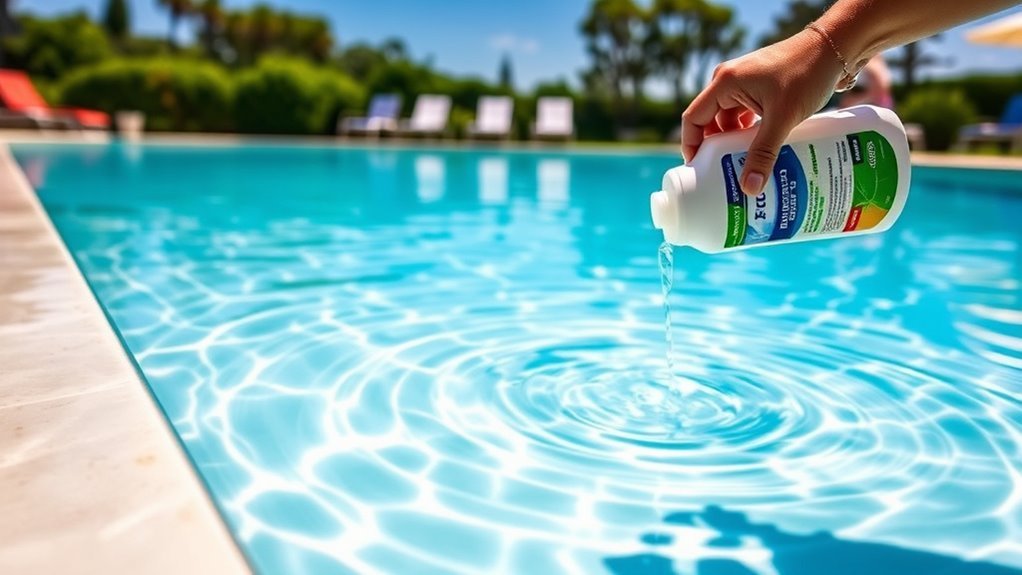
Although you mightn’t always see it, algaecide plays a crucial role in keeping your pool clean and safe. When you add algaecide, you’re directly targeting algae, the slippery green stuff that can quickly turn your pool into a slimy mess.
Algae thrives in warm, sunny water, and it can make your pool look unattractive and even pose health risks. By using algaecide, you prevent algae from growing and spreading, ensuring your water stays clear and inviting.
It’s a proactive step that works alongside your regular pool maintenance, like chlorination and filtration. Understanding this helps you appreciate why adding algaecide is essential, not just for appearance but for maintaining a healthy swimming environment.
Common Types of Algaecides and Their Ingredients
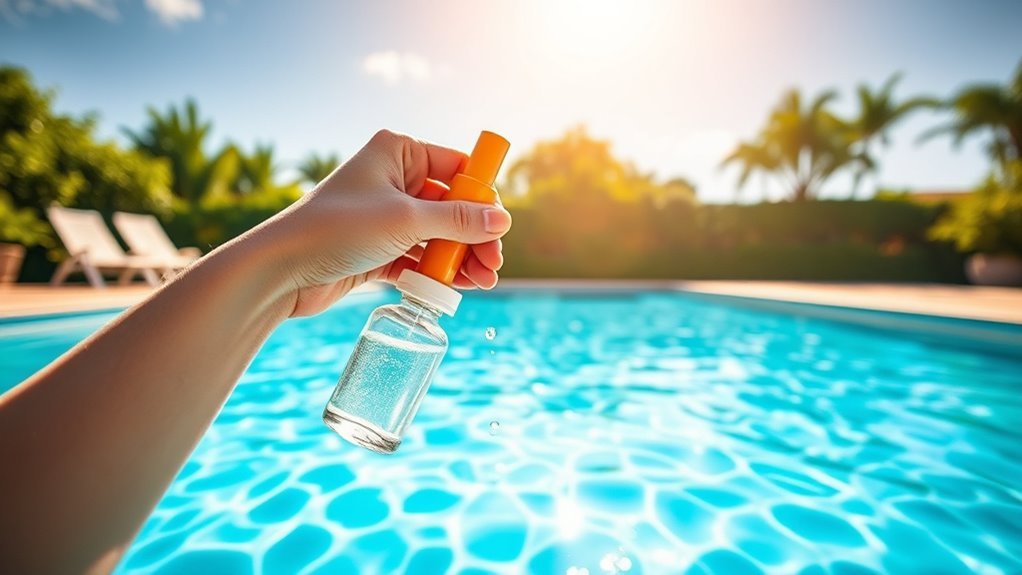
When you choose an algaecide, it’s important to know the different types and their active ingredients to pick the one that works best for your pool’s needs.
The most common algaecides contain copper-based compounds, which are effective against a broad range of algae but can stain pool surfaces if overused.
Quaternary ammonium compounds, or “quats,” are popular for their quick action and affordability, but they may cause foaming if used excessively.
Polyquaternary algaecides combine different quats to boost effectiveness without as much foaming.
Finally, you might find algaecides with sodium bromide or peroxides, which work well for specific algae types.
Knowing these ingredients helps you select a safe, efficient product tailored to your pool’s condition.
Recommended Waiting Periods Before Swimming
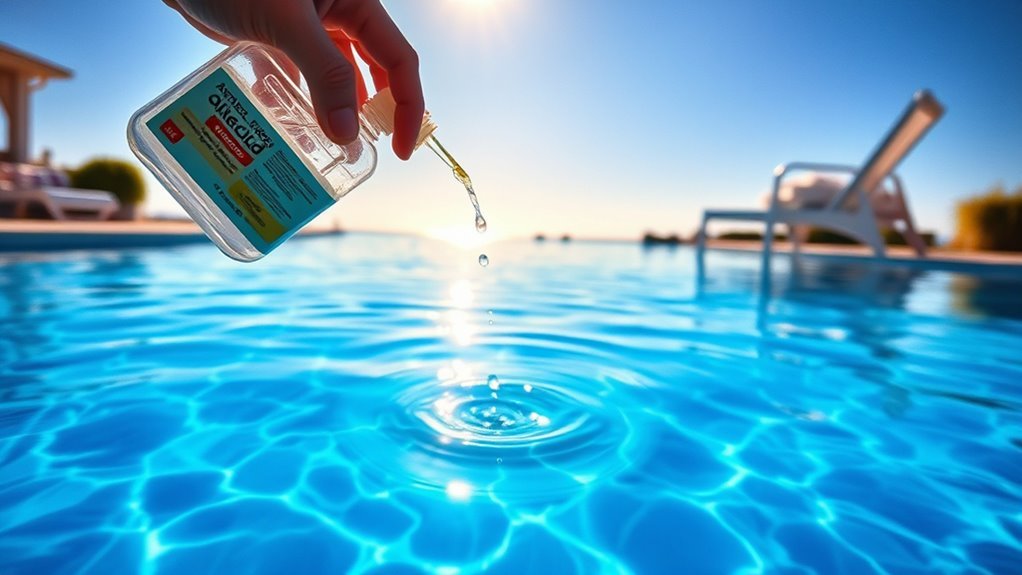
Since algaecides contain chemicals that need time to dissipate or become safe, you should wait before jumping into your pool. Typically, waiting periods vary by algaecide type and concentration. Most manufacturers recommend waiting at least 24 hours after treatment to ensure safety.
| Algaecide Type | Typical Wait Time | Notes |
|---|---|---|
| Copper-based | 24 hours | Avoid contact during this time |
| Polymeric | 12-24 hours | Slightly faster dissipation |
| Quaternary Ammonium | 24-48 hours | Longer wait for sensitive skin |
Waiting the recommended time helps prevent skin irritation and chemical exposure. Always check the product label for exact instructions to keep swimming safe and enjoyable.
Factors That Influence Safe Swimming Time After Treatment
Because various factors affect how quickly algaecide chemicals break down, you need to take into account more than just the type of algaecide when determining a safe swimming time.
Water temperature plays a big role. Warmer water speeds up chemical breakdown, so you might wait less time in summer.
Sunlight exposure also matters; UV rays help degrade algaecides faster, allowing you to swim sooner.
The pool’s filtration and circulation system can dilute chemicals, reducing their concentration more quickly.
Additionally, the amount of algaecide you add and the pool size influence how long residues remain.
Finally, if you’ve combined algaecide with other treatments, interactions may extend the safe waiting period.
Considering these factors helps you swim safely without risking irritation or exposure.
Tips for Using Algaecide Safely and Effectively
Understanding the factors that affect how long you should wait before swimming helps you use algaecide more responsibly. To maximize safety and effectiveness, follow these tips:
Knowing when to swim after algaecide ensures safe, effective pool care and responsible chemical use.
- Read the label thoroughly. Each product has specific instructions and wait times.
- Apply algaecide evenly to avoid concentrated areas that may irritate skin.
- Run your pool filter continuously for at least 24 hours to help distribute the chemical and clear algae.
- Avoid overuse. Too much algaecide can harm pool equipment and pose health risks.
Signs Your Pool Is Ready for Swimming After Algaecide Use
Although algaecide can work quickly, you should look for specific signs before jumping back into the pool. First, the water should be clear and free of any visible algae patches or cloudiness. Check the pool’s surface and walls for smoothness. No slippery or slimy residue means the algaecide has done its job.
Also, the water’s chemical levels, especially chlorine and pH, should be balanced to ensure safety. If you’ve used a copper-based algaecide, verify that metal levels are within safe limits.
Finally, ensure you’ve waited the recommended time on the product label, usually 24 to 48 hours.
Once these signs align, you can confidently dive back in, knowing your pool is both clean and safe for swimming.
Frequently Asked Questions
Can Algaecide Cause Skin Irritation or Allergic Reactions?
Yes, algaecide can cause skin irritation or allergic reactions if you have sensitive skin or allergies. You should avoid direct contact and rinse off thoroughly after swimming. Consult a doctor if you experience any discomfort.
Is Algaecide Safe for Pets Around the Pool Area?
You should keep pets away, you should rinse their paws, and you should watch for reactions. Algaecide isn’t toxic in small amounts, but it can irritate skin or eyes, so caution’s always best around your furry friends.
How Does Algaecide Affect Pool Water Chemistry Long-Term?
Algaecide can alter your pool’s chemistry by affecting pH and sanitizer levels over time. You’ll need to monitor and balance these regularly to prevent buildup or imbalances that could harm water quality and equipment longevity.
Can Algaecide Be Mixed With Other Pool Chemicals Safely?
You shouldn’t mix algaecide directly with other pool chemicals because it can cause reactions or reduce effectiveness.
Always add algaecide separately and wait before adding other chemicals to keep your pool balanced and safe.
What Should I Do if I Accidentally Swallow Pool Algaecide?
If you accidentally swallow pool algaecide, don’t panic. Rinse your mouth thoroughly, avoid vomiting, and immediately call poison control or seek emergency medical help.
Keep the algaecide container handy to provide details.
Conclusion
When you add algaecide to your pool, it’s important to wait before jumping in—usually around 24 hours to guarantee safety. Did you know that 65% of pool owners underestimate the necessary wait time, risking skin irritation or eye discomfort?
By following recommended guidelines and checking for clear water and no chemical odor, you’ll keep your swim safe and enjoyable. Always give algaecide time to work properly before taking a dip.
In conclusion, waiting the appropriate time after adding algaecide ensures a safe swimming experience. Remember, knowing how long after adding algaecide you can swim safely helps prevent health issues and keeps your pool clean and inviting.