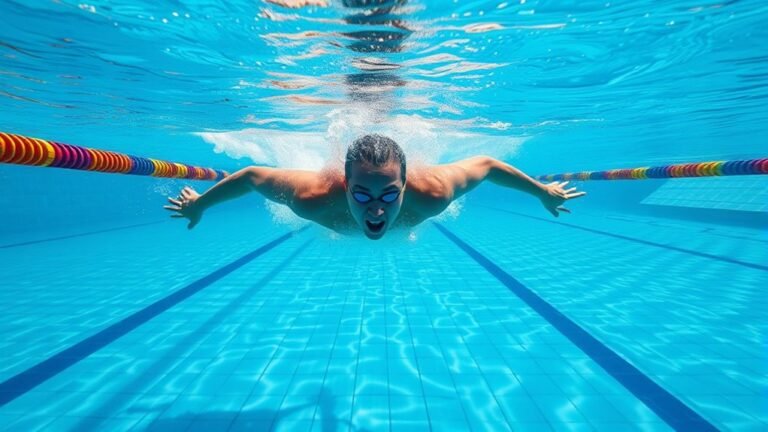
How to Use Swimming for Good Lower Back Pain Relief
You can use swimming for good lower back pain relief by choosing gentle strokes like backstroke or breaststroke that support your spine without strain. These strokes help reduce pressure on your lower back while promoting flexibility and strength. Focus on keeping your head aligned with your spine and using smooth, controlled arm and leg movements to avoid jerky motions.
Incorporate core-strengthening exercises like flutter kicks to build stability and support your lower back. Start with short sessions and listen to your body to prevent overexertion.
If you want to know ways to customize your routine safely and effectively, keep exploring.
Understanding the Benefits of Swimming for Lower Back Pain

Although lower back pain can limit your daily activities, swimming offers a low-impact way to stay active and support recovery. When you swim, the water’s buoyancy reduces pressure on your spine, easing discomfort and preventing further strain.
Swimming gently supports your spine by reducing pressure and easing lower back pain during recovery.
You’ll find that swimming helps strengthen your core muscles, which are vital for supporting your lower back. Plus, the gentle resistance of water encourages muscle toning without harsh impact.
This combination not only improves flexibility but also promotes better posture, reducing the likelihood of future pain. By staying consistent, you can enhance circulation and reduce inflammation in your lower back area.
Swimming also provides a soothing environment, which can help you relax and manage pain more effectively as you recover.
Choosing the Right Swimming Strokes for Back Support

To get the most relief for your lower back, you need to pick swimming strokes that support your spine and avoid strain. Some strokes naturally promote better posture and gentle movement, easing tension instead of adding to it.
Focus on strokes that keep your back aligned and minimize twisting or jolting motions.
Consider these options:
- Backstroke: Keeps your spine elongated and encourages good posture.
- Breaststroke: Moves your body smoothly but avoid overextending your neck.
- Sidestroke: Gentle on the back, allows steady breathing and rotation.
- Freestyle (front crawl): Use with caution, focus on controlled, even strokes.
- Avoid butterfly: It can strain your lower back due to its powerful undulating motion.
Choosing wisely helps you swim pain-free and support your healing.
Essential Swimming Techniques to Protect Your Spine
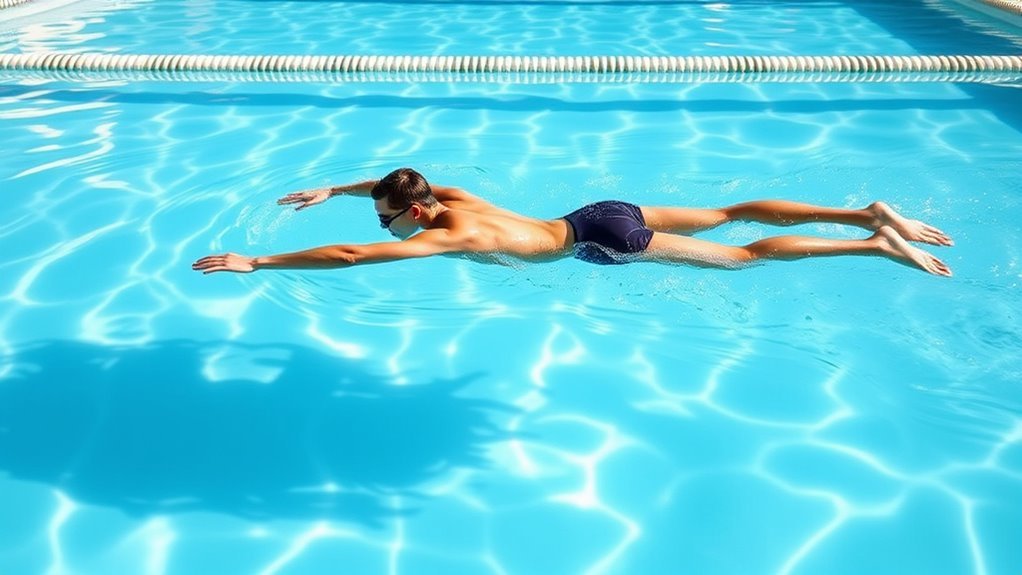
When you swim, maintaining proper technique is essential to protect your spine from unnecessary strain. Focus on smooth, controlled movements and avoid excessive twisting or arching your back.
Keep your head aligned with your spine to reduce neck and back tension. Breathing rhythmically helps maintain balance and posture in the water.
| Technique | Why It Protects Your Spine |
|---|---|
| Neutral Head Position | Prevents neck strain and spinal misalignment |
| Controlled Kicking | Avoids jerky movements that stress the lower back |
| Smooth Arm Strokes | Reduces rotational strain on your spine |
| Steady Breathing | Maintains body balance and spinal alignment |
Applying these techniques consistently helps you swim safely and supports lower back health.
Incorporating Core Strengthening Exercises in the Pool
Mastering proper swimming techniques lays a strong foundation for protecting your spine, but strengthening your core muscles in the pool takes your lower back support to the next level.
You can engage your core effectively while staying buoyant and supported by water.
Try these exercises to activate and build your core:
- Flutter kicks while holding a kickboard, keeping your abs tight
- Vertical sculling with slight knee lifts, focusing on controlled breathing
- Pool planks by placing forearms on the pool edge and extending your body
- Bicycle kicks underwater to work obliques and lower abs
- Side leg lifts while floating on your side, maintaining a stable torso
Incorporate these into your swim sessions to enhance core stability and reduce strain on your lower back.
Creating a Swimming Routine Tailored to Your Back Pain
Although swimming offers excellent relief for lower back pain, crafting a routine that fits your specific needs guarantees you get the most benefit without overexerting yourself. Start by evaluating your pain level and mobility, then choose strokes that feel comfortable, such as backstroke or gentle freestyle.
Swimming relieves lower back pain best when you tailor your routine to your comfort and mobility levels.
Begin with short sessions, around 15-20 minutes, and gradually increase duration as your strength improves. Incorporate rest days to allow your body to recover.
Focus on smooth, controlled movements and avoid sudden twists or jerks in the water.
Mixing in core strengthening exercises in the pool supports your spine and enhances stability.
Finally, listen to your body. If a movement causes pain, adjust or skip it. Tailoring your routine this way maximizes relief while protecting your back.
Tips for Safe Swimming and Injury Prevention
To swim safely and prevent injuries, you need to prioritize proper technique and listen closely to your body’s signals. Start each session with a gentle warm-up to prepare your muscles, and focus on smooth, controlled movements to avoid straining your back.
Pay attention to any discomfort and stop if pain arises. Incorporate rest days to let your body recover.
Here are some key tips to keep in mind:
- Use a streamlined body position to reduce back stress
- Avoid sudden twisting or jerky movements
- Choose strokes like backstroke or freestyle that support your spine
- Stretch gently after swimming to maintain flexibility
- Gradually increase intensity and duration to build strength safely
Following these guidelines helps you enjoy swimming’s benefits while protecting your lower back.
Frequently Asked Questions
Can Swimming Worsen Existing Lower Back Conditions?
Yes, swimming can worsen existing lower back conditions if you use improper techniques or overexert yourself. You should focus on gentle strokes, avoid twisting movements, and consult a professional to guarantee you swim safely and effectively.
How Soon Can I Expect Pain Relief After Starting Swimming?
You can start noticing pain relief within a few weeks if you swim regularly and use proper techniques.
Consistency matters, so stick with gentle, low-impact strokes to help strengthen your back without causing strain.
Are There Specific Pool Temperatures Ideal for Back Pain Relief?
You might think colder pools ease pain, but warmer water—around 84-88°F—actually soothes muscle tension better.
That gentle warmth helps relax your back, making swimming more comfortable and effective for relieving lower back pain.
Should I Use Flotation Devices to Support My Back?
Yes, you should use flotation devices to support your back. They help reduce strain, improve buoyancy, and maintain proper alignment while swimming.
Using these devices makes your exercises safer and more effective for relieving lower back pain.
How Does Swimming Compare to Other Low-Impact Exercises for Back Pain?
Swimming offers full-body support and gentle resistance, making it easier on your back than many low-impact exercises. It improves flexibility and strength without stressing your spine, often providing better relief and comfort than walking or cycling.
Conclusion
By diving into swimming, you’re giving your lower back a gentle yet powerful hug. With the right strokes and techniques, you’ll support your spine while strengthening your core, turning the pool into your personal pain relief haven.
Stick to a routine tailored just for you, and swim safely to avoid setbacks. Remember, every stroke you take is a step toward a stronger, pain-free back—so keep moving and let the water carry your worries away.
Using swimming for good lower back pain relief can transform your recovery journey. Embrace the healing power of water and make swimming a regular part of your pain management plan.