How Much Does It Cost to Maintain a Swimming Pool?
You can expect to spend several hundred dollars a year maintaining your swimming pool, but costs vary based on size, type, and climate. Routine tasks like skimming and vacuuming can be DIY or paid services, affecting your budget. Chemicals and water testing add monthly expenses, while equipment maintenance and seasonal opening or closing fees also require funds.
Managing energy use and knowing when to hire professionals helps control costs. Keep exploring to find ways to save and protect your pool investment. With proper care, you can enjoy a clean and inviting swimming pool all year round.
Factors Influencing Swimming Pool Maintenance Costs

While the cost to maintain a swimming pool varies, several key factors directly influence how much you’ll spend. The size of your pool plays a major role. Larger pools require more chemicals, water, and energy to keep balanced.
The type of pool you have matters too. Saltwater pools often cost more upfront but can save on chemicals over time, while traditional chlorine pools might have higher ongoing chemical expenses.
Your local climate affects maintenance requirements as well. Warmer, sunnier areas may need more frequent water treatments and filtration.
Ultimately, the age and condition of your pool equipment can impact costs, since older pumps or filters may consume more energy or need frequent repairs.
Knowing these factors helps you budget accurately and avoid surprises.
Routine Cleaning and Skimming Expenses
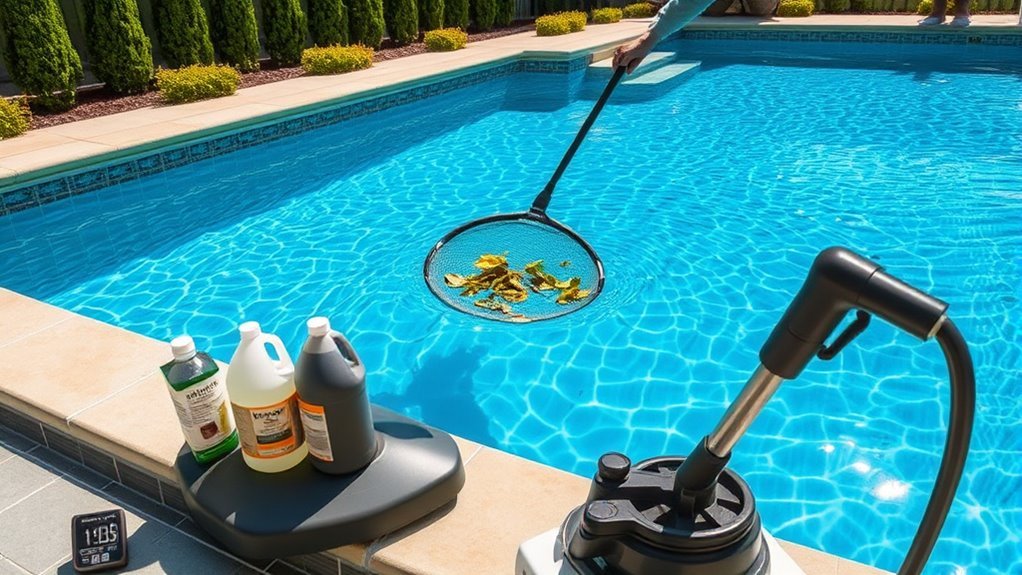
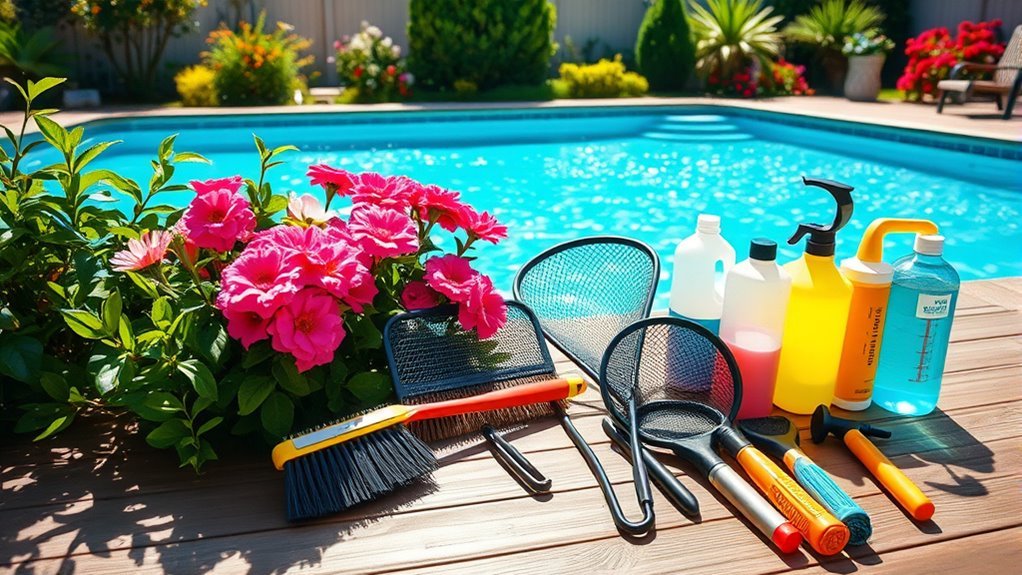
Understanding the factors that influence pool maintenance costs helps you see where your money goes, especially when it comes to routine cleaning and skimming. Keeping your pool free of debris and dirt is essential to prevent damage and maintain water clarity.
You can either clean the pool yourself or hire a professional service, which affects your expenses.
| Task | Frequency | Estimated Cost |
|---|---|---|
| Skimming leaves | Daily | $0 (DIY) |
| Vacuuming pool floor | Weekly | $0-$50 (DIY/Pro) |
| Cleaning filters | Monthly | $0-$30 (DIY) |
| Emptying skimmer baskets | Weekly | $0 (DIY) |
| Professional cleaning | Weekly or Biweekly | $75-$150 per visit |
Routine cleaning guarantees your pool stays inviting without costing too much.
Chemical Treatment and Water Testing Costs
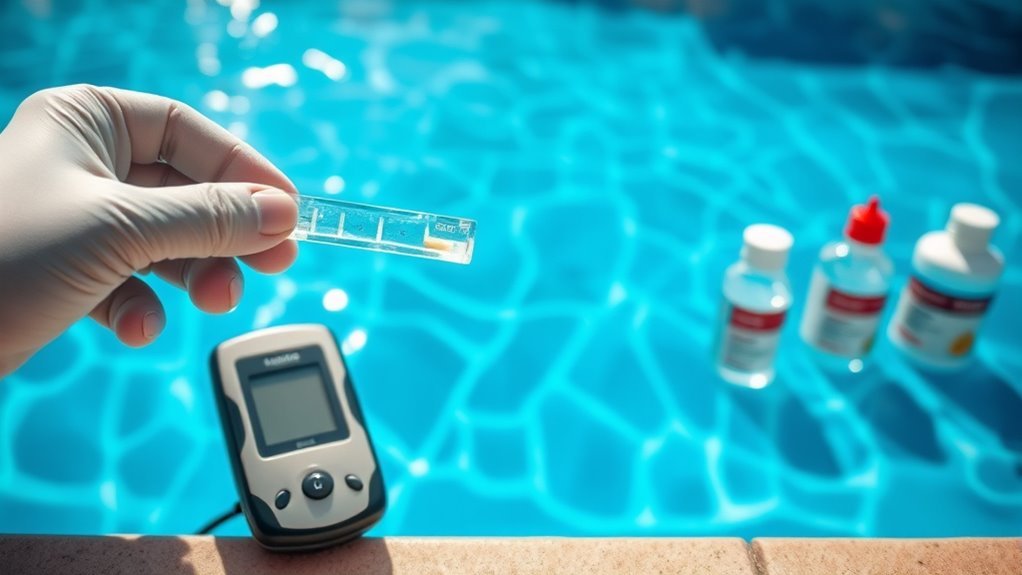
Because maintaining proper chemical balance is essential for safe and clear pool water, you’ll need to invest in regular chemical treatments and water testing.
Maintaining proper chemical balance is key to safe, clear pool water and requires regular treatments and testing.
Expect to spend around $20 to $50 monthly on chemicals like chlorine, pH adjusters, algaecides, and stabilizers. These help prevent algae growth, bacteria, and cloudy water.
Additionally, you should test your pool water at least once a week using test strips or a liquid test kit, which costs about $10 to $30 for supplies that last several months.
If you prefer convenience, automatic chemical feeders or professional water testing services might add to your expenses.
Staying on top of chemical balance not only keeps your pool inviting but also protects your investment by preventing damage caused by improper water chemistry.
Equipment Maintenance and Repair Fees
Keeping your pool’s chemical balance in check helps protect its equipment from corrosion and buildup, but you’ll still need to budget for regular maintenance and occasional repairs.
Your pool pump, filter, and heater need proper care to run efficiently and last longer. Here’s what to expect:
- Pump and Filter Servicing: Plan for $100 to $300 annually to clean, lubricate, and replace worn parts.
- Heater Repairs: Depending on the issue, repairs can range from $150 to $600; regular checkups help catch problems early.
- Equipment Replacement: Over time, you might replace parts like pump impellers or filter cartridges, costing $50 to $200 each.
Seasonal Opening and Closing Charges
Although you maintain your pool year-round, you’ll need professional help to open it in the spring and close it for winter. Seasonal opening involves removing the cover, inspecting equipment, cleaning debris, balancing chemicals, and restarting the filtration system.
Closing requires draining water from pipes, adding winterizing chemicals, covering the pool securely, and shutting down equipment to prevent damage from freezing temperatures.
Typically, opening charges range from $150 to $300, while closing fees average $100 to $250, depending on pool size and location.
These one-time seasonal services help ensure your pool stays in good condition, avoiding costly repairs. Budgeting for these charges is essential since neglecting proper opening or closing can lead to equipment failure or water damage, which will increase your overall maintenance costs.
Energy Consumption and Utility Bills
When you run a swimming pool, energy consumption can quickly become one of your largest ongoing expenses. Your pump, heater, and lighting all draw power daily, so managing their use is key to controlling your utility bills.
Here are three ways to keep energy costs manageable:
- Use a variable-speed pump: These pumps adjust to the pool’s needs, using less electricity than traditional single-speed models.
- Install a pool cover: It reduces heat loss and evaporation, cutting down on heater and pump run times.
- Time your equipment: Run pumps and heaters during off-peak hours to take advantage of lower electricity rates.
Professional Pool Service vs. DIY Maintenance
Deciding whether to hire a professional pool service or handle maintenance yourself depends on your budget, time, and comfort level with pool care.
If you’re short on time or unsure about balancing chemicals and equipment upkeep, a professional service can save you stress and make certain your pool stays in top condition.
However, this convenience comes at a cost, typically ranging from $80 to $150 per month.
On the other hand, doing it yourself lets you control expenses and learn valuable skills, though it demands regular effort and some initial investment in tools and testing kits.
Ultimately, choose the option that fits your schedule, expertise, and financial plan to keep your pool clean and safe without unnecessary hassle.
Tips for Reducing Pool Maintenance Costs
If you want to lower your pool maintenance expenses, adopting a few smart habits can make a big difference. Here are three practical tips to help you save money while keeping your pool in great shape:
- Regular Cleaning: Skim debris daily and vacuum weekly to prevent dirt buildup, reducing the need for costly deep cleans.
- Optimize Chemical Use: Test your water frequently and adjust chemicals only as needed to avoid wasting expensive supplies.
- Maintain Equipment: Inspect pumps and filters monthly to catch minor issues early, preventing costly repairs or replacements.
Frequently Asked Questions
What Is the Average Lifespan of Swimming Pool Equipment?
You can expect your swimming pool equipment to last about 8 to 12 years on average. Proper maintenance and timely repairs can extend its lifespan, so don’t skip regular check-ups and cleanings to keep everything running smoothly.
How Often Should Pool Water Be Replaced Completely?
You should completely replace your pool water every 3 to 5 years, depending on usage and water quality.
Regular testing and maintenance help extend this timeframe by keeping your water balanced and clean.
Can Pool Maintenance Affect Home Insurance Rates?
You might think pool maintenance doesn’t impact insurance, but it can. Neglect raises risk, possibly increasing your rates.
Staying on top of repairs and cleanliness helps keep premiums lower and your coverage intact.
What Are the Signs of Algae Growth in a Pool?
You’ll notice cloudy water, greenish tint, slippery surfaces, and floating clumps if algae start growing.
Algae can also cause unpleasant odors and make your pool’s walls and floor feel rough or slimy. Act fast!
Are Saltwater Pools Cheaper to Maintain Than Chlorine Pools?
Think of saltwater pools as a self-sustaining garden, while chlorine pools need constant watering. You’ll find saltwater pools generally cheaper to maintain since they require fewer chemicals, but initial setup costs can make a difference.
Conclusion
Maintaining your swimming pool doesn’t have to feel like a medieval quest. By understanding costs like cleaning, chemicals, equipment upkeep, and energy bills, you can budget wisely and avoid surprises.
Whether you choose professional help or DIY, staying consistent is key. With smart tips and routine care, you’ll keep your pool sparkling without draining your wallet.
So, plunge in confidently and enjoy your oasis without the hassle or excessive costs! Remember, regular pool maintenance and budgeting for expenses are essential to keep your swimming pool in top shape.