How to Teach Someone to Swim in 10 Essential Steps
Start by evaluating comfort and explaining water safety basics, which are crucial for teaching someone to swim. Show how to enter and exit the pool safely to build confidence and prevent accidents. Help them practice breath control and submerging their face to get comfortable in the water.
Teach front and back floating to develop balance and confidence. Next, introduce arm strokes for movement and coordinate them with breathing. Encourage swimming short distances independently, then gradually build endurance.
Always supervise and reinforce a positive mindset to keep them motivated. Keep going, and you’ll discover more ways to make learning smooth and safe.
Assess Swimming Comfort and Skills
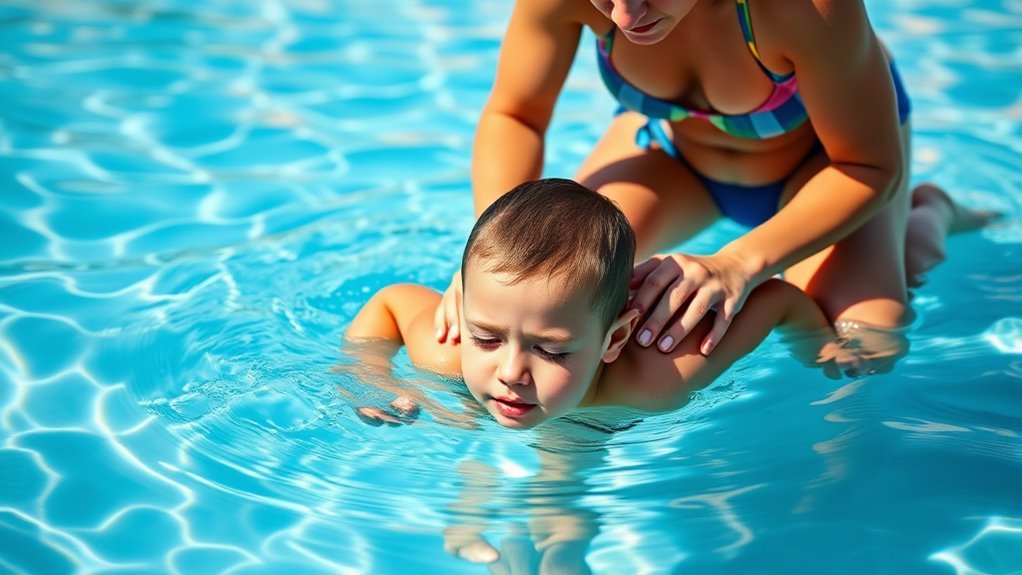
Before you begin teaching swimming techniques, you need to assess the learner’s comfort level and existing skills in the water. Start by observing how they behave near the pool. Do they hesitate or jump in confidently? Ask simple questions about their past experiences with water.
Next, encourage them to enter shallow water and see if they can float or move comfortably. Watch their breathing and body position closely, as these reveal a lot about their comfort.
If they’re nervous, spend time helping them relax and get accustomed to the water’s feel.
Understanding their current abilities helps you tailor your lessons effectively, ensuring safety and boosting their confidence as they progress. This initial assessment sets a solid foundation before moving on to teaching actual swimming techniques.
Explain Basic Water Safety Rules
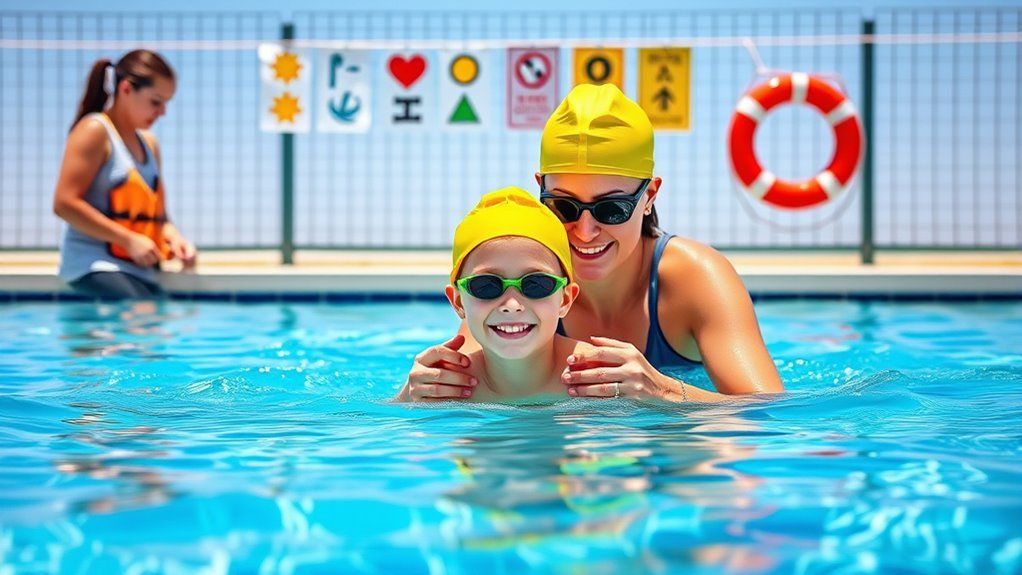
Since swimming involves inherent risks, you need to understand and follow basic water safety rules to protect yourself and others. Always swim where a lifeguard is present and never swim alone. Avoid running around the pool to prevent slips and falls.
If you’re tired or cold, get out of the water immediately to avoid cramps or hypothermia.
Here’s a quick reminder:
| Rule | Why It Matters |
|---|---|
| Swim with a buddy | Ensures help is nearby if needed |
| Stay in designated areas | Avoids unsafe or deep water zones |
| Follow pool rules | Prevents accidents and injuries |
Teach How to Enter and Exit the Pool Safely
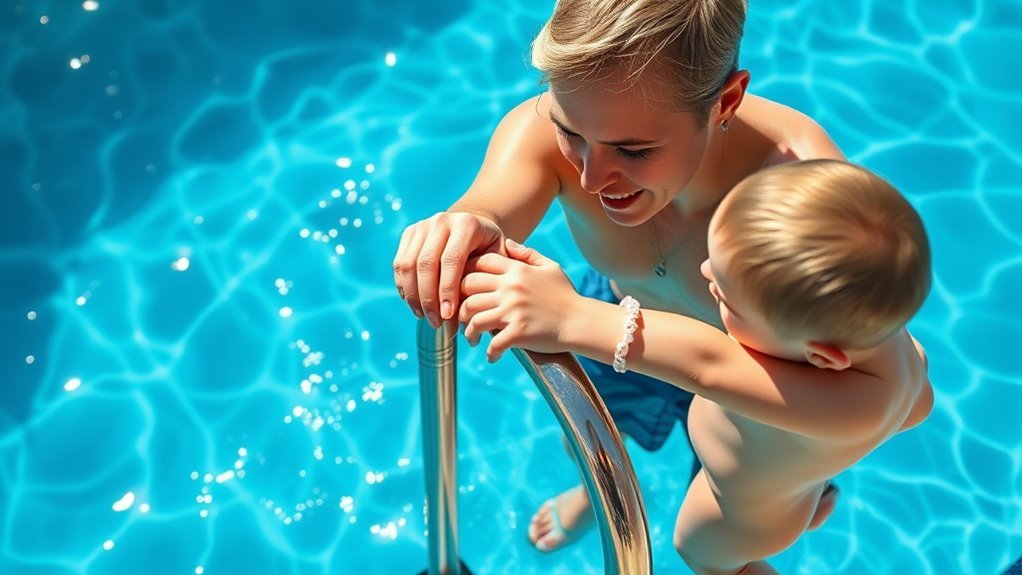
Although entering and exiting the pool may seem simple, doing it safely is essential to prevent slips and injuries. Start by showing the swimmer how to use the pool ladder or steps, ensuring they face the pool when entering and exiting.
Encourage them to hold onto handrails firmly and take slow, deliberate movements. Teach them to test the water temperature with their hand or foot before fully entering.
Hold handrails firmly and enter slowly, testing water temperature with hand or foot before going in fully.
When stepping in, remind them to enter feet first to avoid accidents.
When exiting, instruct them to climb out steadily without rushing, always maintaining a grip on the rail.
Emphasize the importance of avoiding running or horseplay near the pool edge.
Reinforce these habits consistently to build confidence and ensure their safety every time they get in or out of the water.
Practice Breath Control and Face Submersion
To build comfort in the water, you need to practice breath control and get used to submerging your face. Start by standing in the shallow end and taking a deep breath. Then, slowly lower your face into the water, holding your breath for a few seconds before lifting your head to breathe out.
Repeat this several times until you feel more relaxed. Next, try blowing bubbles underwater to control your exhale and reduce anxiety.
Gradually increase the time you spend with your face submerged, focusing on smooth, steady breathing.
This practice helps you build confidence and prepares you for swimming strokes. Remember, staying calm and controlled is key to mastering breath control and face submersion in the water.
Introduce Floating Techniques on Front and Back
Once you feel comfortable with breath control, you can start learning how to float on both your front and back. Begin by standing in shallow water where you can touch the bottom.
To float on your front, stretch your body out and gently lower your face into the water while keeping your arms extended forward. Relax your muscles and focus on keeping your body horizontal.
For back floating, lean back slowly, supporting your head and neck, and let your body rise to the surface. Keep your arms and legs slightly spread for balance.
Remember to stay calm and breathe steadily. Floating is all about relaxation and trust in the water, so take your time practicing these positions until you feel secure and stable before moving on to other swimming techniques.
Demonstrate and Practice Kicking Movements
How do you develop the powerful, steady kicks that keep you moving through the water? Start by demonstrating the basic flutter kick, emphasizing relaxed ankles and straight legs.
Then, encourage practicing while holding onto the pool edge or a kickboard to build confidence and strength. Focus on these three key points:
- Keep your legs mostly straight but avoid locking your knees to maintain fluidity.
- Kick from the hips, not the knees, generating more propulsion with less effort.
- Maintain a steady rhythm that complements your breathing and overall swimming pace.
Practice these steps repeatedly, giving constructive feedback. Over time, your learner will develop the muscle memory and coordination needed for effective kicking, setting a strong foundation before introducing arm movements.
Teach Arm Strokes for Propulsion
Now that you’ve helped your learner develop strong, steady kicks, it’s time to add arm strokes to boost propulsion. Begin by demonstrating basic arm movements out of the water so they can visualize the motion.
Encourage them to reach forward with one hand, pull through the water in a semi-circular motion, and then recover by bringing the arm back to the starting position. Practice these strokes on the poolside before moving into the water.
Once comfortable, have them combine arm strokes with their kicking, focusing on smooth, coordinated movements. Remind them to keep their fingers together and hands relaxed to maximize water resistance.
Consistent practice of arm strokes will considerably improve their forward momentum and build confidence in swimming independently.
Combine Breathing With Stroke Coordination
As you add breathing to your strokes, focus on timing your breaths with your arm movements to maintain a steady rhythm. Coordinating these actions helps you swim more efficiently and prevents fatigue.
To master this skill:
To master this skill, focus on timing your breath with each stroke for smooth, efficient swimming.
- Turn your head to the side as one arm pulls underwater, inhaling quickly through your mouth.
- Keep your face in the water between breaths, exhaling smoothly through your nose or mouth.
- Practice this pattern slowly at first, gradually increasing speed as you build comfort and control.
Encourage Swimming Short Distances Independently
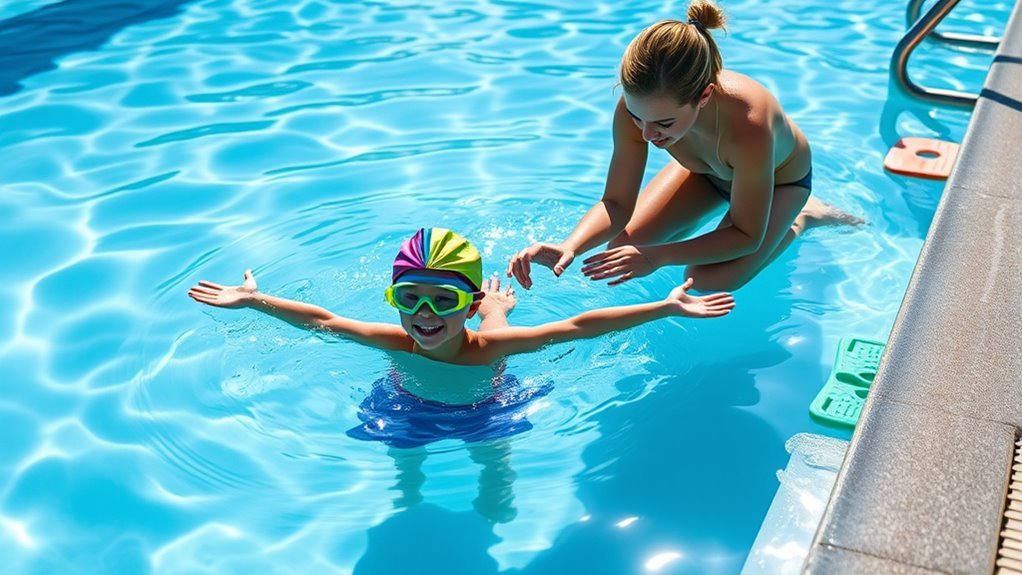
Once you’ve practiced breathing and stroke coordination, encourage swimming short distances independently to build confidence and stamina. Start by setting a manageable goal, like swimming from one side of the pool to the other.
Make sure the swimmer feels safe and remind them to focus on steady breathing and smooth strokes. Stay close by to offer support and reassurance without taking over. Celebrate each successful attempt to boost motivation.
If they struggle, suggest breaking the distance into smaller segments and gradually increasing as they improve. Encourage them to maintain a relaxed body position and keep their head in the water.
This step helps them gain a sense of control and independence in the water, laying a strong foundation for longer swims.
Build Endurance and Confidence in the Water
Although swimming short distances independently is a great start, you need to gradually build endurance and confidence to swim longer and more comfortably. Begin by setting small, achievable goals that challenge the swimmer without overwhelming them.
Next, encourage consistent practice sessions to help their muscles adapt and stamina improve.
Finally, celebrate progress to boost their motivation and self-assurance. Here’s how you can do it:
- Increase swimming distance or time in small increments.
- Incorporate rest breaks as needed to avoid fatigue.
- Use positive reinforcement to keep their mindset strong.
Frequently Asked Questions
What Is the Best Age to Start Swimming Lessons?
You can start swimming lessons as early as six months old with parent-assisted classes. For independent lessons, around age four is ideal since kids develop better coordination and confidence by then, making learning safer and more effective.
How Do I Choose the Right Swimwear for Beginners?
Think of swimwear as a cozy boat on water. Choose snug, chlorine-resistant suits that move with you, not against you.
Pick bright colors for visibility and soft fabrics to keep beginners comfy and confident as they learn to swim.
Are Swimming Lessons Safe for Children With Asthma?
Yes, swimming lessons are secure for children with asthma if you select a well-ventilated pool and monitor their breathing closely. Always consult their doctor first and make certain they have quick access to their inhaler during lessons.
What Equipment Is Helpful for Beginner Swimmers?
“Don’t put the cart before the horse.” You’ll want goggles, a swim cap, floatation devices like kickboards or noodles, and swim fins. These help build confidence and improve technique as you get comfortable in the water.
How Often Should Beginners Practice Swimming Each Week?
You should practice swimming at least 2-3 times a week to build confidence and improve skills steadily.
Consistent practice helps your body adapt to the water and develop muscle memory efficiently.
Conclusion
You might worry that teaching someone to swim feels overwhelming, but taking it step by step makes it manageable and rewarding. By focusing on comfort and safety first, you’ll build their confidence naturally. Remember, patience and encouragement go a long way.
Soon enough, they’ll swim short distances independently and feel proud of their progress. Stick with these essential steps, and you’ll help someone develop a lifelong skill that’s both fun and life-saving. Teaching someone to swim not only promotes safety but also boosts confidence and enjoyment in the water.
By following these 10 essential steps, you ensure a structured approach that supports gradual learning and skill development. This method transforms the challenge into a positive and empowering experience for both teacher and learner.