How Do Micro Tears in the Shoulder Feel Like When Swimming
When you have micro tears in your shoulder from swimming, you’ll experience sharp, localized pain during overhead strokes and a persistent ache afterward. These micro tears often cause discomfort that is different from typical muscle soreness.
Your shoulder may feel stiff, weak, or caught when lifting or rotating your arm. Unlike normal muscle soreness, this pain worsens with activity and limits your range of motion.
Ignoring these signs could worsen the injury. However, by paying close attention, you can learn how to spot symptoms early and know when to seek help.
Early Signs of Shoulder Discomfort During Swimming
Although you mightn’t notice it at first, early signs of shoulder discomfort during swimming often appear as a subtle ache or stiffness after your swim session. You might feel a mild tightness in the shoulder joint or a slight decrease in your usual range of motion.
These symptoms can be easy to overlook since they don’t cause sharp pain or immediate weakness. However, if you start experiencing persistent soreness during your strokes or notice discomfort when lifting your arm overhead, your shoulder is signaling that something isn’t right.
Ignoring these early signs increases the risk of further injury. Paying attention to these subtle cues allows you to adjust your technique or take breaks to prevent more serious shoulder issues.
Differentiating Micro Tear Pain From Normal Muscle Soreness
When you swim regularly, it’s important to tell the difference between normal muscle soreness and the sharper pain caused by micro tears in your shoulder. Normal soreness usually feels like a dull, spread-out ache that appears a day or two after intense swimming and fades with rest.
Distinguishing between normal muscle soreness and sharp micro tear pain is key for swimmers’ shoulder health.
Micro tear pain, however, tends to be more localized and sharp, especially during specific movements like reaching overhead or pulling through the water.
You might notice this pain worsens rather than improves with continued activity.
Unlike regular soreness, micro tear pain often limits your range of motion and doesn’t respond well to typical recovery methods like stretching or light exercise.
Paying attention to these differences helps you address injuries early and avoid worsening your shoulder condition.
Common Sensations Associated With Shoulder Micro Tears
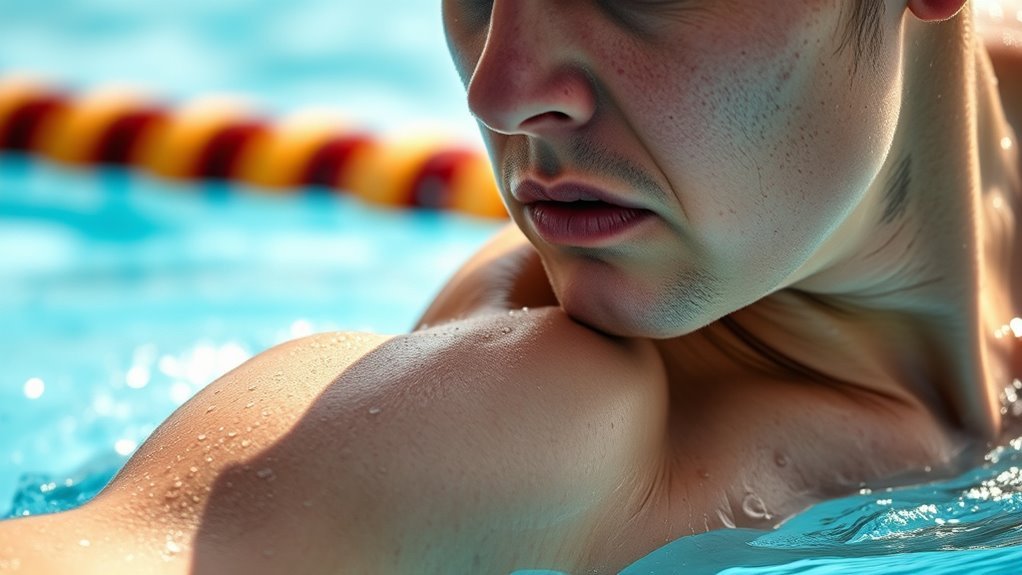
You’ll often feel a sharp, stabbing pain in your shoulder when a micro tear occurs, especially during swimming strokes that involve overhead arm movements.
Along with that, you might notice a persistent dull ache that lingers even after you stop swimming.
This discomfort can intensify when you try to lift your arm or rotate your shoulder.
Sometimes, you could experience a clicking or popping sensation, indicating irritation in the joint.
Your shoulder might also feel weak or unstable, making it tough to maintain your usual swimming pace or form.
Stiffness and reduced range of motion are common too, limiting how far you can comfortably move your arm.
These sensations collectively signal that your shoulder’s soft tissues are struggling to handle the strain.
Activities That May Exacerbate Shoulder Micro Tear Symptoms
Certain swimming activities can worsen the symptoms of shoulder micro tears by placing extra stress on the damaged tissues. When you engage in these movements, you might feel increased pain or stiffness, signaling that your shoulder needs a break.
Be cautious with:
- Frequent butterfly strokes, which require intense shoulder rotation and force.
- High-intensity freestyle sprints, involving rapid, repetitive arm movements.
- Overhead drills, such as diving or prolonged arm lifts during practice.
These activities repeatedly strain the already compromised shoulder, aggravating pain and delaying healing. If you notice discomfort during or after these motions, consider modifying your routine or resting to prevent further injury.
Listening to your body helps you avoid worsening micro tears while still enjoying swimming safely.
When to Seek Medical Advice for Shoulder Pain in Swimmers
If your shoulder pain persists despite adjusting your swimming routine or resting, it’s important to know when to consult a medical professional. Seek advice if the pain worsens, limits your range of motion, or doesn’t improve within a week or two.
Also, watch for swelling, numbness, or weakness in your arm, which could signal a more serious issue. Don’t ignore sharp or stabbing pain during or after swimming, as it may indicate worsening micro tears.
Early diagnosis and treatment can prevent further damage and speed up recovery. A doctor may recommend imaging tests or physical therapy tailored to your condition.
Prioritize your shoulder health. Getting timely medical help guarantees you can return to swimming safely and comfortably.
Frequently Asked Questions
Can Micro Tears in the Shoulder Heal Without Professional Treatment?
Yes, you can heal micro tears without professional treatment by resting, icing, and avoiding aggravating activities. However, if pain persists or worsens, you should see a healthcare professional to prevent further damage and guarantee proper recovery.
What Swimming Strokes Are Safest for Avoiding Shoulder Micro Tears?
You’ll find breaststroke and backstroke safer for your shoulders since they put less strain on the joint.
Avoid overusing freestyle or butterfly, which involve repetitive overhead motions that can cause micro tears more easily.
Are There Specific Exercises to Prevent Shoulder Micro Tears in Swimmers?
Yes, you can do rotator cuff strengthening, scapular stabilization, and shoulder mobility exercises to prevent micro tears. Focus on resistance bands, light weights, and proper warm-ups to keep your shoulder muscles balanced and resilient during swimming.
How Long Does Recovery From a Shoulder Micro Tear Typically Take?
Recovery from a shoulder micro tear typically takes two to six weeks. You’ll want to rest, rehab, and gradually return.
Don’t rush; rushing risks re-injury. Listen to your body and lean on professional guidance for a safe comeback.
Can Nutrition Impact the Healing Process of Shoulder Micro Tears?
Yes, nutrition can impact your healing. Eating protein-rich foods, antioxidants, and staying hydrated helps repair tissues faster.
Avoid processed foods and focus on vitamins like C and D to support your shoulder’s recovery effectively.
Conclusion
So, next time your shoulder throws a tiny tantrum while you’re swimming, don’t just chalk it up to “swimmer’s swagger.” Those micro tears aren’t your body’s way of saying, “Keep going!” — they’re more like a passive-aggressive nudge (or a full-on scream).
Listen up before your shoulder decides to go on strike. Because trust me, ignoring it won’t turn you into a shoulder-powered superhero; it’ll just make you the star of the bench press instead.
Understanding how micro tears in the shoulder feel like when swimming is crucial. Paying attention to these sensations can help you prevent further injury and keep your swim sessions pain-free.