When to Start Baby Swimming Lessons How-To Guide
You should start baby swimming lessons around six months old when your baby’s immune system is stronger and they have better head control for safety. Preparing for baby swimming lessons by making bath time fun and dressing your baby in easy clothes for quick changes helps create a positive experience. Early lessons focus on comfort, trust, and gentle water introduction, while you stay close for safety.
Swimming helps develop strength and confidence in your baby. Keep going to discover helpful tips, safety advice, and key benefits that make early swimming great for your baby.
Ideal Age to Begin Baby Swimming Lessons

Although every child develops at their own pace, experts generally recommend starting baby swimming lessons around six months old. At this age, your baby’s immune system is stronger, and they can hold their head up steadily.
You’ll notice they’re more alert and responsive, making lessons safer and more enjoyable. Before six months, babies may be more vulnerable to infections and less able to regulate body temperature in water.
Babies over six months are more alert and better at regulating body temperature, enhancing safety and enjoyment in lessons.
However, it’s important to think about your baby’s individual health and comfort. If your child was born prematurely or has medical concerns, check with your pediatrician first.
Starting too early might cause stress for both you and your baby. When the timing feels right, introducing swimming can build confidence, strengthen muscles, and foster water safety awareness from a young age.
Preparing Your Baby for the First Swimming Class

Before your baby’s first swimming class, you’ll want to guarantee they’re comfortable and calm to make the experience positive. To help your little one get ready, focus on gentle preparation and familiarization with water.
Start by introducing bath time as a fun, soothing activity. Keep the mood light and reassuring.
On the day of the class, pack essentials and plan ahead to avoid stress.
Here are key tips to prepare your baby:
- Dress them in easy-to-remove clothes for quick changing.
- Bring a favorite toy or blanket for comfort.
- Feed your baby beforehand to avoid hunger during class.
- Arrive early to let your baby acclimate to the pool environment.
These steps help your baby feel secure and excited for swimming lessons.
What to Expect During Early Swimming Lessons

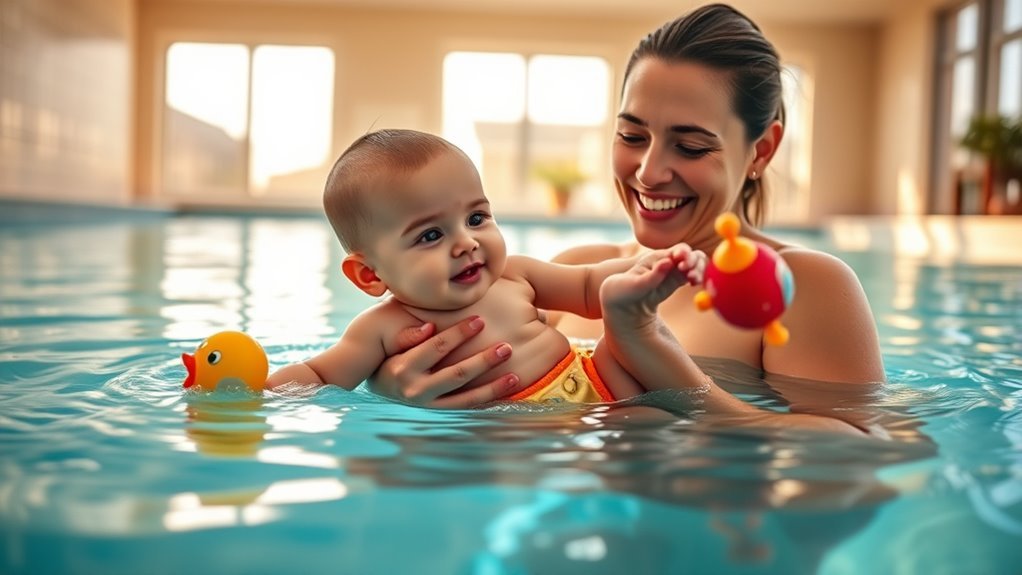
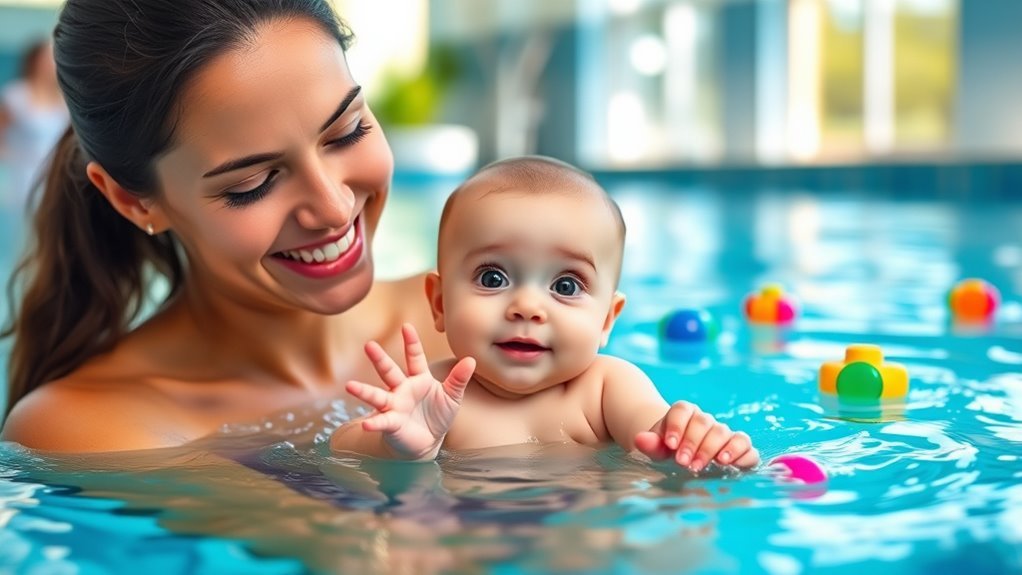
As you step into your baby’s first swimming lessons, you’ll notice the sessions focus on building comfort and trust in the water rather than formal swimming skills. You’ll engage in gentle water introductions, songs, and simple movements to encourage your baby’s natural reflexes. The instructor will guide you through holding techniques and water acclimation exercises that promote bonding and confidence.
| Activity | Purpose | Baby’s Response |
|---|---|---|
| Water Splashing | Sensory Exploration | Smiling, curiosity |
| Gentle Floats | Trust Building | Relaxation, eye contact |
| Singing & Games | Engagement & Comfort | Laughing, mimicking |
| Parent Holding | Safety & Reassurance | Calmness, attachment |
Expect joyful moments as your baby gradually feels at ease in the water.
Safety Tips for Baby Swimming Sessions
Since safety is your top priority during baby swimming sessions, you should always stay attentive and follow essential precautions to protect your little one in and around the water. Make sure you’re within arm’s reach at all times and never leave your baby unattended.
Always stay close and attentive to keep your baby safe during swimming sessions.
Use appropriate flotation devices recommended for infants, but don’t rely on them solely for safety.
Check the water temperature to ensure it’s comfortable and suitable for your baby’s sensitive skin.
Ultimately, follow the pool rules and guidelines to maintain a safe environment for everyone.
- Keep constant eye contact and stay close to your baby
- Use infant-approved swim diapers and flotation aids
- Maintain a warm water temperature (around 32°C or 89.6°F)
- Follow all pool safety rules and hygiene practices
Benefits of Starting Baby Swimming Early
Although you might wonder if starting baby swimming lessons early is worth it, you’ll find that it offers numerous benefits for your child’s development. By introducing your baby to water at a young age, you promote physical growth, improve coordination, and build muscle strength.
Early swimming lessons also boost your baby’s confidence and comfort in water, reducing fear as they grow. Plus, these sessions enhance cognitive skills through sensory stimulation and social interaction with other babies and instructors.
Starting early helps establish a lifelong appreciation for water safety and exercise, making swimming a fun, healthy habit.
Ultimately, you’re giving your child a head start on physical and emotional development while fostering a valuable life skill that can enhance safety and enjoyment for years to come.
Frequently Asked Questions
What Type of Swimwear Is Best for Babies?
You’ll want swimwear that’s snug, quick-drying, and offers UV protection.
Look for rash guards and swim diapers designed for babies to keep them comfortable and safe in the water while preventing accidents during lessons.
How to Choose a Qualified Baby Swim Instructor?
You’ll want an instructor certified in infant CPR and water safety—studies show 70% of drownings happen to non-swimmers.
Check their experience, reviews, and guarantee they create a fun, secure environment for your baby’s confidence and safety.
Can Baby Swimming Help With Water Allergy Prevention?
You can’t rely on baby swimming to prevent water allergies, but early exposure may help reduce fear of water.
Always watch for skin reactions and consult your pediatrician if your baby shows sensitivity or irritation.
What Should I Pack for My Baby’s Swim Class?
You’ll want to pack your baby’s swim diaper, a towel, swimwear, goggles, and a change of clothes. Don’t forget a rubber ducky—it’s practically a Victorian essential!
Also, bring snacks and a water bottle for you.
How Often Should Baby Swimming Lessons Be Scheduled?
You should schedule baby swimming lessons once or twice a week to keep your little one comfortable and build their skills consistently without overwhelming them.
Regular sessions help maintain progress and boost confidence in the water.
Conclusion
Starting baby swimming lessons at the right time can make all the difference. It’s funny how just when you’re ready to leap in, your little one might surprise you with their excitement—or hesitation.
By preparing properly and keeping safety top of mind, you’ll both enjoy those early splashes together. Remember, the benefits you gain from starting early often show up when you least expect them.
Making every lesson a special moment to cherish will help you make the most of baby swimming lessons. Early swimming can boost confidence, coordination, and bonding, so choosing the best time to start is key.