
How to Backwash a Swimming Pool in 5 Easy Steps
First, check your filter pressure gauge; a rise means it’s time to backwash your swimming pool filter. Backwashing helps maintain clean and clear pool water by removing debris trapped in the filter.
Next, turn off your pool pump to avoid damage. Then, lift and turn the multiport valve to the “Backwash” position carefully.
Turn the pump back on and run it until the water clears, usually 2-3 minutes. Finally, switch the valve to “Rinse,” run briefly, then return it to “Filter” and restart the pump.
Keep going to uncover the full process and helpful tips.
Check the Filter Pressure Gauge

How do you know when it’s time to backwash your pool filter? The key is to check the filter pressure gauge regularly. This gauge measures the pressure inside the filter, indicating how efficiently water flows through it.
When the pressure rises about 8 to 10 psi above the normal operating level, it means the filter is getting clogged with dirt and debris. That’s your signal to backwash.
Don’t wait too long, or your filter will strain and won’t clean the water effectively. Keep an eye on the gauge during your regular maintenance routine to catch these pressure jumps early.
Turn Off the Pool Pump
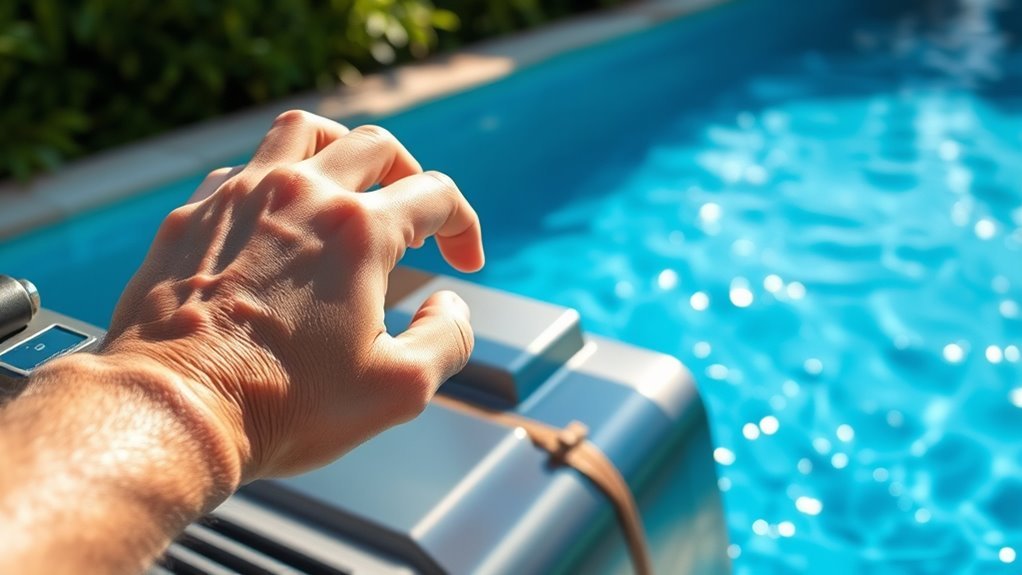
Before you begin backwashing, make sure to turn off the pool pump completely. This step is essential to prevent damage to the system and guarantee the process runs smoothly.
Turning off the pool pump before backwashing is crucial to protect your system and ensure smooth operation.
Here’s how to do it:
- Locate the pool pump’s power switch or circuit breaker.
- Turn the switch off or flip the breaker to cut power to the pump.
- Double-check that the pump has stopped running by listening for the motor or feeling for vibration.
Turning off the pump stops water flow, allowing you to safely change the valve setting without causing pressure surges or damaging internal parts.
Skipping this step can lead to costly repairs or inefficient backwashing. So take a moment to confirm the pump is off before moving on.
Set the Multiport Valve to Backwash

Once the pump is off, you’ll need to set the multiport valve to the backwash position. This valve controls the flow of water through your pool’s filtration system.
Turning it to “Backwash” reverses the flow, flushing debris from the filter.
Here’s a quick guide to multiport valve settings:
| Setting | Purpose |
|---|---|
| Filter | Normal water filtration |
| Backwash | Cleans filter by reversing flow |
| Rinse | Clears remaining debris post-backwash |
To set the valve, lift the handle slightly to release the lock, then turn it slowly to “Backwash.” Make sure it clicks into place to avoid leaks or damage.
Never force the valve while the pump is running; always wait for it to be off to prevent harm to the system.
Turn On the Pump and Backwash
After setting the multiport valve to Backwash, turn on the pump to start flushing out the debris from your pool filter. You’ll notice the water flowing through the waste line, carrying dirt and particles away from your pool system.
Keep an eye on the sight glass, if your filter has one, to watch the clarity of the water.
Watch the sight glass to monitor water clarity during backwashing for optimal filter cleaning.
Follow these steps to ensure proper backwashing:
- Run the pump for 2-3 minutes or until the water in the sight glass clears.
- Monitor pressure gauge to see a drop, indicating debris has been removed.
- Avoid running the pump too long to prevent water loss or damage.
This process efficiently cleans your filter, keeping your pool water sparkling clean.
Rinse and Reset the Valve
When the water in the sight glass runs clear and the pressure gauge drops, it’s time to move the multiport valve to the Rinse setting.
Turn the pump back on and let it run for about 30 seconds to one minute. This step flushes any remaining debris from the filter and settles the sand bed, preventing dirt from returning to the pool.
Keep an eye on the sight glass during this time; the water should look clear.
After rinsing, turn off the pump before moving the valve back to the Filter position. This resets your system for regular filtration.
Finally, turn the pump on again and check the pressure gauge to ensure normal operation.
You’ve now successfully rinsed and reset the valve, preparing your pool for clean, clear water.
Frequently Asked Questions
How Often Should I Backwash My Swimming Pool Filter?
You should backwash your pool filter when the pressure gauge rises 8-10 psi above normal or every 1-2 weeks during heavy use.
Don’t wait too long, or your filter won’t clean effectively. Check regularly!
What Are the Signs That My Pool Needs Backwashing?
You’ll know your pool needs backwashing when the pressure gauge rises 8-10 psi above normal, water flow decreases, or the water looks cloudy. These signs mean your filter is clogged and needs cleaning to keep water clear.
Can I Backwash My Pool Filter During Winter?
Sure, you can backwash your pool filter during winter if you enjoy freezing your fingers off while water sprays everywhere. But seriously, it’s best to avoid it; winterizing your pool calls for different care to prevent damage.
What Type of Filter Requires Backwashing?
You’ll need to backwash sand and DE (diatomaceous earth) filters since they trap debris in their media.
Cartridge filters don’t require backwashing because you clean them by removing and rinsing the cartridges instead.
Is Backwashing Harmful to the Environment?
Backwashing can harm the environment if you don’t dispose of the water properly, since it contains chemicals and debris.
You should always direct the waste water to a sanitary sewer or approved drainage area to minimize impact.
Conclusion
Now that you know how to check the filter pressure gauge, turn off the pump, set the valve to backwash, turn the pump back on, and rinse before resetting, keeping your pool clean becomes simple.
Follow these steps regularly to save time and effort, maintain clear water, and enjoy a sparkling pool all season.
Backwashing isn’t just maintenance—it’s your key to a healthier, fresher, and more inviting swimming experience every time you plunge in.
By mastering how to backwash a swimming pool, you ensure optimal filter performance and prolong the life of your pool equipment.